Kirjojen hintavertailu – 12 903 724 kirjaa ja 27 kauppaa

Kirjailija

Ahmad Irfan

Kirjat ja teokset yhdessä paikassa: 7 kirjaa, julkaisuja vuosilta 2012–2017, suosituimpiin kuuluu Organic light emitting diodes: How to ehance efficiency and stability. Vertaile teosten hintoja ja tarkista saatavuus suomalaisista kirjakaupoista.

7 kirjaa

Kirjojen julkaisuvuodet: 2012–2017.

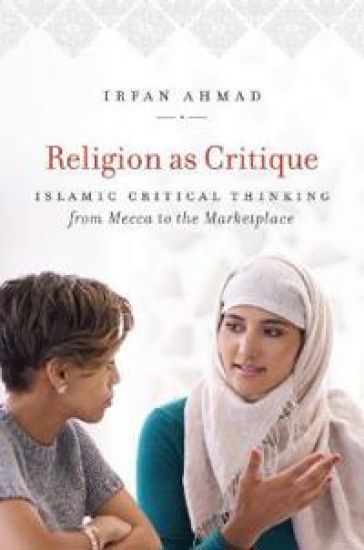
Religion as Critique

Religion as Critique

Ahmad Irfan

The University of North Carolina Press
2017
sidottu
Irfan Ahmad makes the far-reaching argument that potent systems and modes for self-critique as well as critique of others are inherent in Islam - indeed, critique is integral to its fundamental tenets and practices. Challenging common views of Islam as hostile to critical thinking, Ahmad delineates thriving traditions of critique in Islamic culture, focusing in large part on South Asian traditions. Ahmad contemplates and interrogates Greek and Enlightenment notions of reason and critique, and he notes how they are invoked in relation to ""others,"" including Muslims. Drafting an alternative genealogy of critique in Islam, Ahmad reads religious teachings and texts, drawing on sources in Hindi, Urdu, Farsi, and English, and demonstrates how they serve as expressions of critique. Throughout, he depicts Islam as an agent, not an object, of critique. On a broader level, Ahmad expands the idea of critique itself. Drawing on his fieldwork among marketplace hawkers in Delhi and Aligarh, he construes critique anthropologically as a sociocultural activity in the everyday lives of ordinary Muslims, beyond the world of intellectuals. Religion as Critique allows space for new theoretical considerations of modernity and change, taking on such salient issues as nationhood, women's equality, the state, culture, democracy, and secularism.
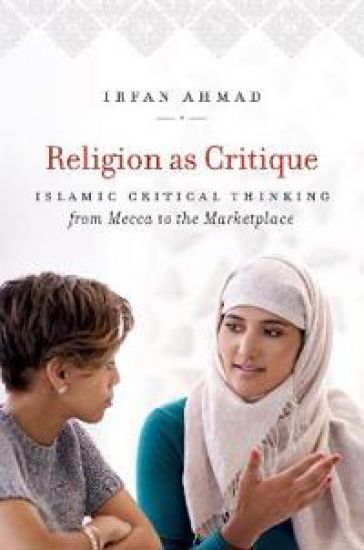
Religion as Critique

Religion as Critique

Ahmad Irfan

The University of North Carolina Press
2017
nidottu
Irfan Ahmad makes the far-reaching argument that potent systems and modes for self-critique as well as critique of others are inherent in Islam - indeed, critique is integral to its fundamental tenets and practices. Challenging common views of Islam as hostile to critical thinking, Ahmad delineates thriving traditions of critique in Islamic culture, focusing in large part on South Asian traditions. Ahmad contemplates and interrogates Greek and Enlightenment notions of reason and critique, and he notes how they are invoked in relation to ""others,"" including Muslims. Drafting an alternative genealogy of critique in Islam, Ahmad reads religious teachings and texts, drawing on sources in Hindi, Urdu, Farsi, and English, and demonstrates how they serve as expressions of critique. Throughout, he depicts Islam as an agent, not an object, of critique. On a broader level, Ahmad expands the idea of critique itself. Drawing on his fieldwork among marketplace hawkers in Delhi and Aligarh, he construes critique anthropologically as a sociocultural activity in the everyday lives of ordinary Muslims, beyond the world of intellectuals. Religion as Critique allows space for new theoretical considerations of modernity and change, taking on such salient issues as nationhood, women's equality, the state, culture, democracy, and secularism.