Kirjojen hintavertailu – 12 903 725 kirjaa ja 27 kauppaa

Kirjailija

Ahmed Al-Harrasi

Kirjat ja teokset yhdessä paikassa: 9 kirjaa, julkaisuja vuosilta 2019–2025, suosituimpiin kuuluu Introduction to Plant-Based Latex. Vertaile teosten hintoja ja tarkista saatavuus suomalaisista kirjakaupoista.

9 kirjaa

Kirjojen julkaisuvuodet: 2019–2025.

Medicinal and Aromatic Plants of Oman

Medicinal and Aromatic Plants of Oman

Ahmed Al-Harrasi; Ahmed Al-Rawahi; Saif Amur Al Hatmi; Saurabh Bhatia

TAYLOR FRANCIS LTD
2025
sidottu
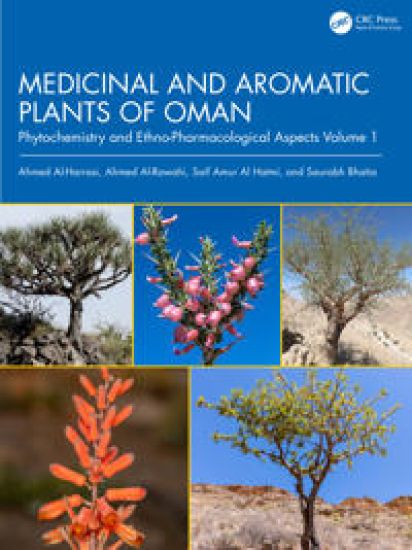
Medicinal plants have received an impetus recently due to revival of attention in natural products in form of herbal medicines demanding convincing knowledge on their phytochemistry, status, cultivation and utilization. Medicinal plants in the Sultanate of Oman have tremendous potential in terms of ethnomedicinal and food applications. However, these treasures of Oman have not been fully explored until recently. Several medicinal plants indigenous to Oman have been used for several centuries in form of traditional medicine for the prevention and treatment of diseases. The first volume of this book uncovers information about sustainable use of selected medicinal plants, their phytochemistry and efforts made to conserve them to ensured continues supply. This volume reveals systematic information about promising 132 medicinal plants in Oman with botanical names, common names, synonyms, local names, family, habitat and distribution, chemical constituents, cultivation and collection, pharmacological activity, uses (a. common uses; b. traditional uses; therapeutic uses), toxicity and clinical data, status, patents, and their marketed products or industrial application. Each of the 132 plants has a high-resolution color photograph, plant description, and location. The chapters are written by well experienced authors in the field. A uniform chapter structure throughout the book has been designed to keep consistency. This book is especially valuable to academicians, phytochemists, pharmacologists, herbalists, agriculturists, biotechnologists, natural product researchers, and industrialists involved in the production of herbal drugs. Salient Features:Provides common uses, traditional uses, therapeutic uses of 132 medicinal plants. Uncover the detailed phytochemistry of each medicinal plant. Offer systematic information about their geographical distribution and current status of these plants. Updated information about their pharmacology, mechanism of action, and toxicity are mentioned in detail.
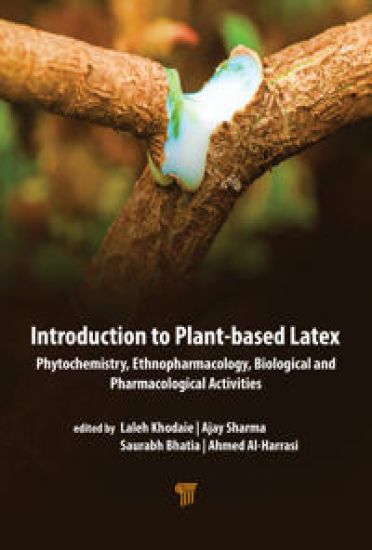
Introduction to Plant-Based Latex

Introduction to Plant-Based Latex

Laleh Khodaie; Ajay Sharma; Saurabh Bhatia; Ahmed Al-Harrasi

Jenny Stanford Publishing
2025
sidottu
Latex-bearing plants have been known for their contribution to human health. Latex, a complex mixture produced in some plants, acts as a reservoir of secondary metabolites with high medicinal value. This semisolid exudation from plants contains several chemical components that are synthesized via different biosynthetic pathways and acts as their first line of defense. Recently, chemical components derived from natural plant latex and their synthetic analogs have been used in medicine as analgesics, antimicrobial agents, antiproliferatives, and anticancer drugs. Several ethnobotanical studies of latex plants have revealed the pharmacological potential of latex. However, the continuous exploitation of laticiferous plants for industrial and medicinal use has placed them at risk of extinction. Thus, several researchers have developed potential cultivation methods to conserve these plants. This book presents the uses of latex and discusses prospects for its potential utilization in the pharmaceutical sector, agriculture, and industry. The recent advancement in plant-based latex has accelerated the development in all areas of natural products. This book illustrates cutting-edge advances in the field of plant-based latex and is a useful reference for teachers, undergraduate and postgraduate students, research scholars, and general readers.
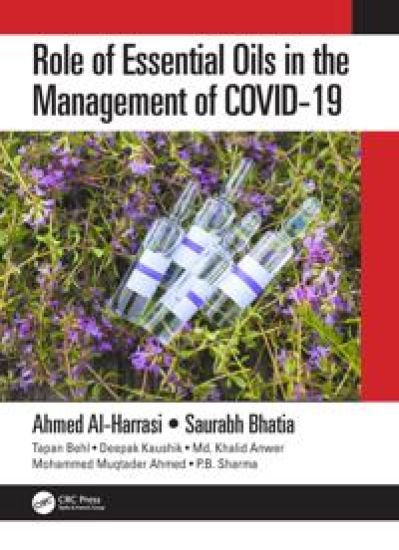
Role of Essential Oils in the Management of COVID-19

Role of Essential Oils in the Management of COVID-19

Ahmed Al-Harrasi; Saurabh Bhatia; Tapan Behl; Deepak Kaushik; Md. Khalid Anwer; Mohammed Muqtader Ahmed; Pritam Babu Sharma; Ajay Sharma; Md. Tanvir Kabir; Vineet Mittal

TAYLOR FRANCIS LTD
2025
nidottu
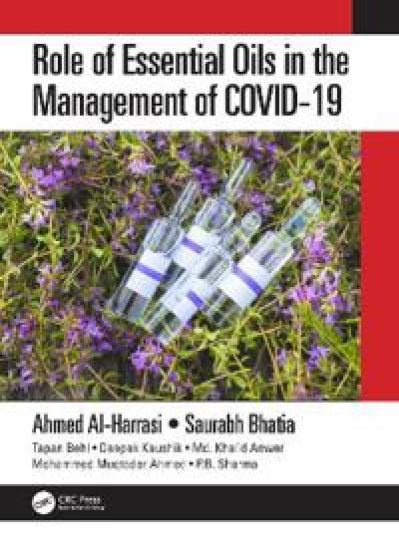
Coronavirus disease 2019 (COVID-19) has emerged as a global health threat. Unfortunately, there are very limited approved therapeutics available with established efficacy and safety profiles against SARS-CoV-2. COVID-19 vaccines aim to actively induce systemic immunization; however, the possibility or fear of side effects decreases or discourages their use. Alternative therapy via natural products, especially essential oils, could be considered safe and effective to improve health, cure ailments, and soothe your body and mind. Essential oils, which have been known for their anti-inflammatory, immunomodulatory, bronchodilatory, and antiviral properties, could possibly be useful for the symptomatic management of COVID-19. This book is vital in respect of designing approaches to protect humanity from further losses and harm due to SARS-CoV-2 infection. Role of Essential Oils in the Management of COVID-19 offers a complete outline of the recent novel coronavirus (SARS-CoV-2) infection, its biology, and associated challenges for the prevention and treatment of novel COVID-19, with a prime focus on the possible role of essential oils in the prevention and treatment of COVID-19. This book is written for everyone who needs to be thoroughly familiar with the appropriate and safe use of essential oils in COVID-19 therapy. As per the objectives of the book: The first seven chapters cover various aspects of COVID-19 infection, including epidemiology, origin, morphology, genome organization, pathogenesis, clinical manifestations, diagnostic approaches, preventive measures, and treatment strategies. The remaining chapters elaborate on the various aspects related to essential oils, such as chemistry, extraction methods, dispensing methods, stability, quality control, mechanism of action, therapeutic effects, pharmacokinetics, aromatherapy, and safety profiles. Prof. Ahmed Al-Harrasi is Vice Chancellor for Graduate Studies, Research and External Relations, Natural and Medical Sciences Research Center, and Professor of Organic Chemistry, University of Nizwa, Oman. Prof. Ahmed received his M. Sc. degree in Chemistry followed by his Ph. D. in Organic Chemistry from the University of Berlin. He then pursued his postdoctoral research at Cornell University. Afterward, he continued his research rigor at the University of Nizwa, where he founded the Natural and Medical Sciences Research Center, which has now become a center of excellence in natural and medical sciences. While enduring his research aptitude, he has authored and co-authored more than 400 scientific papers, 2 books, and 12 book chapters of high repute. Dr. Saurabh Bhatia graduated from Kurukshetra University, followed by postgraduation from Bharati Vidyapeeth University. He received his Ph. D in Pharmaceutical Technology at Jadavpur University. He now works as an Associate Professor at Natural and Medical Sciences Research Center, University of Nizwa, Oman. He has 12 years of academic experience; has authored 75 articles and 9 books of repute; and filed 11 patents.
Recent Advances in Natural Products Science

Recent Advances in Natural Products Science

Ahmed Al-Harrasi; Saurabh Bhatia; Tapan Behl; Mohammed F. Aldawsari; Deepak Kaushik; Sridevi Chigurupati

TAYLOR FRANCIS LTD
2024
nidottu
This book provides a summarized information related to the global herbal drug market and its regulations, ethnopharmacology of traditional crude drugs, isolation of phytopharmaceuticals, phytochemistry, standardization, and quality assessment of crude drugs. Natural products science has constantly been developing with comprehensive data contemplating different parts of natural drugs, such as global trade, quality control and regulatory concerns, traditional medicine systems, production and utilization of drugs, and utilization of medicinal and aromatic plants. This broad information about crude drugs gives rise to a subject that is now recognized as advance natural products science. By contemplating all of this thorough knowledge of the areas, this book is intended to provide considerably to the natural products science. The area of natural products science involves a broad range of topics, such as the pharmacognostical, phytochemical, and ethno-pharmacological aspects of crude drugs. Each chapter gives a sufficient understanding to academicians and researchers in the respective topic. This book includes 40 illustrations and descriptions of roughly 80 medicinal plants used for herbal medicine. The book is an imperative source for all researchers, academicians, students, and those interested in natural products science. FEATURES Includes advance knowledge and detailed developments in natural products science Discusses the most important phytopharmaceuticals used in the pharmaceutical industry Explores the analysis and classification of novel plant-based medicinal compounds Includes standardization, quality control, and global trade of natural products Gives a deep understanding related to recent advances in herbal medicines to treat various ailments Discusses national and WHO regulations and policies related to herbal medicines Covers the complete profile of some important traditional medicinal plants, especially their historical background, biology, and chemistry
Recent Advances in Natural Products Science

Recent Advances in Natural Products Science

Ahmed Al-Harrasi; Saurabh Bhatia; Tapan Behl; Mohammed F. Aldawsari; Deepak Kaushik; Sridevi Chigurupati

TAYLOR FRANCIS LTD
2022
sidottu
This book provides a summarized information related to the global herbal drug market and its regulations, ethnopharmacology of traditional crude drugs, isolation of phytopharmaceuticals, phytochemistry, standardization, and quality assessment of crude drugs. Natural products science has constantly been developing with comprehensive data contemplating different parts of natural drugs, such as global trade, quality control and regulatory concerns, traditional medicine systems, production and utilization of drugs, and utilization of medicinal and aromatic plants. This broad information about crude drugs gives rise to a subject that is now recognized as advance natural products science. By contemplating all of this thorough knowledge of the areas, this book is intended to provide considerably to the natural products science. The area of natural products science involves a broad range of topics, such as the pharmacognostical, phytochemical, and ethno-pharmacological aspects of crude drugs. Each chapter gives a sufficient understanding to academicians and researchers in the respective topic. This book includes 40 illustrations and descriptions of roughly 80 medicinal plants used for herbal medicine. The book is an imperative source for all researchers, academicians, students, and those interested in natural products science. FEATURES Includes advance knowledge and detailed developments in natural products science Discusses the most important phytopharmaceuticals used in the pharmaceutical industry Explores the analysis and classification of novel plant-based medicinal compounds Includes standardization, quality control, and global trade of natural products Gives a deep understanding related to recent advances in herbal medicines to treat various ailments Discusses national and WHO regulations and policies related to herbal medicines Covers the complete profile of some important traditional medicinal plants, especially their historical background, biology, and chemistry
Role of Essential Oils in the Management of COVID-19

Role of Essential Oils in the Management of COVID-19

Ahmed Al-Harrasi; Saurabh Bhatia; Tapan Behl; Deepak Kaushik; Md. Khalid Anwer; Mohammed Muqtader Ahmed; Pritam Babu Sharma; Ajay Sharma; Md. Tanvir Kabir; Vineet Mittal

Taylor Francis Ltd
2022
sidottu
Coronavirus disease 2019 (COVID-19) has emerged as a global health threat. Unfortunately, there are very limited approved therapeutics available with established efficacy and safety profiles against SARS-CoV-2. COVID-19 vaccines aim to actively induce systemic immunization; however, the possibility or fear of side effects decreases or discourages their use. Alternative therapy via natural products, especially essential oils, could be considered safe and effective to improve health, cure ailments, and soothe your body and mind. Essential oils, which have been known for their anti-inflammatory, immunomodulatory, bronchodilatory, and antiviral properties, could possibly be useful for the symptomatic management of COVID-19. This book is vital in respect of designing approaches to protect humanity from further losses and harm due to SARS-CoV-2 infection. Role of Essential Oils in the Management of COVID-19 offers a complete outline of the recent novel coronavirus (SARS-CoV-2) infection, its biology, and associated challenges for the prevention and treatment of novel COVID-19, with a prime focus on the possible role of essential oils in the prevention and treatment of COVID-19. This book is written for everyone who needs to be thoroughly familiar with the appropriate and safe use of essential oils in COVID-19 therapy. As per the objectives of the book: The first seven chapters cover various aspects of COVID-19 infection, including epidemiology, origin, morphology, genome organization, pathogenesis, clinical manifestations, diagnostic approaches, preventive measures, and treatment strategies. The remaining chapters elaborate on the various aspects related to essential oils, such as chemistry, extraction methods, dispensing methods, stability, quality control, mechanism of action, therapeutic effects, pharmacokinetics, aromatherapy, and safety profiles. Prof. Ahmed Al-Harrasi is Vice Chancellor for Graduate Studies, Research and External Relations, Natural and Medical Sciences Research Center, and Professor of Organic Chemistry, University of Nizwa, Oman. Prof. Ahmed received his M. Sc. degree in Chemistry followed by his Ph. D. in Organic Chemistry from the University of Berlin. He then pursued his postdoctoral research at Cornell University. Afterward, he continued his research rigor at the University of Nizwa, where he founded the Natural and Medical Sciences Research Center, which has now become a center of excellence in natural and medical sciences. While enduring his research aptitude, he has authored and co-authored more than 400 scientific papers, 2 books, and 12 book chapters of high repute. Dr. Saurabh Bhatia graduated from Kurukshetra University, followed by postgraduation from Bharati Vidyapeeth University. He received his Ph. D in Pharmaceutical Technology at Jadavpur University. He now works as an Associate Professor at Natural and Medical Sciences Research Center, University of Nizwa, Oman. He has 12 years of academic experience; has authored 75 articles and 9 books of repute; and filed 11 patents.
Biology of Genus Boswellia

Biology of Genus Boswellia

Ahmed Al-Harrasi; Abdul Latif Khan; Sajjad Asaf; Ahmed Al-Rawahi

Springer Nature Switzerland AG
2019
sidottu
This book provides insight into the biology and genomics of the genus Boswellia (family Burseraceae), a natural resource used for the production of frankincense, an oleo-gum resin. The Boswellia species are ecologically, medicinally, commercially and culturally important. Significantly contributing to the paucity of comprehensive literature on this genus, this volume provides a detailed discussion on the genomics, physiology and ecology of Boswellia. The chapters cover a wide range of topics, including taxonomy, distribution, genetic diversity and microbiology. The production process of frankincense and its impact on the species are presented as well. In light of the recent decline of various Boswellia populations, species propagation and conservation are discussed. Plant scholars, ecologists and conservation biologists will find this book to be an important and informative reference.