Kirjojen hintavertailu – 12 859 829 kirjaa ja 27 kauppaa
Kirjailija
Ahmed Shawqi
Kirjat ja teokset yhdessä paikassa: 14 kirjaa, julkaisuja vuosilta 2012–2023, suosituimpiin kuuluu Amirat Al-Andalus ( Arabic Edition ). Vertaile teosten hintoja ja tarkista saatavuus suomalaisista kirjakaupoista.
Ahmed Shawqi wrote chapters of prose, as he called them, about several and unrelated subjects, and collected them under the title: the Markets of Gold. shawki's prose writings, such as Aswaq Al Thahab "Gold Markets" contain many thoughtful statements which have been since then widely known as wise sayings.
Ahmed Shawqi (1868-1932) was one of the greatest Arabic poets laureate, an Egyptian poet and dramatist who pioneered the modern Egyptian literary movement.
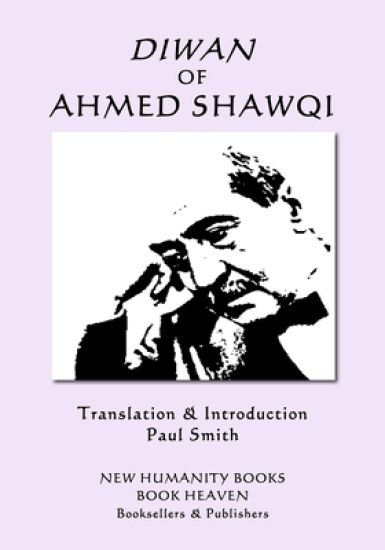
DIWAN OF AHMED SHAWQI Translation & Introduction Paul Smith AHMED SHAWQI (1869 - 1932) was the great Arabic Poet-Laureate; an Egyptian poet and dramatist who pioneered the modern Egyptian literary movement, most notably introducing the genre of poetic epics to the Arabic literary tradition. Shawqi was sent to continue his studies in Paris where he was influenced by the Moli re and Racine. He returned to Egypt in 1894 and remained a prominent member of Arab literary culture until the British forced him into exile in southern Spain in 1914. Shawqi remained there until 1920. In 1927 he was crowned by his peers the 'Prince of Poets' in recognition of his considerable contributions to the literary field. Shawqi's work can be categorized into three main periods during his career: The first coincides with the period during which he occupied a position at the court of the Khedive (Viceroy), consisting of eulogies to the Khedive: praising him or supporting his policy. The second comprised the period of his exile in Spain. During this period his feeling of nostalgia and sense of alienation directed his poetic talent to patriotic poems on Egypt as well as the Arab world. The third stage occurred after his return from exile: during that period he became preoccupied with the glorious history of Ancient Egypt and Islam. This was the period during which he wrote his religious & Sufi poem, in praise of the Prophet Muhammad (here fully translated in qasida form). The maturation of his poetic style was also reflected in his plays (including his Majnun-Layla... here partially translated in verse), the most notable of all published during this period. Includeed are remarkable poems for children and others in the correct forms. Introduction: Life, Times & Poems and on his Museum This is the largest book of his poems in English. Illustrated. Large Format Paperback 7" x 10" Pages 227 Paul Smith (b. 1945) is a poet, author and translator of many books of Sufi & Bhakti poets of Persian, Arabic, Urdu, Turkish, Hindi and other languages including Hafiz, Sadi, Nizami, Rumi, 'Attar, Sana'i, Jahan Khatun, Obeyd Zakani, Mu'in ud-din Chishti, Amir Khusrau, Nesimi, Kabir, Anvari, Ansari, Jami, Khayyam, Mansur Hallaj, Rudaki, Yunus Emre, Ghalib, Iqbal, Makhfi, Lalla Ded, Abu Nuwas, Ibn al-Farid, Mir, Seemab, Aatish, Jigar, Hali, Rab'ia, Mahsati, Tahirih and many others, as well as his own poetry, fiction, plays, biographies, kids books and more than a dozen screenplays. amazon.com/author/smithpa
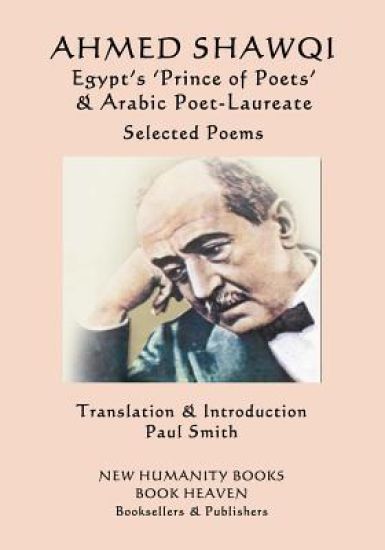
AHMED SHAWQI Egypt's 'Prince of Poets'& Arabic Poet-Laureate Selected Poems Translation & Introduction Paul Smith AHMED SHAWQI (1869 - 1932) was the great Arabic Poet-Laureate; an Egyptian poet and dramatist who pioneered the modern Egyptian literary movement, most notably introducing the genre of poetic epics to the Arabic literary tradition. Shawqi was sent to continue his studies in Paris where he was influenced by the Moli re and Racine. He returned to Egypt in 1894 and remained a prominent member of Arab literary culture until the British forced him into exile in southern Spain in 1914. Shawqi remained there until 1920. In 1927 he was crowned by his peers the 'Prince of Poets' in recognition of his considerable contributions to the literary field. Shawqi's work can be categorized into three main periods during his career: The first coincides with the period during which he occupied a position at the court of the Khedive (Viceroy), consisting of eulogies to the Khedive: praising him or supporting his policy. The second comprised the period of his exile in Spain. During this period his feeling of nostalgia and sense of alienation directed his poetic talent to patriotic poems on Egypt as well as the Arab world. The third stage occurred after his return from exile: during that period he became preoccupied with the glorious history of Ancient Egypt and Islam. This was the period during which he wrote his religious & Sufi poem, in praise of the Prophet Muhammad (here fully translated in qasida form). The maturation of his poetic style was also reflected in his plays (including his Majnun-Layla... here partially translated in verse), the most notable of all published during this period. Includeed are remarkable poems for children and others in the correct forms. Introduction: Life, Times & Poems and on his Museum This is the largest book of his poems in English. Illustrated. Large Format Paperback 7" x 10" Pages 215 Paul Smith (b. 1945) is a poet, author and translator of many books of Sufi & Bhakti poets of Persian, Arabic, Urdu, Turkish, Hindi and other languages including Hafiz, Sadi, Nizami, Rumi, 'Attar, Sana'i, Jahan Khatun, Obeyd Zakani, Mu'in ud-din Chishti, Amir Khusrau, Nesimi, Kabir, Anvari, Ansari, Jami, Khayyam, Mansur Hallaj, Rudaki, Yunus Emre, Ghalib, Iqbal, Makhfi, Lalla Ded, Abu Nuwas, Ibn al-Farid, Mir, Seemab, Aatish, Jigar, Hali, Rab'ia, Mahsati, Tahirih and many others, as well as his own poetry, fiction, plays, biographies, kids books and more than a dozen screenplays. Published by New Humanity Books amazon.com/author/smithpa
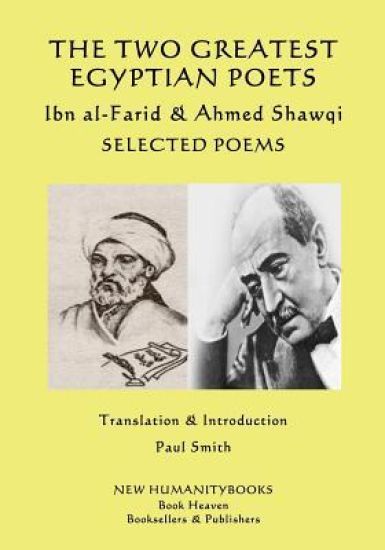
THE TWO GREATEST EGYPTIAN POETS Ibn al-Farid & Ahmed Shawqi SELECTED POEMS Translation & Introduction Paul Smith IBN AL-FARID, an Egyptian poet (1181-1235), is the undisputed master of Islamic mystical (Sufi) poetry in Arabic. He is not only ta poet but a Perfect Master (Qutub) a God-realized soul, and it is his journey to unity with God he reveals in probably the longest qasida (ode) in Arabic (761 couplets), his famous The Mystic's Progress. The other poem for which he is most known is his Wine Poem. Although these poems have been translated into English before, this is the first time in the correct rhyme of the qasida and in clear, concise, modern English. Included in the Introduction are chapters on his Life & Work, The Qasida in Arabic, Previous Qasidas by Master Arab Poets that would have influenced him and one who he influenced, The Perfect Master (Qutub), and the Wine Poem and The Mystic's Way. Selected Bibliography. AHMED SHAWQI (1869 - 1932) was the great Arabic Poet-Laureate; an Egyptian poet and dramatist who pioneered the modern Egyptian literary movement, most notably introducing the genre of poetic epics to the Arabic literary tradition. In 1927 he was crowned by his peers the 'Prince of Poets' in recognition of his considerable contributions to the literary field. Shawqi's work can be categorized into three main periods during his career: The first coincides with the period during which he occupied a position at the court of the Khedive (Viceroy), consisting of eulogies to the Khedive: praising him or supporting his policy. The second comprised the period of his exile in Spain. During this period his feeling of nostalgia and sense of alienation directed his poetic talent to patriotic poems on Egypt as well as the Arab world. The third stage occurred after his return from exile: during that period he became preoccupied with the history of Ancient Egypt and Islam. He wrote his famous Sufi poem, in praise of the Prophet Muhammad (here fully translated in qasida form). The maturation of his poetic style was reflected in his plays (including his Majnun-Layla). Includeed are remarkable poems for children and others in the correct forms. Introduction on his Life & Times & poems & his Museum. Large Format Paperback 7" x 10" 369 pages. Paul Smith (b. 1945) is a poet, author and translator of many books of Sufi & other poets of the Persian, Arabic, Urdu, Turkish, Pashtu and other languages including Hafiz, Sadi, Nizami, Rumi, 'Attar, Sana'i, Jahan Khatun, Obeyd Zakani, Mu'in, Amir Khusrau, Nesimi, Kabir, Anvari, Ansari, Jami, Omar Khayyam, Rudaki, Yunus Emre, Bulleh Shah, Shah Latif, Mahsati, Lalla Ded, Iqbal and many others, and his own poetry, fiction, plays, biographies, children's books and 12 screenplays. amazon.com/author/smithpa