Kirjojen hintavertailu – 12 859 819 kirjaa ja 27 kauppaa
Kirjailija
Ahmed Veriava
Kirjat ja teokset yhdessä paikassa: 4 kirjaa, julkaisuja vuosilta 2013–2022, suosituimpiin kuuluu Ethnographies of Power. Vertaile teosten hintoja ja tarkista saatavuus suomalaisista kirjakaupoista.
Sharad Chari; Mark Hunter; Melanie Samson; Jennifer A Devine; Michael Ekers; Jennifer Greenburg; Bridget Kenny; Stefan Kipfer; Zachary Levenson; Alex Loftus; Ahmed Veriava
Sharad Chari; Mark Hunter; Melanie Samson; Jennifer A Devine; Michael Ekers; Jennifer Greenburg; Bridget Kenny; Stefan Kipfer; Zachary Levenson; Alex Loftus; Ahmed Veriava
Working with key concepts from theorist and human geographer Gillian Hart, this book argues for an ethnographic and geographic approach to critically engage contemporary political-economic processes in the context of real world struggles.
This is the first publication in the Democratic Marxism Series, which seeks to elaborate the social theorising and politics of Democratic Marxism. Marx’s writings on and ideas about social transformation have figured prominently in the global Left imagination for more than 150 years. At the end of the twentieth century a number of factors seemed to converge to mark the end of Marxism’s influence on the world and, as a result, by the late twentieth century the relevance of Marxism was under question by both the Left (including Marxists) and Right. The decline was relatively short-lived, however, as the 2008 economic crisis brought into sharp relief the catastrophic effects of financialised capitalism and the need to (re)find alternatives. In the second decade of the twenty-first century, the revival of Marxism is finding new sources of inspiration that revolve around four primary factors: the importance of democracy for an emancipatory project; the ecological limits of capitalism; the crisis of global capitalism; and learning lessons from the failures of Marxist-inspired experiments. This is not simply a return to nineteenth and twentieth century understandings of Marxism. Rather, the twenty-first century has seen enormous creativity from movements that seek to overcome the weaknesses of the past by forging fundamentally new approaches to politics that draw inspiration from Marxism along with many other anti-capitalist traditions such as feminism, ecology, anarchism and indigenous traditions. The Marxism of many of these movements is not dogmatic or prescriptive, but rather open, searching, dialectical, humanist, utopian and inspirational. This edited volume introduces some contemporary approaches to Marxism and explores some of the ways in which Marxism has been used in Africa.
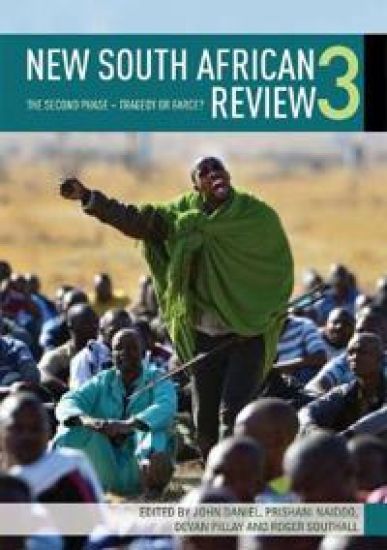
Hegel remarks somewhere that all great world-historic facts and personages appear, so to speak, twice. He forgot to add: the first time as tragedy, the second time as farce … (Karl Marx 1852) In the face of the continuing national tragedy of the inequality, poverty and unemployment which have triggered rising working- class discontent around the country, the ANC announced a `second phase’ of the `national democratic revolution’ to deal with the challenges. Ironically, the ANC post-Mangaung has resolved to preserve the core tenets of the minerals-energy-financial complex that defined racial capitalism – while at the same time ratcheting up the revolutionary rhetoric to keep the working class and marginalised onside. If the `first phase’ was a tragedy of the unmet expectations of the majority, is the `second phase’ likely to be a farce? The chapters in this volume are written by experts in their fields and address issues of politics, power and social class; economy, ecology and labour; public policy and social practice; and South Africa beyond its borders. They examine some of these challenges, and indicate that they are as much about the defective content of policies as their poor implementation. The third volume of the New South African Review continues the series by providing in-depth analyses of the key issues facing our country today.