Kirjojen hintavertailu – 12 903 725 kirjaa ja 27 kauppaa

Kirjailija

Ahmet Erdi Öztürk

Kirjat ja teokset yhdessä paikassa: 6 kirjaa, julkaisuja vuosilta 2017–2026, suosituimpiin kuuluu The Transnationalisation of Turkish Islam. Vertaile teosten hintoja ja tarkista saatavuus suomalaisista kirjakaupoista.

Nimi esiintyy myös muodoissa: Ahmet Erdi Ozturk

6 kirjaa

Kirjojen julkaisuvuodet: 2017–2026.

The Transnationalisation of Turkish Islam

The Transnationalisation of Turkish Islam

Ahmet Erdi Öztürk

TAYLOR FRANCIS LTD
2026
sidottu
The Transnationalisation of Turkish Islam builds on current academic debates pertaining to the use of religion in global politics. By examining how and why religion is used as a tool for foreign policy aims as well as for perpetuating a state’s identity and institutional capacity at home and abroad; the article presents a theory-informed discussion on contemporary Turkey’s transnational politics of religion from a comparative perspective. The country’s use of religion as a political tool outside of its borders has been studied in Continental Europe, Africa, Asia and the Balkans thanks to extensive fieldwork and interviews conducted between 2016 and 2020. The book investigates how and why Turkey has implemented similar tools with different aims in different geographic territories and the underlying material and normative motivations for this pursuit. The main argument presented in the study is that Turkey, under the rule of the AKP (Justice and Development Party), employs religion for three fundamental reasons: to bolster its regional and global influence, to access regions or groups that are difficult to reach through traditional foreign policy tools and to alter domestic political balances or amass power. The Transnationalisation of Turkish Islam builds will appeal to students and scholars of Political Science, International Relations, and Public Policy.
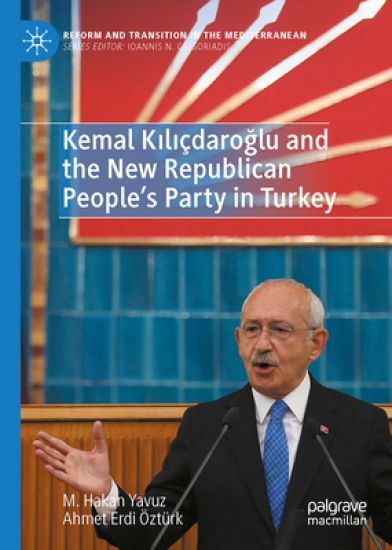
Kemal Kiliçdaroglu and the New Republican People’s Party in Turkey

Kemal Kiliçdaroglu and the New Republican People’s Party in Turkey

M. Hakan Yavuz; Ahmet Erdi Öztürk

Springer International Publishing AG
2023
sidottu
This book discusses the life and professional struggle of Kemal Kiliçdaroglu and the transformation of the CHP under his leadership. It deals with the transformational periods and phases of the CHP, up to the period when Kemal Kiliçdaroglu became prominent in the party. The CHP’s transformation and how it variously affected its popular standing in public opinion and revealed political liabilities and limitations cumulatively can indicate and explain to what extent political parties are likely to change as leadership changes and different regime governing approaches take hold. Furthermore, this book aims to answer the following questions: How and for what reasons did Kiliçdaroglu decide to ally with the center-right wing in the CHP? What was the collective impact of the center-right wing in positive and negative terms regarding the CHP’s general identity, especially in historical context? After the 2015 elections, what constituted the shifts and revisions in Kiliçdaroglu’s ideology andhow did they alter the political power of the CHP as a major opposition party? What evidence exists to shed light on his capabilities for building coalitions as a viable option for the possibility of forming a national government in elections?
Authoritarian Politics in Turkey

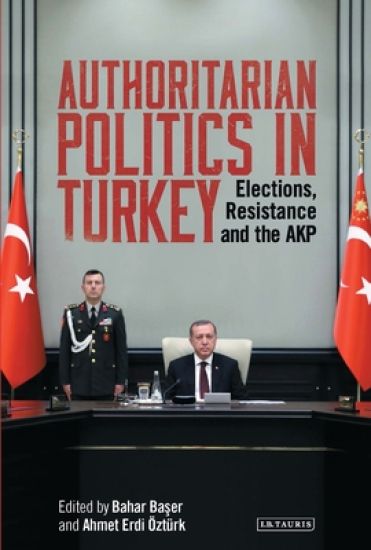
Authoritarian Politics in Turkey

Bahar Baser; Ahmet Erdi Öztürk

I.B. Tauris
2021
nidottu
President Erdogan's victory in the April 2017 referendum granted him sweeping new powers across Turkey. The constitutional reforms transform the country from a parliamentary democracy into a "Turkish style" presidential republic. Despite being democratically elected, Turkey's ruling AKP party has moved towards increasingly authoritarian measures. During the coup attempt in July 2016, the AKP government declared a state of emergency which Erdogan saw as an opportunity to purge the public sector of pro-Gulenist individuals and criminalise opposition groups including Kurds, Alevites, leftists and liberals. The country experienced political turmoil and rapid transformation as a result. This book identifies the process of democratic reversal in Turkey. In particular, contributors explore the various ways that a democratically elected political party has used elections to implement authoritarian measures. They scrutinise the very concepts of democracy, elections and autocracy to expose their flaws which can be manipulated to advantage. The book includes chapters discussing the roots of authoritarianism in Turkey; the political economy of elections; the relationship between the political Islamic groups and the government; Turkish foreign policy; non-Muslim communities' attitudes towards the AKP; and Kurdish citizens' voting patterns. As well as following Turkey's political trajectory, this book contextualises Turkey in the wider literature on electoral and competitive authoritarianisms and explores the country's future options.
Religion, Identity and Power

Religion, Identity and Power

Ahmet Erdi Ozturk

Edinburgh University Press
2021
sidottu
This book examines Turkey's ethno-religious activism and power-related political strategies in the Balkans between 2002 and 2020, the period under the rule of the Justice and Development Party (AKP), to determine the scopes of its activities in the region. Ahmet Erdi ztrk illuminates an often-neglected aspect of Turkey's relations with its Balkan neighbours that emerged as a result of the much discussed 'authoritarian turn' a broader shift in Turkish domestic and foreign policy from a realist-secular to a Sunni Islamic orientation with ethno-nationalist policies. ztrk draws on personal testimonies given by both Turkish and non-Turkish, Muslim and non-Muslim interviewees in three country cases: Bulgaria, North Macedonia and Albania. The findings shed light on contemporary issues surrounding the continuous redefinition of Turkish secularism under the AKP rule and the emergence of a new Muslim elite in Turkey.
International Journal of Religion: Volume 1, Number 1 - November 2020

International Journal of Religion: Volume 1, Number 1 - November 2020

Ahmet Erdi Ozturk; Eric M. Trinka; Ronald L. Hatzenbuehler

Transnational Press London
2020
nidottu
Inaugural issue of the INTERNATIONAL JOURNAL OF RELIGION ISSN: 2633-352X (Print) ISSN: 2633-3538 (Online) Volume 1 Number 1 November 2020 Special Issue: Politics of Religious Dissent Edited by Jeffrey Haynes, Ahmet Erdi zt rk, and Eric M. Trinka Editorial: Launching the International Journal of Religion - Jeffrey Haynes, Ahmet Erdi zt rk, and Eric M. Trinka From the Editorial Desk - Eric M. Trinka Dissent among Mormons in the 1980 Senatorial Election in Idaho - Ronald Hatzenbuehler Creating the Internal Enemy: Opportunities and Threats in Pro and Anti-LGBT Activism within South Korean Protestantism - Hendrick Johannemann Is Right-wing Populism a Phenomenon of Religious Dissent? The Cases of the Lega and the Rassemblement National - Luca Ozanno and Fabio Bolzonar A Religious Movement on Trial: Transformative Years, Judicial Questions and the Nation of Islam - Sultan Tepe Finding the Right Islam for the Maldives: Political Transformation and State-Responses to Growing Religious Dissent - La Toya Waha Islam, Catholicism, and Religion-State Separation: An Essential or Historical Difference? - Ahmet T. Kuru Secularism, Religion, and Identification beyond Binaries: The Transnational Alliances, Rapprochements, and Dissent of German Turks in Germany - Nil Mutluer Dissenting Yogis: The Mīmāṁsaka-Buddhist Battle for Epistemological Authority - Jed Forman Tar & Feathers: Agnotology, Dissent, and Queer Mormon History - Nerida Bullock New Religious-Nationalist Trends among Jewish Settlers in the Halutza Sands - Hayim Katsman
Authoritarian Politics in Turkey

Authoritarian Politics in Turkey

Baser Bahar; Ahmet Erdi Öztürk

I.B. Tauris
2017
sidottu
President Erdogan's victory in the April 2017 referendum granted him sweeping new powers across Turkey. The constitutional reforms transform the country from a parliamentary democracy into a "Turkish style" presidential republic. Despite being democratically elected, Turkey's ruling AKP party has moved towards increasingly authoritarian measures. During the coup attempt in July 2016, the AKP government declared a state of emergency which Erdogan saw as an opportunity to purge the public sector of pro-Gulenist individuals and criminalise opposition groups including Kurds, Alevites, leftists and liberals. The country experienced political turmoil and rapid transformation as a result. This book identifies the process of democratic reversal in Turkey. In particular, contributors explore the various ways that a democratically elected political party has used elections to implement authoritarian measures. They scrutinise the very concepts of democracy, elections and autocracy to expose their flaws which can be manipulated to advantage. The book includes chapters discussing the roots of authoritarianism in Turkey; the political economy of elections; the relationship between the political Islamic groups and the government; Turkish foreign policy; non-Muslim communities' attitudes towards the AKP; and Kurdish citizens' voting patterns. As well as following Turkey's political trajectory, this book contextualises Turkey in the wider literature on electoral and competitive authoritarianisms and explores the country's future options.