Kirjojen hintavertailu – 12 903 725 kirjaa ja 27 kauppaa

Kirjailija

Ahsan Riaz

Kirjat ja teokset yhdessä paikassa: 14 kirjaa, julkaisuja vuodelta 2025, suosituimpiin kuuluu Risk Management and Stock Exchange. Vertaile teosten hintoja ja tarkista saatavuus suomalaisista kirjakaupoista.

14 kirjaa

Risk Management and Stock Exchange

Risk Management and Stock Exchange

Shahid Mahmood; Ahsan Riaz

SCHOLARS' PRESS
2025
pokkari
The book Credit Risk Management and Bank Performance examines the crucial role of credit risk management in ensuring the stability and profitability of commercial banks. Focusing on banks listed on the Pakistan Stock Exchange, it analyzes a decade (2006-2015) of empirical data using econometric models. The study investigates the impact of key credit risk variables - non-performing loans (NPLs), capital adequacy ratio (CAR), and loan advances (LA) - on bank performance indicators like return on assets (ROA), return on equity (ROE), and net interest margin (NIM). The findings reveal that NPLs negatively affect bank performance, while CAR enhances profitability. The book underscores the importance of robust risk management frameworks, recommending strict credit assessment policies and strategic risk mitigation techniques to improve financial stability. Aimed at banking professionals, policymakers, and researchers, it provides valuable insights into optimizing credit risk management practices for sustainable bank growth in evolving financial landscapes.
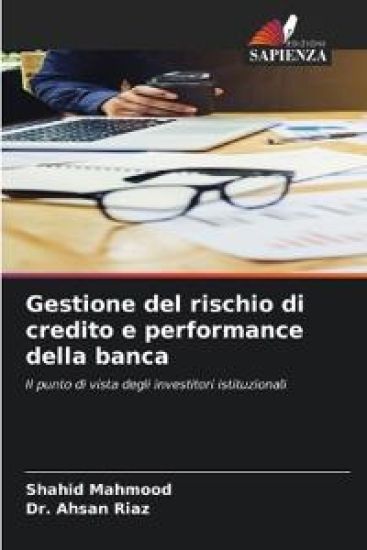
Credit Risk Management and Bank Performance

Credit Risk Management and Bank Performance

Shahid Mahmood; Ahsan Riaz

SCHOLARS' PRESS
2025
pokkari
Credit risk management focuses on identifying, assessing, and mitigating the risk of borrower default. The book explores key principles, methodologies, and frameworks used by financial institutions to manage credit risk effectively. It covers credit scoring models, portfolio risk assessment, regulatory frameworks like Basel Accords, and stress testing techniques. The book emphasizes risk mitigation tools such as credit derivatives, collateralization, and diversification. It also discusses early warning signals, loan classifications, and risk-adjusted return models. Case studies highlight real-world applications, showing how institutions navigate market volatility and economic downturns. A key takeaway is the balance between risk appetite and profitability, ensuring sustainable lending practices. The book underscores the role of AI, machine learning, and big data in enhancing credit risk analytics. It provides a strategic perspective on integrating risk management into financial decision-making while complying with evolving global regulations.