Kirjojen hintavertailu – 12 859 828 kirjaa ja 27 kauppaa

Kirjailija

Aidan Dodson

Kirjat ja teokset yhdessä paikassa: 25 kirjaa, julkaisuja vuosilta 1994–2027, suosituimpiin kuuluu British Light Cruisers of the First World War. Vertaile teosten hintoja ja tarkista saatavuus suomalaisista kirjakaupoista.

25 kirjaa

Kirjojen julkaisuvuodet: 1994–2027.

Amenhotep-son-of-Hapu, High Official, Architect, Demigod

Amenhotep-son-of-Hapu, High Official, Architect, Demigod

Aidan Dodson; Kenneth Griffin

AMERICAN UNIVERSITY IN CAIRO PRESS
2027
sidottu
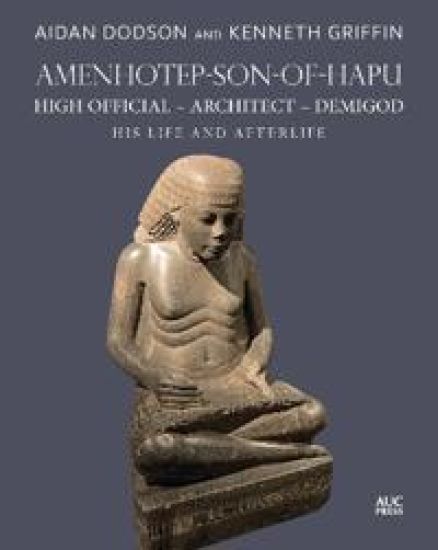
A compelling account of a unique New Kingdom figure, from his early life to the pinnacle of his power under Amenhotep III to his manifestation as a cult figure Amenhotep-son-of-Hapu was one of the most remarkable non-royal figures in Egyptian history. In life, he was an official of Amenhotep III, of exceptional prominence, but apparently modest origins. Holding a vast array of titles, he was responsible for the management of the king’s principal works, and was honored with numerous statues and a unique mortuary temple in royal style. Then, a millennium after his death, we find him elevated to divine status, in conjunction with an even more ancient royal builder, Imhotep of the Third Dynasty. As such, he appears in temples around Thebes, even having a a colossal statue erected for his cult in front of the great temple at Karnak. This is the first full-length book in English dedicated to him. It begins with an overview of the fourteenth century BC reign of Amenhotep III, during which the known events of Amenhotep-son-of-Hapu’s life took place. It then investigates what we know of Amenhotep-son-of-Hapu’s background, and reviews the material surviving from his lifetime to reconstruct his activities. Also described are the funerary arrangements of Amenhotep-son-of-Hapu, in the context of contemporary practice, underlining how these were far more elaborate than those of any other official, and approaching royal standards. The authors then jump forward to the second century BC to explore how the cult of Amenhotep-son-of-Hapu was manifested, and the various monuments that were decorated in his honor. The final chapter describes the rediscovery of Amenhotep-son-of-Hapu and his monuments by modern scholarship.
British Light Cruisers of the First World War

British Light Cruisers of the First World War

Aidan Dodson

PEN SWORD BOOKS LTD
2026
sidottu
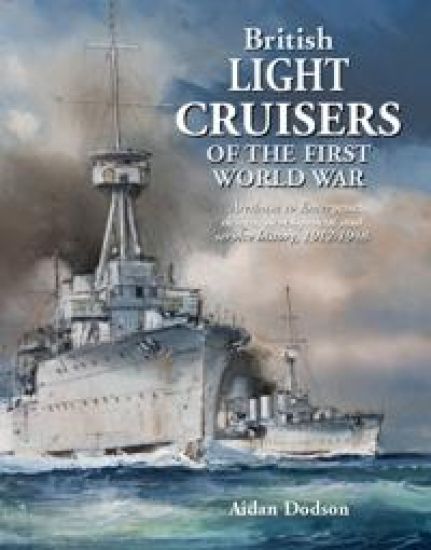
A wholly new kind of cruiser for the Royal Navy, intended to work with the fleet, was developed in 1912. With its first units completed during 1914–15 as the Arethusa class, the concept was developed during the war years through the ‘C’ and ‘D’ classes, culminating in the ‘E’ class, ordered in 1918, and which would be the fastest and most heavily torpedo-armed cruisers ever built for the Navy. Although intended for North Sea service, during the postwar years the survivors would be deployed all over the world, and play a significant role in every theatre of the Second World War. Today, one of their number, HMS Caroline, still survives, the last British ship left to have fought at Jutland. They were indeed valiant ships. This new book explains their origins and technical development, their many modifications, and service in war and peace. During the First World War they were in the thick of the battles in the North Sea, before Cardiff had the honour of leading the High Seas Fleet into internment. Service against the Bolsheviks in the Baltic was followed by the routine of the peacetime navy, and then progressive disposals, before growing war clouds halted scrappings and initiated conversions into highly capable anti-aircraft ships. They were in the thick of the fighting during the first years of the Second World War, while Coventry went on to become the Royal Navy’s top-scoring anti-aircraft ship; but they suffered horrific losses, especially in the Mediterranean. Peace brought the curtain down on three decades of service, and all survivors passed to the shipbreakers during 1946–48, except for Caroline. The author has drawn both on archival and published material, and the book is extensively illustrated with photographs and drawings, covering all the significant changes in the ships’ appearances and armament during their long careers. It also provides a unique documentation of the guns and mountings fitted in the ships over their lives.
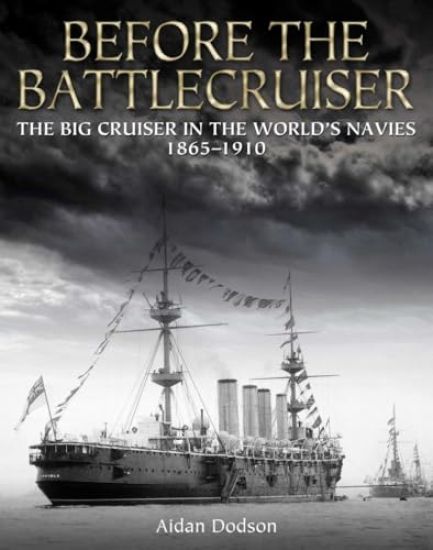
Before the Battlecruiser

Before the Battlecruiser

Aidan Dodson

PEN SWORD BOOKS LTD
2026
nidottu
The battlecruiser is perceived by many as the most glamorous of warships, remembered for its triumphs and tragedies in both world wars. Often forgotten are its lineal ancestors, the big cruisers that were constructed as capital ships for distant waters, as commerce raiders, and as fast scouts for the battlefleet during the last decades of the nineteenth century and the first years of the twentieth. In this new book by bestselling author Aidan Dobson, the 200 or so big cruisers that were built for the world’s navies from 1865 are described and analysed in detail. The type came into being in the 1860s when the French built a series of cruising ironclads to project its power in the Far East. Britain followed suit as did Russia. By the 1890s the general adoption of these fast, heavily-armed and moderately armoured vessels ushered in the golden age of the big cruiser. These great ships would go on to be key combatants in the Spanish-American and Russo-Japanese wars, the Japanese employing them within the battlefleet in a manner that heralded later battlecruiser tactics. In Britain, in reply to the launch of the big Russian Rurik in 1890, there was spawned the freakishly huge HMS Powerful and HMS Terrible, ships that underlined the public’s view of the glamour of the ‘great cruiser’. Indeed, the two ships’ cap-tallies became ubiquitous on the sailor suits of late Victorian British children. In some navies, particularly those of South American republics, the big cruiser became the true capital ship, while the Italians built the Giuseppe Garibaldi as a more affordable battleship. By the beginning of the twentieth century the type became yet bigger and guns approached battleship size; with HMS Invincible the British created what was, in 1912, officially dubbed the ‘battlecruiser’. Despite their growing obsolescence in the new century some had remarkably long careers in patrol and other subsidiary roles, the Argentine Garibaldi still sailing as a training ship in the 1950s. The design, development and operations of all these great vessels is told with the author’s usual attention to detail and depth of analysis and will delight naval enthusiasts and historians of the late nineteenth and early twentieth centuries.
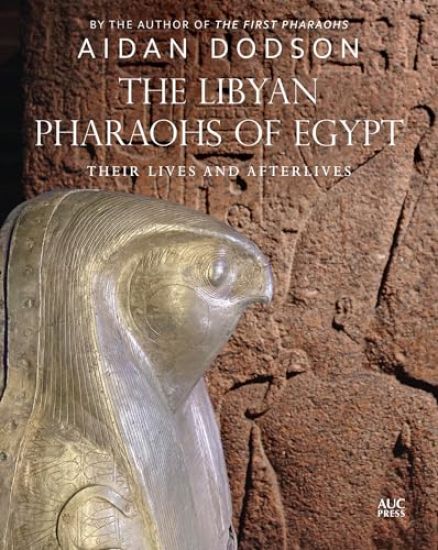
The Libyan Pharaohs of Egypt

The Libyan Pharaohs of Egypt

Aidan Dodson

AMERICAN UNIVERSITY IN CAIRO PRESS
2025
sidottu

Halvin toimitettuna 36,90 €

A comprehensive account of the Libyan pharaohs of Egypt, who ruled from the tenth through the seventh centuries BC, accessibly written by renowned Egyptologist Aidan DodsonDuring the tenth through the seventh centuries BC, Egypt was ruled by a series of pharaohs of Libyan ancestry, who ranged from Shoshenq I, conqueror of Jerusalem, to individuals so obscure that some may actually be spelling errors. The Libyans had hitherto been enemies of the Egyptians, with conflicts going back into the third millennium BC. Yet during the eleventh century we find Libyan names among members of Egyptian elite families, and early in the next century a pharaoh of Libyan descent ascended the Egyptian throne. There is no evidence of any violent take-over, so it appears likely that ongoing immigration and intermarriage with the Egyptian elites had brought a Libyan line to this point. Although the earlier Libyan pharaohs seem to have maintained the tradition of a unitary Egyptian state, as time went by, Libyan ideas of decentralized control became more prevalent. As a result, we find individuals holding both Libyan and Egyptian titles controlling distinct territories around Egypt, some of whom assumed the names and titles of a pharaoh. Conflict sometimes accompanied this process, with a long civil war fought for the control of southern Egypt and the great religious capital of Thebes. Some degree of central control was imposed with the advent of a further set of rulers from Nubia during the eight century, but a single Egyptian state would not be restored until the middle of the seventh century. The Libyan Pharaohs of Egypt reconstructs the story of this era, covering not only its complex political history, but also its monuments – both for the living and the dead—and its aftermath, including the rediscovery of its kings and monuments in modern times.
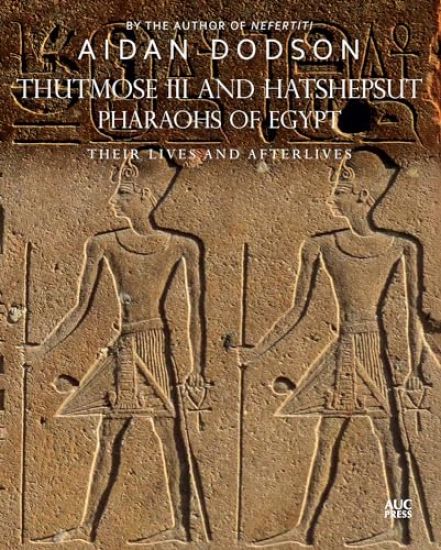
Thutmose III and Hatshepsut, Pharaohs of Egypt

Thutmose III and Hatshepsut, Pharaohs of Egypt

Aidan Dodson

AMERICAN UNIVERSITY IN CAIRO PRESS
2025
sidottu
"A veritable roadmap, not only to the complex issues surrounding their reigns, but also to the tale of their modern rediscovery. "—Stephen P. Harvey, Ahmose and Tetisheri Project, AbydosAn innovative account of the lives and times of the ‘warrior king’ Thutmose III, and the female pharaoh Hatshepsut, by renowned Egyptologist Aidan DodsonThutmose III and Hatshepsut are among the best-known figures in Egyptian history. Thutmose has been called the “Napoleon of ancient Egypt,” during whose reign Egypt’s armies penetrated deep into northern Syria and consolidated Egyptian dominion over much of Sudan. Hatshepsut, one of the handful of female pharaohs, also took to the battlefield, but is best known today for a great trading expedition, down the Red Sea coast to the mysterious land of Punt. At first, Hatshepsut served simply as regent for her young nephew-stepson Thutmose, but subsequently the two shared the throne of Egypt as co-pharaohs for over a decade. Later, as sole king, Thutmose devoted much of the rest of his life to military matters and large-scale building works, continuing the work of Hatshepsut that created much of the core of the great temple of Karnak. During the very last years of his life, Thutmose launched an attack on the memory of Hatshepsut, with most of her images destroyed. Yet, some four centuries later, Thutmose III and Hatshepsut were still remembered together as great figures of the past, whose conception of pharaonic kingship served as the model for later rulers, into the eighth century BC. This book, illustrated in full color, traces what we know about the lives and times of Thutmose and Hatshepsut, and the monuments they built to guarantee their afterlives. It then explores their posthumous reputations in ancient times, and ends with the story of how the two pharaohs emerged from the mists of time during the nineteenth century AD, to resume their places in history.
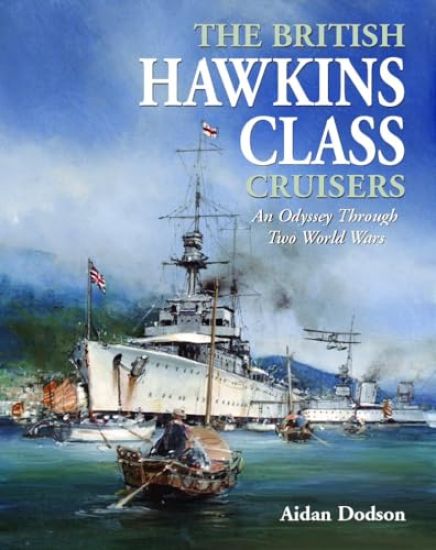
The British Hawkins Class Cruisers

The British Hawkins Class Cruisers

Aidan Dodson

PEN SWORD BOOKS LTD
2024
sidottu

Halvin toimitettuna 42,90 €

During the First World War, rumours of heavily-armed German raiders led to the building of the first ‘modern’ heavy cruisers by the Royal Navy. Named for famous Elizabethan seamen, they were very different from the lumbering armoured cruisers of the previous generation, and were enlarged developments of the highly successful light cruisers that had been built since the mid-1910s. As such, they provided the prototypes for the ‘Washington Treaty’ cruisers that dominated naval construction during the 1920s, with two of them also pioneering the use of the catapult for launching aircraft from cruisers. Completed too late to actively participate in the First World War, they would go on to have mixed fortunes, spending much of their careers as flagships, but also being sadly attracted to rocky reefs, in two cases with fatal results. One, Cavendish (later Vindictive), fulfilled a remarkable array of functions during her career: laid down as a cruiser, completing as an aircraft carrier, then reverting to a cruiser, to be further transformed into a dedicated cadet training ship, and finally a repair ship. Meanwhile Effingham underwent the most comprehensive rebuilding of any British cruiser of her era. Disarmed and nearly scrapped as a result of the London Naval Treaty, all the survivors nevertheless returned to serve during the Second World War in a range of roles, two gaining battle honours – albeit in one case fatally – during the Norwegian campaign, and Hawkins and Frobisher spending long years as deep-sea escorts in the South Atlantic and Indian Oceans, before being brought back to bombard the beaches of Normandy. The story of the Hawkins class therefore weaves strands that include the technical development of the cruiser in the UK and abroad, the early use of aircraft at sea, international naval diplomacy and treaty-making between the wars, the evolution of the cadet training regime in the Royal Navy, the way in which the vital southern and eastern trade routes were kept open, and the contribution of naval forces to the success of the invasion of Europe. With its detailed descriptions and analysis of the ships and their development, and the narratives of their careers, all tied together with a wide-ranging collection of photographs and line drawings, this new history of a distinguished Royal Navy cruiser class will delight naval historians and enthusiasts, ship modellers and all those who care to read about the exploits of the imperial navy in peace and war.
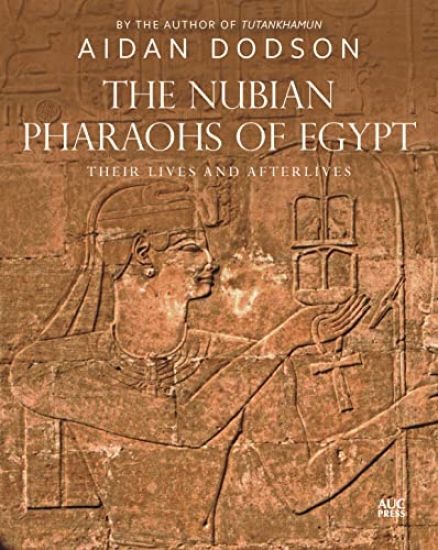
The Nubian Pharaohs of Egypt

The Nubian Pharaohs of Egypt

Aidan Dodson

AMERICAN UNIVERSITY IN CAIRO PRESS
2023
sidottu
An innovative account of the careers of the Nubians who occupied the Egyptian throne, written by a leading Egyptologist and author of Tutankhamun, King of EgyptThe region of Nubia—now spanning the modern border between Egypt and Sudan—was long a subject of Egyptian imperial domination by its ancient pharaohs. However, in the eighth century BC matters were suddenly reversed, when the kings of Kush, the ancient name for Nubia, became the overlords of Egypt for nearly a century, before being forced to withdraw in the face of Assyrian invasions. Yet the Kushite kingdom would endure back in its heartlands for another millennium, the heritage of its Egyptian sojourn still visible in its fields of pyramid-tombs. This authoritative yet accessible book tells the story of these Nubian pharaohs of Egypt, from the origins of their kingdom of Kush, through their time as rulers of Egypt, to their heritage in the heart of Sudan—and their rediscovery in modern times. The latter uncovers some very unsavory examples of the racist attitudes of some earlier scholars. These engendered enduringly negative attitudes to aspects of careers of the Nubian pharaohs that find little support in the actual surviving evidence. The latter includes a fascinating network of texts from not only Egypt and Sudan, but also Assyria and the Bible, reflecting the interactions and conflicts of the period. There are also the standing monuments of Nubian pharaohs, ranging from temples they built throughout their dominions, to their tombs: pyramids, constructed in their ancestral heartland, in which Nubian and Egyptian funerary customs were intriguingly entangled. Richly illustrated in full color throughout, this fascinating book by a leading Egyptologist will be essential reading for anyone interested in the lives and times of Egypt’s Nubian pharaohs.
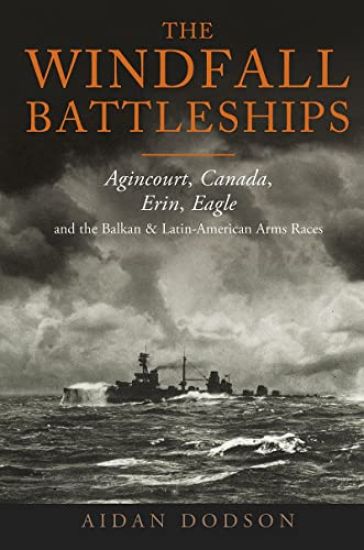
The Windfall Battleships

The Windfall Battleships

Aidan Dodson

PEN SWORD BOOKS LTD
2023
sidottu
This new book explores for the first time the full story of how two Turkish and two Chilean battleships became British capital ships after the outbreak of the First World War. Under construction by the shipbuilding giants of Armstrong and Vickers in August 1914, Sultan Osman I, Re?adiye, Almirante Latorre and Almirante Cochrane became HM Ships Agincourt, Erin, Canada and Eagle. The first three served with the Grand Fleet, fighting at Jutland, while the last was transformed into a pioneering aircraft carrier, which would serve with distinction until sunk while escorting a convoy to Malta in 1942\. While two of the other ships had short lives - cut short by the Washington Naval Treaty - the final ship, Almirante Latorre, would be returned to Chile after the war, for a continuing active career that would last into the 1950s. When finally towed away for scrap in 1959, she was the penultimate survivor of Jutland. Drawing on extensive archival research, the book begins with an overview of the warships under construction around Europe for foreign customers in August 1914, and how the four ships featured were acquired by the Royal Navy. It then looks at them as manifestations of the international rivalries which directed much of the national budgets of impecunious South American and Balkan states towards armaments. The focus then switches to the British service of the ships actually completed as battleships, and then to the story of the carrier. Although never finished as a battleship, she would play a crucial role in the development of British carrier aviation. Finally, the author traces the stories of the battleships of the Latin-American naval race from the 1920s down to the 1950s. The stories and back-stories of Agincourt, Erin, Canada and Eagle embrace almost the whole of the twentieth-century battleship era, and they take us down the byways of international naval power, ranging from the Pacific to the Black Sea, and from the line of battle to mutiny and revolution. A fascinating and original story.
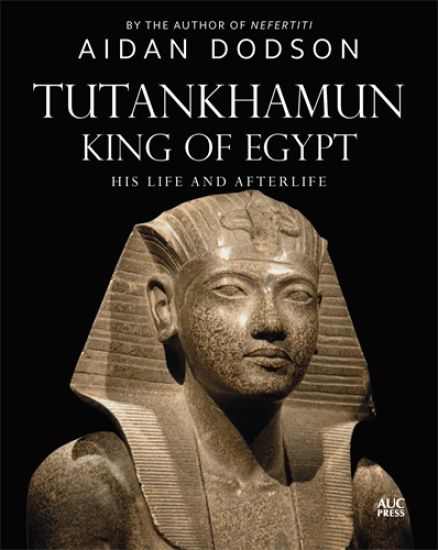
Tutankhamun, King of Egypt

Tutankhamun, King of Egypt

Aidan Dodson

AMERICAN UNIVERSITY IN CAIRO PRESS
2023
sidottu

Halvin toimitettuna 36,90 €

An innovative account of the life of Tutankhamun, the rediscovery of his existence, and the enduring impact of the finding of his tomb, by leading Egyptologist Aidan DodsonThe spectacular discovery of Tutankhamun’s tomb in 1922 has given him an afterlife that has all but eclipsed the young king’s real career. This authoritative yet accessible book tells the story of Tutankhamun, from his own lifetime in the fourteenth century BC, down to modern times. It explores the various theories as to his parentage, his role in the ‘counter-reformation’ that followed the religious revolution of Akhenaten, and his premature death. It also looks at the monuments built during the king’s reign, his key officials, and the arrangements made for his funeral. Moving forward in time, Tutankhamun, King of Egypt considers the way in which Tutankhamun was written out of official history. The story is then picked up again in the early nineteenth century AD when, with the first decipherment of hieroglyphs, Tutankhamun’s name could once again be read, and the problem of his place in history considered by Egyptologists. Aidan Dodson traces possible solutions through the decades as more and more data came to light, culminating in the discovery of the king’s tomb. Yet, dazzling as that discovery was, many matters regarding Tutankhamun remain obscure today, even with the aid of genetic data. Dodson also looks at how the discovery of Tutankhamun’s tomb brought about the first of many outbreaks of "Tut-mania," and explores some of its manifestations. Richly illustrated in full color throughout, this fascinating book by a leading Egyptologist will be essential reading for anyone interested in the life and enduring legacy of ancient Egypt’s most famous king.
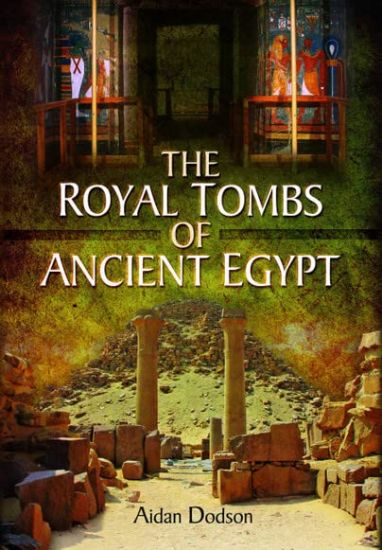
The Royal Tombs of Ancient Egypt

The Royal Tombs of Ancient Egypt

Aidan Dodson

PEN SWORD BOOKS LTD
2022
nidottu

Halvin toimitettuna 27,50 €

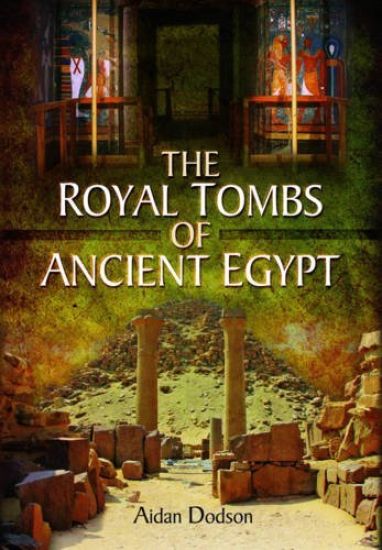
The royal tombs of ancient Egypt include some of the most stupendous monuments of all time, containing some of the greatest treasures to survive from the ancient world. This book is a history of the burial places of the rulers of Egypt from the very dawn of history down to the countrys absorption into the Roman Empire, three millennia later. During this time, the tombs ranged from mudbrick-lined pits in the desert, through pyramid-topped labyrinths to superbly-decorated galleries penetrating deep into the rock of the Valley of the Kings. The first book to embrace in detail the entire range of royal tombs, the present volume covers the full extent of royal funerary monuments, which comprised not only the actual burial place, but also the place where the worlds of the living and the dead came together in the temples built to provide for the dead pharaohs soul.
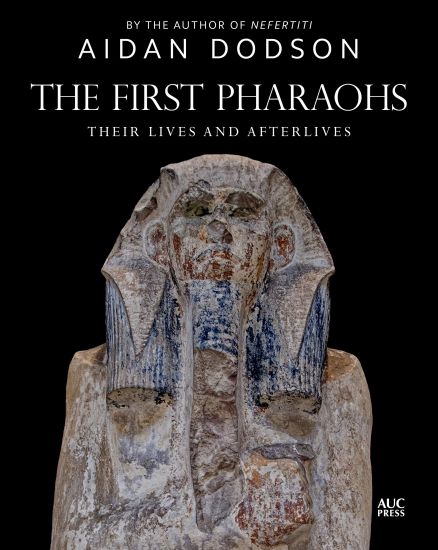
The First Pharaohs

The First Pharaohs

Aidan Dodson

AMERICAN UNIVERSITY IN CAIRO PRESS
2021
sidottu
A richly illustrated account of the rulers of the first three dynasties of the ancient Egyptian civilization, written by renowned Egyptologist Aidan DodsonThe five centuries that followed the unification of Egypt around 3100 BC—the first three dynasties—were crucial in the evolution of the Egyptian state. During this time all the key elements of the civilization that would endure for three millennia were put in place, centered on the semidivine king himself. The First Pharaohs: Their Lives and Afterlives looks at what we know about the two-dozen kings (and one queen-regent) who ruled Egypt during this formative era, from the scanty evidence for the events of their reigns, through to their surviving monuments. It also considers how they were remembered under their successors, when some of the earliest kings’ names were attributed to allegedly ancient ideas and events, and the ways in which some of their monuments became tourist attractions or were even wholly repurposed. Aidan Dodson recounts how two centuries of modern scholarship have allowed these rulers to emerge from an oblivion so total that some archaeologists had come to doubt their very existence outside the works of ancient chroniclers. Then, within a decade at the end of the nineteenth century, archaeological discoveries revealed a whole series of tombs and other monuments that not only confirmed these rulers’ existence, but also showcased the skills of Egyptian craftsmen at the dawn of history.
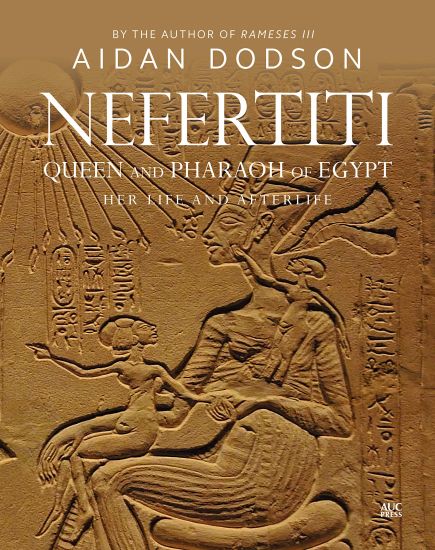
Nefertiti, Queen and Pharaoh of Egypt

Nefertiti, Queen and Pharaoh of Egypt

Aidan Dodson

The American University in Cairo Press
2020
sidottu
Nefertiti’s current world dominion as a cultural and artistic icon presents an interesting contrast with the way in which she was actively written out of history soon after her own death. This book explores what we can reconstruct of the life of the queen, tracing the way in which she and her image emerged in the wake of the first tentative decipherment of Egyptian hieroglyphs during the 1820s–1840s, and then took on the world over the next century and beyond. During the last half of the fourteenth century BC, Egypt was perhaps at the height of its prosperity. It was against this background that the 'Amarna Revolution' occurred. Throughout, its instigator, King Akhenaten, had at his side his Great Wife, Nefertiti. When a painted bust of the queen found at Amarna in 1912 was first revealed to the public in the 1920s, it soon became one of the great artistic icons of the world. Nefertiti's name and face are perhaps the best known of any royal woman of ancient Egypt and one of the best recognized figures of antiquity, but her image has come in many ways to overshadow the woman herself.
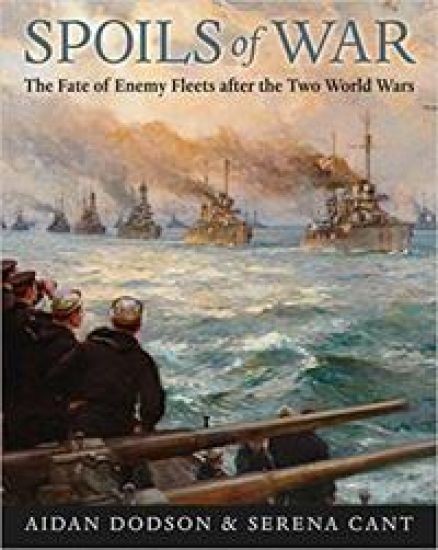
Spoils of War

Spoils of War

Aidan Dodson; Serena Cant

PenSword Books Ltd
2020
sidottu

Halvin toimitettuna 38,30 €

This new book traces the histories of navies and ships of the defeated powers from the months leading up to the relevant armistices or surrenders through to the final execution of the appropriate post-war settlements.
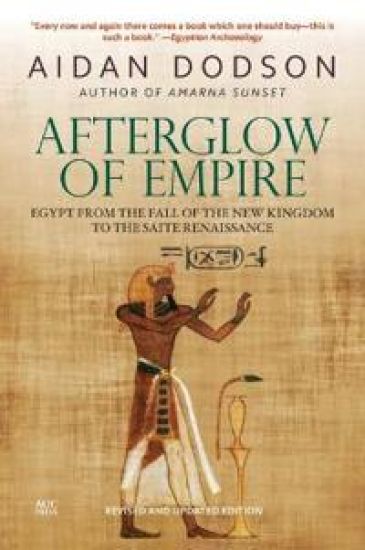
Afterglow of Empire

Afterglow of Empire

Aidan Dodson

The American University in Cairo Press
2020
nidottu
During the half-millennium from the eleventh through the sixth centuries BC, the power and the glory of the imperial pharaohs of the New Kingdom crumbled in the face of internal crises and external pressures, ultimately reversed by invaders from Nubia and consolidated by natives of the Nile Delta following a series of Assyrian invasions. Much of this era remains obscure, with little consensus among Egyptologists. Against this background, Aidan Dodson reconsiders the evidence and proposes a number of new solutions to the problems of the period. He also considers the era's art, architecture, and archaeology, including the royal tombs of Tanis, one of which yielded the intact burials of no fewer than five pharaohs. Afterglow of Empire is extensively illustrated with images of this material, much of which is little known to non-specialists.
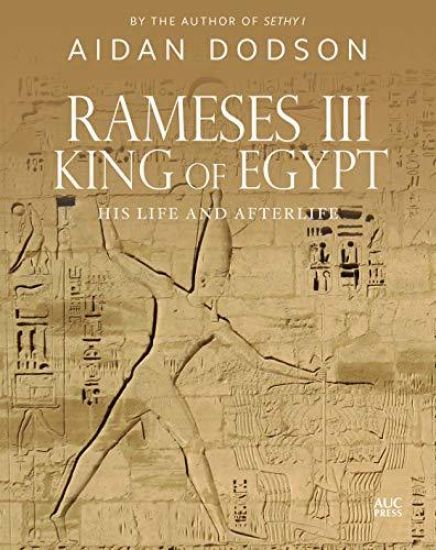
Rameses III, King of Egypt

Rameses III, King of Egypt

Aidan Dodson

The American University in Cairo Press
2019
sidottu
Rameses III—often dubbed the “last great pharaoh”—lived and ruled during the first half of the 12th-century bc, a tumultuous time that saw the almost complete overthrow of established order in the eastern Mediterranean, and among Rameses’s achievements was the preservation of Egypt as a nation-state in the face of external assault. However, his reign also saw economic challenges, and increasing dissatisfaction, which culminated in the king’s own assassination. This richly illustrated book is the latest in a series that aims to provide accounts of key figures in ancient Egyptian history that covers not only their life-stories but also their rediscovery and reception in modern times. Accordingly, it follows the king from his birth to his resurrection through modern research, describing the key events of the reign, his major monuments, and the people and events that led to these becoming once again known to the world.
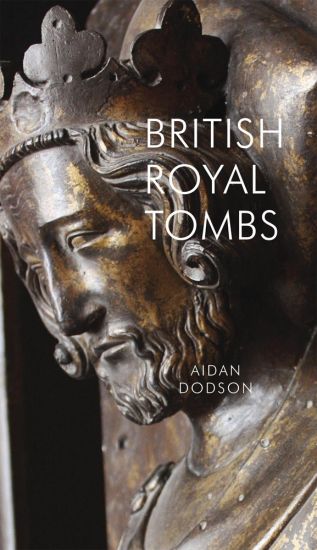
British Royal Tombs

British Royal Tombs

Aidan Dodson

Pallas Athene Arts
2018
nidottu
Aidan Dodson's British Royal Tombs covers all the burials of the kings, queens (and lords protector) of England, Scotland and the United Kingdom, from the occupant of the great Sutton Hoo ship burial, to George VI, last Emperor of India, including of course the long-lost Richard III. This fully revised edition of a book that became an immediate classic of its kind will be equally interesting to the interested visitor and the student. The career of each ruler is briefly described, followed by what is known about his or her burial arrangements and the subsequent history of the tomb and its contents. Each tomb is illustrated as far as possible by at least one photograph or drawing. The posthumous fate of royal spouses is also included, together with information on each of the cathedrals, churches, chapels and other structures that house or once housed royal tombs; there are detailed diagrams for the major sites. A list of monarchs, family trees and an extensive bibliography complete the book.
Sethy I, King of Egypt

Sethy I, King of Egypt

Aidan Dodson

The American University in Cairo Press
2018
sidottu
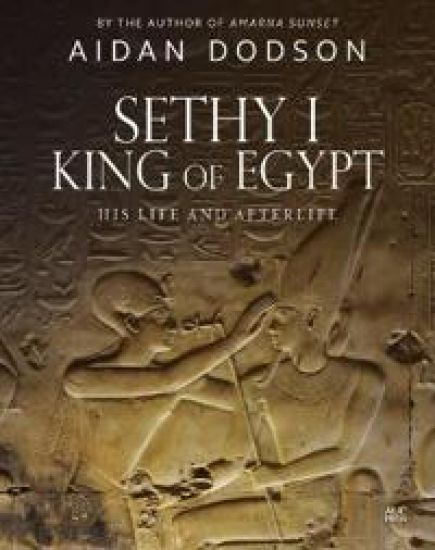
King Sethy I (also transcribed as Seti, Sethi and Sethos) ruled for around a decade in the early thirteenth century BC. His lifetime coincided with a crucial point in Egyptian history, following the ill-starred religious revolution of Akhenaten, and heralding the last phase of Egypt’s imperial splendor. As the second scion of a wholly new royal family, his reign did much to set the agenda for the coming decades, both at home and abroad. Sethy was also a great builder, apparently with exquisite artistic taste, to judge from the unique quality of the decoration of his celebrated monuments at Abydos and Thebes. This richly illustrated book tells the story of Sethy's career and monuments, not only in ancient times, but in modern history, and the impact of his legacy on today’s understanding and appreciation of ancient Egypt.
Royal Tombs of Ancient Egypt

Royal Tombs of Ancient Egypt

Aidan Dodson

Pen Sword Books Ltd
2016
sidottu
The royal tombs of ancient Egypt include some of the most stupendous monuments of all time, containing some of the greatest treasures to survive from the ancient world. This book is a history of the burial places of the rulers of Egypt from the very dawn of history down to the country's absorption into the Roman Empire, three millennia later. During this time, the tombs ranged from mudbrick-lined pits in the desert, through pyramid-topped labyrinths to superbly-decorated galleries penetrating deep into the rock of the Valley of the Kings. The first book to embrace in detail the entire range of royal tombs, the present volume covers the full extent of royal funerary monuments, which comprised not only the actual burial place, but also the place where the worlds of the living and the dead came together in the temples built to provide for the dead pharaoh's soul.