Kirjojen hintavertailu – 12 903 725 kirjaa ja 27 kauppaa
Kirjailija
Aimee Craft
Kirjat ja teokset yhdessä paikassa: 3 kirjaa, julkaisuja vuosilta 2013–2021, suosituimpiin kuuluu Breathing Life Into the Stone Fort Treaty. Vertaile teosten hintoja ja tarkista saatavuus suomalaisista kirjakaupoista.
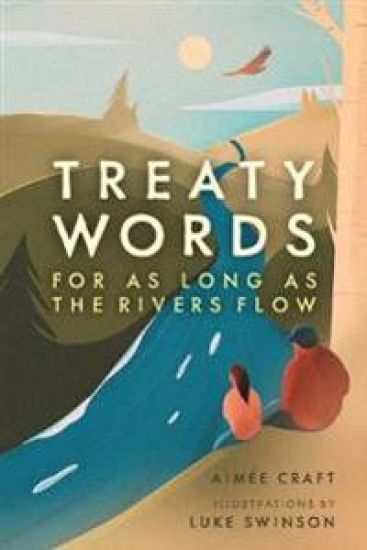
The first treaty that was made was between the earth and the sky. It was an agreement to work together. We build all of our treaties on that original treaty. On the banks of the river that have been Mishomis’s home his whole life, he teaches his granddaughter to listen—to hear both the sounds and the silences, and so to learn her place in Creation. Most importantly, he teaches her about treaties—the bonds of reciprocity and renewal that endure for as long as the sun shines, the grass grows, and the rivers flow. Accompanied by beautiful illustrations by Luke Swinson and an author’s note at the end, Aimée Craft affirms the importance of understanding an Indigenous perspective on treaties in this evocative book that is essential for readers of all ages.
It can start with a knock on the door one morning. It is the local Indian agent, or the parish priest, or, perhaps, a Mounted Police officer."" So began the school experience of many Indigenous children in Canada for more than a hundred years, and so begins the history of residential schools prepared by the Truth & Reconciliation Commission of Canada (TRC). Between 2008 and 2015, the TRC provided opportunities for individuals, families, and communities to share their experiences of residential schools and released several reports based on 7000 survivor statements and five million documents from government, churches, and schools, as well as a solid grounding in secondary sources. A Knock on the Door, published in collaboration with the National Research Centre for Truth & Reconciliation, gathers material from the several reports the TRC has produced to present the essential history and legacy of residential schools in a concise and accessible package that includes new materials to help inform and contextualize the journey to reconciliation that Canadians are now embarked upon. Survivor and former National Chief of the Assembly First Nations, Phil Fontaine, provides a Foreword, and an Afterword introduces the holdings and opportunities of the National Centre for Truth & Reconciliation, home to the archive of recordings, and documents collected by the TRC. As Aimée Craft writes in the Afterword, knowing the historical backdrop of residential schooling and its legacy is essential to the work of reconciliation. In the past, agents of the Canadian state knocked on the doors of Indigenous families to take the children to school. Now, the Survivors have shared their truths and knocked back. It is time for Canadians to open the door to mutual understanding, respect, and reconciliation.
In order to interpret and implement a treaty between the Crown and Canada's First Nations, we must look to its spirit and intent, and consider what was contemplated by the parties at the time the treaty was negotiated, argues Aimée Craft. Using a detailed analysis of Treaty One – today covering what is southern Manitoba – she illustrates how negotiations were defined by Anishinabe laws (inaakonigewin), which included the relationship to the land, the attendance of all jurisdictions' participants, and the rooting of the treaty relationship in kinship. While the focus of this book is on Treaty One, Anishinabe laws (inaakonigewin) defined the settler-Anishinabe relationship well before this, and the principles of interpretation apply equally to all treaties with First Nations.