Kirjojen hintavertailu – 12 903 725 kirjaa ja 27 kauppaa
Kirjailija
Air University Press
Kirjat ja teokset yhdessä paikassa: 17 kirjaa, julkaisuja vuosilta 2012–2016, suosituimpiin kuuluu Air University Style and Author Guide. Vertaile teosten hintoja ja tarkista saatavuus suomalaisista kirjakaupoista.
In this work, It will first develop a brief history of El Salvador. Next, It will describe thepolitical situation in El Salvador and its relation to American political assistance during the1980s war against the Marxist rebels. In the third section, It analyzes El Salvador's economyand American economic aid and show how it supported the counterinsurgency. It will thendiscuss the military situation in El Salvador and American military support in defeating theMarxist rebels. It will offer some concluding remarks showing how the Reagan policy helped toform a successful outcome to the war against the insurgents. Finally, It analyzes the lessonsfrom the war in El Salvador and apply them to today's war on terrorism.
The U. S. Air Force is said to be evolving into an Air and Space Force on its way to becoming a Space and Air Force. Part of this transition includes the possibility of deploying weapons in space. While much has been written about the need for weapons in space, or conversely the need to keep space as a sanctuary, little has been published about what space-based weapons can and cannot bring to the battlefield. A decision to put weapons in space, or to refrain from doing so, should be based on a firm foundation of knowledge about what the weapons can be expected to do. Numerous concepts have been advocated as natural evolutions of surface and airborne weapons; it is critical to examine how these orbital weapons compare with their terrestrial counterparts. This book evaluates the theoretical capabilities of orbital weapons and compares them to weapons already in existence and concepts proposed for development. The objective of this book is to provide insight into where future investments should be made if the United States is to protect its increasingly important space-based assets, and retain its position as a global leader able to project military power wherever necessary.
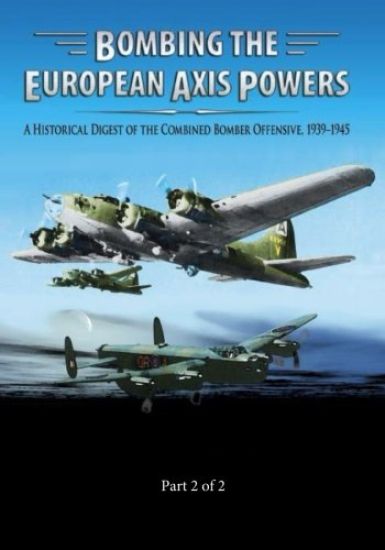
Part 2 of 2The theory of strategic air bombardment states that airpower is best used offensively to penetrate an enemy's home territory and disrupt or destroy the economy and means of war production to force the enemy to surrender. Strategic bombing will succeed either because it has fatally compromised the ability to carry on hostilities or because bombing has broken the will of the people and/or leadership to continue the fight. In World War II only multiengine bomber aircraft had the range, payload, and accuracy to accomplish this task. The strategic bombing theorists posited that destruction of the foe's means of production-by aiming bombs almost entirely at manufacturing, service, and distribution facilities-would quickly lead to the surrender of its armies at the front when, or even before, they exhausted the supplies remaining in their logistics system. This was the ideal result. If, for any number of reasons, that direction of attack proved impractical or insufficient, then strategic bombing theory suggested that an attack on the enemy's will to resist by applying force against the civilian population (i.e., bombing the enemy's principal population centers) might achieve the same end. In this study the author examines the employment of strategic bombers by and the target selection of the British Royal Air Force (RAF) and the US Army Air Forces (AAF) in their campaign against Germany in World War II. In doing so he provides readers with a statistical basis of analysis that will enable them to form their own judgment as to the validity of the theory of strategic bombing and the intentions of the Anglo-Americans in their use of it. At first it seemed that air bombardment offered a means of avoiding the slaughter of the First World War's trench fighting. However, Japanese bombing of Chinese cities in the Sino- Japanese War of the 1930s and Nationalist bombings of Republican cities in the Spanish Civil War appeared to have transferred the slaughter from both sides' frontline soldiers to the enemy's civilians on the home front, instead of lowering the overall human cost of modern warfare. For example, on 26 April 1937 (a market day), bombers of the German Condor Legion supporting the Spanish Nationalist forces led by Gen Francisco Franco attacked Guernica, a town of 7,000 people- a figure that apparently included refugees and those attending the local market. They dropped 40.5 tons of bombs on the undefended and totally unprepared municipality, killing between 200 and 1,650 people and wounding an additional 889. At the worst, this resulted in a ratio of dead to tons of bombs dropped of more than 40 to 1. Likewise, in March 1938, 42 tons of Italian bombs on the defended and prepared city of Barcelona purportedly resulted in more than 3,000 casualties. Most observers at the time seemed to overestimate the casualties of these attacks while failing to consider the general steadfastness of the population under bombardment. In the midst of the international furor over the bombing of the town of Guernica during the Spanish civil war, the plans committee of the British joint chiefs of staff predicted the possible effects of the first week of a German air offensive against Britain at 150,000 casualties. These figures were based on analysis of the German bombing of London in World War I. The perceptions of the general public, apparently based on a straight-line extrapolation of the Guernica casualties, rested on what would eventually prove, from later and much larger World War II experience, a statistical freak.
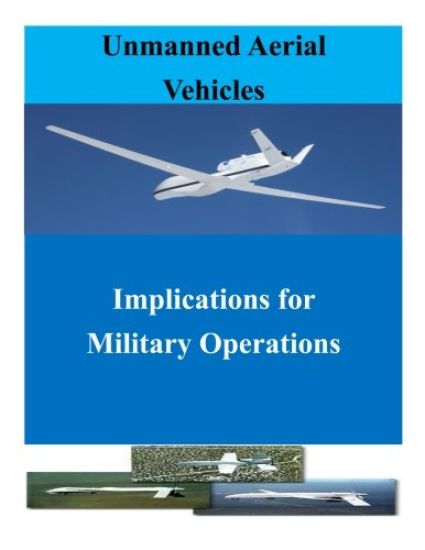
The development of uninhabited aerial vehicles (UAVs) could potentially revolutionize how military force is used in the future. While the early operational experiences with UAVs show great promise, their full range of capabilities is largely unknown. However, it is clear that these technologies will enable military forces to use aerospace power more efficiently, which means at lower cost and with less risk to the humans who pilot aircraft. The broader question is the wisdom of using unmanned aerial vehicles for employing lethal force, and in particular which air power missions are best accomplished by uninhabited, piloted, and autonomous vehicles. The corollary is to examine the essential roles of human pilots or operators in aerospace operations in the twenty-first century. Since it is common to draw distinctions between vehicles with an on-board pilot, vehicles with off-board operators, and autonomous vehicles, this study explores the essential role of pilots and contrasts it with the roles of remotely piloted and autonomous vehicles. The assumption is that piloted, remotely piloted, and autonomous vehicles have advantages and disadvantages in military operations, and that these vary in strategic significance for different levels of conflict. Since it is essential for the U. S. defense establishment to consider the strategic and technological implications of these types of aerial vehicles, this study is devoted to addressing the issues raised by the new generation of aerial vehicles.