Kirjojen hintavertailu – 12 903 725 kirjaa ja 27 kauppaa

Kirjailija

Aisha Khan

Kirjat ja teokset yhdessä paikassa: 29 kirjaa, julkaisuja vuosilta 1988–2024, suosituimpiin kuuluu Avicenna: Leading Physician and Philosopher-Scientist of the Islamic Golden Age. Vertaile teosten hintoja ja tarkista saatavuus suomalaisista kirjakaupoista.

29 kirjaa

Kirjojen julkaisuvuodet: 1988–2024.

Migliorare la scrittura descrittiva attraverso la modellazione a livello medio

Migliorare la scrittura descrittiva attraverso la modellazione a livello medio

Aisha Khan; Muhammad Usman Bajwa; Hira Beenish

International Book Market Service Ltd
2022
pokkari
Lo scopo di questo studio quello di sottolineare l'uso di istruzioni di modellazione nell'insegnamento, per migliorare l'abilit di scrittura descrittiva degli studenti. Lo studio stato progettato per determinare se tali abilit , praticate attraverso attivit di modellazione, servono come un modo per migliorare le abilit di scrittura descrittiva direzionale degli studenti. . Migliorare la scrittura descrittiva attraverso istruzioni di modellazione e indagare le capacit di osservazione degli studenti in classe lo scopo fondamentale di questo studio.
The Deepest Dye

The Deepest Dye

Aisha Khan

Harvard University Press
2021
sidottu
How colonial categories of race and religion together created identities and hierarchies that today are vehicles for multicultural nationalism and social critique in the Caribbean and its diasporas. When the British Empire abolished slavery, Caribbean sugar plantation owners faced a labor shortage. To solve the problem, they imported indentured “coolie” laborers, Hindus and a minority Muslim population from the Indian subcontinent. Indentureship continued from 1838 until its official end in 1917. The Deepest Dye begins on post-emancipation plantations in the West Indies—where Europeans, Indians, and Africans intermingled for work and worship—and ranges to present-day England, North America, and Trinidad, where colonial-era legacies endure in identities and hierarchies that still shape the post-independence Caribbean and its contemporary diasporas. Aisha Khan focuses on the contested religious practices of obeah and Hosay, which are racialized as “African” and “Indian” despite the diversity of their participants. Obeah, a catch-all Caribbean term for sub-Saharan healing and divination traditions, was associated in colonial society with magic, slave insurrection, and fraud. This led to anti-obeah laws, some of which still remain in place. Hosay developed in the West Indies from Indian commemorations of the Islamic mourning ritual of Muharram. Although it received certain legal protections, Hosay’s mass gatherings, processions, and mock battles provoked fears of economic disruption and labor unrest that led to criminalization by colonial powers. The proper observance of Hosay was debated among some historical Muslim communities and continues to be debated now. In a nuanced study of these two practices, Aisha Khan sheds light on power dynamics through religious and racial identities formed in the context of colonialism in the Atlantic world, and shows how today these identities reiterate inequalities as well as reinforce demands for justice and recognition.
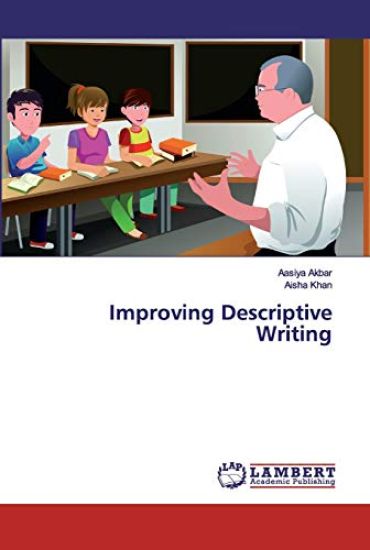
Improving Descriptive Writing

Improving Descriptive Writing

Aasiya Akbar; Aisha Khan

LAP Lambert Academic Publishing
2019
pokkari
The purpose of this study is to emphasize the use of modeling instructions in teaching, for improving descriptive writing skill of students. The study is designed to determine if such skills, practiced through modeling activities, serve as a way to improve students' descriptive directional writing skills. . Improving descriptive writing through modeling instructions and investigating students' observational skills in the classroom is the basic purpose of this study.
Avicenna: Leading Physician and Philosopher-Scientist of the Islamic Golden Age
Known as the "prince of physicians," Avicenna made enormous contributions to the fields of medicine, natural history, metaphysics, and religion. His use of Aristotelian logic and his work on the concept of "being" opened the door for a rationalist study of religion, influencing the later Christian philosophers Aquinas, Descartes, and Kant. Avicenna's monumental Canon of Medicine is regarded as possibly the greatest medical work ever. Available in a Latin translation in Europe one hundred years after his death, it continued to be used there for the next six centuries.
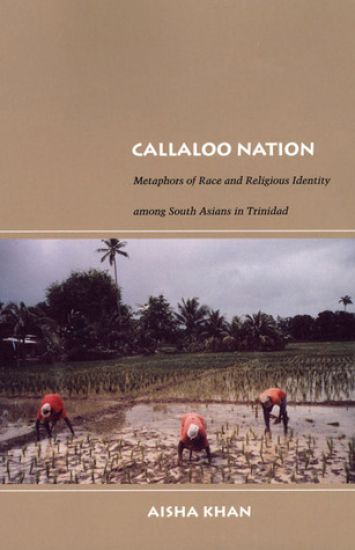
Callaloo Nation

Callaloo Nation

Aisha Khan

Duke University Press
2004
pokkari
Mixing-whether referred to as mestizaje, callaloo, hybridity, creolization, or multiculturalism-is a foundational cultural trope in Caribbean and Latin American societies. Historically entwined with colonial, anticolonial, and democratic ideologies, ideas about mixing are powerful forces in the ways identities are interpreted and evaluated. As Aisha Khan shows in this ethnography, they reveal the tension that exists between identity as a source of equality and identity as an instrument through which social and cultural hierarchies are reinforced. Focusing on the Indian diaspora in the Caribbean, Khan examines this paradox as it is expressed in key dimensions of Hindu and Muslim cultural history and social relationships in southern Trinidad. In vivid detail, she describes how disempowered communities create livable conditions for themselves while participating in a broader culture that both celebrates and denies difference. Khan combines ethnographic research she conducted in Trinidad over the course of a decade with extensive archival research to explore how Hindu and Muslim Indo-Trinidadians interpret authority, generational tensions, and the transformations of Indian culture in the Caribbean through metaphors of mixing. She demonstrates how ambivalence about the desirability of a callaloo nation-a multicultural society-is manifest around practices and issues, including rituals, labor, intermarriage, and class mobility. Khan maintains that metaphors of mixing are pervasive and worth paying attention to: the assumptions and concerns they communicate are key to unraveling who Indo-Trinidadians imagine themselves to be and how identities such as race and religion shape and are shaped by the politics of multiculturalism.
Callaloo Nation

Callaloo Nation

Aisha Khan

Duke University Press
2004
sidottu
Mixing-whether referred to as mestizaje, callaloo, hybridity, creolization, or multiculturalism-is a foundational cultural trope in Caribbean and Latin American societies. Historically entwined with colonial, anticolonial, and democratic ideologies, ideas about mixing are powerful forces in the ways identities are interpreted and evaluated. As Aisha Khan shows in this ethnography, they reveal the tension that exists between identity as a source of equality and identity as an instrument through which social and cultural hierarchies are reinforced. Focusing on the Indian diaspora in the Caribbean, Khan examines this paradox as it is expressed in key dimensions of Hindu and Muslim cultural history and social relationships in southern Trinidad. In vivid detail, she describes how disempowered communities create livable conditions for themselves while participating in a broader culture that both celebrates and denies difference. Khan combines ethnographic research she conducted in Trinidad over the course of a decade with extensive archival research to explore how Hindu and Muslim Indo-Trinidadians interpret authority, generational tensions, and the transformations of Indian culture in the Caribbean through metaphors of mixing. She demonstrates how ambivalence about the desirability of a callaloo nation-a multicultural society-is manifest around practices and issues, including rituals, labor, intermarriage, and class mobility. Khan maintains that metaphors of mixing are pervasive and worth paying attention to: the assumptions and concerns they communicate are key to unraveling who Indo-Trinidadians imagine themselves to be and how identities such as race and religion shape and are shaped by the politics of multiculturalism.
Women Anthropologists

Women Anthropologists

Ute Gacs; Aisha Khan; Jerrie Mcintyre; Ruth Weinberg

Greenwood Press
1988
sidottu
A welcome resource and reference biographical dictionary that took five years to produce and is aimed at both graduate and undergraduate students in anthropology, history, and sociology. Each chapter is a brief autobiography that portrays the professional and personal lives--the triumphs and tribulations--of the brave, committed, first- and second-generation pioneers. . . . Well organized with useful appendixes, indexes, and references. Choice These concise biographies of a wide and interesting sample of women anthropologists make a valuable addition to the growing field of history of anthropology. As the editors point out, the careers of these women illuminate, usually by contrast, the factors that shaped the discipline of anthropology in its first century. The editors also note that these women's careers show far more `applied' and `popular' work than characterizes the careers of most prominent men anthropologists, and this difference calls into question the values implicit in much mainstream anthropology, implicit values often at odds with professed values. Alice B. Kehoe, Marquette University