Kirjojen hintavertailu – 12 903 725 kirjaa ja 27 kauppaa

Kirjailija

Aishath Muneeza

Kirjat ja teokset yhdessä paikassa: 9 kirjaa, julkaisuja vuosilta 2022–2025, suosituimpiin kuuluu Islamic Finance in Africa. Vertaile teosten hintoja ja tarkista saatavuus suomalaisista kirjakaupoista.

9 kirjaa

Kirjojen julkaisuvuodet: 2022–2025.

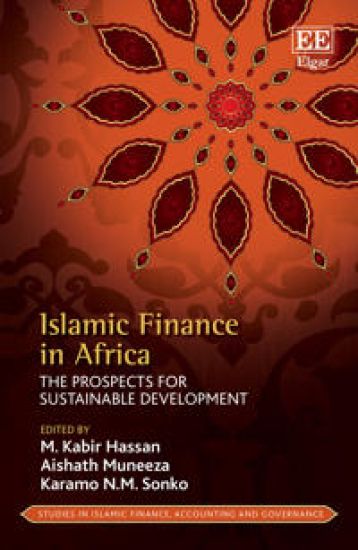
Islamic Finance in Africa

Islamic Finance in Africa

M. K. Hassan; Aishath Muneeza; Karamo N.m. Sonko

EDWARD ELGAR PUBLISHING LTD
2022
sidottu
Islamic Finance in Africa discusses the progress, issues and innovations in African Islamic financial markets. It provides a comprehensive overview of Islamic finance in Africa by exploring legal, regulatory and governance challenges while balancing the issues and innovations found in both Islamic commercial and social finance.

Islamic Social Finance

Islamic Social Finance

Sherin Kunhibava; Aishath Muneeza; Maryam Binti Khalid; Zakariya Mustapha; Thong Ming Sen

SPRINGER VERLAG, SINGAPORE
2025
nidottu
This book addresses the growing significance of Islamic social finance as an alternative and sustainable financing approach in the world. With a focus on Malaysia, a global leader in Islamic banking and finance, the topics covered fills the gap in the extant research by providing in-depth coverage of the legal framework surrounding Islamic social finance. Written with students, researchers, and policymakers in mind, it explores the unique features and principles of Islamic social finance, which aims to achieve social objectives alongside financial returns. By examining real-life case studies and digital examples, readers will gain valuable insights into the practical application of Islamic social finance principles. Each chapter concludes with self-review questions, allowing students to assess their understanding and consolidate their knowledge. This book serves as a valuable resource for academics, researchers, and practitioners seeking to explore and implement Islamic social finance principles. With its comprehensive coverage and practical insights, it will will play a crucial role in promoting the understanding and adoption of Islamic social finance for sustainable development.
Islamic Finance and Sustainable Development

Islamic Finance and Sustainable Development

M. Kabir Hassan; Aishath Muneeza; Rashedul Hasan

Cambridge University Press
2025
sidottu
Islamic finance is rooted in Shariah or Islamic law, which promotes the well-being of humanity and discourages harmful practices. This Element highlights the nexus between Islamic finance and sustainable development, emphasizing the ethical and socially responsible nature of Islamic finance. It discusses how Islamic financial institutions contribute to sustainable development through the achievement of Sustainable Development Goals , Environmental, Social, and Governance criteria, and Socially Responsible Investment practices. Case studies from different parts of the world demonstrate practical applications of Islamic finance principles in supporting SDG. It suggests reforms that can unlock the full potential of Islamic finance, including the institutionalization of Islamic social finance, convergence with commercial finance, leveraging technology, integrating Shariah-based financial products, considering social return as a benchmark for approving products, introducing blended finance, and collaborating with humanitarian agencies. The potential of Islamic finance for sustainable development provides valuable insights for academicians, practitioners, and policymakers.
Islamic Finance and Sustainable Development

Islamic Finance and Sustainable Development

M. Kabir Hassan; Aishath Muneeza; Rashedul Hasan

Cambridge University Press
2025
pokkari
Islamic finance is rooted in Shariah or Islamic law, which promotes the well-being of humanity and discourages harmful practices. This Element highlights the nexus between Islamic finance and sustainable development, emphasizing the ethical and socially responsible nature of Islamic finance. It discusses how Islamic financial institutions contribute to sustainable development through the achievement of Sustainable Development Goals , Environmental, Social, and Governance criteria, and Socially Responsible Investment practices. Case studies from different parts of the world demonstrate practical applications of Islamic finance principles in supporting SDG. It suggests reforms that can unlock the full potential of Islamic finance, including the institutionalization of Islamic social finance, convergence with commercial finance, leveraging technology, integrating Shariah-based financial products, considering social return as a benchmark for approving products, introducing blended finance, and collaborating with humanitarian agencies. The potential of Islamic finance for sustainable development provides valuable insights for academicians, practitioners, and policymakers.
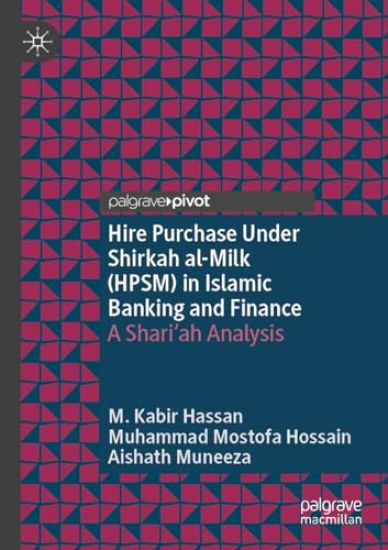
Hire Purchase Under Shirkah al-Milk (HPSM) in Islamic Banking and Finance

Hire Purchase Under Shirkah al-Milk (HPSM) in Islamic Banking and Finance

M. Kabir Hassan; Muhammad Mostofa Hossain; Aishath Muneeza

Springer International Publishing AG
2025
nidottu
HPSM is a modern financial contract that comprises shirkah (partnership), ijarah (lease), and sale contracts. In the HPSM contract, ownership of the asset is jointly held by the bank and the client. The client makes regular instalments. During the contract, the client is granted to use the asset as long as he meets specific conditions. Upon the completion of all instalments, the asset becomes the property of the client. This book seeks to shed light on the fundamental concept of HPSM, including the policies, regulations, and subsidiary contracts that play a vital role in its practical application. It provides a thorough exploration of the documentation and accounting procedures, while also addressing potential Shari’ah-related issues in HPSM, and will be of potential interest to students, researchers, policymakers and practitioners, offering a comprehensive understanding of how HPSM is applied within the Islamic finance industry.
Islamic Social Finance

Islamic Social Finance

Sherin Kunhibava; Aishath Muneeza; Maryam Binti Khalid; Zakariya Mustapha; Thong Ming Sen

SPRINGER VERLAG, SINGAPORE
2024
sidottu
This book addresses the growing significance of Islamic social finance as an alternative and sustainable financing approach in the world. With a focus on Malaysia, a global leader in Islamic banking and finance, the topics covered fills the gap in the extant research by providing in-depth coverage of the legal framework surrounding Islamic social finance. Written with students, researchers, and policymakers in mind, it explores the unique features and principles of Islamic social finance, which aims to achieve social objectives alongside financial returns. By examining real-life case studies and digital examples, readers will gain valuable insights into the practical application of Islamic social finance principles. Each chapter concludes with self-review questions, allowing students to assess their understanding and consolidate their knowledge. This book serves as a valuable resource for academics, researchers, and practitioners seeking to explore and implement Islamic social finance principles. With its comprehensive coverage and practical insights, it will will play a crucial role in promoting the understanding and adoption of Islamic social finance for sustainable development.
Application Of Zakat: From Classical And Contemporary Perspective

Application Of Zakat: From Classical And Contemporary Perspective

M Kabir Hassan; Magda Ismail Abdel Mohsin; Aishath Muneeza

WORLD SCIENTIFIC PUBLISHING CO PTE LTD
2024
sidottu
Zakat, being the third pillar of Islam, is an act of worship fulfilled by Muslims. As an obligatory means of alms- giving expected of Muslims, it also helps to alleviate poverty in society by assisting such individuals to achieve a state of financial independence. It is maintained by Muslims that the principles of zakat derived from the Sharia are expected to remain unchanged with passing time. However, in order to achieve efficiency in the administration of zakat, innovation and technology can be used even within the parameters of Sharia. The objective of this textbook is to provide the opportunity to learn the basics of zakat and its contemporary application by highlighting the innovative practices of zakat with issues and challenges.
Hire Purchase Under Shirkah al-Milk (HPSM) in Islamic Banking and Finance

Hire Purchase Under Shirkah al-Milk (HPSM) in Islamic Banking and Finance

M. Kabir Hassan; Muhammad Mostofa Hossain; Aishath Muneeza

Springer International Publishing AG
2024
sidottu
HPSM is a modern financial contract that comprises shirkah (partnership), ijarah (lease), and sale contracts. In the HPSM contract, ownership of the asset is jointly held by the bank and the client. The client makes regular instalments. During the contract, the client is granted to use the asset as long as he meets specific conditions. Upon the completion of all instalments, the asset becomes the property of the client. This book seeks to shed light on the fundamental concept of HPSM, including the policies, regulations, and subsidiary contracts that play a vital role in its practical application. It provides a thorough exploration of the documentation and accounting procedures, while also addressing potential Shari’ah-related issues in HPSM, and will be of potential interest to students, researchers, policymakers and practitioners, offering a comprehensive understanding of how HPSM is applied within the Islamic finance industry.
COVID-19 and Islamic Finance

COVID-19 and Islamic Finance

M. Kabir Hassan; Aishath Muneeza

Cambridge University Press
2022
pokkari
The objective of this Element is to provide an overview of Islamic finance by highlighting the impact of the pandemic on it in a comprehensive manner by looking at two branches of Islamic finance: Islamic commercial finance; and Islamic social finance. The approach that is adopted in this Element is to first provide an overview of Islamic finance to the readers in a simple and easy manner followed by the impact of pandemic discussed separately for both types of Islamic finance. Last, but not least, the Element also recommends ways in which Islamic finance could be further improved in the light of the lessons learnt from the pandemic. It is anticipated that the recommendations made in this regard would assist policymakers, practitioners, researchers and other stakeholders of Islamic finance to understand the way to unlock the full potential of Islamic finance to reduce the wealth gap and achieve financial inclusion.