
Kirjojen hintavertailu – 12 859 818 kirjaa ja 27 kauppaa

Kirjailija

Aiysha Varraich

Kirjat ja teokset yhdessä paikassa: 2 kirjaa, julkaisuja vuodelta 2017, suosituimpiin kuuluu Making Sense of Corruption. Vertaile teosten hintoja ja tarkista saatavuus suomalaisista kirjakaupoista.

2 kirjaa

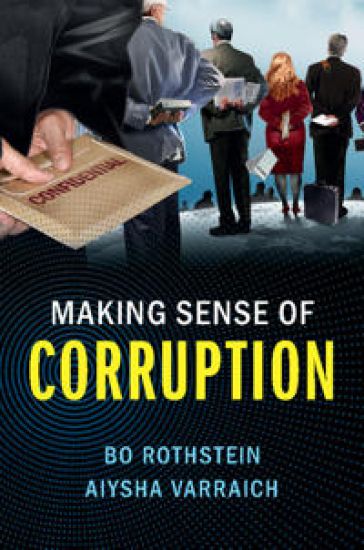
Making Sense of Corruption

Making Sense of Corruption

Bo Rothstein; Aiysha Varraich

Cambridge University Press
2017
sidottu
Corruption is a serious threat to prosperity, democracy and human well-being, with mounting empirical evidence highlighting its detrimental effects on society. Yet defining this threat has resulted in profound disagreement, producing a multidimensional concept. Tackling this important and provocative topic, the authors provide an accessible and systematic analysis of how our understanding of corruption has evolved. They identify gaps in the research and make connections between related concepts such as clientelism, patronage, patrimonialism, particularism and state capture. A fundamental issue discussed is how the opposite of corruption should be defined. By arguing for the possibility of a universal understanding of corruption, and specifically what corruption is not, an innovative solution to this problem is presented. This book provides an accessible overview of corruption, allowing scholars and students alike to see the far reaching place it has within academic research.
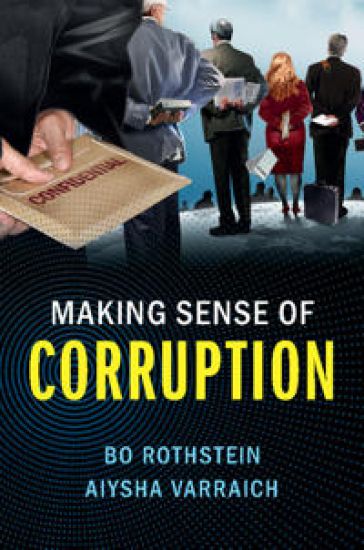
Making Sense of Corruption

Making Sense of Corruption

Bo Rothstein; Aiysha Varraich

Cambridge University Press
2017
pokkari

Halvin toimitettuna 29,50 €

Corruption is a serious threat to prosperity, democracy and human well-being, with mounting empirical evidence highlighting its detrimental effects on society. Yet defining this threat has resulted in profound disagreement, producing a multidimensional concept. Tackling this important and provocative topic, the authors provide an accessible and systematic analysis of how our understanding of corruption has evolved. They identify gaps in the research and make connections between related concepts such as clientelism, patronage, patrimonialism, particularism and state capture. A fundamental issue discussed is how the opposite of corruption should be defined. By arguing for the possibility of a universal understanding of corruption, and specifically what corruption is not, an innovative solution to this problem is presented. This book provides an accessible overview of corruption, allowing scholars and students alike to see the far reaching place it has within academic research.