Kirjojen hintavertailu – 12 859 829 kirjaa ja 27 kauppaa
Kirjailija
Ajay Agrawal
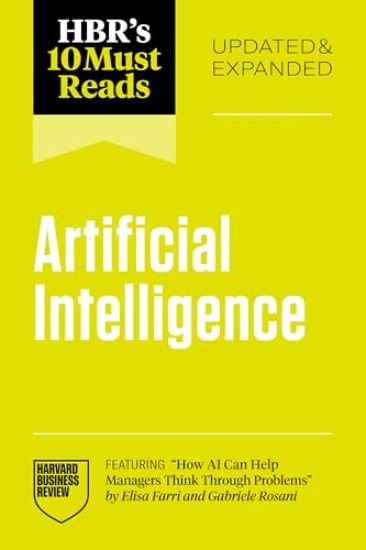
Kirjat ja teokset yhdessä paikassa: 9 kirjaa, julkaisuja vuosilta 2018–2026, suosituimpiin kuuluu HBR's 10 Must Reads on Artificial Intelligence, Updated and Expanded (featuring "How AI Can Help Managers Think Through Problems" by Elisa Farri and Gabriele Rosani). Vertaile teosten hintoja ja tarkista saatavuus suomalaisista kirjakaupoista.
How to stay ahead in a world transformed by AI. If you read nothing else on artificial intelligence, read this book. We've chosen a new selection of current and classic Harvard Business Review articles that will help you make sense of the evolving generative AI landscape, manage regulation and risk, and develop a strategy that keeps pace with technological change. This book will inspire you to: Help your people and technology work better together Redesign roles, workflows, and capabilities Keep your AI projects on track Address gen AI's quality control and waste problems Harness the potential of agentic AI Embed AI in the core of your business This collection of articles includes "For Success with AI, Bring Everyone on Board," by David De Cremer; "Bring Human Values to AI," by Jacob Abernethy, Francois Candelon, Theodoros Evgeniou, Abhishek Gupta, and Yves Lostanlen; "From Prediction to Transformation," by Ajay Agrawal, Joshua Gans, and Avi Goldfarb; "How AI Can Help Managers Think Through Problems," by Elisa Farri and Gabriele Rosani; "The Gen AI Playbook for Organizations," by Bharat N. Anand and Andy Wu; "Agentic AI Is Already Changing the Workforce," by Jen Stave, Ryan Kurt, and John Winsor; "Keep Your AI Projects on Track," by Iavor Bojinov; "How to Marry Process Management and AI," by Thomas H. Davenport and Thomas C. Redman; "The Hidden Penalty of Using AI at Work," by Oguz A. Acar, Phyliss Jia Gai, Yanping Tu, and Jiayi Hou; "Heavy Machinery Meets AI," by Vijay Govindarajan and Venkat Venkatraman; "AI Is Changing the Structure of Consulting Firms," by David S. Duncan, Tyler Anderson, and Jeffrey Saviano; "Stop Running So Many AI Pilots," by Goutam Challagalla, Mahwesh Khan, and Fabrice Beaulieu; "Addressing Gen AI's Quality-Control Problem," by Stefan Thomke, Philipp Eisenhauer, and Puneet Sahni; "AI's Growing Waste Problem—and How to Solve It," by Samsurin Welch, Khaled Soufani, and Eva Morales; and "Don't Let an AI Failure Harm Your Brand," by Julian De Freitas. HBR's 10 Must Reads are definitive collections of classic ideas, practical advice, and essential thinking from the pages of Harvard Business Review. Exploring topics like disruptive innovation, emotional intelligence, and new technology in our ever-evolving world, these books empower any leader to make bold decisions and inspire others. This Updated and Expanded edition features new, breakthrough articles, additional short-form pieces, and a detailed discussion guide to give you and your team the tools you need for sustained success.
"Dhundh Me Safar" एक प्रेरणादायक हिंदी उपन्यास है, जिसे लेखक अजय अग्रवाल ने संवेदनशीलता और यथार्थ के अद्भुत संतुलन से रचा है। यह कहानी केवल एक व्यक्ति की नहीं, बल्कि उन सभी सपने देखने वालों की है जो जीवन की धुंध में अपने मार्ग को खोजने का साहस रखते हैं। पुस्तक का नायक कठिन परिस्थितियों, सामाजिक विरोधों और नैतिक दुविधाओं के बीच अपने आदर्शों पर अडिग रहते हुए आगे बढ़ने की प्रेरणा देता है। लेखक ने मानवीय भावनाओं, राजनीति और समाज की जटिलताओं को बड़ी बारीकी से उकेरा है। पात्रों की सजीवता, संवादों की गहराई और घटनाओं का प्रवाह पाठक को आरंभ से अंत तक बाँधे रखता है। यह उपन्यास केवल संघर्ष की नहीं, बल्कि आत्मबल, ईमानदारी और मानवीयता की विजय की कहानी है। "धुंध में सफर" जीवन के उन क्षणों को सामने लाती है जब इंसान को अपने ही निर्णयों के बीच सच्चे मार्ग का चयन करना पड़ता है। यह पुस्तक पाठक को यह सोचने पर विवश करती है कि सच्चाई की राह भले कठिन हो, पर अंततः वही संतोष और शांति देती है। आधुनिक भारत के सामाजिक परिवेश, मानवीय मूल्यों और नैतिक पुनर्जागरण को दर्शाती यह कृति हर उस पाठक के लिए है जो साहित्य में प्रेरणा, संघर्ष और जीवन की सच्चाई तलाशता है।
The next generation of AI is here—use it to lead your business forward. If you read nothing else on artificial intelligence and machine learning, read these 10 articles. We've combed through hundreds of Harvard Business Review articles and selected the most important ones to help you understand the future direction of AI, bring your AI initiatives to scale, and use AI to transform your organization. This book will inspire you to: Create a new AI strategy Learn to work with intelligent robots Get more from your marketing AI Be ready for ethical and regulatory challenges Understand how generative AI is game changing Stop tinkering with AI and go all in This collection of articles includes "Competing in the Age of AI," by Marco Iansiti and Karim R. Lakhani; "How to Win with Machine Learning," by Ajay Agrawal, Joshua Gans, and Avi Goldfarb; "Developing a Digital Mindset," by Tsedal Neeley and Paul Leonardi; "Learning to Work with Intelligent Machines," by Matt Beane; "Getting AI to Scale," by Tim Fountaine, Brian McCarthy, and Tamim Saleh; "Why You Aren't Getting More from Your Marketing AI," by Eva Ascarza, Michael Ross, and Bruce G. S. Hardie; "The Pitfalls of Pricing Algorithms," by Marco Bertini and Oded Koenigsberg; "A Smarter Strategy for Using Robots," by Ben Armstrong and Julie Shah; "Why You Need an AI Ethics Committee," by Reid Blackman; "Robots Need Us More Than We Need Them," by H. James Wilson and Paul R. Daugherty; "Stop Tinkering with AI," by Thomas H. Davenport and Nitin Mittal; and "ChatGPT Is a Tipping Point for AI," by Ethan Mollick. HBR's 10 Must Reads paperback series is the definitive collection of books for new and experienced leaders alike. Leaders looking for the inspiration that big ideas provide, both to accelerate their own growth and that of their companies, should look no further. HBR's 10 Must Reads series focuses on the core topics that every ambitious manager needs to know: leadership, strategy, change, managing people, and managing yourself. Harvard Business Review has sorted through hundreds of articles and selected only the most essential reading on each topic. Each title includes timeless advice that will be relevant regardless of an ever-changing business environment.
The next generation of AI is here—use it to lead your business forward. If you read nothing else on artificial intelligence and machine learning, read these 10 articles. We've combed through hundreds of Harvard Business Review articles and selected the most important ones to help you understand the future direction of AI, bring your AI initiatives to scale, and use AI to transform your organization. This book will inspire you to:Create a new AI strategyLearn to work with intelligent robotsGet more from your marketing AIBe ready for ethical and regulatory challengesUnderstand how generative AI is game changingStop tinkering with AI and go all inThis collection of articles includes "Competing in the Age of AI," by Marco Iansiti and Karim R. Lakhani; "How to Win with Machine Learning," by Ajay Agrawal, Joshua Gans, and Avi Goldfarb; "Developing a Digital Mindset," by Tsedal Neeley and Paul Leonardi; "Learning to Work with Intelligent Machines," by Matt Beane; "Getting AI to Scale," by Tim Fountaine, Brian McCarthy, and Tamim Saleh; "Why You Aren't Getting More from Your Marketing AI," by Eva Ascarza, Michael Ross, and Bruce G. S. Hardie; "The Pitfalls of Pricing Algorithms," by Marco Bertini and Oded Koenigsberg; "A Smarter Strategy for Using Robots," by Ben Armstrong and Julie Shah; "Why You Need an AI Ethics Committee," by Reid Blackman; "Robots Need Us More Than We Need Them," by H. James Wilson and Paul R. Daugherty; "Stop Tinkering with AI," by Thomas H. Davenport and Nitin Mittal; and "ChatGPT Is a Tipping Point for AI," by Ethan Mollick. HBR's 10 Must Reads paperback series is the definitive collection of books for new and experienced leaders alike. Leaders looking for the inspiration that big ideas provide, both to accelerate their own growth and that of their companies, should look no further. HBR's 10 Must Reads series focuses on the core topics that every ambitious manager needs to know: leadership, strategy, change, managing people, and managing yourself. Harvard Business Review has sorted through hundreds of articles and selected only the most essential reading on each topic. Each title includes timeless advice that will be relevant regardless of an ever-changing business environment.
Disruption resulting from the proliferation of AI is coming. The authors of the bestselling Prediction Machines can help you prepare. Artificial intelligence (AI) has impacted many industries around the world—banking and finance, pharmaceuticals, automotive, medical technology, manufacturing, and retail. But it has only just begun its odyssey toward cheaper, better, and faster predictions that drive strategic business decisions. When prediction is taken to the max, industries transform, and with such transformation comes disruption. What is at the root of this? In their bestselling first book, Prediction Machines, eminent economists Ajay Agrawal, Joshua Gans, and Avi Goldfarb explained the simple yet game-changing economics of AI. Now, in Power and Prediction, they go deeper, examining the most basic unit of analysis: the decision. The authors explain that the two key decision-making ingredients are prediction and judgment, and we perform both together in our minds, often without realizing it. The rise of AI is shifting prediction from humans to machines, relieving people from this cognitive load while increasing the speed and accuracy of decisions. This sets the stage for a flourishing of new decisions and has profound implications for system-level innovation. Redesigning systems of interdependent decisions takes time—many industries are in the quiet before the storm—but when these new systems emerge, they can be disruptive on a global scale. Decision-making confers power. In industry, power confers profits; in society, power confers control. This process will have winners and losers, and the authors show how businesses can leverage opportunities, as well as protect their positions. Filled with illuminating insights, rich examples, and practical advice, Power and Prediction is the must-read guide for any business leader or policymaker on how to make the coming AI disruptions work for you rather than against you.
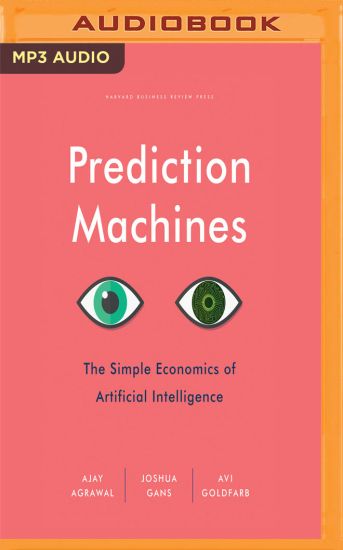
Named one of "The five best books to understand AI" by The EconomistThe impact AI will have is profound, but the economic framework for understanding it is surprisingly simple. Artificial intelligence seems to do the impossible, magically bringing machines to life—driving cars, trading stocks, and teaching children. But facing the sea change that AI brings can be paralyzing. How should companies set strategies, governments design policies, and people plan their lives for a world so different from what we know? In the face of such uncertainty, many either cower in fear or predict an impossibly sunny future. But in Prediction Machines, three eminent economists recast the rise of AI as a drop in the cost of prediction. With this masterful stroke, they lift the curtain on the AI-is-magic hype and provide economic clarity about the AI revolution as well as a basis for action by executives, policy makers, investors, and entrepreneurs. In this new, updated edition, the authors illustrate how, when AI is framed as cheap prediction, its extraordinary potential becomes clear:Prediction is at the heart of making decisions amid uncertainty. Our businesses and personal lives are riddled with such decisions. Prediction tools increase productivity—operating machines, handling documents, communicating with customers. Uncertainty constrains strategy. Better prediction creates opportunities for new business strategies to compete. The authors reset the context, describing the striking impact the book has had and how its argument and its implications are playing out in the real world. And in new material, they explain how prediction fits into decision-making processes and how foundational technologies such as quantum computing will impact business choices. Penetrating, insightful, and practical, Prediction Machines will help you navigate the changes on the horizon.
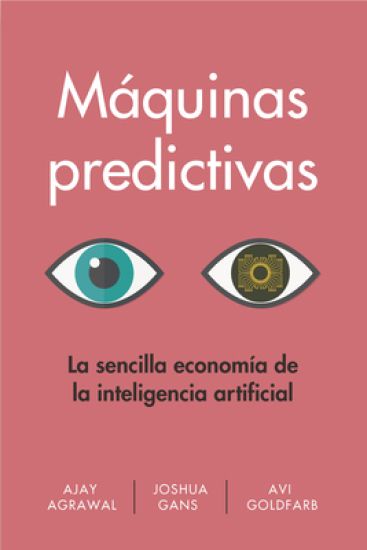
La inteligencia artificial hace lo aparentemente imposible, trayendo m gicamente las m quinas a los coches que conducen la vida, intercambiando acciones y ense ando a los ni os. Pero enfrentar el cambio radical que traer la IA puede ser paralizante. C mo deber an las empresas establecer estrategias, los gobiernos dise ar pol ticas y las personas planificar sus vidas para un mundo tan diferente al que conocemos? Ante tal incertidumbre, muchos analistas se acobardan de miedo o predicen un futuro imposiblemente soleado. ///// Artificial intelligence does the seemingly impossible, magically bringing machines to life--driving cars, trading stocks, and teaching children. But facing the sea change that AI will bring can be paralyzing. How should companies set strategies, governments design policies, and people plan their lives for a world so different from what we know? In the face of such uncertainty, many analysts either cower in fear or predict an impossibly sunny future. But in Prediction Machines, three eminent economists recast the rise of AI as a drop in the cost of prediction. With this single, masterful stroke, they lift the curtain on the AI-is-magic hype and show how basic tools from economics provide clarity about the AI revolution and a basis for action by CEOs, managers, policy makers, investors, and entrepreneurs.
"What does AI mean for your business? Read this book to find out." (Hal Varian, Chief Economist, Google) Artificial intelligence does the seemingly impossible, magically bringing machines to life - driving cars, trading stocks, and teaching children. But facing the sea change that AI will bring can be paralyzing. How should companies set strategies, governments design policies, and people plan their lives for a world so different from what we know? In the face of such uncertainty, many analysts either cower in fear or predict an impossibly sunny future. But in Prediction Machines, three eminent economists recast the rise of AI as a drop in the cost of prediction. With this single, masterful stroke, they lift the curtain on the AI-is-magic hype and show how basic tools from economics provide clarity about the AI revolution and a basis for action by CEOs, managers, policy makers, investors, and entrepreneurs. When AI is framed as cheap prediction, its extraordinary potential becomes clear: Prediction is at the heart of making decisions under uncertainty. Our businesses and personal lives are riddled with such decisions. Prediction tools increase productivity - operating machines, handling documents, communicating with customers. Uncertainty constrains strategy. Better prediction creates opportunities for new business structures and strategies to compete. Penetrating, fun, and always insightful and practical, Prediction Machines follows its inescapable logic to explain how to navigate the changes on the horizon. The impact of AI will be profound, but the economic framework for understanding it is surprisingly simple. The accompanying reference guide is included as a PDF.