Kirjojen hintavertailu – 12 903 735 kirjaa ja 27 kauppaa

Kirjailija

Akhil Gupta

Kirjat ja teokset yhdessä paikassa: 21 kirjaa, julkaisuja vuosilta 1998–2026, suosituimpiin kuuluu OSCEs for Medical Finals. Vertaile teosten hintoja ja tarkista saatavuus suomalaisista kirjakaupoista.

21 kirjaa

Kirjojen julkaisuvuodet: 1998–2026.

OSCEs for Medical Finals

OSCEs for Medical Finals

Hamed Khan; Iqbal Khan; Akhil Gupta; Nazmul Hussain; Sathiji Nageshwaran

John Wiley Sons Inc
2012
nidottu
OSCEs for Medical Finals has been written by doctors from a variety of specialties with extensive experience of medical education and of organising and examining OSCEs. The book and website package consists of the most common OSCE scenarios encountered in medical finals, together with checklists, similar to OSCE mark schemes, that cover all of the key learning points students need to succeed. Each topic checklist contains comprehensive exam-focussed advice on how to maximise performance together with a range of ‘insider's tips' on OSCE strategy and common OSCE pitfalls. Designed to provide enough coverage for those students who want to gain as many marks as possible in their OSCEs, and not just a book which will ensure students ‘scrape a pass', the book is fully supported by a companion website at www.wiley.com/go/khan/osces, containing: OSCE checklists from the bookA survey of doctors and students of which OSCEs have a high chance of appearing in finals in each UK medical school
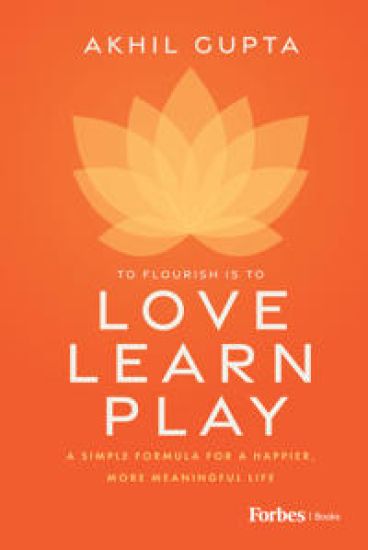
Love, Learn, Play

Love, Learn, Play

Akhil Gupta

Advantage Media Group
2026
sidottu
Despite unprecedented levels of material success, billions today feel unfulfilled, anxious, and disconnected. In Love, Learn, Play, Akhil Gupta—a former driver equity leader turned global seeker—offers radical yet deeply intuitive solution: real well-being arises when we engage our deepest human longings to love to learn and to play in whatever we do. Drawing from his remarkable journey—from global finance to Harvard classrooms—Gupta explores how ancient wisdom and modern science point to three essential forces that lead to true well-being: love, learning, and play. These are not luxuries, he argues, but our deepest human needs. This powerful, research-backed framework helps readers: Break free from false cultural narratives Reconnect with their authentic self Balance meaning and happiness without burnout Bring wholeness to work, parenting, and personal life Create a life that feels deeply alive—every day Whether you're leading a team, raising a family, or reevaluating what really matters, Love, Learn, Play offers a practical and inspiring guide to a life that’s not just successful—but truly flourishing. If you've ever asked, “Is this all there is?” this book is your answer.
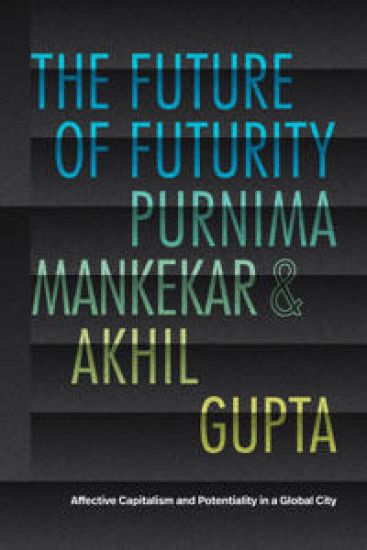
The Future of Futurity

The Future of Futurity

Purnima Mankekar; Akhil Gupta

DUKE UNIVERSITY PRESS
2025
sidottu
In The Future of Futurity, Purnima Mankekar and Akhil Gupta examine the lives and experiences of call center agents in India’s business process outsourcing (BPO) industry, who live in Bengaluru and work for customers in the Global North. Mankekar and Gupta show how futurity—an affective-temporal potentiality and mode of being that emphasizes the unfolding of time—enables BPO workers to strive for hopeful futures despite their experiences of growing inequality, volatility, and violence. Drawing on long-term fieldwork with managers, owners, and workers of BPO companies, the authors explore how workers find pathways for navigating a globalized world and for imagining their futures in it. They point to the heterogeneous lives, yearnings, and anxieties of BPO workers, foregrounding the disjunctions and conjunctions between labor, corporeality, intimacy, family life, and mobility. Mankekar and Gupta show how workers’ daily lives and imaginings of the future point to the relationships between futurity, capital, and technology as well as futurity’s imbrications with contemporary racial capitalism. In so doing, the authors insist on the transformative potential of futurity even in conditions of extreme precarity.
Final FRCA: 60 CRQs

Final FRCA: 60 CRQs

Sebastian Baxter; Akhil Gupta; James O'Carroll; Kariem El-Boghdadly; Ade Ayeni; Neel Desai

JP Medical Ltd
2021
nidottu
This book is a practical revision aid for postgraduates preparing for Final FRCA (Fellowship of the Royal College of Anaesthetists) written examinations. Presented in the style of the newly introduced CRQ (Constructed Response Questions) format, the book features five complete papers, each containing twelve questions. Topics cover the entire examination syllabus. Detailed answers are given for every question, as well as comprehensive references for further reading. Key points Practical revision aid for candidates preparing for Final FRCA examinationsPresented in the style of the new CRQ formatIncludes five papers each containing twelve questions with detailed answersTopics cover the complete exam syllabus
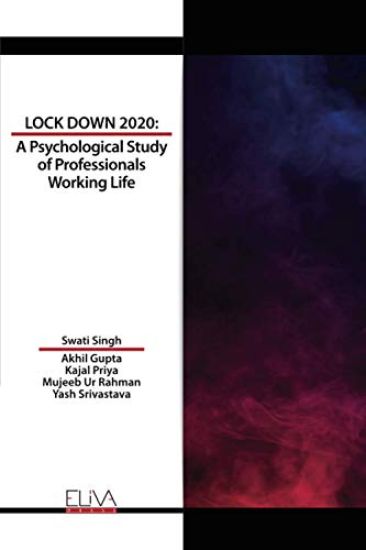
Lockdown 2020: A Psychological Study of Professionals Working Life

Lockdown 2020: A Psychological Study of Professionals Working Life

Akhil Gupta; Kajal Priya; Mujeeb Ur Rahman

Eliva Press
2021
nidottu
COVID-19 has shaken the core of the word by storm since 2020 but seldom studies have been conducted to understand the level of stress among working professions due to strict measures taken by various countries i.e., lockdowns to which India is no exception. Life is not a bed of roses and COVID- 19 is testament to it. COVID-19 has paralysed life of people. Underlying the believe in welfare of the society the authors have tried to comprehend the adversities that this pandemic has brought in. So, it's an endeavour to understand the psychological repercussion on the lives of people. On March 11th, 2020 World Health Organization declared Coronavirus as a pandemic and on March 20th, 2020 the government of India took the step towards first lockdown which resulted in four phases. The present study is an attempt to assess the efficiency & the level of stress among the working professions & students in India before and after lockdown regarding to work from home for the first time in history i.e., virtually. The data is from of people scattered across the country residing in different states and cities. It was observed that among all the working, the ones with day-to-day income source were comparatively less efficient in their working from home experience & professionals with day-to-day income source showed higher stress levels due to work from home. Moreover, those persons who found it difficult to work from home were more likely to be able to predict early end of lockdown then others.
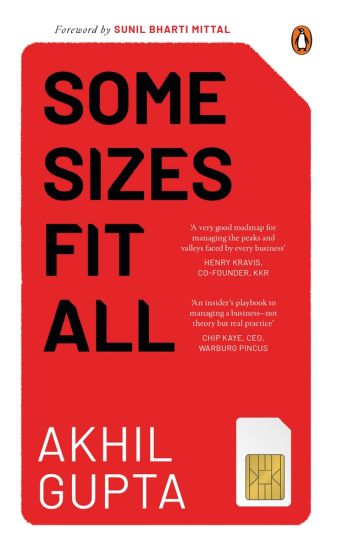
Some Sizes Fit All

Some Sizes Fit All

Akhil Gupta

Penguin Portfolio
2020
sidottu
An oft-repeated dictum every time a company fails to replicate its past successes when introducing a new product or entering a new market is that one size does not fit all. Business gurus advise that every new situation, market and environment calls for a fresh approach and requires 'unlearning' what one might have learnt elsewhere, even if that had met with great success. While this statement may appear to be obvious, it is often quoted out of context. The fact is that certain fundamentals of business-irrespective of line of business, geography or scale-are universally applicable. Some Sizes Fit All is an attempt to explain these fundamental pillars for any kind of business. An authentic and lucid presentation of management concepts and practices-which Akhil Gupta has tried and tested first hand through his illustrious career-this is a must-read for anyone trying to build a robust and financially sound business.
Red Tape

Red Tape

Akhil Gupta

Duke University Press
2012
pokkari
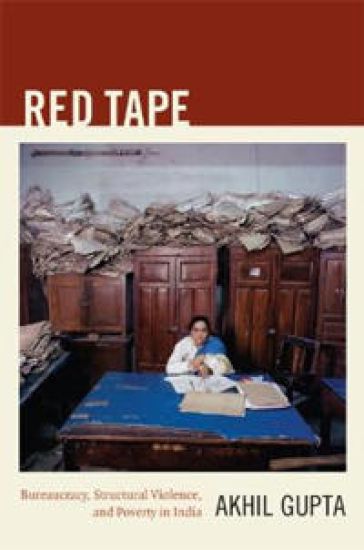
Red Tape presents a major new theory of the state developed by the renowned anthropologist Akhil Gupta. Seeking to understand the chronic and widespread poverty in India, the world's fourth largest economy, Gupta conceives of the relation between the state in India and the poor as one of structural violence. Every year this violence kills between two and three million people, especially women and girls, and lower-caste and indigenous peoples. Yet India's poor are not disenfranchised; they actively participate in the democratic project. Nor is the state indifferent to the plight of the poor; it sponsors many poverty amelioration programs. Gupta conducted ethnographic research among officials charged with coordinating development programs in rural Uttar Pradesh. Drawing on that research, he offers insightful analyses of corruption; the significance of writing and written records; and governmentality, or the expansion of bureaucracies. Those analyses underlie his argument that care is arbitrary in its consequences, and that arbitrariness is systematically produced by the very mechanisms that are meant to ameliorate social suffering. What must be explained is not only why government programs aimed at providing nutrition, employment, housing, healthcare, and education to poor people do not succeed in their objectives, but also why, when they do succeed, they do so unevenly and erratically.
Red Tape

Red Tape

Akhil Gupta

Duke University Press
2012
sidottu
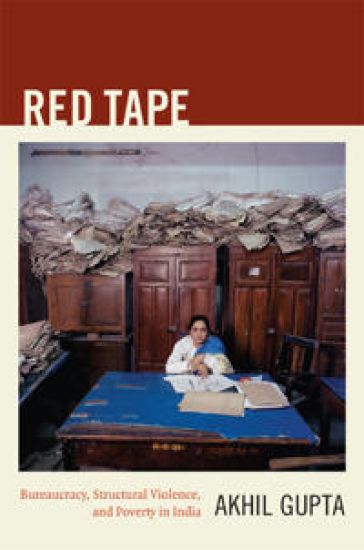
Red Tape presents a major new theory of the state developed by the renowned anthropologist Akhil Gupta. Seeking to understand the chronic and widespread poverty in India, the world's fourth largest economy, Gupta conceives of the relation between the state in India and the poor as one of structural violence. Every year this violence kills between two and three million people, especially women and girls, and lower-caste and indigenous peoples. Yet India's poor are not disenfranchised; they actively participate in the democratic project. Nor is the state indifferent to the plight of the poor; it sponsors many poverty amelioration programs. Gupta conducted ethnographic research among officials charged with coordinating development programs in rural Uttar Pradesh. Drawing on that research, he offers insightful analyses of corruption; the significance of writing and written records; and governmentality, or the expansion of bureaucracies. Those analyses underlie his argument that care is arbitrary in its consequences, and that arbitrariness is systematically produced by the very mechanisms that are meant to ameliorate social suffering. What must be explained is not only why government programs aimed at providing nutrition, employment, housing, healthcare, and education to poor people do not succeed in their objectives, but also why, when they do succeed, they do so unevenly and erratically.
Postcolonial Developments

Postcolonial Developments

Akhil Gupta

Duke University Press
1998
pokkari
This definitive study brings together recent critiques of development and work in postcolonial studies to explore what the postcolonial condition has meant to rural people in the Third World. Focusing on local-level agricultural practices in India since the “green revolution” of the 1960s, Akhil Gupta challenges the dichotomy of “developed” and “underdeveloped,” as well as the notion of a monolithic postcolonial condition. In so doing, he advances discussions of modernity in the Third World and offers a new model for future ethnographic scholarship. Based on fieldwork done in the village of Alipur in rural north India from the early 1980s through the 1990s, Postcolonial Developments examines development itself as a post–World War II sociopolitical ideological formation, critiques related policies, and explores the various uses of the concept of the “indigenous” in several discursive contexts. Gupta begins with an analysis of the connections and conflicts between the world food economy, transnational capital, and technological innovations in wheat production. He then examines narratives of village politics in Alipur to show how certain discourses influenced governmental policies on the green revolution. Drawing links between village life, national trends, and global forces, Gupta concludes with a discussion of the implications of environmentalism as exemplified by the Rio Earth Summit and an examination of how global environmental treaties may detrimentally affect the lives of subaltern peoples. With a series of subtle observations on rural politics, nationalism, gender, modernization, and difference, this innovative study capitalizes on many different disciplines: anthropology, sociology, comparative politics, cultural geography, ecology, political science, agricultural economics, and history.