Kirjojen hintavertailu – 12 903 725 kirjaa ja 27 kauppaa

Kirjailija

Akira Iriye

Kirjat ja teokset yhdessä paikassa: 19 kirjaa, julkaisuja vuosilta 1982–2022, suosituimpiin kuuluu International History. Vertaile teosten hintoja ja tarkista saatavuus suomalaisista kirjakaupoista.

19 kirjaa

Kirjojen julkaisuvuodet: 1982–2022.

International History

International History

Akira Iriye; Petra Goedde

Bloomsbury Academic
2022
nidottu
International History: A Cultural Approach offers an innovative history of modern international relations that stresses cultural themes. In place of the usual focus on great-power rivalries, diplomatic negotiations, military conflict, and other phenomena in which sovereign nations are the key players, this book focuses on intercultural relations as individuals, races, religions, and non-state actors interact across national boundaries, to provide a fresh perspective on modern international history. Among the themes covered are:- Nationalism and cosmopolitanism - Migration - Cross-cultural encounters - Consumerism and youth cultures - Environmental transformations - Economic and technological globalization Akira Iriye and Petra Goedde's approach offers a deeper understanding of international history, focusing on people and their cultures rather than just state level interactions.
International History

International History

Akira Iriye; Petra Goedde

Bloomsbury Academic
2022
sidottu
International History: A Cultural Approach offers an innovative history of modern international relations that stresses cultural themes. In place of the usual focus on great-power rivalries, diplomatic negotiations, military conflict, and other phenomena in which sovereign nations are the key players, this book focuses on intercultural relations as individuals, races, religions, and non-state actors interact across national boundaries, to provide a fresh perspective on modern international history. Among the themes covered are:- Nationalism and cosmopolitanism - Migration - Cross-cultural encounters - Consumerism and youth cultures - Environmental transformations - Economic and technological globalization Akira Iriye and Petra Goedde's approach offers a deeper understanding of international history, focusing on people and their cultures rather than just state level interactions.
Memory, Identity, and Commemorations of World War II
Why do some governments and societies attach great significance to a particular anniversary year whereas others seem less inclined to do so? What motivates the orchestration of elaborate commemorative activities in some countries? What are they supposed to accomplish, for both domestic and international audience? In what ways do commemorations in Asia Pacific fit into the global memory culture of war commemoration? In what ways are these commemorations intertwined with current international politics? This book presents the first large-scale analysis of how countries in the Asia Pacific and beyond commemorated the seventieth anniversaries of the end of World War II. Consisting of in-depth case studies of China, Taiwan, Korea, Japan, Singapore, the Philippines, United States, Russia, and Germany, this unique collective effort demonstrates how memories of the past as reflected in public commemorations and contemporary politics—both internal and international—profoundly affect each other.
Memory, Identity, and Commemorations of World War II
Why do some governments and societies attach great significance to a particular anniversary year whereas others seem less inclined to do so? What motivates the orchestration of elaborate commemorative activities in some countries? What are they supposed to accomplish, for both domestic and international audience? In what ways do commemorations in Asia Pacific fit into the global memory culture of war commemoration? In what ways are these commemorations intertwined with current international politics? This book presents the first large-scale analysis of how countries in the Asia Pacific and beyond commemorated the seventieth anniversaries of the end of World War II. Consisting of in-depth case studies of China, Taiwan, Korea, Japan, Singapore, the Philippines, United States, Russia, and Germany, this unique collective effort demonstrates how memories of the past as reflected in public commemorations and contemporary politics—both internal and international—profoundly affect each other.
Japan and the Wider World

Japan and the Wider World

Akira Iriye

Routledge
2015
sidottu
Akira Iriye assesses Japan's international relations, from a Japanese perspective, in the century and a half since she ended her self-imposed isolation and resumed her place in the international community. The book is the author's own adaptation of two highly successful short studies, up to and after 1945, that he wrote for Japan. It ends with a consideration of Japan's international relations since the end of the Cold War, and her place in the world today. This is history written from within - and there could be no better interpreter of Japan to the West than this most distinguished of historians, who, himself Japanese, has long lived and taught in the United States.
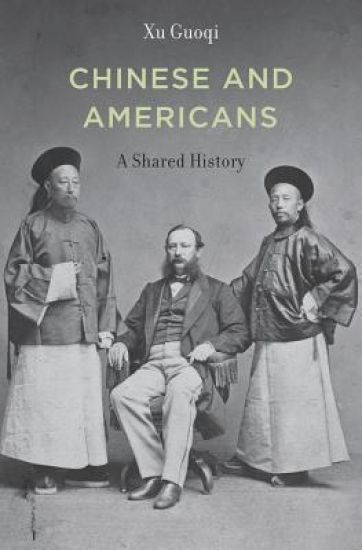
Chinese and Americans

Chinese and Americans

Guoqi Xu; Akira Iriye

Harvard University Press
2014
sidottu
Chinese–American relations are often viewed through the prism of power rivalry and civilization clash. But China and America’s shared history is much more than a catalog of conflicts. Using culture rather than politics or economics as a reference point, Xu Guoqi highlights significant yet neglected cultural exchanges in which China and America have contributed to each other’s national development, building the foundation of what Zhou Enlai called a relationship of “equality and mutual benefit.” Xu begins with the story of Anson Burlingame, Abraham Lincoln’s ambassador to China, and the 120 Chinese students he played a crucial role in bringing to America, inaugurating a program of Chinese international study that continues today. Such educational crosscurrents moved both ways, as is evident in Xu’s profile of the remarkable Ge Kunhua, the Chinese poet who helped spearhead Chinese language teaching in Boston in the 1870s. Xu examines the contributions of two American scholars to Chinese political and educational reform in the twentieth century: the law professor Frank Goodnow, who took part in making the Yuan Shikai government’s constitution; and the philosopher John Dewey, who helped promote Chinese modernization as a visiting scholar at Peking University and elsewhere. Xu also shows that it was Americans who first introduced to China the modern Olympic movement, and that China has used sports ever since to showcase its rise as a global power. These surprising shared traditions between two nations, Xu argues, provide the best roadmap for the future of Sino–American relations.
Nationalism to Internationalism

Nationalism to Internationalism

Akira Iriye

Routledge
2010
nidottu
First published in 2001. This is Volume X of the Foreign Policies of the Great Powers eleven part series and focuses on the policies of the United States. From 1776 to 1914. It includes sections demonstrating the U. S. journey from Internationalistic Nationalism to Nationalistic Internationalism.
Global Community

Global Community

Akira Iriye

University of California Press
2004
pokkari
The 'global community' is a term we take for granted today. But how did the global community, both as an idea and as a reality, originate and develop over time? This book examines this concept by looking at the emergence, growth, and activities of international organizations - both governmental and nongovernmental - from the end of the nineteenth century to today. Akira Iriye, one of this country's most preeminent historians, proposes a significant rereading of the history of the last fifty years, suggesting that the central influence on the international scene in this period was not the Cold War, but rather a deepening web of international interactions. This groundbreaking book, the first systematic study of international organizations by a historian, moves beyond the usual framework for studying international relations - politics, war, diplomacy, and other interstate affairs - as it traces the crucial role played by international organizations in determining the shape of the world today. Iriye's sweeping discussion of international organizations around the world examines multinational corporations, religious organizations, regional communities, transnational private associations, environmental organizations, and other groups to illuminate the evolution and meaning of the global community and global consciousness. While states have been preoccupied with their own national interests such as security and prestige, international organizations have been actively engaged in promoting cultural exchange, offering humanitarian assistance, extending developmental aid, protecting the environment, and championing human rights. In short, they have made important contributions to making the world a more interdependent and peaceful place. This book, tracing the development of the global community in a truly innovative way, will win a wide readership among those interested in understanding the growing phenomenon of globalization and its meaning for us today. "Global Community" is based on Iriye's Jefferson lectures at the University of California, Berkeley.

Mori Arinori's Life and Resources in America

Mori Arinori's Life and Resources in America

Mori Arinori; Akira Iriye

Lexington Books
2003
sidottu
"Mori notes, 'Where men think that they know everything, and boast of their superior wisdom, the presumption is that they have yet much to learn.' . . . [T]oday's readers, whether in the United States, in Japan, or elsewhere, who may think they already know so much about the subject, will find much of value in Life and Resources in America." —Akira Iriye, Harvard University, from the foreword Mori Arinori's Life and Resources in America was written by the young, educated ex-samurai the Japanese government selected as its first diplomatic representative in the United States. Originally published in English in Washington, D. C., in 1871, this book sheds much light on the shape of an American society, government, and economy recovering from the Civil War. Like earlier philosopher-tourists such as Alexis de Tocqueville and Harriet Martineau, Mori understands the United States as a stage upon which an important experiment in democracy, pluralism, and liberalism is unfolding. Life and Resources in America is distinct for its view from the Reconstruction period and by a non-European observer. Historian John E. Van Sant has annotated and lightly edited this uniquely illuminating text, making it readily accessible to the contemporary audience it deserves.
Mori Arinori's Life and Resources in America

Mori Arinori's Life and Resources in America

Mori Arinori; Akira Iriye

Lexington Books
2003
nidottu
'Mori notes, 'Where men think that they know everything, and boast of their superior wisdom, the presumption is that they have yet much to learn.' . . . [T]oday's readers, whether in the United States, in Japan, or elsewhere, who may think they already know so much about the subject, will find much of value in Life and Resources in America.' —Akira Iriye, Harvard University, from the foreword Mori Arinori's Life and Resources in America was written by the young, educated ex-samurai the Japanese government selected as its first diplomatic representative in the United States. Originally published in English in Washington, D. C., in 1871, this book sheds much light on the shape of an American society, government, and economy recovering from the Civil War. Like earlier philosopher-tourists such as Alexis de Tocqueville and Harriet Martineau, Mori understands the United States as a stage upon which an important experiment in democracy, pluralism, and liberalism is unfolding. Life and Resources in America is distinct for its view from the Reconstruction period and by a non-European observer. Historian John E. Van Sant has annotated and lightly edited this uniquely illuminating text, making it readily accessible to the contemporary audience it deserves.
Staging Growth

Staging Growth

Akira Iriye

University of Massachusetts Press
2003
nidottu
A timely reassessment of modernization theory and its international impact; Beginning in the 1950s, the theory of modernization emerged as the dominant paradigm of economic, social, and political develoment within the American foreign policy establishment. Purporting to explain the stages through which all nations pass on the road to industrial modernity, it provided a rationale for a broad range of cultural and political projects aimed at fostering Third World growth while simultaneously combating communism. But modernization theory was more than simply an expression of Cold War ideology. As the essays in this volume show, the ideal of modernization proliferated throughout the postcolonial world and across ideological lines in places as diverse as East Asia, Southern Africa, and South Asia. Indeed, it was embraced by all who shared the American enthusiasm for the increased production and higher standards of living promised by industrialization - enemies and allies alike. Situating modernization theory historically, Staging Growth avoids conventional chronologies and categories of analysis, particularly the traditional focus on conflicts between major powers. The contributors employ a variety of approaches - from economic and intellectual history to cultural criticism and biography - to shed fresh light on the global forces that shaped the Cold War and its legacies. Most of the pieces are comparative, exploring how different countries and cultures have grappled with the implications of modern development. At the same time, all of the essays address similar fundamental questions. Is modernization the same thing as Westernization? Is the idea of modernization universally valid? Do countries follow similar trajectories as they undertake development? Does modernization bring about globalization? In addition to the editors and Akira Iriye, contributors include Michael Adas, Laura Belmonte, Gregg Andrew Brazinsky, Christina Klein, J. Victor Koschmann, and Michael R. Mahoney.
Nationalism to Internationalism

Nationalism to Internationalism

Akira Iriye

Routledge
2001
sidottu
First published in 2001. This is Volume X of the Foreign Policies of the Great Powers eleven part series and focuses on the policies of the United States. From 1776 to 1914. It includes sections demonstrating the U. S. journey from Internationalistic Nationalism to Nationalistic Internationalism.
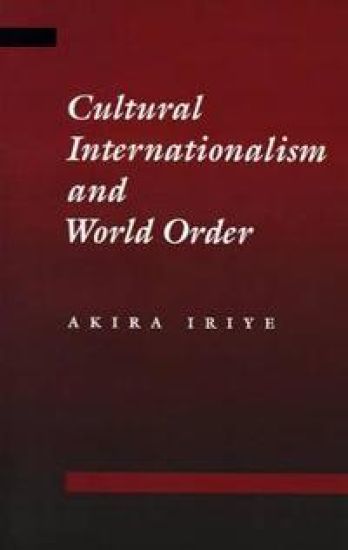
Cultural Internationalism and World Order

Cultural Internationalism and World Order

Akira Iriye

Johns Hopkins University Press
2001
pokkari
As the nineteenth century became the twentieth and the dangers of rampant nationalism became more evident, people throughout the world embraced the idea that a new spirit of internationalism might be fostered by better communication and understanding among notions. Cultural internationalism came into its own after the end of World War I, when intellectuals and artists realized that one way of forging a stable and lasting international peace was to encourage international cultural exchange and cooperation. In Cultural Internationalism and World Order, noted historian Akira Iriye shows how widespread and serious a following this idea had. He describes a surprising array of efforts to foster cooperation, from the creation of an international language to student exchange programs, international lecture circuits, and other cultural activities. But he does not overlook the tensions the movement encountered with the real politics of the day, including the militarism that led up to the World War I, the rise of extreme strains of nationalism in Germany and Japan before World War II, and the bipolar rivalries of the Cold War. Iriye concludes that the effort of cultural internationalism can only be appreciated only in the context of world politics. A lasting and stable world order, he argues, cannot rely just on governments and power politics; it also depends upon the open exchange of cultures among peoples in pursuing common intellectual and cultural interests.
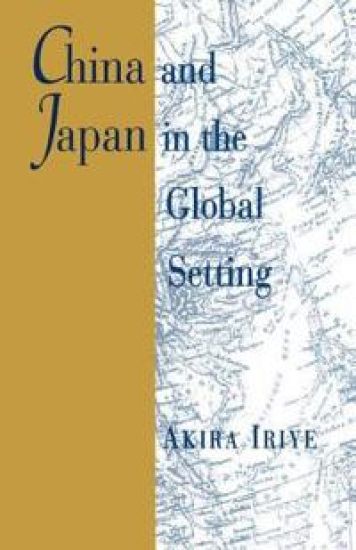
China and Japan in the Global Setting

China and Japan in the Global Setting

Akira Iriye

Harvard University Press
1998
nidottu
The relationship between China and Japan remains among the most significant of all the world’s bilateral affairs—yet it is also the most tortured and the least understood. Akira Iriye adds brilliant clarity to the past century of Chinese–Japanese interactions in this masterful interpretive survey. Placing the relationship within its global context, he outlines three distinct periods in the history of these Asian giants. From the 1880s to World War I, the two nations struggled for power. Armaments, war strategies, and security measures played pivotal roles, reflecting the importance 0f military calculations in a world dominated by Western governments. In the second period, that between the two World Wars, Iriye illuminates the dominant role of culture and the stress on internationalism. China’s continuing literary influence, an exchange of ideas and students reforms such as Japan’s Taisho democracy and China’s May Fourth movement, and both nations’ bid for racial equality in the West profoundly affected these interwar years. The third period reaches from the end of World War II through the present day, and is characterized by exchanges of an economic nature: trade, shipping, investment, and emigration. The author discusses the results of China’s civil war, the rise and decline 0f the Cold War in the West, and the cultural and ecological problems brought by Japan’s spiraling economic development. But economic ties remain deeply entwined with cultural concerns, and ultimately, Iriye stresses, the future of China and Japan depends on the successful cultural interdependence of what may be the most significant pair of countries in the world today.
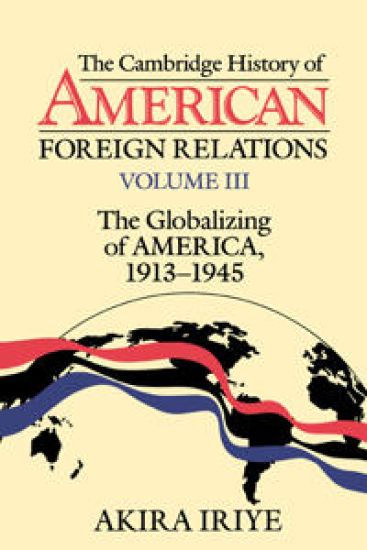
The Cambridge History of American Foreign Relations: Volume 3, The Globalizing of America, 1913–1945
Volume 3 describes the history of the foreign relations of the United States during 1913–1945, the period of two world wars as well as of momentous changes that brought to an end the period of European domination. The United States emerged as the key global power, actively participating in wars but also promoting trade and investment activities throughout the world, as well as ‘Americanising’ other countries’ ways of life and habits of thought. The book is thus not a usual survey of foreign policy decisions but tells a story about America’s growing involvement in all parts of the world and in all aspects of twentieth-century life.
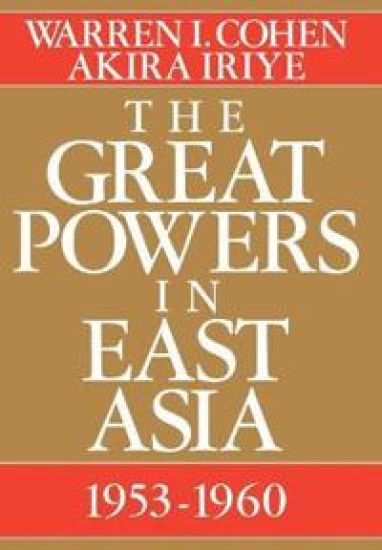
The Great Powers In East Asia

The Great Powers In East Asia

Warren I. Cohen; Akira Iriye

Columbia University Press
1990
sidottu
/I>The Great Powers of East Asia: 1953-1960 are written by some of the world's leading scholars. They contain new information, fresh insights, and useful analyses. The first series of essays focuses on the evolution of American policy. American historians examine the workings of the the Department of State and the Pentagon, and an American and a Chinese analyze the foreign economic policy of the Eisenhower administration in East Asia. The second series of essays is Japan-centered. Together these essays constitute an important contribution to the writing of international history. The contributors reveal the levels of understanding the major powers has of each other and of the smaller nations of the region, informed by different national experiences. The threads they weave together create a far richer tapestry than a national or binational approach could ever produce.
Power and Culture

Power and Culture

Akira Iriye

Harvard University Press
1982
nidottu
Power and Culture challenges existing assumptions about the war in the Pacific. By focusing on the interplay between culture and international relations, one of the world’s most distinguished scholars of United States–Japanese affairs offers a startling reassessment of what the war really meant to the two combatants. Akira Iriye examines the Japanese–American war for the first time from the cultural perspectives of both countries, arguing that it was more a search for international order than a ruthless pursuit of power. His thesis is bold, for he convincingly demonstrates that throughout the war many Japanese leaders shared with their American counterparts an essentially Wilsonian vision of international cooperation. As the war drew to a close, these statesmen began to plan for a cooperative world structure that was remarkably similar to the ideas of American policymakers. Indeed, as Iriye shows, the stunning success of Japanese–American postwar relations can be understood only in the light of a deep convergence of their ideals. Iriye has drawn his conclusions from original research, using official Japanese archives and recently declassified American documents. These offer a totally new perspective on the ways leaders in both countries actually viewed the war they were waging.