

Kirjailija
Alain Berthoz
Kirjat ja teokset yhdessä paikassa: 6 kirjaa, julkaisuja vuosilta 2002–2019, suosituimpiin kuuluu L'Empathie. Vertaile teosten hintoja ja tarkista saatavuus suomalaisista kirjakaupoista.
6 kirjaa
Kirjojen julkaisuvuodet: 2002–2019.
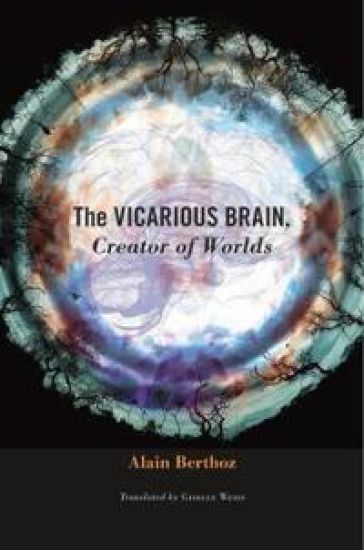
Groping around a familiar room in the dark, or learning to read again after a traumatic brain injury; navigating a virtual landscape through an avatar, or envisioning a scene through the eyes of a character—all of these are expressions of one fundamental property of life, Alain Berthoz argues. They are instances of vicariance, when the brain sidesteps an impasse by substituting one process or function for another. In The Vicarious Brain, Creator of Worlds, Berthoz shows that this capacity is the foundation of the human ability to think creatively and function in a complex world. Vicariance is often associated with proxies and delegates, but it also refers to a biological process in which a healthy organ takes over for a defective counterpart. Berthoz, a neuroscientist, approaches vicariance through neuronal networks, asking how, for example, a blind person can develop a heightened sense of touch. He also describes how our brains model physical reality and how we use these models to understand things that are foreign to us. Forging across disciplinary boundaries, he explores notions of the vicarious in paleontology, ethology, art, literature, and psychology. Through an absorbing examination of numerous facets of vicariance, Berthoz reveals its impact on an individual’s daily decision making and, more broadly, on the brain’s creation of worlds. As our personal and social lives are transformed by virtual realities, it is more crucial than ever before that we understand vicariance within our increasingly complex environment, and as an aspect of our own multiplying identities.
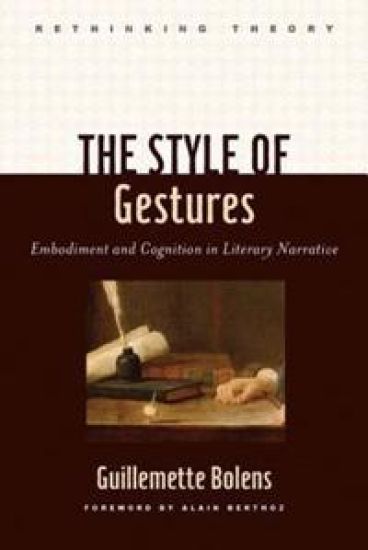
In this volume Guillemette Bolens examines the ways in which artists, authors, and readers draw on skills, sensorimotor capacities, and embodied knowledge when creating and experiencing artistic and literary works. In so doing, Bolens offers a new literary perspective on gesture studies and the role of embodied cognition in narrative. At the cutting edge of interdisciplinary inquiries into gesture, style, narratology, cognition, and literature, this work brings together academic expertise in literary studies with a consideration of neuroscientific and cognitive findings. Bolens studies the relevance of kinesic intelligence - our ability to understand the meaning of body movements, postures, gestures, and facial expressions - to the interpretation of literature. Through her discussions of works by John Milton, Jane Austen, Marcel Proust, James Joyce, and major medieval authors, Bolens shows how our experience of creative works draws on forms of cognition that are grounded in our corporeality. This book represents a crucial contribution from a literary scholar to the exciting new field of embodied cognition. With a foreword by well-known neuroscientist Alain Berthoz, "The Style of Gestures" convincingly makes the case that embodied cognition is essential to the reception, understanding, and enjoyment of art and literature.

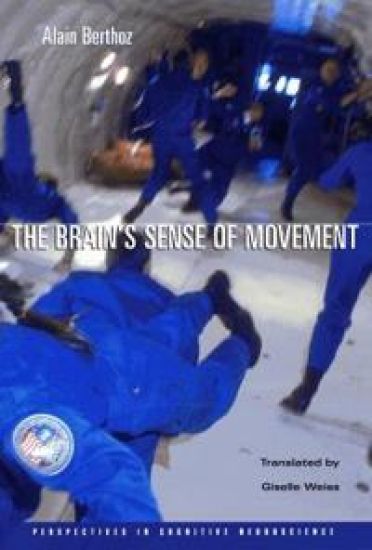
The neuroscientist Alain Berthoz experimented on Russian astronauts in space to answer these questions: How does weightlessness affect motion? How are motion and three-dimensional space perceived? In this erudite and witty book, Berthoz describes how human beings on earth perceive and control bodily movement. Reviewing a wealth of research in neurophysiology and experimental psychology, he argues for a rethinking of the traditional separation between action and perception, and for the division of perception into five senses. In Berthoz’s view, perception and cognition are inherently predictive, functioning to allow us to anticipate the consequences of current or potential actions. The brain acts like a simulator that is constantly inventing models to project onto the changing world, models that are corrected by steady, minute feedback from the world. We move in the direction we are looking, anticipate the trajectory of a falling ball, recover when we stumble, and continually update our own physical position, all thanks to this sense of movement. This interpretation of perception and action allows Berthoz, in The Brain’s Sense of Movement, to focus on psychological phenomena largely ignored in standard texts: proprioception and kinaesthesis, the mechanisms that maintain balance and coordinate actions, and basic perceptual and memory processes involved in navigation.