Kirjojen hintavertailu – 12 859 828 kirjaa ja 27 kauppaa

Kirjailija

Alamin Mazrui

Kirjat ja teokset yhdessä paikassa: 7 kirjaa, julkaisuja vuosilta 1996–2024, suosituimpiin kuuluu Swahili in Spaces of War. Vertaile teosten hintoja ja tarkista saatavuus suomalaisista kirjakaupoista.

7 kirjaa

Kirjojen julkaisuvuodet: 1996–2024.

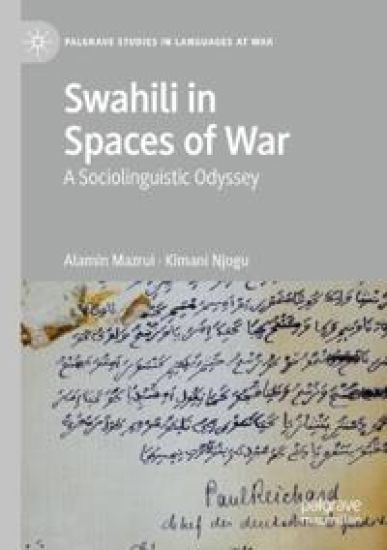
Swahili in Spaces of War

Swahili in Spaces of War

Alamin Mazrui; Kimani Njogu

Springer International Publishing AG
2024
nidottu
This monograph examines the roles and functions of Swahili in war/conflict situations, and the impact of wars on the destiny of the language. Covering a period of over a century, the monograph explores this sociolinguistic theme in the context of six wars/conflicts: the Maji Maji resistance against German rule, the two World Wars, the anti-colonial resistance to British colonialism, the wars of the Great Lakes region, the cold wars, and the ongoing war against terrorism. In geographical focus, some of the war situations explored here are “local,” others are “transnational,” and others still rather “global” in scope and ramifications. In the final analysis, the monograph provides important snapshots of the conflict-based history of the Swahili language, demonstrating once again that language is a malleable tool that can be appropriated and galvanized to serve the interests of either party in a conflict and sometimes as a means of creating hegemonic and anti-hegemonic meanings.

Swahili in Spaces of War

Swahili in Spaces of War

Alamin Mazrui; Kimani Njogu

Springer International Publishing AG
2023
sidottu
This monograph examines the roles and functions of Swahili in war/conflict situations, and the impact of wars on the destiny of the language. Covering a period of over a century, the monograph explores this sociolinguistic theme in the context of six wars/conflicts: the Maji Maji resistance against German rule, the two World Wars, the anti-colonial resistance to British colonialism, the wars of the Great Lakes region, the cold wars, and the ongoing war against terrorism. In geographical focus, some of the war situations explored here are “local,” others are “transnational,” and others still rather “global” in scope and ramifications. In the final analysis, the monograph provides important snapshots of the conflict-based history of the Swahili language, demonstrating once again that language is a malleable tool that can be appropriated and galvanized to serve the interests of either party in a conflict and sometimes as a means of creating hegemonic and anti-hegemonic meanings.

Cultural Politics of Translation

Cultural Politics of Translation

Alamin Mazrui

Routledge
2018
nidottu
This book is the first full-length examination of the cultural politics at work in the act of translation in East Africa, providing close critical analyses of a variety of texts that demonstrate the myriad connections between translation and larger socio-political forces. Looking specifically at texts translated into Swahili, the book builds on the notion that translation is not just a linguistic process, but also a complex interaction between culture, history, and politics, and charts this evolution of the translation process in East Africa from the pre-colonial to colonial to post-colonial periods. It uses textual examples, including the Bible, the Qur’an, and Frantz Fanon’s Wretched of the Earth, from five different domains – religious, political, legal, journalistic, and literary – and grounds them in their specific socio-political and historical contexts to highlight the importance of context in the translation process and to unpack the complex relationships between both global and local forces that infuse these translated texts with an identity all their own. This book provides a comprehensive portrait of the multivalent nature of the act of translation in the East African experience and serves as a key resource for students and researchers in translation studies, cultural studies, post-colonial studies, African studies, and comparative literature.
Cultural Politics of Translation

Cultural Politics of Translation

Alamin Mazrui

Routledge
2016
sidottu
This book is the first full-length examination of the cultural politics at work in the act of translation in East Africa, providing close critical analyses of a variety of texts that demonstrate the myriad connections between translation and larger socio-political forces. Looking specifically at texts translated into Swahili, the book builds on the notion that translation is not just a linguistic process, but also a complex interaction between culture, history, and politics, and charts this evolution of the translation process in East Africa from the pre-colonial to colonial to post-colonial periods. It uses textual examples, including the Bible, the Qur’an, and Frantz Fanon’s Wretched of the Earth, from five different domains – religious, political, legal, journalistic, and literary – and grounds them in their specific socio-political and historical contexts to highlight the importance of context in the translation process and to unpack the complex relationships between both global and local forces that infuse these translated texts with an identity all their own. This book provides a comprehensive portrait of the multivalent nature of the act of translation in the East African experience and serves as a key resource for students and researchers in translation studies, cultural studies, post-colonial studies, African studies, and comparative literature.
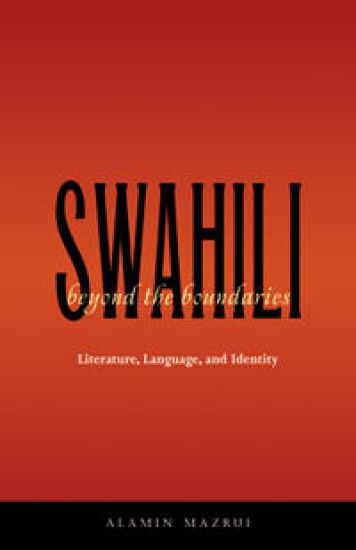
Swahili Beyond the Boundaries

Swahili Beyond the Boundaries

Alamin Mazrui

Ohio University Press
2007
pokkari
Africa is a marriage of cultures: African and Asian, Islamic and Euro-Christian. Nowhere is this fusion more evident than in the formation of Swahili, Eastern Africa's lingua franca, and its cultures. Swahili beyond the Boundaries: Literature, Language, and Identity addresses the moving frontiers of Swahili literature under the impetus of new waves of globalization in the twentieth and twenty-first centuries. These momentous changes have generated much theoretical debate on several literary fronts, as Swahili literature continues to undergo transformation in the mill of human creativity. Swahili literature is a hybrid that is being reconfigured by a conjuncture of global and local forces. As the interweaving of elements of the colonizer and the colonized, this hybrid formation provides a representation of cultural difference that is said to constitute a "third space," blurring existing boundaries and calling into question established identitarian categorizations. This cultural dialectic is clearly evident in the Swahili literary experience as it has evolved in the crucible of the politics of African cultural production. However, Swahili beyond the Boundaries demonstrates that, from the point of view of Swahili literature, while hybridity evokes endless openness on questions of home and identity, it can simultaneously put closure on specific forms of subjectivity. In the process of this contestation, a new synthesis may be emerging that is poised to subject Swahili literature to new kinds of challenges in the politics of identity, compounded by the dynamics and counterdynamics of post–Cold War globalization.
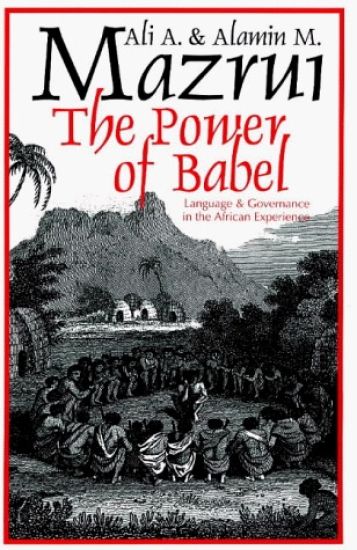
Power of Babel

Power of Babel

Ali A. Mazrui; Alamin Mazrui

James Currey
1998
pokkari
Ali Mazrui address the great language debate in Africa. Tackling the contentious question of African languages versus European languages, this study argues that the dominance of the incoming languages is due to two factors: originally the societies were not expansionist enough, and later the peoples of Africa failed to be nationalist enough. ALI A. MAZRUI was Director of the Institute of Global Cultural Studies at the State University of New York at Binghamton and Senior Scholar in African Studies atCornell University North America: Chicago U Press; Uganda: Fountain Publishers; Kenya: EAEP
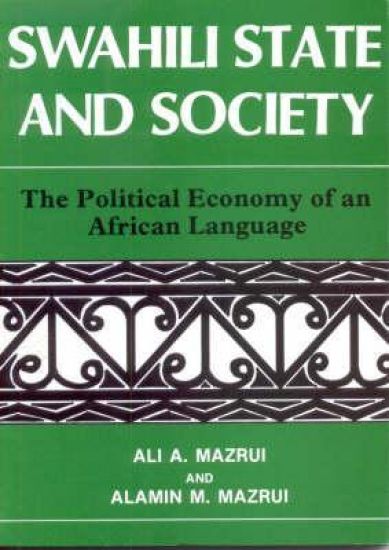
Swahili, State and Society

Swahili, State and Society

Ali A. Mazrui; Alamin Mazrui

James Currey
1996
pokkari
This text examines the social and political impact of the Swahili language. The authors consider the spread of the Swahili language in Eastern and Central Africa against a background of interaction between church and state, and between economics and politics. North America: Africa World Press;Kenya: EAEP