

Kirjailija
Alan Barnard
Kirjat ja teokset yhdessä paikassa: 18 kirjaa, julkaisuja vuosilta 1992–2022, suosituimpiin kuuluu Technology and Nursing. Vertaile teosten hintoja ja tarkista saatavuus suomalaisista kirjakaupoista.
18 kirjaa
Kirjojen julkaisuvuodet: 1992–2022.

In the past twenty years, there have been exciting new developments in the field of anthropology. This second edition of Barnard's classic textbook on the history and theory of anthropology has been revised and expanded to include up-to-date coverage on all the most important topics in the field. Its coverage ranges from traditional topics like the beginnings of the subject, evolutionism, functionalism, structuralism, and Marxism, to ideas about globalization, post-colonialism, and notions of 'race' and of being 'indigenous'. There are several new chapters, along with an extensive glossary, index, dates of birth and death, and award-winning diagrams. Although anthropology is often dominated by trends in Europe and North America, this edition makes plain the contributions of trendsetters in the rest of the world too. With its comprehensive yet clear coverage of concepts, this is essential reading for a new generation of anthropology students.

In the past twenty years, there have been exciting new developments in the field of anthropology. This second edition of Barnard's classic textbook on the history and theory of anthropology has been revised and expanded to include up-to-date coverage on all the most important topics in the field. Its coverage ranges from traditional topics like the beginnings of the subject, evolutionism, functionalism, structuralism, and Marxism, to ideas about globalization, post-colonialism, and notions of 'race' and of being 'indigenous'. There are several new chapters, along with an extensive glossary, index, dates of birth and death, and award-winning diagrams. Although anthropology is often dominated by trends in Europe and North America, this edition makes plain the contributions of trendsetters in the rest of the world too. With its comprehensive yet clear coverage of concepts, this is essential reading for a new generation of anthropology students.


The hunter-gatherers of southern Africa known as 'Bushmen' or 'San' are not one single ethnic group, but several. They speak a diverse variety of languages, and have many different settlement patterns, kinship systems and economic practices. The fact that we think of them as a unity is not as strange as it may seem, for they share a common origin: they are an original hunter-gatherer population of southern Africa with a history of many thousands of years on the subcontinent. Drawing on his four decades of field research in Botswana, Namibia and South Africa, Alan Barnard provides a detailed account of Bushmen or San, covering ethnography, archaeology, folklore, religious studies and rock-art studies as well as several other fields. Its wide coverage includes social development and politics, both historically and in the present day, helping us to reconstruct both human prehistory and a better understanding of ourselves.

The hunter-gatherers of southern Africa known as 'Bushmen' or 'San' are not one single ethnic group, but several. They speak a diverse variety of languages, and have many different settlement patterns, kinship systems and economic practices. The fact that we think of them as a unity is not as strange as it may seem, for they share a common origin: they are an original hunter-gatherer population of southern Africa with a history of many thousands of years on the subcontinent. Drawing on his four decades of field research in Botswana, Namibia and South Africa, Alan Barnard provides a detailed account of Bushmen or San, covering ethnography, archaeology, folklore, religious studies and rock-art studies as well as several other fields. Its wide coverage includes social development and politics, both historically and in the present day, helping us to reconstruct both human prehistory and a better understanding of ourselves.

It is entirely reasonable to expect that food, whether it is served in a smart restaurant or street food from a market stall, should be appetizing and nourishing, and should not be potentially harmful. And yet it is a disturbing fact that, worldwide, illnesses caused by food poisoning greatly outnumber all other types of infectious diseases. In this book twelve different types of food poisoning are discussed, the kind of foods that could be affected and the nature of the illnesses that they cause.

For ninety per cent of our history, humans have lived as 'hunters and gatherers', and for most of this time, as talking individuals. No direct evidence for the origin and evolution of language exists; we do not even know if early humans had language, either spoken or signed. Taking an anthropological perspective, Alan Barnard acknowledges this difficulty and argues that we can nevertheless infer a great deal about our linguistic past from what is around us in the present. Hunter-gatherers still inhabit much of the world, and in sufficient number to enable us to study the ways in which they speak, the many languages they use, and what they use them for. Barnard investigates the lives of hunter-gatherers by understanding them in their own terms, to create a book which will be welcomed by all those interested in the evolution of language.

For ninety per cent of our history, humans have lived as 'hunters and gatherers', and for most of this time, as talking individuals. No direct evidence for the origin and evolution of language exists; we do not even know if early humans had language, either spoken or signed. Taking an anthropological perspective, Alan Barnard acknowledges this difficulty and argues that we can nevertheless infer a great deal about our linguistic past from what is around us in the present. Hunter-gatherers still inhabit much of the world, and in sufficient number to enable us to study the ways in which they speak, the many languages they use, and what they use them for. Barnard investigates the lives of hunter-gatherers by understanding them in their own terms, to create a book which will be welcomed by all those interested in the evolution of language.

Symbolic thought is what makes us human. Claude Lévi-Strauss stated that we can never know the genesis of symbolic thought, but in this powerful new study Alan Barnard argues that we can. Continuing the line of analysis initiated in Social Anthropology and Human Origins (Cambridge University Press, 2011), Genesis of Symbolic Thought applies ideas from social anthropology, old and new, to understand some of the areas also being explored in fields as diverse as archaeology, linguistics, genetics and neuroscience. Barnard aims to answer questions including: when and why did language come into being? What was the earliest religion? And what form did social organization take before humanity dispersed from the African continent? Rejecting the notion of hunter-gatherers as 'primitive', Barnard hails the great sophistication of the complex means of their linguistic and symbolic expression and places the possible origin of symbolic thought at as early as 130,000 years ago.

This ground-breaking book redefines campaigning and explains how to create and deliver a compelling campaign that can be applied in any aspect of your professional and personal life. Based on a claim that is both bold and true, this book introduces and demonstrates a new, unique and complete approach to communication for change - the Campaign It! model. It is a model developed and used by leading professionals in communications and campaigning to create influence and change at the highest levels business, politics and society. It is transferable to any sphere of life. It is tried and tested. And it works. Simply put: to achieve change and be successful you always have to inform, persuade and gain agreement from significant people and organizations. The Campaign It! model enables you to do this powerfully and positively.
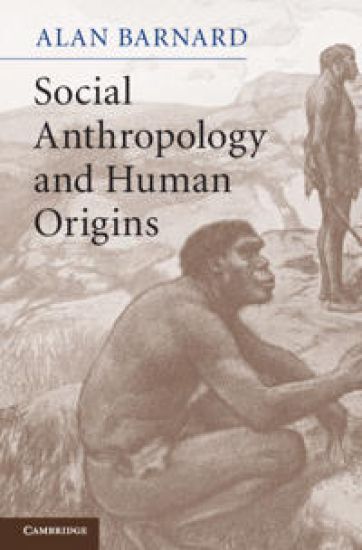
The study of human origins is one of the most fascinating branches of anthropology. Yet it has rarely been considered by social or cultural anthropologists, who represent the largest subfield of the discipline. In this powerful study Alan Barnard aims to bridge this gap. Barnard argues that social anthropological theory has much to contribute to our understanding of human evolution, including changes in technology, subsistence and exchange, family and kinship, as well as to the study of language, art, ritual and belief. This book places social anthropology in the context of a widely-conceived constellation of anthropological sciences. It incorporates recent findings in many fields, including primate studies, archaeology, linguistics and human genetics. In clear, accessible style Barnard addresses the fundamental questions surrounding the evolution of human society and the prehistory of culture, suggesting a new direction for social anthropology that will open up debate across the discipline as a whole.
The study of human origins is one of the most fascinating branches of anthropology. Yet it has rarely been considered by social or cultural anthropologists, who represent the largest subfield of the discipline. In this powerful study Alan Barnard aims to bridge this gap. Barnard argues that social anthropological theory has much to contribute to our understanding of human evolution, including changes in technology, subsistence and exchange, family and kinship, as well as to the study of language, art, ritual and belief. This book places social anthropology in the context of a widely-conceived constellation of anthropological sciences. It incorporates recent findings in many fields, including primate studies, archaeology, linguistics and human genetics. In clear, accessible style Barnard addresses the fundamental questions surrounding the evolution of human society and the prehistory of culture, suggesting a new direction for social anthropology that will open up debate across the discipline as a whole.

Technology and Nursing Practice explains and critically engages with the practice implications of technology for nursing. It takes a broad view of technology, covering not only health informatics, but also 'tele-nursing' and the use of equipment in clinical practice.

The Bushman' is a perennial but changing image. The transformation of that image is important. It symbolizes the perception of Bushman or San society, of the ideas and values of ethnographers who have worked with Bushman peoples, and those of other anthropologists who use this work. Anthropology and the Bushman covers early travellers and settlers, classic nineteenth and twentieth-century ethnographers, North American and Japanese ecological traditions, the approaches of African ethnographers, and recent work on advocacy and social development. It reveals the impact of Bushman studies on anthropology and on the public. The book highlights how Bushman or San ethnography has contributed to anthropological controversy, for example in the debates on the degree of incorporation of San society within the wider political economy, and on the validity of the case for 'indigenous rights' as a special kind of human rights. Examining the changing image of the Bushman, Barnard provides a new contribution to an established anthropology debate. A PDF version of this book is available for free in open access via the OAPEN Library platform, www.oapen.org
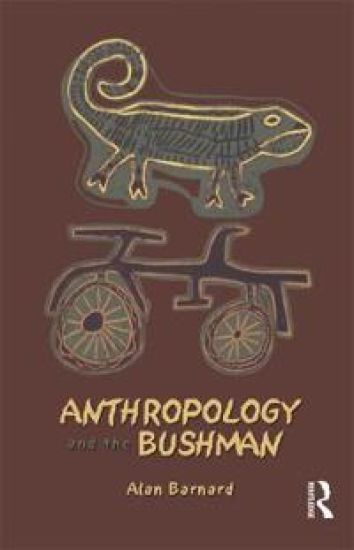
The Bushman' is a perennial but changing image. The transformation of that image is important. It symbolizes the perception of Bushman or San society, of the ideas and values of ethnographers who have worked with Bushman peoples, and those of other anthropologists who use this work. Anthropology and the Bushman covers early travellers and settlers, classic nineteenth and twentieth-century ethnographers, North American and Japanese ecological traditions, the approaches of African ethnographers, and recent work on advocacy and social development. It reveals the impact of Bushman studies on anthropology and on the public. The book highlights how Bushman or San ethnography has contributed to anthropological controversy, for example in the debates on the degree of incorporation of San society within the wider political economy, and on the validity of the case for 'indigenous rights' as a special kind of human rights. Examining the changing image of the Bushman, Barnard provides a new contribution to an established anthropology debate. A PDF version of this book is available for free in open access via the OAPEN Library platform, www.oapen.org

The Khoisan are a cluster of southern African peoples, including the famous Bushmen or San ‘hunters’, the Khoekhoe ‘herders’ (in the past called ‘Hottentots’), and the Damara, also a herding people. Most Khoisan live in the Kalahari desert and surrounding areas of Botswana and Namibia. In spite of differences in their way of life, the various groups have much in common, and this book explores these similarities and the influence of environment and history on aspects of Khoisan culture. This is the first book on the Khoisan as a whole since the publication in 1930 of The Khoisan Peoples of South Africa, by Isaac Schapera, doyen of southern African studies.

The Khoisan are a cluster of southern African peoples, including the famous Bushmen or San ‘hunters’, the Khoekhoe ‘herders’ (in the past called ‘Hottentots’), and the Damara, also a herding people. Most Khoisan live in the Kalahari desert and surrounding areas of Botswana and Namibia. In spite of differences in their way of life, the various groups have much in common, and this book explores these similarities and the influence of environment and history on aspects of Khoisan culture. This is the first book on the Khoisan as a whole since the publication in 1930 of The Khoisan Peoples of South Africa, by Isaac Schapera, doyen of southern African studies.