Kirjojen hintavertailu – 12 859 829 kirjaa ja 27 kauppaa

Kirjailija

Alan Bleakley

Kirjat ja teokset yhdessä paikassa: 22 kirjaa, julkaisuja vuosilta 2011–2026, suosituimpiin kuuluu Metacognition, Metahumanities, and Medical Education. Vertaile teosten hintoja ja tarkista saatavuus suomalaisista kirjakaupoista.

22 kirjaa

Kirjojen julkaisuvuodet: 2011–2026.

Metacognition, Metahumanities, and Medical Education

Metacognition, Metahumanities, and Medical Education

Alan Bleakley; Quentin Eichbaum; Rachel Ellaway

TAYLOR FRANCIS LTD
2026
nidottu
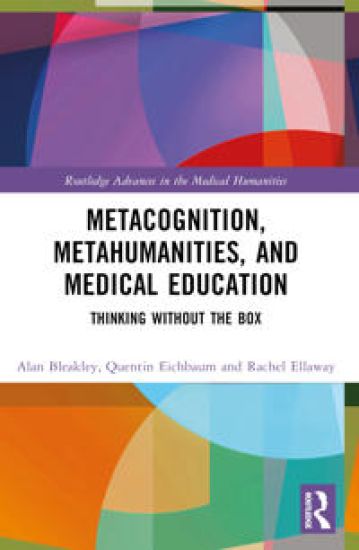
This persuasive volume develops a novel approach to medical education and the medical humanities, making a case for the integration of the two to explore the ways in which ‘warm’ humanism and ‘cold’ technologies can come together to design humane posthumanist futures in medicine. There are many problems with conventional medical education. It can be overly technocratic, dehumanizing, and empathy-eroding, introducing artefacts that lead to harm and reproduce inequality and injustice. Use of the arts, humanities, and qualitative social sciences have been pursued as an antidote or balance to these problems. Arguing against the purely instrumentalist use of medical humanities in this way, this book addresses the importance of a genuine and open-ended engagement with humanities approaches in medicine. It discusses the impact of artificial intelligence and emerging theoretical frameworks and posthumanist perspectives, such as object-oriented ontology, on meaning making in medicine. It demonstrates how the key to such a transition is the recovery of the intrinsic art and humanity of metaphor-heavy biomedical science, in turn framed by models of dynamic complexity rather than static linearity. This book is an important contribution to debates around the medical humanities and its role in medical education. It is an essential read for scholars with an interest in these areas, as well as those working in science and technology studies and the sociology of health and illness.
Self-Literacy

Self-Literacy

Alan Bleakley

TAYLOR FRANCIS LTD
2025
sidottu
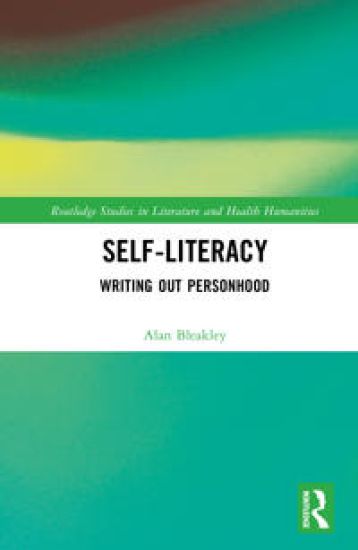
Self-Literacy: Writing Out Personhood offers fifty perspectives on gaining an understanding of what ‘personhood’ may mean through various disciplines. Literature is a key medium through which selves are mapped as humans are written into being. Such literature is intimately tied to health such as within self-help literature, written accounts of illness, or of characters who are defined by their afflictions – physical, psychological, and moral. This book adopts an essay approach to aspects of selfhood, including disciplines of psychology (personality), sociology (social selves), anthropology (cultural selfhood), literary (the self as portrayed in literature), and history (notions of self through time). Each chapter can be read in isolation, and a comprehensive list of works on self is provided as a bibliography. This book will appeal to researchers and postgraduates engaged in the fields of Literature and Health Humanities, as well as psychology, sociology, and anthropology academics and students.
Metacognition, Metahumanities, and Medical Education

Metacognition, Metahumanities, and Medical Education

Alan Bleakley; Quentin Eichbaum; Rachel Ellaway

TAYLOR FRANCIS LTD
2024
sidottu
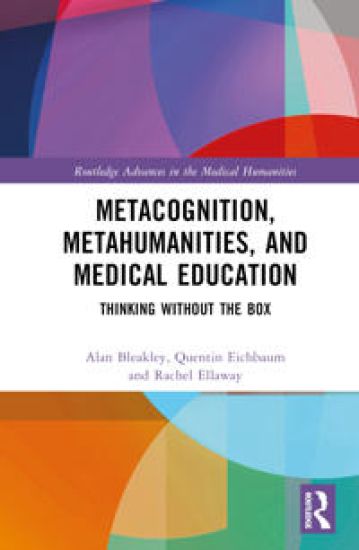
This persuasive volume develops a novel approach to medical education and the medical humanities, making a case for the integration of the two to explore the ways in which ‘warm’ humanism and ‘cold’ technologies can come together to design humane posthumanist futures in medicine. There are many problems with conventional medical education. It can be overly technocratic, dehumanizing, and empathy-eroding, introducing artefacts that lead to harm and reproduce inequality and injustice. Use of the arts, humanities, and qualitative social sciences have been pursued as an antidote or balance to these problems. Arguing against the purely instrumentalist use of medical humanities in this way, this book addresses the importance of a genuine and open-ended engagement with humanities approaches in medicine. It discusses the impact of artificial intelligence and emerging theoretical frameworks and posthumanist perspectives, such as object-oriented ontology, on meaning making in medicine. It demonstrates how the key to such a transition is the recovery of the intrinsic art and humanity of metaphor-heavy biomedical science, in turn framed by models of dynamic complexity rather than static linearity. This book is an important contribution to debates around the medical humanities and its role in medical education. It is an essential read for scholars with an interest in these areas, as well as those working in science and technology studies and the sociology of health and illness.
Poetry in the Clinic

Poetry in the Clinic

Alan Bleakley; Shane Neilson

TAYLOR FRANCIS LTD
2024
nidottu
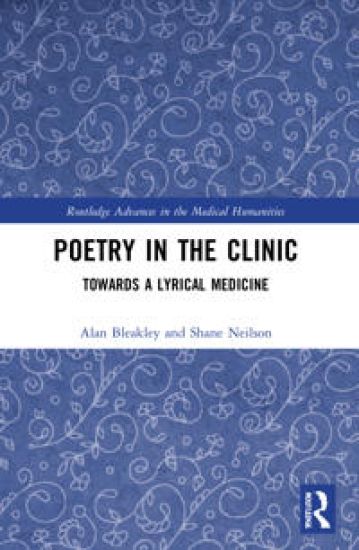
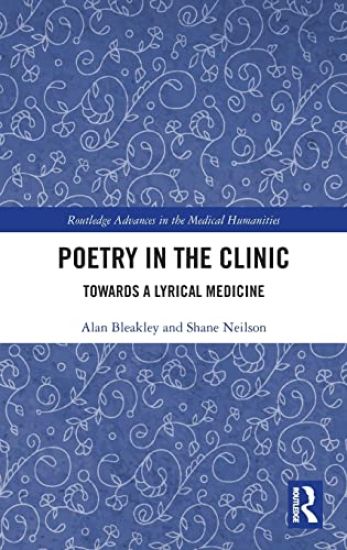
This book explores previously unexamined overlaps between the poetic imagination and the medical mind. It shows how appreciation of poetry can help us to engage with medicine in more intense ways based on ‘de-familiarising’ old habits and bringing poetic forms of ‘close reading’ to the clinic. Bleakley and Neilson carry out an extensive critical examination of the well-established practices of narrative medicine to show that non-narrative, lyrical poetry does different kind of work, previously unexamined, such as place eclipsing time. They articulate a groundbreaking ‘lyrical medicine’ that promotes aesthetic, ethical and political practices as well as noting the often-concealed metaphor cache of biomedicine. Demonstrating that ambiguity is a key resource in both poetry and medicine, the authors anatomise poetic and medical practices as forms of extended and situated cognition, grounded in close readings of singular contexts. They illustrate structural correspondences between poetic diction and clinical thinking, such as use of sound and metaphor. This provocative examination of the meaningful overlap between poetic and clinical work is an essential read for researchers and practitioners interested in extending the reach of medical and health humanities, narrative medicine, medical education and English literature.
Medical Humanities

Medical Humanities

Alan Bleakley

TAYLOR FRANCIS LTD
2023
nidottu
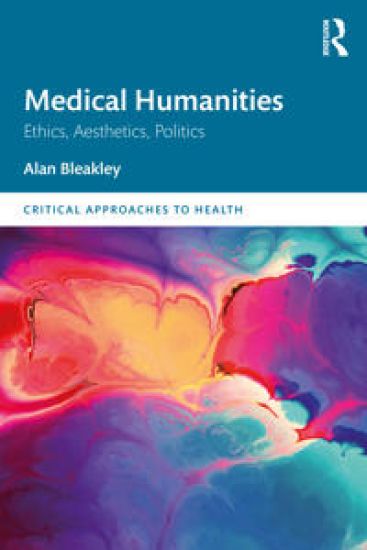
This ground-breaking book sets out a fresh vision for a future medical education by providing a radical reconceptualisation of the purposes of medical humanities through a lens of critical health psychology and liberatory pedagogy. The medical humanities are conceived as translational media through which reductive, instrumental biomedicine can be raised in quality, intensity, and complexity by embracing ethical, aesthetic, political, and transcendental values. This translation occurs through innovative use of metaphor. A note of caution is offered – that the medical humanities too can be instrumental and reductive if not framed well. Drawing on major theorists such as Michel Foucault and Jacques Rancière and bringing together insights from diverse but inter-related fields, Bleakley focuses on the "ills" of contemporary biomedicine and medical education, and the need for reconceptualisation, which – it is argued – the translational medical humanities have the potential to accomplish. Current instrumental approaches to medical humanities, embracing communication skills training and narrative-based medicine, have failed to address the chronic symptoms suffered by medicine. These include resort to closed, functional systems thinking rather than embracing dynamic, complex, open, and adaptive systems thinking; lack of democratic habits in medical culture, compromising patient safety and care; the production of insensibility rather than deepening of sensibility in medical education; a lack of attention to ethics, aesthetics, and politics where the instrumental is privileged; and a lack of critical reflexivity in revisioning habitual practices. Through persuasive argument, Bleakley sets out a more radical manifesto for the role the arts and humanities might play in medical/healthcare education and offers a new approach based on curriculum process rather than syllabus content, to recuperate aesthetic sensibilities, discernment, and affect in medicine. The book will appeal to medical and healthcare educators, medical and health humanities scholars, engaged clinicians, social scientists drawing on critical theory, and arts and humanities practitioners engaging with medical and healthcare themes.
Medical Humanities

Medical Humanities

Alan Bleakley

TAYLOR FRANCIS LTD
2023
sidottu
This ground-breaking book sets out a fresh vision for a future medical education by providing a radical reconceptualisation of the purposes of medical humanities through a lens of critical health psychology and liberatory pedagogy. The medical humanities are conceived as translational media through which reductive, instrumental biomedicine can be raised in quality, intensity, and complexity by embracing ethical, aesthetic, political, and transcendental values. This translation occurs through innovative use of metaphor. A note of caution is offered – that the medical humanities too can be instrumental and reductive if not framed well. Drawing on major theorists such as Michel Foucault and Jacques Rancière and bringing together insights from diverse but inter-related fields, Bleakley focuses on the "ills" of contemporary biomedicine and medical education, and the need for reconceptualisation, which – it is argued – the translational medical humanities have the potential to accomplish. Current instrumental approaches to medical humanities, embracing communication skills training and narrative-based medicine, have failed to address the chronic symptoms suffered by medicine. These include resort to closed, functional systems thinking rather than embracing dynamic, complex, open, and adaptive systems thinking; lack of democratic habits in medical culture, compromising patient safety and care; the production of insensibility rather than deepening of sensibility in medical education; a lack of attention to ethics, aesthetics, and politics where the instrumental is privileged; and a lack of critical reflexivity in revisioning habitual practices. Through persuasive argument, Bleakley sets out a more radical manifesto for the role the arts and humanities might play in medical/healthcare education and offers a new approach based on curriculum process rather than syllabus content, to recuperate aesthetic sensibilities, discernment, and affect in medicine. The book will appeal to medical and healthcare educators, medical and health humanities scholars, engaged clinicians, social scientists drawing on critical theory, and arts and humanities practitioners engaging with medical and healthcare themes.
Psychotherapy, the Alchemical Imagination and Metaphors of Substance
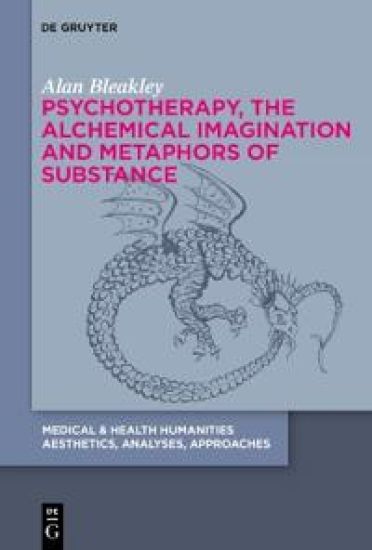
Alchemy is popularly viewed as a secret way of turning worthless base metal into gold, and then a precursor to modern chemistry. This is often taken as a metaphor for psychological development. This book describes an innovative "third way" for both the education and exercise of an alchemical imagination that embraces both material matters and psychological insight: alchemy as lyrical poetics, or the intensive production of embodied metaphor. Alchemy here is viewed as an immanent set of metaphor-driven "best practices" for indwelling complex and contradictory earthly matters in a sensual, artistic and humane manner. Or, again, it describes best psychotherapeutic practice. Alchemy is read not as a medium for "personal growth", but optimal co-existence with the natural world. It is an eco-logical rather than ego-logical project with deep aesthetic concerns (education of the senses in close noticing) and political intentions (a democracy of worldly things). The book echoes post-Freudian developments in psychoanalysis that avoid the mysticism of symbol systems to work rather with everyday signs and linguistic registers such as embodied metaphors, keeping the focus on known and sensed phenomena rather than abstractions.
Medical Education, Politics and Social Justice

Medical Education, Politics and Social Justice

Alan Bleakley

TAYLOR FRANCIS LTD
2023
nidottu
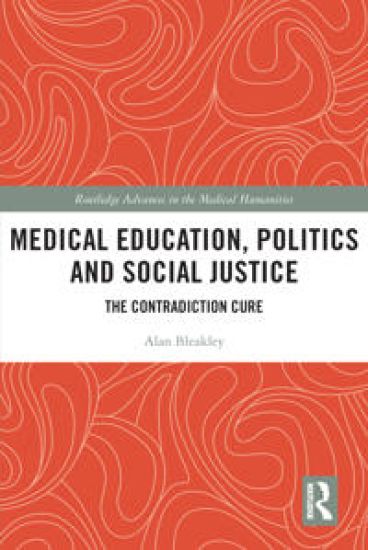
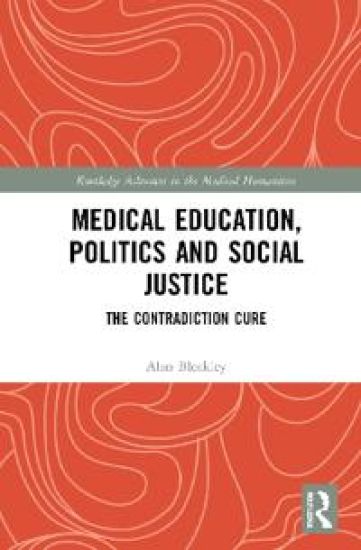
This book critically analyses how politics and power affect the ways that medicine is taught and learned. Challenging society’s historic reluctance to connect the realm of politics to the realm of medicine, Medical Education, Politics and Social Justice: The Contradiction Cure emphasizes the need for medical students to engage with social justice issues, including global health crises resulting from the climate emergency, and the health implications of widening social inequality. Arguing for an increased focus on community-based learning, rather than acute care, this innovative text maps the territory of medicine’s contradictory engagement with politics as a springboard for creative curriculum design. It demonstrates why the socially disempowered - such as political and climate refugees, the homeless, or those without health insurance should be primary subjects of attention for medical students, while exploring how political engagement can be refined, sharp, cultivated and creative, engaging imagination and demanding innovationExploring how the medical humanities can promote engagement with politics to improve medical education, this book is a ground-breaking and inspiring contribution. It is an essential read for all those with a focus on medical education and medical humanities, as well as medical and healthcare students with an interest in the social determinants of health.
Poetry in the Clinic

Poetry in the Clinic

Alan Bleakley; Shane Neilson

TAYLOR FRANCIS LTD
2021
sidottu
This book explores previously unexamined overlaps between the poetic imagination and the medical mind. It shows how appreciation of poetry can help us to engage with medicine in more intense ways based on ‘de-familiarising’ old habits and bringing poetic forms of ‘close reading’ to the clinic. Bleakley and Neilson carry out an extensive critical examination of the well-established practices of narrative medicine to show that non-narrative, lyrical poetry does different kind of work, previously unexamined, such as place eclipsing time. They articulate a groundbreaking ‘lyrical medicine’ that promotes aesthetic, ethical and political practices as well as noting the often-concealed metaphor cache of biomedicine. Demonstrating that ambiguity is a key resource in both poetry and medicine, the authors anatomise poetic and medical practices as forms of extended and situated cognition, grounded in close readings of singular contexts. They illustrate structural correspondences between poetic diction and clinical thinking, such as use of sound and metaphor. This provocative examination of the meaningful overlap between poetic and clinical work is an essential read for researchers and practitioners interested in extending the reach of medical and health humanities, narrative medicine, medical education and English literature.
Educating Doctors' Senses Through The Medical Humanities
Educating Doctors’ Senses Through the Medical Humanities: "How Do I Look?" uses the medical diagnostic method to identify a chronic symptom in medical culture: the unintentional production of insensibility through compulsory mis-education. This book identifies the symptom and its origins and offers an intervention: deliberate and planned education of sensibility through the introduction of medical humanities to the core undergraduate medicine and surgery curriculum. To change medical culture is an enormous challenge, and this book sets out how to do this by answering the following questions: How has a compulsory mis-education for insensibility developed in medical culture and medical education? How is sensibility capital generated, who ‘owns’ it and how is it distributed, mal-distributed and re-distributed? What is the place of resistance (or ‘dissensus’) in this process? How can the symptom of a ‘developed’ insensibility be addressed pedagogically through introduction of the medical humanities as core and integrated curriculum provision? How can both the identity constructions of doctors and doctor–patient relationships be tied up with education for sensibility? How can artists work with clinicians, through the medical humanities in medical education, to better educate sensibility? The book will be of interest to all medical educators and clinicians, including those health and social care professionals outside of medicine who work with doctors.
Medical Education, Politics and Social Justice
This book critically analyses how politics and power affect the ways that medicine is taught and learned. Challenging society’s historic reluctance to connect the realm of politics to the realm of medicine, Medical Education, Politics and Social Justice: The Contradiction Cure emphasizes the need for medical students to engage with social justice issues, including global health crises resulting from the climate emergency, and the health implications of widening social inequality. Arguing for an increased focus on community-based learning, rather than acute care, this innovative text maps the territory of medicine’s contradictory engagement with politics as a springboard for creative curriculum design. It demonstrates why the socially disempowered - such as political and climate refugees, the homeless, or those without health insurance should be primary subjects of attention for medical students, while exploring how political engagement can be refined, sharp, cultivated and creative, engaging imagination and demanding innovationExploring how the medical humanities can promote engagement with politics to improve medical education, this book is a ground-breaking and inspiring contribution. It is an essential read for all those with a focus on medical education and medical humanities, as well as medical and healthcare students with an interest in the social determinants of health.
Educating Doctors' Senses Through the Medical Humanities
Educating Doctors’ Senses Through the Medical Humanities: "How Do I Look?" uses the medical diagnostic method to identify a chronic symptom in medical culture: the unintentional production of insensibility through compulsory mis-education. This book identifies the symptom and its origins and offers an intervention: deliberate and planned education of sensibility through the introduction of medical humanities to the core undergraduate medicine and surgery curriculum. To change medical culture is an enormous challenge, and this book sets out how to do this by answering the following questions: How has a compulsory mis-education for insensibility developed in medical culture and medical education? How is sensibility capital generated, who ‘owns’ it and how is it distributed, mal-distributed and re-distributed? What is the place of resistance (or ‘dissensus’) in this process? How can the symptom of a ‘developed’ insensibility be addressed pedagogically through introduction of the medical humanities as core and integrated curriculum provision? How can both the identity constructions of doctors and doctor–patient relationships be tied up with education for sensibility? How can artists work with clinicians, through the medical humanities in medical education, to better educate sensibility? The book will be of interest to all medical educators and clinicians, including those health and social care professionals outside of medicine who work with doctors.
Thinking with Metaphors in Medicine
While medical language is soaked in metaphor, and thinking with metaphor is central to diagnostic work, medicine – that is, medical culture, clinical practice and medical education – outwardly rejects metaphor for objective, literal scientific language. This thought-provoking book argues that this is a misstep, and critically considers what embracing the use of metaphors and similes might mean for shaping medical culture, and especially the doctor–patient relationship, in a healthy way. Thinking With Metaphors in Medicine explores: how metaphors inhabit medicine – sometimes for the better and sometimes for the worse – and how these metaphors can be revealed, appreciated and understood; how diagnostic work utilizes thinking with metaphors; how patient–doctor communication can be better understood and enhanced as a metaphorical exchange; how the landscape of medicine is historically shaped by leading or didactic metaphors, such as ‘the body as machine’ and ‘medicine as war’, which may conflict with other values or perspectives on healthcare, for instance, person-centred care. Outlining the kinds of metaphors and resemblances that inhabit medicine and how they shape practices and identities of doctors, colleagues and patients, this book demonstrates how the landscape of medicine may be reshaped through metaphor shift. It is an important work for all those interested in the use of language and rhetoric in medicine, whether hailing from a humanities, social science or healthcare background.
Staying Human During the Foundation Programme and Beyond

Staying Human During the Foundation Programme and Beyond

Allan Peterkin; Alan Bleakley

CRC Press
2017
nidottu
The ultimate enrichment and survival guide for Foundation Programme doctors, Staying Human During the Foundation Programme and Beyond provides time-tested advice and the latest information on every aspect of a junior doctor's life – from clinical transitions, to coping with stress, enhancing self-care and protecting personal and professional relationships. Already acknowledged in its original Canadian edition as an invaluable resource by thousands of doctors working across North America, this UK adaptation – with a host of new material and features – offers evidence-based practical advice to junior doctors on how to cope with a wide-range of challenges including working in teams, sleep deprivation, time pressures and ethical issues, while at the same time maintaining a high level of patient care and safety. The authors also address subjects such as sexuality, equality and social justice.
Staying Human During the Foundation Programme and Beyond

Staying Human During the Foundation Programme and Beyond

Allan Peterkin; Alan Bleakley

CRC Press
2017
sidottu
The ultimate enrichment and survival guide for Foundation Programme doctors, Staying Human During the Foundation Programme and Beyond provides time-tested advice and the latest information on every aspect of a junior doctor's life – from clinical transitions, to coping with stress, enhancing self-care and protecting personal and professional relationships. Already acknowledged in its original Canadian edition as an invaluable resource by thousands of doctors working across North America, this UK adaptation – with a host of new material and features – offers evidence-based practical advice to junior doctors on how to cope with a wide-range of challenges including working in teams, sleep deprivation, time pressures and ethical issues, while at the same time maintaining a high level of patient care and safety. The authors also address subjects such as sexuality, equality and social justice.
Thinking with Metaphors in Medicine
While medical language is soaked in metaphor, and thinking with metaphor is central to diagnostic work, medicine – that is, medical culture, clinical practice and medical education – outwardly rejects metaphor for objective, literal scientific language. This thought-provoking book argues that this is a misstep, and critically considers what embracing the use of metaphors and similes might mean for shaping medical culture, and especially the doctor–patient relationship, in a healthy way. Thinking With Metaphors in Medicine explores: how metaphors inhabit medicine – sometimes for the better and sometimes for the worse – and how these metaphors can be revealed, appreciated and understood; how diagnostic work utilizes thinking with metaphors; how patient–doctor communication can be better understood and enhanced as a metaphorical exchange; how the landscape of medicine is historically shaped by leading or didactic metaphors, such as ‘the body as machine’ and ‘medicine as war’, which may conflict with other values or perspectives on healthcare, for instance, person-centred care. Outlining the kinds of metaphors and resemblances that inhabit medicine and how they shape practices and identities of doctors, colleagues and patients, this book demonstrates how the landscape of medicine may be reshaped through metaphor shift. It is an important work for all those interested in the use of language and rhetoric in medicine, whether hailing from a humanities, social science or healthcare background.
Medical Humanities and Medical Education
The field of the medical humanities is developing rapidly, however, there has also been parallel concern from sceptics that the value of medical humanities educational interventions should be open to scrutiny and evidence. Just what is the impact of medical humanities provision upon the education of medical students? In an era of limited resources, is such provision worth the investment? This innovative text addresses these pressing questions, describes the contemporary territory comprising the medical humanities in medical education, and explains how this field may be developed as a key medical education component for the future. Bleakley, a driving force of the international movement to establish the medical humanities as a core and integrated provision in the medical curriculum, proposes a model that requires collaboration between patients, artists, humanities scholars, doctors and other health professionals, in developing medical students’ sensibility (clinical acumen based on close noticing) and sensitivity (ethical, professional and humane practice). In particular, this text focuses upon how medical humanities input into the curriculum can help to shape the identities of medical students as future doctors who are humane, caring, expressive and creative – whose work will be technically sound but considerably enhanced by their abilities to communicate well with patients and colleagues, to empathise, to be adaptive and innovative, and to act as ‘medical citizens’ in shaping a future medical culture as a model democracy where social justice is a key aspect of medicine. Making sense of the new wave of medical humanities in medical education scholarship that calls for a ‘critical medical humanities’, Medical Humanities and Medical Education incorporates a range of case studies and illustrative and practical examples to aid integrating medical humanities into the medical curriculum. It will be important reading for medical educators and others working with the medical education community, and all those interested in the medical humanities.
Patient-Centred Medicine in Transition

Patient-Centred Medicine in Transition

Alan Bleakley

Springer International Publishing AG
2016
nidottu
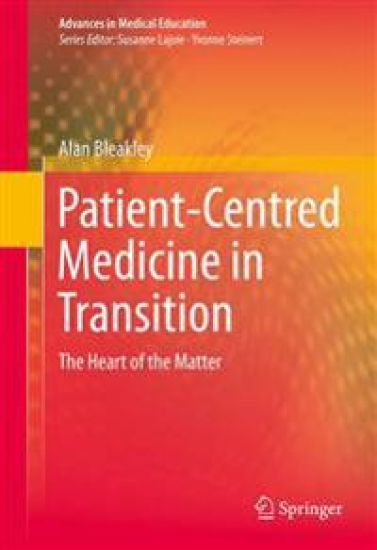
This book challenges functional models for more aesthetic and ethical models, where communication is grounded in values systems of cultures. Here, communication is treated as a distributed phenomenon involving networks of persons, activities and artifacts, and extends beyond doctor-patient relationships to working in and across teams around patients. The purpose of the book is to stimulate thinking about how patient care and safety may be improved through a focus upon the ‘non-technical’ work of doctors – interpersonal communication, teamwork and situation awareness in teams. The focus is then not on the personality of the doctor, but on the dynamics of relationships which form doctors’ multiple identities.
Medical Humanities and Medical Education
The field of the medical humanities is developing rapidly, however, there has also been parallel concern from sceptics that the value of medical humanities educational interventions should be open to scrutiny and evidence. Just what is the impact of medical humanities provision upon the education of medical students? In an era of limited resources, is such provision worth the investment? This innovative text addresses these pressing questions, describes the contemporary territory comprising the medical humanities in medical education, and explains how this field may be developed as a key medical education component for the future. Bleakley, a driving force of the international movement to establish the medical humanities as a core and integrated provision in the medical curriculum, proposes a model that requires collaboration between patients, artists, humanities scholars, doctors and other health professionals, in developing medical students’ sensibility (clinical acumen based on close noticing) and sensitivity (ethical, professional and humane practice). In particular, this text focuses upon how medical humanities input into the curriculum can help to shape the identities of medical students as future doctors who are humane, caring, expressive and creative – whose work will be technically sound but considerably enhanced by their abilities to communicate well with patients and colleagues, to empathise, to be adaptive and innovative, and to act as ‘medical citizens’ in shaping a future medical culture as a model democracy where social justice is a key aspect of medicine. Making sense of the new wave of medical humanities in medical education scholarship that calls for a ‘critical medical humanities’, Medical Humanities and Medical Education incorporates a range of case studies and illustrative and practical examples to aid integrating medical humanities into the medical curriculum. It will be important reading for medical educators and others working with the medical education community, and all those interested in the medical humanities.
Patient-Centred Medicine in Transition

Patient-Centred Medicine in Transition

Alan Bleakley

Springer International Publishing AG
2014
sidottu
This book challenges functional models for more aesthetic and ethical models, where communication is grounded in values systems of cultures. Here, communication is treated as a distributed phenomenon involving networks of persons, activities and artifacts, and extends beyond doctor-patient relationships to working in and across teams around patients. The purpose of the book is to stimulate thinking about how patient care and safety may be improved through a focus upon the ‘non-technical’ work of doctors – interpersonal communication, teamwork and situation awareness in teams. The focus is then not on the personality of the doctor, but on the dynamics of relationships which form doctors’ multiple identities.