Kirjojen hintavertailu – 12 903 725 kirjaa ja 27 kauppaa

Kirjailija

Alan Burton

Kirjat ja teokset yhdessä paikassa: 15 kirjaa, julkaisuja vuosilta 2002–2026, suosituimpiin kuuluu Historical Dictionary of British Cinema. Vertaile teosten hintoja ja tarkista saatavuus suomalaisista kirjakaupoista.

15 kirjaa

Kirjojen julkaisuvuodet: 2002–2026.

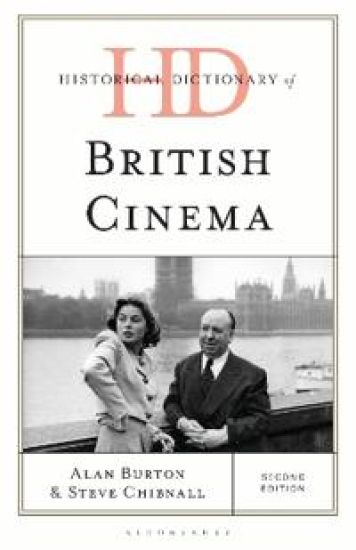
Historical Dictionary of British Cinema

Historical Dictionary of British Cinema

Alan Burton; Steve Chibnall

BLOOMSBURY PUBLISHING PLC
2026
sidottu
British filmmakers were among the pioneers of motion pictures, and British cinema has participated in all the great historical transitions of the medium, from black and white to colour, from talkies to sound, and from flat screen to 3-D and Imax. Many British performers, artistes and directors, after success in their home country, have been lured to Hollywood, including such giants as Charlie Chaplin, Stan Laurel and Alfred Hitchcock. Today, cinema in Britain remains vibrant, turning out films that appeal to a wide variety of audiences, and initiating and sustaining such popular and lucrative series as the James Bond, Harry Potter and Bridget Jones franchises. British studios and technicians are regularly first choice for the production of Hollywood blockbusters. Historical Dictionary of British Cinema contains a chronology, an introduction, appendices, and an extensive bibliography. The dictionary section contains cross-referenced entries on significant actors, producers, directors and crafts people, leading organizations and studios, important genres like comedy and horror, and for memorable films. This book is an excellent resource for students, researchers, and anyone wanting to know more about British cinema.
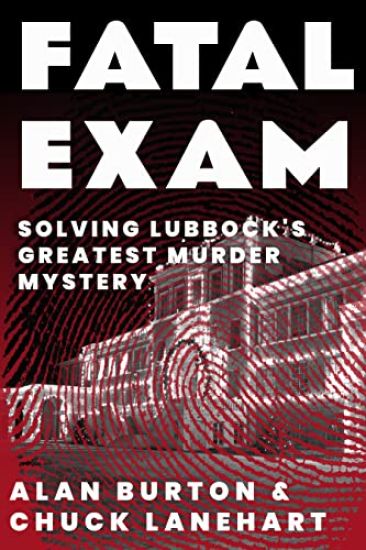
Fatal Exam

Fatal Exam

Alan Burton; Chuck Lanehart

TEXAS A M UNIVERSITY PRESS
2023
nidottu
On Monday, December 4, 1967, a body was discovered in the science building of the largest university in West Texas. The next day, citizens of Lubbock gathered for the Carol of Lights, and event typically the centrepiece of the holidays for the quiet college town. But in 1967, the normal festive excitement and anticipation was shockingly and swiftly shattered by the harrowing events that had occurred just twenty-four hours earlier. For the first time, the story of this shocking murder has been painstakingly reconstructed by Alan Burton and Chuck Lanehart. Piecing together timelines based on interviews, journalists' archives, courtroom transcripts, and the personal experiences of Lubbockites, Fatal Exam situates the murder, relates the capture, and details the trial of the crime's perpetrator. Not your standard psychopathic master, the criminal at this story's center cuts a challenging profile, and his story shines an unusual light on the criminal justice system. Fatal Exam is a crime story, but it's also the story of its biggest university in West Texas and the peculiar town-and-gown relationship that comes in such a far-flung setting.
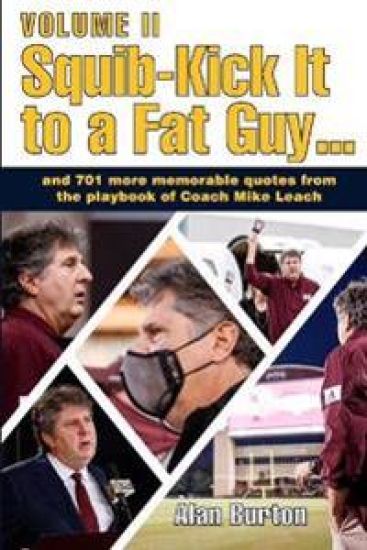
Squib-Kick It to a Fat Guy, Volume II

Squib-Kick It to a Fat Guy, Volume II

Alan Burton

Anarene Books
2021
pokkari
Mike Leach is back by popular demand. The words and random thoughts of college football's most interesting coach are chronicled inSquib-Kick It to a Fat Guy, Volume II ... and 701 more memorable quotes from the playbook of Coach Mike Leach. This collection is the sequel to the original Squib-Kick It to a Fat Guy... and 699 more memorable quotes from the playbook of Coach Mike Leach, which hit the (book)stores/online in the summer of 2016. Since that time, after successfully rebuilding the Washington State football program, Leach has moved on from Pullman, Washington, to Starkville, Mississippi, as the head coach of the Mississippi State Bulldogs in the powerful Southeastern Conference. Along the way, he has left us with a pirate's treasure of fresh quotes and observations, that, quite frankly, coupled with his Air Raid offense, make the game of college football more entertaining and enjoyable for everyone. Volume II covers the "Best of Leach'' for the past five years, as well as dipping back into his earlier days of coaching for some classic and unique perspectives on football and life. About the AuthorAlan Burton has more than 35 years of experience in the field of media/communications. He currently serves as the special assistant to the president/director of university communications at Southeastern Oklahoma State University. He has been associated with the Durant, Oklahoma, school in various capacities for the past twenty years. Burton was director of community relations for the Sherman (Texas) Independent School District for eleven years, and prior to that, was sports editor of the Sherman Democrat. The Sherman native has received writing awards from the Associated Press, Texas School Public Relations Association, and the Oklahoma College Public Relations Association. Burton is a 1979 graduate of Texas Tech University, where he earned a bachelor of arts degree in English. Squib-Kick It to a Fat Guy, Volume II is his eighth book; previous subjects have included Texas celebrities, sports and music quotes, and a history of college football radio broadcasting in the Lone Star State.
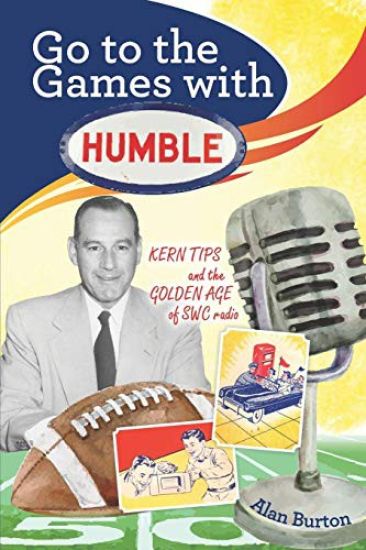
Go to the Games with Humble: Kern Tips and the Golden Age of SWC radio
Quite simply, Go to the Games with Humble: Kern Tips and the Golden Age of SWC radio is a one-of-a-kind book. For the first time, the history of the Humble Oil and Refining Company's radio broadcasts of Southwest Conference football games is chronicled with behind-the-scenes stories, rare photos, comprehensive lists of the announcers and the games they called, an actual script of a broadcast, and a timeline of memorable moments. Long before the advent of ESPN and the explosion of cable TV sports and, eventually, the Longhorn Network, college football fans tuned in to their radios to follow the SWC teams. Humble, with its broadcast origins dating back to 1934, offered unbiased play-by-play action of all conference teams through the growing number of radio stations on its network. Humble/Enco/Exxon sponsored SWC football radio broadcasts for 44 consecutive years, from 1934 to 1977. Over the years, many famous names occupied the Humble broadcast booth, including top play-by-play man Kern Tips, the Voice of the Southwest Conference, and his sidekick, Alec Chesser. Following Tips's death, Connie Alexander ably assumed the role of top announcer, accompanied on a frequent basis by color announcers Stan McKenzie and Dave Smith. Other broadcasters familiar to longtime SWC football fans included the likes of Frank Fallon, Jack Dale, Glenn Brown, and Gene Elston. Through extensive research and interviews by longtime Texas writer Alan Burton, Go to the Games with Humble offers readers the chance to relive the golden days of radio. This is a must-read for all football fans in the Southwest. Happy Reading
Looking-Glass Wars: Spies on British Screens since 1960
Looking-Glass Wars: Spies on British Screens since 1960 is a detailed historical and critical overview of espionage in British film and television in the important period since 1960. From that date, the British spy screen was transformed under the influence of the tremendous success of James Bond in the cinema (the spy thriller), and of the new-style spy writing of John le Carr and Len Deighton (the espionage story). In the 1960s, there developed a popular cycle of spy thrillers in the cinema and on television. The new study looks in detail at the cycle which in previous work has been largely neglected in favour of the James Bond films. The study also brings new attention to espionage on British television and popular secret agent series such as Spy Trap, Quiller and The Sandbaggers. It also gives attention to the more 'realistic' representation of spying in the film and television adaptations of le Carr and Deighton, and other dramas with a more serious intent. In addition, there is wholly original attention given to 'nostalgic' spy fictions on screen, adaptations of classic stories of espionage which were popular in the late 1970s and through the 1980s, and to 'historical' spy fiction, dramas which treated 'real' cases of espionage and their characters, most notably the notorious Cambridge Spies. Detailed attention is also given to the 'secret state' thriller, a cycle of paranoid screen dramas in the 1980s which portrayed the intelligence services in a conspiratorial light, best understood as a reaction to excessive official secrecy and anxieties about an unregulated security service. The study is brought up-to-date with an examination of screen espionage in Britain since the end of the Cold War. The approach is empirical and historical. The study examines the production and reception, literary and historical contexts of the films and dramas. It is the first detailed overview of the British spy screen in its crucial period since the 1960s and provides fresh attention to spy films, series and serials never previously considered.
Looking-Glass Wars: Spies on British Screens since 1960

Looking-Glass Wars: Spies on British Screens since 1960

Alan Burton

Vernon Press
2018
sidottu

Halvin toimitettuna 101,50 €

Looking-Glass Wars: Spies on British Screens since 1960 is a detailed historical and critical overview of espionage in British film and television in the important period since 1960. From that date, the British spy screen was transformed under the influence of the tremendous success of James Bond in the cinema (the spy thriller), and of the new-style spy writing of John le Carr and Len Deighton (the espionage story). In the 1960s, there developed a popular cycle of spy thrillers in the cinema and on television. The new study looks in detail at the cycle which in previous work has been largely neglected in favour of the James Bond films. The study also brings new attention to espionage on British television and popular secret agent series such as Spy Trap, Quiller and The Sandbaggers. It also gives attention to the more 'realistic' representation of spying in the film and television adaptations of le Carr and Deighton, and other dramas with a more serious intent. In addition, there is wholly original attention given to 'nostalgic' spy fictions on screen, adaptations of classic stories of espionage which were popular in the late 1970s and through the 1980s, and to 'historical' spy fiction, dramas which treated 'real' cases of espionage and their characters, most notably the notorious Cambridge Spies. Detailed attention is also given to the 'secret state' thriller, a cycle of paranoid screen dramas in the 1980s which portrayed the intelligence services in a conspiratorial light, best understood as a reaction to excessive official secrecy and anxieties about an unregulated security service. The study is brought up-to-date with an examination of screen espionage in Britain since the end of the Cold War. The approach is empirical and historical. The study examines the production and reception, literary and historical contexts of the films and dramas. It is the first detailed overview of the British spy screen in its crucial period since the 1960s and provides fresh attention to spy films, series and serials never previously considered.
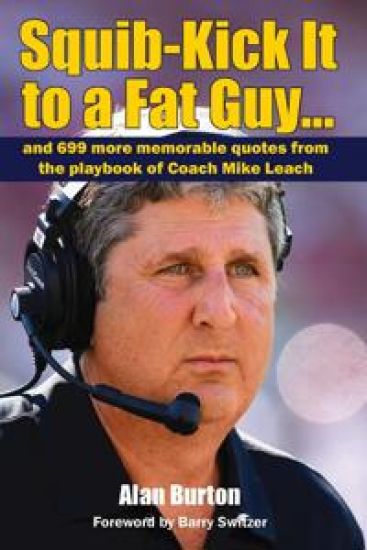
Squib-Kick It to a Fat Guy…

Squib-Kick It to a Fat Guy…

Alan Burton; Barry Switzer

Redleaf Press
2016
pokkari
College football coach Mike Leach is known for three things--winning games, producing offenses that gain yards and score points, and finally, speaking his mind and saying things that go far beyond the cliché-ridden speeches employed by his coaching peers. In Squib-Kick It to a Fat Guy…, Mike Leach is unplugged. Author Alan Burton painstakingly gathered hundreds of his most memorable quotes to offer "Leachspeak" at its best--informative, entertaining, humorous, and even mystifying. Leach fans won't want to miss this delightful, revealing collection of unforgettable quotes.
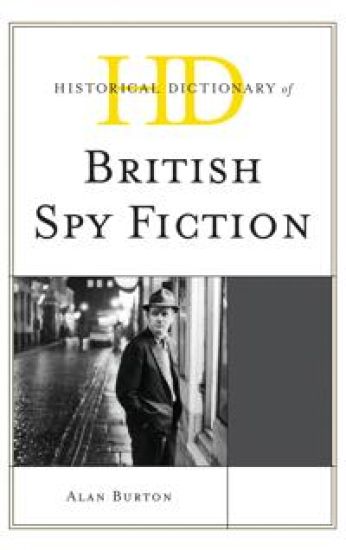
Historical Dictionary of British Spy Fiction

Historical Dictionary of British Spy Fiction

Alan Burton

Rowman Littlefield
2016
sidottu
The Historical Dictionary of British Spy Fiction is a detailed overview of the rich history and achievements of the British espionage story in literature, cinema and television. It provides detailed yet accessible information on numerous individual authors, novels, films, filmmakers, television dramas and significant themes within the broader field of the British spy story. It contains a wealth of facts, insights and perspectives, and represents the best single source for the study and appreciation of British spy fiction. British spy fiction is widely regarded as the most significant and accomplished in the world and this book is the first attempt to bring together an informed survey of the achievements in the British spy story in literature, cinema and television. The Historical Dictionary of British Spy Fiction contains a chronology, an introduction, appendixes, and an extensive bibliography. The dictionary section has over 200 cross-referenced entries on individual authors, stories, films, filmmakers, television shows and the various sub-genres of the British spy story. This book is an excellent access point for students, researchers, and anyone wanting to know more about British spy fiction.
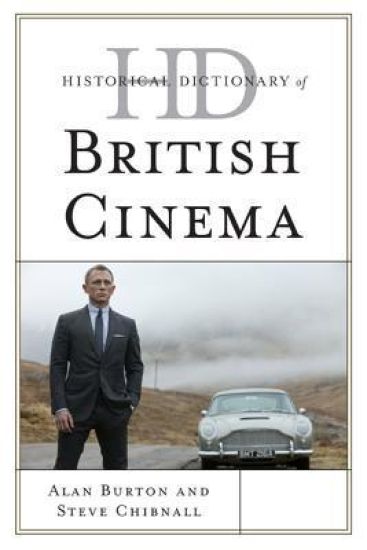
Historical Dictionary of British Cinema

Historical Dictionary of British Cinema

Alan Burton; Steve Chibnall

Scarecrow Press
2013
sidottu
British cinema has been around from the very birth of motion pictures, from black-and-white to color, from talkies to sound, and now 3D, it has been making a major contribution to world cinema. Many of its actors and directors have stayed at home but others ventured abroad, like Charlie Chaplin and Alfred Hitchcock. Today it is still going strong, the only real competition to Hollywood, turning out films which appeal not only to Brits, just think of Bridget Jones, while busily adding to franchises like James Bond and Harry Potter. So this Historical Dictionary of British Cinema has a lot of ground to cover. This it does with over 300 dictionary entries informing us about significant actors, producers and directors, outstanding films and serials, organizations and studios, different films genres from comedy to horror, and memorable films, among other things. Two appendixes provide lists of award-winners. Meanwhile, the chronology covers over a century of history. These parts provide the details, countless details, while the introduction offers the big story. And the extensive bibliography points toward other sources of information.
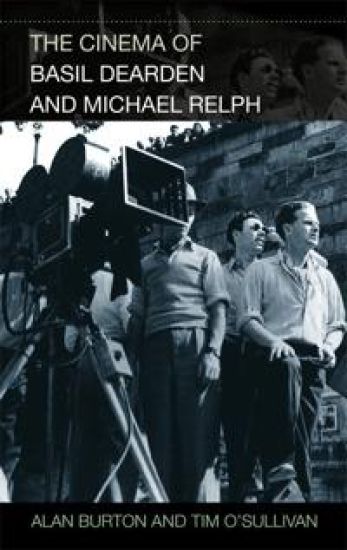
The Cinema of Basil Dearden and Michael Relph

The Cinema of Basil Dearden and Michael Relph

Alan Burton; Tim O'Sullivan

Edinburgh University Press
2009
sidottu
This book offers the first full systematic assessment and evaluation of the cinema of this important filmmaking partnership. Dearden and Relph came together at the famous Ealing Studios in the wartime period and became the most prolific production team at the studio, contributing such popular and critically acclaimed films as The Captive Heart (1946), The Blue Lamp (1950) and Pool of London (1951). Later in the 1950s, Dearden and Relph branched out into independent production and became particularly associated with a cycle of controversial social problem films that included Sapphire (1959) and Victim (1961). This new study takes an extensive view of the cinema of Basil Dearden and Michael Relph. It considers in detail their contribution to the celebrated achievements of wartime cinema at Ealing, brings a new focus to their post-war films that addressed masculine adjustment in a period of rapid change, takes a fresh look at the prominent group of social problem films within their work, and offers an original study of their later period of filmmaking for the international market in the 1960s. Attention is also given to the significant place of comedy in their cinema and Michael Relph's considerable achievements as an art director. The book will be of interest to all students of film history and a general readership that takes a keen interest in British cinema.
Dallas Cowboys

Dallas Cowboys

Alan Burton

State House Press
2006
nidottu
Alan Burton, a lifelong fan of the Dallas Cowboys, chronicles the team's forty-five year history in a collection of more than five hundred quips and quotes from players, coaches, owners, broadcasters, and writers. Organized chronologically, the quotations provide a colorful record of the ups and downs of one of the best-known franchises in professional sports - and ""must"" reading for the die-hard Dallas Cowboy fan. A few examples: Tom Landry on his Flex defense: ""It is designed to stop every play on the line of scrimmage. This is the theory, you have to remember, not necessarily the result."" Lineman Jim Boeke on quarterback Don Meredith: ""If Meredith had led us over a cliff, I would have been the first one to follow. He was that great a leader."" Linebacker D. D. Lewis on Texas Stadium: ""Texas Stadium has a hole in its roof so God can watch his favorite team play."" Caustic commentator Howard Cosell: ""The Cowboys are the most overrated, overhyped team in professional football."" Sportswriter Bob St. John on Roger Staubach's clean-cut image: ""His idea of breaking training is putting whipped cream on his pie."" A convicted murderer shortly before his execution: ""I am thankful to the Dallas Cowboys for giving me a lot of enjoyment the past years."" Lineman Nate Newton: ""Remember this - there's the Cowboys, and then there's the rest.