Kirjojen hintavertailu – 12 859 819 kirjaa ja 27 kauppaa

Kirjailija

Alan Cook

Kirjat ja teokset yhdessä paikassa: 16 kirjaa, julkaisuja vuosilta 1993–2020, suosituimpiin kuuluu Truth, Tears, Turning, and Trusting. Vertaile teosten hintoja ja tarkista saatavuus suomalaisista kirjakaupoista.

16 kirjaa

Kirjojen julkaisuvuodet: 1993–2020.

Truth, Tears, Turning, and Trusting

Truth, Tears, Turning, and Trusting

Ron Simkins; Alan Cook

Resource Publications (CA)
2020
sidottu
To a startling extent, we Christians have related, and still relate, to Jewish people in ways that encourage anti-Semitism and anti-Judaism. We often do this as we exegete the Bible in our sermons, classrooms, and books. Our sins against Jews can be just as horrendous when they flow from our ignorance, arrogance, and privilege as when they are the expression of outright prejudices. This book is a plea for Christians to live up to the challenge Jesus, as well as the great writing prophets of the Old Testament, set for us. We must learn to tell the truth rather than hiding from it, to shed the tears of broken hearts, choose turning from our old ways to new paths, and practice trusting that God will bless the efforts. Although the author believes it is important to know that the mostly Jewish writers of the New Testament were not rejecting their Jewish roots, and certainly were not anti-Semitic, he acknowledges that church history ensures that there is almost no other way to hear some passages today. We can choose a new path that honors Jesus and honors all we owe the Jewish people past and present.
Truth, Tears, Turning, and Trusting

Truth, Tears, Turning, and Trusting

Ron Simkins; Alan Cook

Resource Publications (CA)
2020
pokkari
To a startling extent, we Christians have related, and still relate, to Jewish people in ways that encourage anti-Semitism and anti-Judaism. We often do this as we exegete the Bible in our sermons, classrooms, and books. Our sins against Jews can be just as horrendous when they flow from our ignorance, arrogance, and privilege as when they are the expression of outright prejudices. This book is a plea for Christians to live up to the challenge Jesus, as well as the great writing prophets of the Old Testament, set for us. We must learn to tell the truth rather than hiding from it, to shed the tears of broken hearts, choose turning from our old ways to new paths, and practice trusting that God will bless the efforts. Although the author believes it is important to know that the mostly Jewish writers of the New Testament were not rejecting their Jewish roots, and certainly were not anti-Semitic, he acknowledges that church history ensures that there is almost no other way to hear some passages today. We can choose a new path that honors Jesus and honors all we owe the Jewish people past and present.
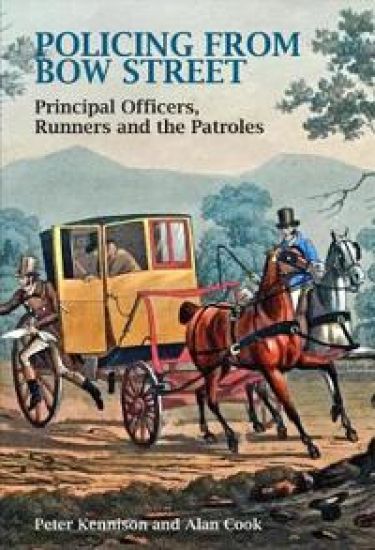
Policing From Bow Street

Policing From Bow Street

Peter Kennison; Alan Cook

Blue Lamp Books
2019
sidottu
The starting point for many scholars studying the art and science of crime investigation wrongly begins with the creation of Robert Peel's New Police in 1829, yet basic policing and investigative elements had been tried and tested at least 80 years before that. In mid-Georgian times, the playwright and magistrate Henry Fielding realised the ineffectiveness of the Parish Police Parochial Watch system that press-ganged traders and merchants into doing their civil duty as Constables. Each Parish Watch operated independently within its own boundary, but since crime fails to respect boundaries many perpetrators escaped. Crimes committed often went unreported for want of a real central police organisation. An innovative plan was needed, and through Fielding's determination the Bow Street Public Office became the "Centre Office" for victims reporting their crimes in and around London. This was the first police station and court building; a hub for crime administration, accommodation for police officers, a place to detain prisoners. Fielding established the Criminal Records system of searchable registers at the Centre Office. Gathering intelligence on crime and criminals not only provided for the first time an understanding of criminality, but also allowed offenders to be caught after the crime had been committed. Fielding also formed the Foot Patroles, an organised and regulated body of men, to combat riots, gangs and street disorder, thus establishing an early police sub-culture. This detailed narrative seeks to go behind the scenes of Bow Street to a secret world denied to the majority. The professional and private lives of the Justices and Officers - often called the 'Runners' - are examined here for the first time, revealing their secrets, their experiences and their brave exploits which established them as honest thief-takers, constables and the first early detectives.
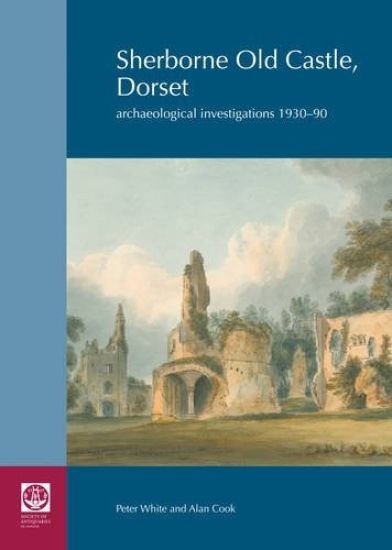
Sherborne Old Castle, Dorset

Sherborne Old Castle, Dorset

Peter White; Alan Cook

Society of Antiquaries of London
2015
sidottu
Roger, Bishop of Salisbury (1102–39, built Sherborne Old Castle within his episcopal estate at Sherborne, in north-west Dorset, in about 1122–35. The fortified palace was one of several major building projects undertaken by Bishop Roger; among the others were the rebuilding of Old Sarum cathedral and castles at Devizes and Malmesbury. Although Sherborne Old Castle was altered over the next four centuries, most of its original structural elements were retained until the buildings were slighted in 1645. This report describes and analyses the information obtained from all the archaeological investigations undertaken at the castle since the early twentieth century, including those of A E Rawlence (1932), C E Bean (1932 to 1954), and the authors of this report, Peter White, then Inspector of Ancient Monuments, between 1968 and 1980and the late Alan Cook (1980–95). An analysis of the results, together with continuing historical research, have revealed much more about the major periods of the castle’s construction and use. It is now possible to describe and source more exactly the sophisticated design of Roger’s castle and the high quality of the craftsmanship employed in its construction and decoration; the later phases of development during the medieval period including the improvements to the castle’s defences and accommodation when held by the Crown between 1183 and 1354; the post-1357 alterations after the castle had been regained by Bishop Wyvil of Salisbury, and the important fifteenth-century building programme carried out by Bishop Thomas Langton. A much clearer assessment has been made of the impact of the works undertaken by Sir Walter Ralegh in his abortive attempt to remodel the castle as his country seat after he obtained the estate in 1592. Finally, although much of the fabric of the castle was destroyed following its surrender to a Parliamentary army in 1645, new documentary evidence and structural analysis has revealed how, during the eighteenth century, the Digby family developed and maintained the ruins as a romantic feature on the northern boundary of their landscaped park.
Gravitational Experiments in the Laboratory

Gravitational Experiments in the Laboratory

Y. T. Chen; Alan Cook

Cambridge University Press
2005
pokkari
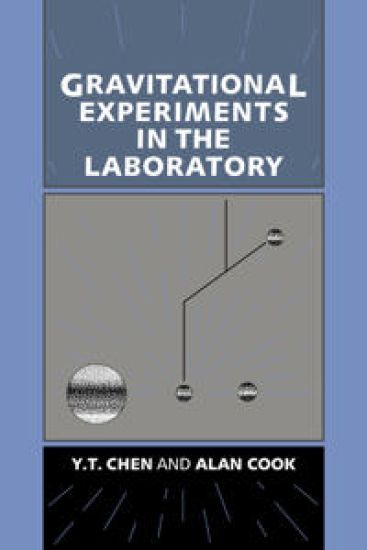
This book provides an up-to-date account of the precise experiments used to explore the nature of universal gravitation that can be performed in a terrestrial laboratory. The experiments required are at the limits of sensitivity of mechanical measurements. The problems of experiment design are discussed, and critical accounts given of the principal experiments testing the inverse square law and the principle of equivalence, and measuring the constant of gravitation. An analysis of the effects of noise and other disturbances is also provided, further highlighting the care that is needed in experimental design and performance. The motivation for undertaking such experiments is also discussed. The book will be of value to graduate students, researchers and teachers who are engaged in either theoretical or experimental studies of gravitation, and who wish to understand the nature and problems of laboratory experiments in this field.
Gravitational Experiments in the Laboratory

Gravitational Experiments in the Laboratory

Y. T. Chen; Alan Cook

Cambridge University Press
1993
sidottu
This book provides an up-to-date account of the precise experiments used to explore the nature of universal gravitation that can be performed in a terrestrial laboratory. The experiments required are at the limits of sensitivity of mechanical measurements. The problems of experiment design are discussed, and critical accounts given of the principal experiments testing the inverse square law and the principle of equivalence, and measuring the constant of gravitation. An analysis of the effects of noise and other disturbances is also provided, further highlighting the care that is needed in experimental design and performance. The motivation for undertaking such experiments is also discussed. The book will be of value to graduate students, researchers and teachers who are engaged in either theoretical or experimental studies of gravitation, and who wish to understand the nature and problems of laboratory experiments in this field.