Kirjojen hintavertailu – 12 859 819 kirjaa ja 27 kauppaa
Kirjailija
Alan Dundes
Kirjat ja teokset yhdessä paikassa: 18 kirjaa, julkaisuja vuosilta 1987–2022, suosituimpiin kuuluu Fables of the Ancients?. Vertaile teosten hintoja ja tarkista saatavuus suomalaisista kirjakaupoista.
By combining their expertise in English literature and anthropology, Ibrahim Muhawi and Sharif Kanaana bring to these folktales an integral method of study that unites a sensitivity to language with a deep appreciation for culture. As native Palestinians, the authors are well suited to their task. Over the course of several years, they collected tales from the regions of the Galilee, Gaza, and the West Bank, determining which were the most widely known and appreciated and selecting the ones that best represent the Palestinian Arab folk narrative tradition. Great care has been taken with the translations to maintain the original flavor, humor, and cultural nuances in tales that are at once earthy and whimsical and that also parallel stories found in the larger Arab folk tradition. Featuring a new foreword by Ibtisam Barakat, Speak, Bird, Speak Again is an essential text in Palestinian culture and a must for those who want to deepen their understanding of an enduring people.
The essays of Alan Dundes virtually created the meaning of folklore as an American academic discipline. Yet many of them went quickly out of print after their initial publication in far-flung journals. Brought together for the first time in this volume compiled and edited by Simon Bronner, the selection surveys Dundes's major ideas and emphases, and is introduced by Bronner with a thorough analysis of Dundes's long career, his interpretations, and his inestimable contribution to folklore studies. Runner-up, the Wayland Hand Award for Folklore and History, 2009
The 30th Anniversary Edition is a candid academic treatment of offensive and sick humor by the leading folklorist scholar on the topic of jokes and joke cycles. It features insightful, surprising, controversial and thought-provoking analyses of the jokes that have been told for years, within various cultures. "No piece of folklore continues to be transmitted unless it means something-even if neither the speaker nor the audience can articulate what that meaning might be. In fact, it usually is essential that the joke's meaning not be crystal clear. If people knew what they were communicating when they told jokes, the jokes would cease to be effective as socially sanctioned outlets for expressing taboo ideas and subjects."-Alan Dundes, in the preface to Cracking Jokes Where there is anxiety, there will be jokes to express that anxiety. Jokes are legitimate folklore-like myths, proverbs, legends, superstitions and songs-and as such, they reflect what is on people's minds. There has been no shortage of jokes or anxiety since the 1960s, and in this book, Dundes reminds us of the jokes we have been telling, and reveals the anxiety these jokes reflect. His interpretations are not always popular. His investigation into antisemitic jokes in Germany in the 1980s, for example, met with widespread criticism. But it is a part of society that makes a difference and should not be shielded from academic scrutiny. Dundes likens his critics to those who attack the messenger when they do not like the news. All kinds of jokes exist. He reports on what exists and applies the best methods of investigative journalism to uncover the motive and true meaning behind the jokes. As Marc Galanter writes in the new foreword, "A preeminent scholar of jokes, Dundes was an adventurous and prolific pioneer of the study of many realms of folklore. A tireless champion of the field, he was a major force in shifting the study of folklore from its rural and antiquarian tilt to encompass the prolific lore of modern life. ... He regarded jokes not only as subject matter to be analyzed and understood in their own right, but as useful tools to uncover social and cultural patterns." This book in particular is the culmination of these important yet understudied cultural devices. Dundes was "a deeply dedicated scholar who maintained a radiant faith that by understanding our susceptibility to the irrational we might empower ourselves to move beyond prejudice and act rationally and humanely." The book, with the new foreword, is republished by the independent academic press Quid Pro Books.
Bloody Mary in the Mirror mixes Sigmund Freud with vampires and The Little Mermaid to see what new light psychoanalysis can bring to folklore techniques and forms. Ever since Freud published his analysis of Jewish jokes in 1905 and his disciple Otto Rank followed with his groundbreaking The Myth of the Birth of the Hero in 1909, the psychoanalytic study of folklore has been an acknowledged part of applied psychoanalysis. However, psychoanalysts, handicapped by their limited knowledge of folklore techniques, have tended to confine their efforts to the Bible, to classical mythology, and to the Grimm fairy tales. Most folklorists have been slow to consider psychoanalysis as a method of interpreting folklore. One notable exception is folklorist Alan Dundes. In the seven fascinating essays of Bloody Mary in the Mirror, psychoanalytic theory illuminates such folklore genres as legend (in the vampire tale), folktale (in the ancient Egyptian tale of two brothers), custom (in fraternity hazing and ritual fasting), and games (in the modern Greek game of ""Long Donkey""). One of two essays Dundes co-authored with his daughter Lauren Dundes, professor of sociology at Western Maryland College, successfully probes the content of Disney's The Little Mermaid, yielding new insights into this popular reworking of a Hans Christian Andersen favorite. Among folk rituals investigated is the girl's game of ""Bloody Mary."" Elementary or middle school-age girls huddle in a darkened bathroom awaiting the appearance in the mirror of a frightening apparition. The plausible analysis of this well-known--if somewhat puzzling--American rite is one of many surprising and enlightening finds in this book. All of the essays in this remarkable volume create new takes on old traditions. Bloody Mary in the Mirror is an expedition into psychoanalytic folklore techniques and constitutes a giant step towards realizing the potential Freud's work promises for folklore studies. Alan Dundes is professor of anthropology and folklore at the University of California, Berkeley. Among many others, his books include Interpreting Folklore (1980) and From Game to War and Other Psychoanalytic Essays on Folklore (1997). He edited Mother Wit from the Laughing Barrel: Readings in the Interpretation of Afro-American Folklore (1991), which was published by University Press of Mississippi.
Given the widespread consensus that the Qur'an was in oral tradition before being committed to written form, it should come as no surprise to learn that the Qur'an still bears the traces of its original oral form. The field of knowledge most concerned with oral tradition is folkloristics, the study of folklore. Folklorist Alan Dundes has carefully and respectfully documented some of these unmistakable traces. These traces include numerous oral formulas repeated throughout the Qur'an as well as several traditional folktales. Just as Jesus effectively used parables to get His message across, so similar means are to be found in the Qur'an. The scholarly identification of formulas and folktales in the Qur'an represents an entirely new approach to this world-famous religious text. Not only does it provide insight into the basic composition of this sacred document, but for readers not previously familiar with the Qur'an, it pinpoints and makes accessible many of the principal themes contained therein.
In these stimulating essays, Alan Dundes presents a history of psychoanalytic studies of folklore while also showing how folklore methodology can be used to clarify and validate psychoanalytic theory. Dundes' work is unique in its symbolic analysis of the ordinary imagination. His data are children's games, folktales, everyday speech, cultural metaphors for power and prestige, and rituals associated with childbirth.
There are literally hundreds if not thousands of books written about Judaism and Jews, but this book is unlike any previously published. It focuses on the topic of 'circumventing custom' with special emphasis on the ingenious ways Orthodox (and other) Jews have devised to avoid breaking the extensive list of activities forbidden on the Sabbath. After examining the sources of Sabbath observance as set forth in the Old Testament, the New Testament, and rabbinical writings, some of the most salient forms of circumvention are described. These include: riding a special Shabbat elevator, unscrewing the lightbulb in the refrigerator, constructing an eruv (a space extending one's domicile so that objects may be carried outside the home), and relying on the services of the so-called 'Shabbes Goy,' among others. Dundes respectfully analyzes such facets of Jewish characteristics as an undue concern with purity, and a long-established tradition of indulging in nit-picking and argumentation. The resultant picture of Jewish character is drawn from an unusual mixture of religious written texts and oral tradition (jokes and proverbs). The sources range from ancient Israel to works from the twenty-first century. In many ways, it is an authentic and striking Jewish self-portrait that is painted for the very first time in this fascinating volume.
With great reverence for the Bible, Dundes offers a new and exciting way to resolve some of the mysteries and contradictions that evolved during the Bible's pre-written legacy and that persists today. Using his expert knowledge of folklore, Dundes unearths and contracts multiple versions of nearly every major biblical event, including the creation of women, the flood, the ten commandments, the Sermon on the Mount, the Lord's Prayer, and the inscription on the Cross.
This book helps us resolve some of the mysteries and contradictions that evolved during the Bible's pre-written legacy and that persist in the Great Book today. Most biblical scholars acknowledge that both the Old and New Testaments were orally transmitted for decades before appearing in written form. With great reverence for the Bible, Dundes offers a new and exciting way to understand its variant texts. He uses the analytical framework of folklore to unearth and contrast the multiple versions of nearly every major biblical event, including the creation of woman, the flood, the ten commandments (there were once as many as eleven or twelve), the names of the twelve tribes, the naming of the disciples, the Sermon on the Mount, the Lord's Prayer, and the words inscribed on the Cross, among many others.
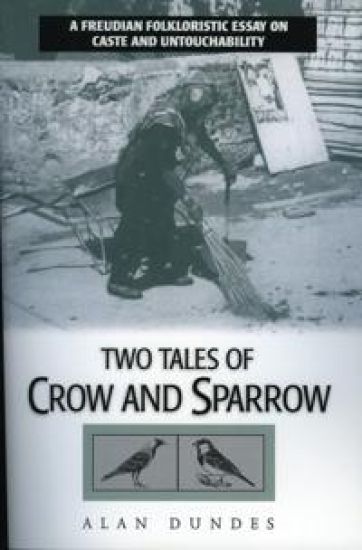
This provocative book by a leading folklorist offers a new analysis of caste in India, focusing on the rationale underlying the customs surrounding untouchability. Drawing on clues contained in two fascinating folktales, Alan Dundes goes beyond Dumont's classic Homo Hierarchicus in deconstructing the pervasive pollution complex that prevents millions of individuals from entering temples or drawing water from community wells. His graceful and erudite explanation of caste also illuminates the mysterious worship of the sacred cow as well as sati/suttee, or widow burning. The author concludes by relating caste to the theory of marginal survival, drawing on Gypsy concepts of pollution. This controversial book offers a fresh perspective for anyone interested in India, folklore, and psychoanlytic anthropology_a detailed case study documenting how folklore, as a source of native categories and symbols, can yield unique insights into the unconscious functioning of a culture through time. In this comprehensive textbook, renowned philosopher J. N. Mohanty examines the range of Indian philosophy from the Sutra period through the 17th century Navya Nyaya. Classical Indian Philosophy is divided into three parts that cover epistemology, metaphysics, and the attempt to transcend the distinction between subject and object. Mohanty focuses on the major concepts and problems dealt with in Indian philosophy, including ethics, social philosophy, law, and aesthetics. Students of Indian philosophy at every level will find this a rich and rewarding text.
Anyone who has ever filled in a form in triplicate, taken an aptitude test, or been rebuffed by a form letter will appreciate the urban folklore found in this collection. Urban people as a folk are bound together by their unhappy experiences in battling "the system," whether that system is the machinery of government or the office where one works. The wonderfully expressive materials in this book--chain letters, memoranda, notices, and cartoons--touch upon every major controversy of urban America: racism, sex, politics, automation, alienation, welfare, the women's movement, military mentality, and office bureaucracy. The humor of the materials pinpoints the ills and frustrations of modern society and becomes, in turn, an escape from them.
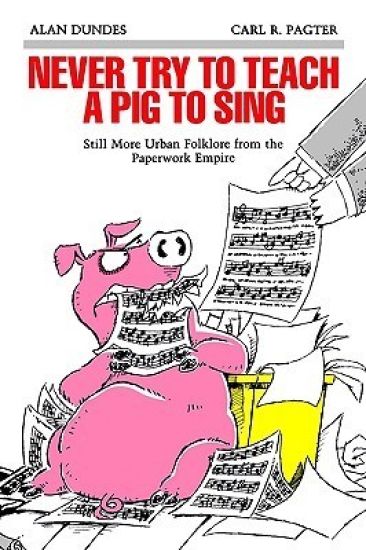
Never Try to Teach a Pig to Sing documents the thriving folklore tradition that circulates in the workplace. Alan Dundes and Carl Pagter have collected more than two hundred and fifty "signs of the times"--the office memoranda, parodies, cartoons, and poems that daily make their way through copy machines, interoffice mail systems, and fax machines and are affixed to bulletin boards and water coolers. The rich vein of urban folklore tapped by this imaginative volume constitutes a great testament to one of the world's most prolific authors--anonymous. The popularity of the items featured in this timely book is apparent by their reproduction in mass or popular cultural form--as greeting cards, plaques, and bumper stickers--reminding us of the inevitable interplay between folklore and mass culture. Dundes and Pagter clearly demonstrate the existence of folklore in the modern urban technological world and refute the notion that folklore reflects only the past.
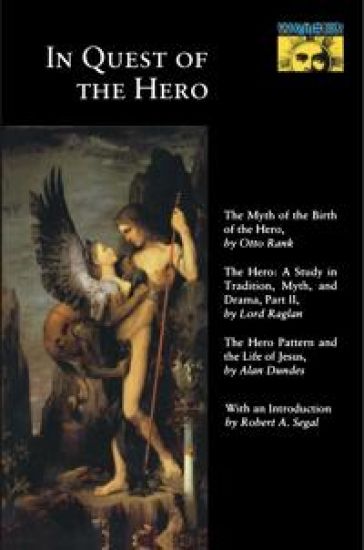
In Quest of the Hero makes available for a new generation of readers two key works on hero myths: Otto Rank's Myth of the Birth of the Hero and the central section of Lord Raglan's The Hero. Amplifying these is Alan Dundes's fascinating contemporary inquiry, "The Hero Pattern and the Life of Jesus." Examined here are the patterns found in the lore surrounding historical or legendary figures like Gilgamesh, Moses, David, Oedipus, Odysseus, Perseus, Heracles, Aeneas, Romulus, Siegfried, Lohengrin, Arthur, and Buddha. Rank's monograph remains the classic application of Freudian theory to hero myths. In The Hero the noted English ethnologist Raglan singles out the myth-ritualist pattern in James Frazer's many-sided Golden Bough and applies that pattern to hero myths. Dundes, the eminent folklorist at the University of California at Berkeley, applies the theories of Rank, Raglan, and others to the case of Jesus. In his introduction to this selection from Rank, Raglan, and Dundes, Robert Segal, author of the major study of Joseph Campbell, charts the history of theorizing about hero myths and compares the approaches of Rank, Raglan, Dundes, and Campbell.
Life Is Like a Chicken Coop Ladder was first published in 1984 and from the outset inspired a wide variety of reactions ranging from high praise to utter disgust. Alan Dundes' theses identifies a strong anal erotic element in German national character, citing numerous examples of scatological data from authentic compilations of German folklore. The examination of this single trait of German character is used to demonstrate that national character exists and that its existence is unambiguously documented by the folklore of a nation. Dundes is of the opinion that the use of folkloristic data minimizes subjective bias in the study of national character, since unedited or uncensored, it constitutes a unique way of looking at a culture from the inside-out rather than from the outside-in, the more typical situation of an outside observer trying to understand a foreign culture.
Covering a period of more than one hundred years of work by renowned folklorists, these enlightening essays explore the timeless tale of Cinderella. In addition to the most famous versions of the story (Basile’s Pentamerone, Perrault’s Cendrillon, and the Grimm’s Aschenputtel), this casebook includes articles on other versions of the tale from Russian, English, Chinese, Greek and French folklore. The volume concludes with several interpretive essays, including a psychoanalytic view from Dundes and a critique of the popularization of Cinderella in America.