Kirjojen hintavertailu – 12 859 828 kirjaa ja 27 kauppaa

Kirjailija

Alan Hardy

Kirjat ja teokset yhdessä paikassa: 16 kirjaa, julkaisuja vuosilta 2002–2019, suosituimpiin kuuluu A Slice of Rural Essex. Vertaile teosten hintoja ja tarkista saatavuus suomalaisista kirjakaupoista.

16 kirjaa

Kirjojen julkaisuvuodet: 2002–2019.

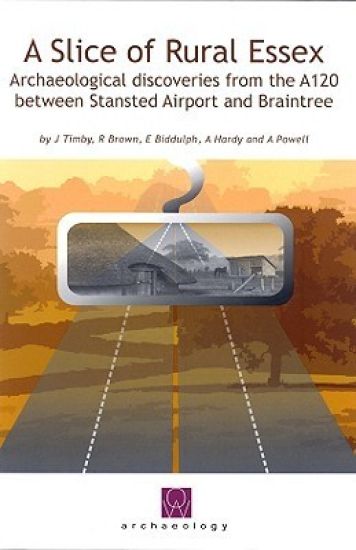
A Slice of Rural Essex

A Slice of Rural Essex

Jane R. Timby; Richard Brown; E. Biddulph; Alan Hardy

Oxford Archaeology
2007
sidottu
The upgrading of the A120 between Stansted Airport and Braintree allowed the unique opportunity to examine a slice of landscape crossing the clay plateau of Essex; a geology which has received little attention in the past. A diverse pattern of human history was revealed including earlier prehistoric flint knapping, later prehistoric ritual activity, a Roman farmstead with accompanying cemetery, a middle Saxon hall, medieval settlement, pottery production and a windmill. This report is the product of a joint venture between Oxford Archaeology and Wessex Archaeology and has been designed to provide the reader with an accessible interpretation of the findings with supporting factual data.

Say Hello to Little Jenny

Say Hello to Little Jenny

Alan Hardy

Authorhouse UK
2019
pokkari
This is the story of how a girl got her nickname. It all happened one day when she wanted to be really helpful, but everyone she asked turned her away because some part of her was too little. Finally, with her heart full of sadness she walked off home, only to have her wish come true in the most unexpected way
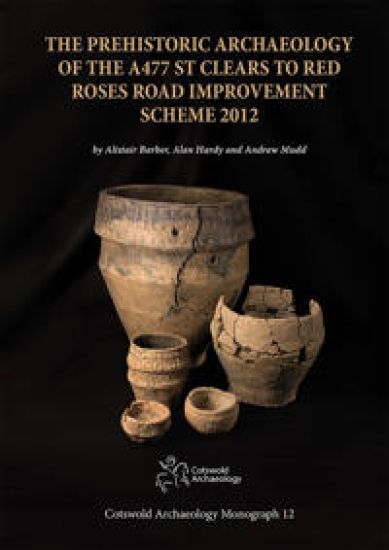
The Prehistoric Archaeology of the A477 St Clears to Red Roses Road Improvement Scheme 2012

The Prehistoric Archaeology of the A477 St Clears to Red Roses Road Improvement Scheme 2012

Alistair Barber; Alan Hardy; Andrew Mudd

Cotswold Archaeological Trust Ltd
2019
sidottu
Details results of excavations along the A477 from St Clears to Red Roses during the Road Improvement Scheme, 2012. Finds include a Mesolithic site in the lower Tâf valley; early Neolithic pits and a post-built structure at Cildywyll; the remains of an Early Bronze Age barrow, 38 burials (some urned), a pyre site, and a Middle Bronze Age drying oven near St Clears; and A Bronze Age burnt mound near Red Roses.
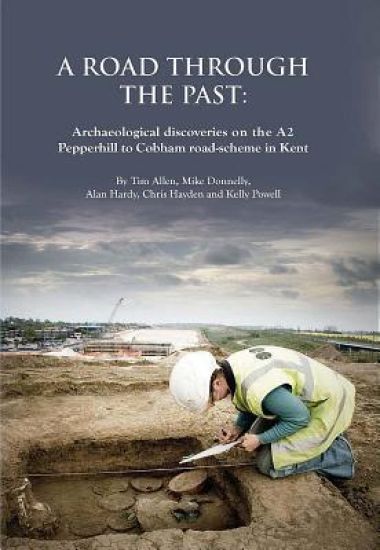
A Road Through the Past

A Road Through the Past

Tim Allen; Michael Donnelly; Alan Hardy; Kelly Powell

Oxford Archaeology
2012
sidottu
Excavations along the new road line have revealed nearly 6000 years of human activity, from a massive marker post erected by early Neolithic farmers at the head of a dry valley to a bizarre burial of several different animals dating to the sixteenth century AD. Prehistoric discoveries include two enclosures of the middle Bronze Age, both associated with some of the earliest cobbled roads in Kent, a collection of Iron Age storage pits rich in diverse deliberate offerings, and the emergence of a nucleated hamlet in the middle Iron Age. Most exciting were rich cremation burials of the late Iron Age and early Roman periods, probably successive generations of a local family, whose rise to prominence coincides with the growth of the cult centre at Springhead nearby. The metal vessels include types new to Britain, the pottery stamps suggest the movement of continental potters to Kent, and one grave has the clearest evidence of furniture yet found from early Roman Britain. Medieval settlements of the late 11th-14th centuries mirror the renewed importance of Watling Street after the Norman conquest, and its eventual return to obscurity due to competition from the ferry from London to Gravesend.
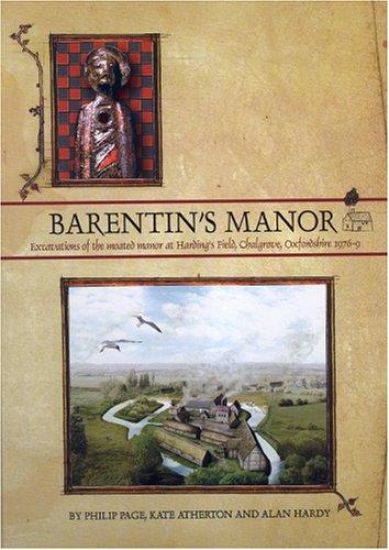
Barentin's Manor

Barentin's Manor

Page Philip; Atherton Kate; Alan Hardy

Oxford University School of Archaeology
2005
Sidottu
Archaeological investigations at Harding's Field, Chalgrove, revealed the remains of one of the most complete examples of a moated medieval manor yet excavated in England. Evidence of a pre-moat occupation dating from the first half of the 13th century, which may not have been seigneurial, was succeeded in the mid 13th century by the construction of the moated manor house. The documentary evidence indicates that this house belonged to the Barentins, a prominent Oxfordshire family. The manor underwent considerable alterations and improvements during the following 200 years, particularly during the early part of the 14th century and, to a lesser extent, in the late 14th and early 15th century. It passed out of the hands of the Barentin family shortly before it was demolished in the late 15th century.