Kirjojen hintavertailu – 12 903 725 kirjaa ja 27 kauppaa

Kirjailija

Alan Jones

Kirjat ja teokset yhdessä paikassa: 66 kirjaa, julkaisuja vuosilta 1986–2026, suosituimpiin kuuluu Schaum's Outline of Biochemistry, Third Edition. Vertaile teosten hintoja ja tarkista saatavuus suomalaisista kirjakaupoista.

66 kirjaa

Kirjojen julkaisuvuodet: 1986–2026.

Risk, Opportunity, Uncertainty and Other Random Models
Risk, Opportunity, Uncertainty and Other Random Models (Volume V in the Working Guides to Estimating and Forecasting series) goes part way to debunking the myth that research and development cost are somewhat random, as under certain conditions they can be observed to follow a pattern of behaviour referred to as a Norden-Rayleigh Curve, which unfortunately has to be truncated to stop the myth from becoming a reality! However, there is a practical alternative in relation to a particular form of PERT-Beta Curve. However, the major emphasis of this volume is the use of Monte Carlo Simulation as a general technique for narrowing down potential outcomes of multiple interacting variables or cost drivers. Perhaps the most common of these in the evaluation of Risk, Opportunity and Uncertainty. The trouble is that many Monte Carlo Simulation tools are ‘black boxes’ and too few estimators and forecasters really appreciate what is happening inside the ‘black box’. This volume aims to resolve that and offers tips into things that might need to be considered to remove some of the uninformed random input that often creates a misinformed misconception of ‘it must be right!’Monte Carlo Simulation can be used to model variable determine Critical Paths in a schedule, and is key to modelling Waiting Times and cues with random arisings. Supported by a wealth of figures and tables, this is a valuable resource for estimators, engineers, accountants, project risk specialists as well as students of cost engineering.
Probability, Statistics and Other Frightening Stuff
Probability, Statistics and Other Frightening Stuff (Volume II of the Working Guides to Estimating & Forecasting series) considers many of the commonly used Descriptive Statistics in the world of estimating and forecasting. It considers values that are representative of the ‘middle ground’ (Measures of Central Tendency), and the degree of data scatter (Measures of Dispersion and Shape) around the ‘middle ground’ values. A number of Probability Distributions and where they might be used are discussed, along with some fascinating and useful ‘rules of thumb’ or short-cut properties that estimators and forecasters can exploit in plying their trade. With the help of a ‘Correlation Chicken’, the concept of partial correlation is explained, including how the estimator or forecaster can exploit this in reflecting varying levels of independence and imperfect dependence between an output or predicted value (such as cost) and an input or predictor variable such as size. Under the guise of ‘Tails of the unexpected’ the book concludes with two chapters devoted to Hypothesis Testing (or knowing when to accept or reject the validity of an assumed estimating relationship), and a number of statistically-based tests to help the estimator to decide whether to include or exclude a data point as an ‘outlier’, one that appears not to be representative of that which the estimator is tasked to produce. This is a valuable resource for estimators, engineers, accountants, project risk specialists as well as students of cost engineering.
Best Fit Lines & Curves

Best Fit Lines & Curves

Alan Jones

Routledge
2018
sidottu
Best Fit Lines and Curves, and Some Mathe-Magical Transformations (Volume III of the Working Guides to Estimating & Forecasting series) concentrates on techniques for finding the Best Fit Line or Curve to some historical data allowing us to interpolate or extrapolate the implied relationship that will underpin our prediction. A range of simple ‘Moving Measures’ are suggested to smooth the underlying trend and quantify the degree of noise or scatter around that trend. The advantages and disadvantages are discussed and a simple way to offset the latent disadvantage of most Moving Measure Techniques is provided. Simple Linear Regression Analysis, a more formal numerical technique that calculates the line of best fit subject to defined ‘goodness of fit’ criteria. Microsoft Excel is used to demonstrate how to decide whether the line of best fit is a good fit, or just a solution in search of some data. These principles are then extended to cover multiple cost drivers, and how we can use them to quantify 3-Point Estimates. With a deft sleight of hand, certain commonly occurring families of non-linear relationships can be transformed mathe-magically into linear formats, allowing us to exploit the powers of Regression Analysis to find the Best Fit Curves. The concludes with an exploration of the ups and downs of seasonal data (Time Series Analysis). Supported by a wealth of figures and tables, this is a valuable resource for estimators, engineers, accountants, project risk specialists as well as students of cost engineering.
Principles, Process and Practice of Professional Number Juggling
Principles, Process and Practice of Professional Number Juggling (Volume 1 of the Working Guides to Estimating & Forecasting series) sets the scene of TRACEability and good estimate practice that is followed in the other volumes in this series of five working guides. It clarifies the difference between an Estimating Process, Procedure, Approach, Method and Technique. It expands on these definitions of Approach (Top-down, Bottom-up and‘Ethereal’) and Method (Analogy, Parametric and ‘Trusted Source’) and discusses how these form the basis of all other means of establishing an estimate. This volume also underlines the importance of ‘data normalisation’ in any estimating procedure, and demonstrates that the Estimating by Analogy Method, in essence, is a simple extension of Data Normalisation. The author looks at simple measures of assessing the maturity or health of an estimate, and offers a means of assessing a spreadsheet for any inherent risks or errors that may be introduced by failing to follow good practice in spreadsheet design and build. This book provides a taster of the more numerical techniques covered in the remainder of the series by considering how an estimator can potentially exploit Benford’s Law (traditionally used in Fraud Detection) to identify systematic bias from third party contributors. It will be a valuable resource for estimators, engineers, accountants, project risk specialists as well as students of cost engineering.
Learning, Unlearning and Re-Learning Curves
Learning, Unlearning and Re-learning Curves (Volume IV of the Working Guides to Estimating & Forecasting series) focuses in on Learning Curves, and the various tried and tested models of Wright, Crawford, DeJong, Towill-Bevis and others. It explores the differences and similarities between the various models and examines the key properties that Estimators and Forecasters can exploit. A discussion about Learning Curve Cost Drivers leads to the consideration of a little used but very powerful technique of Learning Curve modelling called Segmentation, which looks at an organisation’s complex learning curve as the product of multiple shallower learning curves. Perhaps the biggest benefit is that it simplifies the calculations in Microsoft Excel where there is a change in the rate of learning observed or expected. The same technique can be used to model and calibrate discontinuities in the learning process that result in setbacks and uplifts in time or cost. This technique is compared with other, better known techniques such as Anderlohr’s. Equivalent Unit Learning is another, relative new technique that can be used alongside traditional completed unit learning to give an early warning of changes in the rates of learning. Finally, a Learning Curve can be exploited to estimate the penalty of collaborative working across multiple partners. Supported by a wealth of figures and tables, this is a valuable resource for estimators, engineers, accountants, project risk specialists, as well as students of cost engineering.

The Frightfest Guide To Exploitation Movies

The Frightfest Guide To Exploitation Movies

Buddy Giovinazzo; Alan Jones

FAB Press
2017
nidottu
From the moment motion pictures were invented, fearless entrepreneurs, poverty row profiteers and money-grabbing grifters gave cinemagoers what they truly craved.... the sex, horror and cheap thrills that were too hot for Hollywood to handle. And so the exploitation industry was born. Nothing was taboo and selling sin, shock and sensation became an art form. Soon, what were once the dirty little secrets of the film world became the most sought-after must-sees in every grindhouse and drive-in, as an ever-growing legion of fans travelled miles to witness the most unbelievable sights ever put on celluloid. From MANIAC to ANATOMY OF A PSYCHO, DERANGED to ZOMBIE, I SPIT ON YOUR GRAVE to THE SEXUALIST, THE JESUS TRIP to NAKED FIST and ILSA, SHE WOLF OF THE SS to AFRICA EROTICA - just 10 of the 200 hand-picked outrages covered in this comprehensive and representative history - critically acclaimed film critic, author and broadcaster Alan Jones takes you on a startling tour through the astounding exploitation movie extremes of its 1935 to 1985 Golden Era. Tinsel town trash and global grunge like you've never seen it before, complete with an all-embracing, richly-textured A-Z guide to everything you ever wanted to know about the inglorious exploitation movie genre but were afraid to ask. With a blistering introduction by 42nd Street habitue, aficionado and COMBAT SHOCK writer/director, Buddy Giovinazzo, The Frightfest Guide to Exploitation Movies fully captures the range and breadth of the entire exploitation spectrum. Enter, if you dare, into the sordid, sleazy underworld of Z-studio slime and punishment, where orgies of the dead, cesspools of vice and shameless desires featured tantalizing titles, lurid artwork, daring advertising campaigns and overblown hype. Exploitation movies have never gone away. Inside you'll discover the unbelievable reasons why.
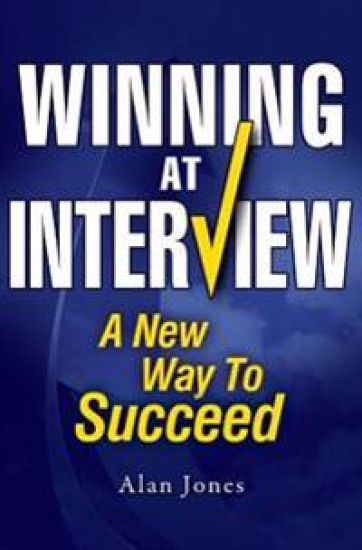
Winning At Interview 2017 Edition: A New Way To Succeed

Winning At Interview 2017 Edition: A New Way To Succeed

Alan Jones

Createspace Independent Publishing Platform
2017
nidottu
This is not a book for the faint-hearted but if you have a potentially life-changing job interview coming up then 'Winning at Interview' deserves your full attention. Reader feedback consistently says that 'It completely changed the way I think about job interviews'. Uniquely, Alan Jones describes the world of job interviews as it really is, not as we would perhaps like it to be. In this updated, revised 2020 edition you will learn how to get 'in the zone', 'have the conversations with yourself' and articulate your truth with increased confidence. Through close analysis of the 42 questions you must ask yourself, and suggested responses, you will discover how they will give you the answer to everything. In a competitive market we all need something to inspire and empower us, and 'Winning at Interview' will do that for you, whether you are a graduate or senior executive, and regardless of your sector or discipline. If you haven't read this book you won't want to be competing with someone who has.
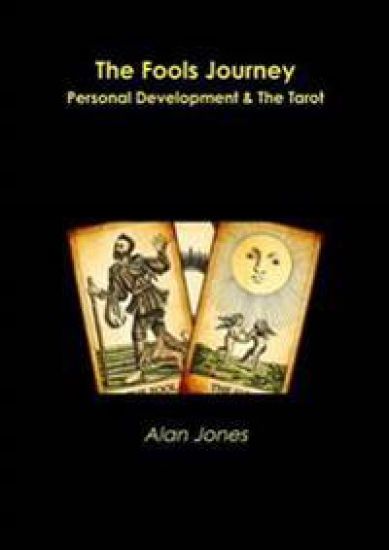
The Fools Journey

The Fools Journey

Alan Jones

Lulu.com
2016
nidottu
Of all the oracle systems in use today, Tarot is arguably one of the better known. 78 Cards - 22 images which could be said to describe a journey through life and a further 56 which add people and textures to the main chapters of that adventure. As someone who has been exploring the Tarot for several decades, I can honestly say that it one of the most visually poetic embodiments of esoteric teachings available to the student of the arcane. It is frequently misrepresented as simply an oracle and given an esoteric history which is firmly in the realms of the fairy tale but when understood it is a symbolic initiatory system which opens a doorway to spiritual exploration. This book represents a way of taking a journey of self-discovery and in the process developing intuition and genuine insight.
Transformational Journeys

Transformational Journeys

Alan Jones

Lulu.com
2016
nidottu
Transformational Journeys We are all on a journey. Some of these journeys are solely our own and some we take with others. This book introduces frameworks to explore personal, transformational journeys. Where are you on your path? Where are you going? Where have you been? What about the influence of Karma? Is self development a good thing? In this book you will find provocations, ideas and frameworks to ask yourself some life affirming and life changing questions. Written to support a weekend workshop, this book can stand on its own as an introduction to The Tarot, The Qabbala, Celtic Spirituality as well as questions about The Soul, Life, The Universe and almost everything.
A Learners Guide to Revising for Exams
A learners guide to revision and preparation for examinations. Aimed students studying for examinations and tests in Years 9, 10 and 11 (UK) but relevant to all learners who may be looking for some practical advice about learning, memory, time management and exam preparation.
Understanding Materials (2nd Ed)

Understanding Materials (2nd Ed)

Alan Jones; Purnell Roy; O'Neill Janet

Brilliant Publications
2014
nidottu
The Brilliant Support Activities series contains reproducible activities for use with slower learners or pupils with various learning difficulties operating at the lower levels of understanding at Key Stage 1 and Key Stage 2. The activities in the books follow the areas of science outlined in the Programmes of Study of the 2014 Science National Curriculum for years 1-3 and selected topics of years 4 and 5. The books introduce one concept per sheet, using simple language and clear, black line illustrations making them easy to read and understand. Understanding Materials contains 46 reproducible sheets to help pupils understand some aspects of 'Everyday Materials'. The activities included in the book will help to develop the essential scientific enquiry skills as outlined in the National Curriculum (Working Scientifically), namely those of Observation, Predicting, Recording and Drawing Conclusions. The worksheets focus on grouping and classifying materials, changing materials, and separating mixtures of materials. Other concepts such as forces, heat and magnetism are included within the context of understanding the properties of materials.
Understanding Living Things (2nd Ed)

Understanding Living Things (2nd Ed)

O'Neill Janet; Alan Jones; Purnell Roy

Brilliant Publications
2014
nidottu
The Brilliant Support Activities series contains reproducible activities for use with slower learners or pupils with various learning difficulties operating at the lower levels of understanding at Key Stage 1 and Key Stage 2. The activities in the books follow the areas of science outlined in the Programmes of Study of the 2014 Science National Curriculum for years 1-3 and selected topics of years 4 and 5. The books introduce one concept per sheet, using simple language and clear, black line illustrations making them easy to read and understand. Understanding Living Things contains 41 reproducible sheets to help pupils understand some aspects of 'Everyday Biology - Plants and Animals'. The activities included in the book will help to develop the essential scientific enquiry skills as outlined in the National Curriculum (Working Scientifically), namely those of Observation, Predicting, Recording and Drawing Conclusions. The worksheets focus on life processes common to all living things, humans and other animals and green plants, as well as on how living things relate to their environment.
Understanding Light, Sound and Forces (2nd Ed)

Understanding Light, Sound and Forces (2nd Ed)

Purnell Roy; O'Neill Janet; Alan Jones

Brilliant Publications
2014
nidottu
The Brilliant Support Activities series contains reproducible activities for use with slower learners or pupils with various learning difficulties operating at the lower levels of understanding at Key Stage 1 and Key Stage 2. The activities in the books follow the areas of science outlined in the Programmes of Study of the 2014 Science National Curriculum for years 1-3 and selected topics of years 4 and 5. The books introduce one concept per sheet, using simple language and clear, black line illustrations making them easy to read and understand. Understanding Light, Sound and Forces contains 42 reproducible sheets to help pupils understand some aspects of 'Everyday Physics'. The activities included in the book will help to develop the essential scientific enquiry skills as outlined in the National Curriculum (Working Scientifically), namely those of Observation, Predicting, Recording and Drawing Conclusions. The worksheets focus on forces and motion, electricity, light and sound, as well as on the Sun and Moon and their relationship to Earth.
Mostly Mental

Mostly Mental

Alan Jones

Lulu Press Inc
2014
nidottu
This book is about the performance theatrical Mind Reading and Mentalism. It is written by a professional performer for professional performers. Whilst it contains what could be considered as 'effects' or 'routines' the core of this book is about the philosophy and psychology of performance. Kenton Knepper has said of this book ..." I see your work as an asset to many sincere performers. Your approach is not for the mildly curious, nor should it be." To re-interate 'this is not for the mildly curious' and is aimed at the sincere performer. Alan Jones presents a fascinating lecture giving valuable ideas about magic and performance relating to his interests and training in NLP and education. Alan's presentation is humorous, eye opening and well worth every magician's attention. I thoroughly enjoyed it." - Eugene Burger "I really enjoyed reading your book. The first card effect is Gangbusters. The Theory is Great Too" - Jeff McBride