Kirjojen hintavertailu – 12 903 725 kirjaa ja 27 kauppaa

Kirjailija

Alan O'Day

Kirjat ja teokset yhdessä paikassa: 11 kirjaa, julkaisuja vuosilta 1987–2026, suosituimpiin kuuluu The Roots of Modern Terrorism. Vertaile teosten hintoja ja tarkista saatavuus suomalaisista kirjakaupoista.

Nimi esiintyy myös muodoissa: Alan O’Day

11 kirjaa

Kirjojen julkaisuvuodet: 1987–2026.

The Roots of Modern Terrorism

The Roots of Modern Terrorism

Alan O'Day

Ashgate Publishing Limited
2026
nidottu
This book differs from the bulk of existing literature dealing with terrorism by emphasising the historic theoretical and practical foundation to contemporary terrorism, by placing it within the framework of contending hypotheses about international relations, strategic and conflcit analysis, along with some of the key writings on peace and reconciliation. It argues that terrorism is a logical, and often reasonable, mode for expression of grievances by disenfranchised groups or organisations, which are unable to be heard through normal political processes. In order to understand the potential of terrorism one has to analyse the structures available for effecting dissent and change. Modernisation and globilisation combined with the increased power of states increases the attractiveness of terrorism for disaffected groups. Within this context the study links various groups, forms and regions where terrorism exists. Unlike most studies it does not start from a state-centred bias, ie how to prevent attacks on legitimate states, but assesses terrorism within its own motivations, methods and objectives.

The Roots of Modern Terrorism

The Roots of Modern Terrorism

Alan O'Day

Ashgate Publishing Limited
2026
sidottu
This book differs from the bulk of existing literature dealing with terrorism by emphasising the historic theoretical and practical foundation to contemporary terrorism, by placing it within the framework of contending hypotheses about international relations, strategic and conflcit analysis, along with some of the key writings on peace and reconciliation. It argues that terrorism is a logical, and often reasonable, mode for expression of grievances by disenfranchised groups or organisations, which are unable to be heard through normal political processes. In order to understand the potential of terrorism one has to analyse the structures available for effecting dissent and change. Modernisation and globilisation combined with the increased power of states increases the attractiveness of terrorism for disaffected groups. Within this context the study links various groups, forms and regions where terrorism exists. Unlike most studies it does not start from a state-centred bias, ie how to prevent attacks on legitimate states, but assesses terrorism within its own motivations, methods and objectives.
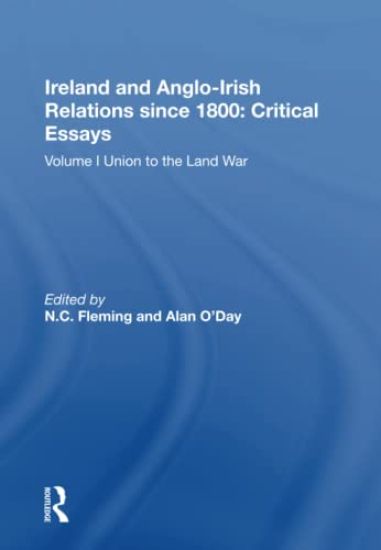
Ireland and Anglo-Irish Relations since 1800: Critical Essays

Ireland and Anglo-Irish Relations since 1800: Critical Essays

N.C. Fleming; Alan O’Day

TAYLOR FRANCIS LTD
2022
nidottu
The Act of Union, coming into effect on 1 January 1801, portended the integration of Ireland into a unified, if not necessarily uniform, community. This volume treats the complexities, perspectives, methodologies and debates on the themes of the years between 1801 and 1879. Its focus is the making of the Union, the Catholic question, the age of Daniel O'Connell, the famine and its consequences, emigration and settlement in new lands, post-famine politics, religious awakenings, Fenianism, the rise of home rule politics and emergent feminism.
Ireland and Anglo-Irish Relations since 1800: Critical Essays
The Act of Union, coming into effect on 1 January 1801, portended the integration of Ireland into a unified, if not necessarily uniform, community. This volume treats the complexities, perspectives, methodologies and debates on the themes of the years between 1801 and 1879. Its focus is the making of the Union, the Catholic question, the age of Daniel O'Connell, the famine and its consequences, emigration and settlement in new lands, post-famine politics, religious awakenings, Fenianism, the rise of home rule politics and emergent feminism.
Charles Stewart Parnell and His Times

Charles Stewart Parnell and His Times

N. C. Fleming; Alan O'Day

Praeger Publishers Inc
2011
sidottu
Charles Stewart Parnell (1846-1891) wrote remarkably little about himself, but he has attracted the attention of many writers, politicians, and scholars, both during his lifetime and ever since. His controversial and provocative role in Irish and British affairs had him vilified as a murderer in The Times, and afterwards dramatically vindicated by the Westminster Parliament. It cast him as a romantic hero to the young James Joyce, and a self-serving opportunist to the journalists of the Nation. Parnell has been the subject of court cases, parliamentary enquiries and debates, journalism, plays, poems, literary analysis and historical studies. For the first time all these have been collected, catalogued and cross-referenced in one volume, an invaluable resource for scholars of late nineteenth century Ireland and Britain. Divided into fifteen chapters, including a biographical sketch, the volume contains information on manuscript and archival collections, printed primary sources, Parnell's writing, Parnell's speeches in the House of Commons and outside Parliament, contemporary journalism, contemporary writing, and contemporary illustrations on Irish affairs, and a substantial list of scholarly work, including biographies, books, articles, chapters, and theses. This volume offers readers a clear record of the substantial material already available on Parnell, and in doing so offers resources to future research in this area.
War on Terrorism

War on Terrorism

Alan O'Day

Ashgate Publishing Limited
2004
sidottu
President George W. Bush maintained in his address of 20 September 2001, that the successful prosecution of the war against terrorism will require the judicious use of 'every resource at our command - every means of diplomacy, every tool of intelligence, every instrument of law enforcement, every financial influence, and every necessary weapon of war'. Unlike the Cold War, the War on Terrorism is neither a battle against some ideology nor bounded by physical boundaries or conventional political units such as nation-states. The War on Terrorism is the internationalisation, or rather, globalisation of previous wars. Terror is not a nation, and the enemies in such wars are not nations; any regime such as Libya simply by repudiating terrorism, can become an ally of the anti-terror coalition. Regimes that continue to practice terrorism against domestic opponents qualify to participate in the wider war if they conform to certain norms in external affairs. The 28 articles reprinted here consider aspects of that most amorphous of animals - the War on Terrorism. They do not set out to provide all of the answers; nor do they radiate a unified vision of what constitutes the war on terrorism; the pieces begin from a range of political and intellectual outlooks. Taken as a group, however, the difficulties of determining the limits and nature of the war on terrorism receive important attention. The authors address several major themes within the war on terrorism: what falls within its perimeters, its shifting manifestations, implications, responses and future directions.
Irish Home Rule

Irish Home Rule

Alan O'Day

Manchester University Press
1998
nidottu
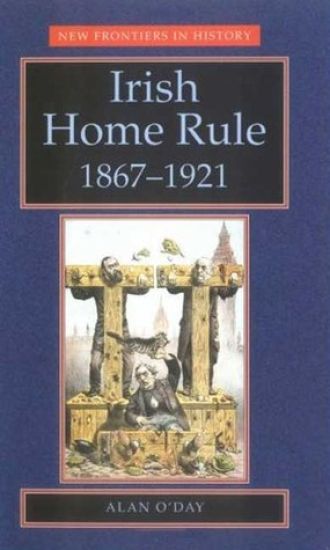
Irish Home Rule considers the pre-eminent issue in British politics during the late nineteenth and early twentieth-centuries. It is the first account to explain the various self-government plans, to place these in context and examine the motives for putting the schemes forward. The book distinguishes between moral and material home rulers, making the point that the first appealed especially to outsiders, some Protestants and the intelligentsia, who saw in self-government a means to reconcile Ireland’s antagonistic traditions. In contrast, material home rulers viewed a Dublin Parliament as a forum of Catholic interests. This account appraises the home rule movement from a fresh angle, distinguishing it from the usual division drawn between physical force and constitutional nationalists It maintains that an ideological continuity runs from Young Ireland, the Fenians, the early home rulers including Isaac Butt and Charles Stewart Parnell, to the Gaelic Revivalists to the Men of 1916. These nationalists are distinguishable from material home rulers not on the basis of methods or strategy but by a fundamental ideological cleavage.
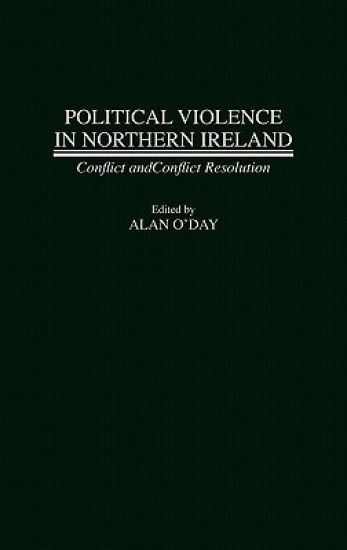
Political Violence in Northern Ireland

Political Violence in Northern Ireland

Alan O'Day

Praeger Publishers Inc
1997
sidottu
Political violence in Northern Ireland began in the late 1960s and has been part of life there and to a lesser extent in the Republic of Ireland and Great Britain for nearly three decades. The crisis has perplexed politicians, strained democratic institutions, and has placed British policies under the microscope of international scrutiny. The volume of up-to-date essays places recent developments in context. It looks at the ideology of republicans and unionists, the impediments to peace, problems of gender and citizenship, the impact of partition on the island's economy, how The Troubles have been filtered through the press, and the impact of overspill violence in the Republic of Ireland and Great Britain. This study adds an important fresh texture to the ongoing discussion of political violence and the problems in Northern Ireland.
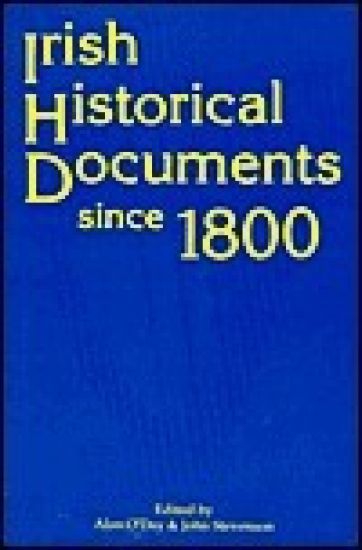
Irish Historical Documents Since 1800

Irish Historical Documents Since 1800

Alan O'Day; John Stevenson

Barnes Noble Books-Imports, Div of Rowman Littlefield Pubs., Inc
1992
nidottu
Irish Historical Documents Since 1800 is another addition to Gill and Macmillan's well established reference publishing in Irish Studies, which already includes successful and widely acclaimed volumes in history, biography and literature. The book reproduces the texts of the most important documents and speeches in the course of Irish history from 1800 to the present day. Among the documents reproduced are the Ulster Solemn League and Covenant of 1912 which formed the basis of the Ulster Unionist resistance to Home Rule, a campaign which eventually resulted in the establishment of Northern Ireland; the Proclamation of the Republic of Ireland at the time of the Easter Rebellion of 1916; the Anglo-Irish Treaty of 1922; the manifesto of the Northern Ireland Civil Rights Association of 1968; and the Anglo-Irish Agreement of 1985. In addition to these major texts, the book will also contain material such as the Fenian proclamation of 1867; letters from lords lieutenant and other government officials in the nineteenth century; and contemporary documents from the Famine which tell graphically of the human and social cost of that huge tragedy. Irish Historical Documents Since 1800 is an essential reference tool for all students and researchers in modern Irish history.
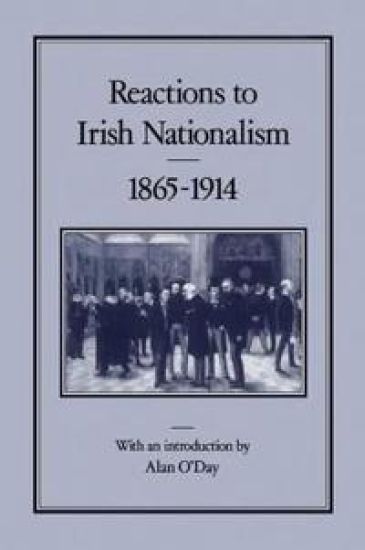
Reactions to Irish Nationalism, 1865-1914

Reactions to Irish Nationalism, 1865-1914

Alan O'Day

Hambledon Continuum
1987
sidottu
From the mid-1860s to 1914 the Irish problem was frequently the prime issue in British politics. Quantitatively it absorbed more time and energy than any other question. There was little about Ireland which was not aired at length in the press, in Parliament and at the dinner tables of the British political elite. Fenianism obsessed British minds at the beginning of the period while at the end it seemed all too possible that Irish home rule would spark off the largest civil disruption in the British Isles since the seventeenth century. Throughout the late Victorian and Edwardian eras Ireland never drifted far from political consciousness. The importance of the Irish question in modern British history is undeniable. It remains a staple of schools and university history syllabuses. For many William Gladstone's long career, most of which had little connection with Ireland, was bound up with his mission to pacify the Emerald Isle. Charles Stewart Parnell, the Protestant nationalist who guided an essentially Catholic movement so triumphantly, has inspired the best in poetry and the worst of Hollywood. The Irish problem, understandably, has continued to excite interest and passion beyond any other issue of the time. Its ramifications are with us even today. Failure to resolve the Irish problem by 1914 left a bitter legacy and was a major factor in giving birth to the contemporary Northern Ireland violence. That the Irish question played so considerable a part in later nineteenth and early twentieth century Britain is at initial glance very curious. Ireland was a small, relatively poor backwater on the fringe of the British Isles and western Europe. It possessed few significant resources and had little intrinsic importance. Scotland and Wales, lands of infinitely more value to Britain, attracted little concern by comparison though both had grievances and aspirations similar to those in Ireland. Moreover, neither the industrial workers of Britain's cities or the agricultural classes of the countryside were given the consideration devoted to the humblest of Ireland's Catholic peasantry. Ireland's centrality is explicable in three principle ways. First, there was a range of outstanding Irish grievances which public opinion had been educated to understand demanded attention if the Catholics of the country were to consent freely to be part of a unified kingdom. Certain issues, then, were ripe for legislation. Secondly, a movement emerged which was able to galvanise the Catholic masses. It also proved effective in keeping Ireland to the fore in British life over an extended time.