Kirjojen hintavertailu – 12 903 725 kirjaa ja 27 kauppaa

Kirjailija

Alan Rushworth

Kirjat ja teokset yhdessä paikassa: 4 kirjaa, julkaisuja vuosilta 2010–2016, suosituimpiin kuuluu Frontiers of the Roman Empire. Vertaile teosten hintoja ja tarkista saatavuus suomalaisista kirjakaupoista.

4 kirjaa

Kirjojen julkaisuvuodet: 2010–2016.

Segedunum

Segedunum

Alexandra Croom; Alan Rushworth

Oxbow Books
2016
sidottu
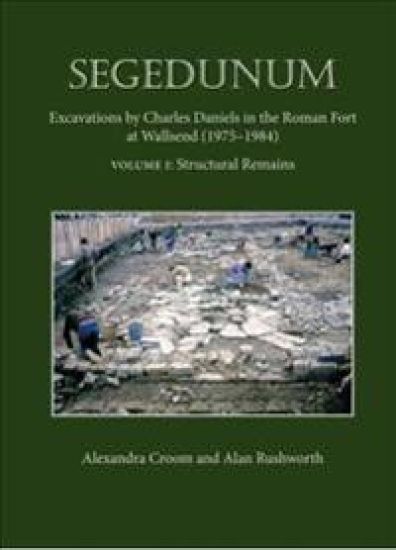
Between 1975 and 1984 almost the entire area of the Roman fort of Segedunum in Wallsend was excavated under the direction of Charles Daniels, senior lecturer in the Department of Archaeology at Newcastle University. It is these excavations which form the subject of this publication. This comprehensive report on the structural remains (Vol. 1) and finds (Vol. 2) show clearly that Daniels’ work represented one of the most ambitious and prolonged programmes of fieldwork attempted on the northern frontier up to that point and has made Wallsend one of the most fully investigated of Roman forts in Britain. In most areas the remains were not excavated down to natural and so the remains revealed were predominantly those of the 2nd and 3rd centuries, with some late Roman features. Volume 1 describes first the stratigraphic sequences and excavation of the stone and timber buildings of the fort’s central range: the granary, hospital, headquarters (principia), commanding officer’s house (praetorium), the forehall fronting the principia and granary, and a long narrow building, perhaps a workshop, on the north side of the eastern via principalis. In the case of all but the praetorium these buildings were fully exposed. Later chapters cover the buildings in the northern third of the fort, revealed to be a group of six infantry barracks which underwent several phases of rebuilding and refurbishment including partial replacment by a stable block. Parts 4 and 5 examine the cavalry barracks in the southern part of the fort (retentura) and excavations of sections of the fort defences on all four sides, particularly of discrete structures such as towers and gates. Volume 2, on the predominantly 2nd–3rd century material culture from the site, looks at the stonework, pottery, coins and small finds recovered. The stonework and ceramic building material provides information on the appearance of the fort and include a very rare stone latrine seat and a bench support. The pottery comprises samian, mortaria, including a large collection stamped by Anaus, amphorae and coarse wares. Other clases of artefact occur in comparatively small numbers, including colourless glass tablewares of the second and third centuries, 295 coins and c. 1000 small finds including some post-Roman pieces. Finally there is a detialed assessment of animal bone assemblages from a cistern and the Commanding Officer’s house.
Frontiers of the Roman Empire: The African Frontiers

Frontiers of the Roman Empire: The African Frontiers

David J. Breeze; Sonja Jilek; David Mattingly; Alan Rushworth; Martin Sterry; Victoria Leitch

Archaeopress
2013
nidottu
The frontiers of the Roman empire together form the largest monument of one of the world’s greatest states. They stretch for some 7,500km through 20 countries which encircle the Mediterranean Sea. The remains of these frontiers have been studied by visitors and later by archaeologists for several centuries. Many of the inscriptions and sculpture, weapons, pottery and artefacts created and used by the soldiers and civilians who lived on the frontier can be seen in museums. Equally evocative of the lost might of Rome are the physical remains of the frontiers themselves. The aim of this series of books is not only to inform the interested visitor about the history of the frontiers but to act as a guidebook as well. The Roman military remains in North Africa are remarkable in their variety and in their state of preservation: they deserve to be better known. They include towers and forts, stretches of defensive lines of stone and earth with ditches broken by gates, and roads, sitting in the most amazing scenery. It is hoped that each reader of this book will enjoy learning more about North Africa’s remarkable Roman inheritance.
Frontiers of the Roman Empire

Frontiers of the Roman Empire

David J. Mattingly; Alan Rushworth; Martin Sterry; Victoria Leitch

Society for Libyan Studies
2013
nidottu
The frontiers of the Roman Empire form the largest surviving monument of one of the world's greatest states, and stretch for around 7500 km through 20 countries. The remains of these have been studied for many centuries. Inscriptions, sculpture, weapons, pottery and artefacts created and used by the soldiers and civilians who lived on the frontier form the basis for this history and are outlined in this book. The physical remains of the frontiers are also visible in many parts of Africa, including towers and forts, stretches of defensive lines of stone and earth with ditches broken by gates, and roads. The aim of this book is to inform the interested visitor about the history of the frontiers and to act as a guidebook as well. Multi-language edition: English, French, German & Arabic
Drove Roads of Northumberland

Drove Roads of Northumberland

Ian Roberts; Alan Rushworth; Richard Carlton

The History Press Ltd
2010
nidottu
Droving has been hugely important in shaping farming practice across Northumberland for 1,000 years or more. The necessity of transporting sheep and cattle has changed the landscape, and developed the roads and buildings and at one time, animals would be herded from as far a field as Scotland and Ireland. Today the scene is very different but the legacy of the drovers can still be seen and enjoyed all over the region. Local archaeologists Ian Roberts, Alan Rushworth and Richard Carlton have been determined to preserve this history on behalf of the Northumberland National Park Authority. Following the development of droving in Northumberland from prehistoric times, through Middle Ages, the eighteenth century and right up to date, they offer the definitive history of this significant activity.