

Kirjailija
Alan Weisman
Kirjat ja teokset yhdessä paikassa: 14 kirjaa, julkaisuja vuosilta 2006–2026, suosituimpiin kuuluu Hope Dies Last. Vertaile teosten hintoja ja tarkista saatavuus suomalaisista kirjakaupoista.
14 kirjaa
Kirjojen julkaisuvuodet: 2006–2026.
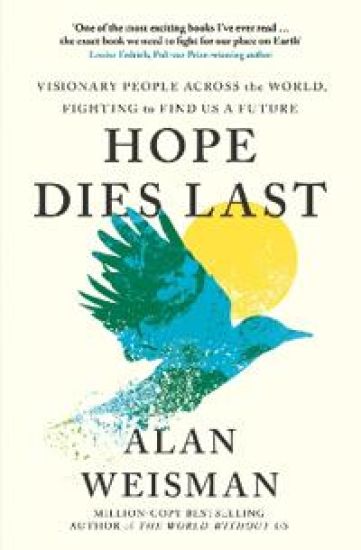
'One of the most exciting books I've ever read'- Louise ErdrichIn this profoundly human and moving narrative, the bestselling author of The World Without Us returns with a book ten years in the making: a study of the precarious state of our planet and what it means to be a human on the front lines of this existential crisis. His new uplifting book, Hope Dies Last, is a literary evocation of our current predicament and the core optimism of the human species against the worst odds we have ever faced. To write this book, Weisman has travelled the globe witnessing the devastation of climate change and meeting the people striving to mitigate and undo our past transgressions. From the flooding Marshall Islands to wetlands renewal in Iraq, and from the Netherlands to the Korean DMZ to cities and coastlines around the world, he has witnessed personally the best of humanity battling the heat, the hunger, and the rising tides. He profiles the work of big thinkers—engineers, scientists, economists, and psychiatrists—as they devise innovative and wildly creative responses to an uncertain and frightening future. We are at an unprecedented point in history, as our collective exploits on this planet are leading us to our own undoing, and we could be one of the species marching toward extinction. A remedy to climate anxiety by one of our most important voices on humans’ relationship with the Earth, Hope Dies Last fills a crucial gap in the global conversation: Now that we have passed the point of no return in our battle against climate change, how do we feel, behave, act, plan, and dream as we approach a future decidedly different from what we had expected?


Hope Dies Last: Visionary People Across the World, Fighting to Find Us a Future
Alan Weisman
DUTTON
2025
sidottu
One of Heatmap's 18 Climate Books to Read in 2025 The award-winning environmental journalist's extraordinary, long-awaited portrait of hope and resilience as we face a fractured and uncertain future In this profoundly human and moving narrative, the bestselling author of The World Without Us returns with a book ten years in the making: a study of what it means to be a human on the front lines of our planet's existential crisis. His new book, Hope Dies Last, is a literary evocation of our current predicament and the core resolve of our species against the most precarious odds we have ever faced. To write this book, Weisman traveled the globe, witnessing climate upheaval and other devastations, and meeting the people striving to mitigate and undo our past transgressions. From the flooding Marshall Islands to revived wetlands in Iraq, from the Netherlands and Bangladesh to the Korean DMZ and to cities and coastlines in the U. S. and around the world, he has encountered the best of humanity battling heat, hunger, rising tides, and imperiled nature. He profiles the innovations of big thinkers--engineers, scientists, conservationists, economists, architects, and artists--as they conjure wildly creative, imaginative responses to an uncertain, ominous future. At this unprecedented point in history, as our collective exploits on this planet may lead to our own undoing and we could be among the species marching toward extinction, they refuse to accept defeat. Hope Dies Last fills a crucial gap in the global conversation: Having reached a point of no return in our climate confrontation, how do we feel, behave, act, plan, and dream as we approach a future decidedly different from what we had expected?

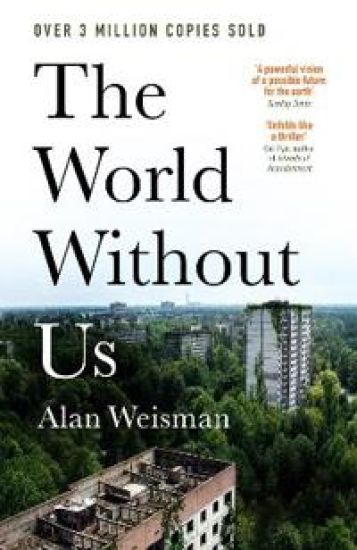
Revised Edition with New Afterword from the Author Time #1 Nonfiction Book of the YearFinalist for the National Book Critics Circle Award Over 3 million copies sold in 35 Languages"On the day after humans disappear, nature takes over and immediately begins cleaning house - or houses, that is. Cleans them right off the face of the earth. They all go." What if mankind disappeared right now, forever... what would happen to the Earth in a week, a year, a millennium? Could the planet's climate ever recover from human activity? How would nature destroy our huge cities and our myriad plastics? And what would our final legacy be? Speaking to experts in fields as diverse as oil production and ecology, and visiting the places that have escaped recent human activity to discover how they have adapted to life without us, Alan Weisman paints an intriguing picture of the future of Earth. Exploring key concerns of our time, this absorbing thought experiment reveals a powerful - and surprising - picture of our planet's future.
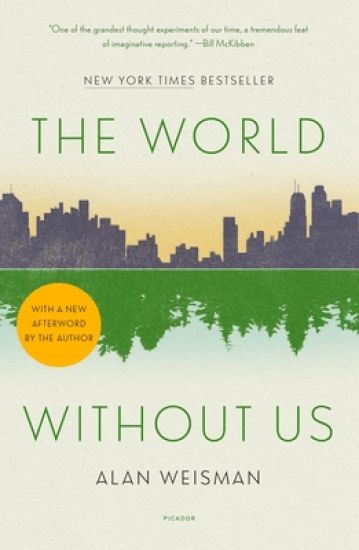
A NEW YORK TIMES BESTSELLER A Time #1 Nonfiction Book* An Entertainment Weekly #1 Nonfiction Book *A Finalist for the National Book Critics Circle Award and Salon Book Awards* A Kansas City Star's Top 100 Book of the Year *A Mother Jones' Favorite Book* The 15th Anniversary edition of the worldwide bestseller that answers the ultimate question: what happens to the Earth when human beings disappear? Now with a new afterword from the author. The World Without Us is a penetrating, page-turning tour of a post-human Earth. Drawing on the expertise of engineers, atmospheric scientists, art conservators, zoologists, oil refiners, marine biologists, astrophysicists, religious leaders from rabbis to the Dalai Lama, and paleontologists, Alan Weisman deftly illustrates what the planet might be like today, if not for us. In this revelatory account, Alan Weisman explains how our massive infrastructure would collapse and finally vanish without human presence; which everyday items may become immortalized as fossils; how copper pipes and wiring would be crushed into mere seams of reddish rock; why some of our earliest buildings might be the last architecture left; and how plastic, bronze sculpture, and radio waves may be our most lasting gifts to the universe. As he shows which human devastations are indelible, and which examples of our highest art and culture would endure longest, Weisman draws on every field of science to present an environmental assessment like no other. This is narrative nonfiction at its finest--one of the most affecting portraits yet of humankind's place on this planet.
Meridel Rubenstein
Arif Khan; Meridel Rubenstein; Shawn Michelle Smith; Alan Weisman
University of New Mexico Press
2017
sidottu
Over the course of her career, internationally renowned artist and University of New Mexico alumna Meridel Rubenstein creates photographic artworks that engage the natural world and investigate humanity's place within nature. Eden Turned on Its Side looks at ecological and human processes across time that either reinforce or destroy the notion of "Eden." Focusing on poetic intersections of nature and culture in relation to ecological and social imbalance, the work consists of large-scale photographic images that tend toward immersive installation, as is characteristic of much of Rubenstein's art. It comprises three parts-Photosynthesis, Volcano Cycle, and Eden in Iraq-which respectively explore ecologies on the scales of human time, geological time, and mythical time. Eden Turned on Its Side will accompany an exhibition of the same name, organized by the University of New Mexico Art Museum and opening in February 2018.

Every four days there are a million more people on the planet. More people and fewer resources. In this timely work, Alan Weisman examines how we can shrink our collective human footprint so that we don't stomp any more species - including our own - out of existence. The answer: reducing gradually and non-violently the number of humans on the planet whose activities, industries and lifestyles are damaging the Earth. Defining an optimum human population for the Earth is an explosive concept. Weisman, one of the most brilliant environmental writers, has travelled the globe in search of answers, from the settlements of Israel and the plains of Mexico, to the bustling streets of Pakistan and the teeming cities of the UK. In Countdown, Weisman details his encounters with religious leaders, demographers, ecologists, economists, engineers and agriculturalists in what promises to be an international classic.
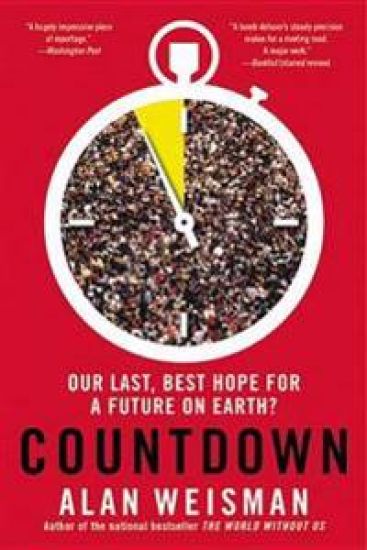
A powerful investigation into the chances for humanity's future from the author of the bestseller The World Without Us. In his bestselling book The World Without Us, Alan Weisman considered how the Earth could heal and even refill empty niches if relieved of humanity's constant pressures. Behind that groundbreaking thought experiment was his hope that we would be inspired to find a way to add humans back to this vision of a restored, healthy planet-only in harmony, not mortal combat, with the rest of nature. But with a million more of us every 4 1/2 days on a planet that's not getting any bigger, and with our exhaust overheating the atmosphere and altering the chemistry of the oceans, prospects for a sustainable human future seem ever more in doubt. For this long awaited follow-up book, Weisman traveled to more than 20 countries to ask what experts agreed were probably the most important questions on Earth--and also the hardest: How many humans can the planet hold without capsizing? How robust must the Earth's ecosystem be to assure our continued existence? Can we know which other species are essential to our survival? And, how might we actually arrive at a stable, optimum population, and design an economy to allow genuine prosperity without endless growth? Weisman visits an extraordinary range of the world's cultures, religions, nationalities, tribes, and political systems to learn what in their beliefs, histories, liturgies, or current circumstances might suggest that sometimes it's in their own best interest to limit their growth. The result is a landmark work of reporting: devastating, urgent, and, ultimately, deeply hopeful. By vividly detailing the burgeoning effects of our cumulative presence, Countdown reveals what may be the fastest, most acceptable, practical, and affordable way of returning our planet and our presence on it to balance. Weisman again shows that he is one of the most provocative journalists at work today, with a book whose message is so compelling that it will change how we see our lives and our destiny.
Every four days there are a million more people on the planet. More people and fewer resources. In this timely work, Alan Weisman examines how we can shrink our collective human footprint so that we don't stomp any more species - including our own - out of existence. The answer: reducing gradually and non-violently the number of humans on the planet whose activities, industries and lifestyles are damaging the Earth. Defining an optimum human population for the Earth is an explosive concept. Weisman, one of the most brilliant environmental writers, will travel the globe, from the settlements of Israel and the plains of Mexico to the bustling streets of Pakistan and the teeming cities of the UK. In his search for answers, he will speak to religious leaders, demographers, ecologists, economists, engineers and agriculturalists in what promises to be an international classic.
A controversial tour de force. Weisman seeks to answer a fundamental question - how do we manage the global population without destroying the planet?
A powerful investigation into the chances for humanity's future from the author of the bestseller The World Without Us. In his bestselling book The World Without Us, Alan Weisman considered how the Earth could heal and even refill empty niches if relieved of humanity's constant pressures. Behind that groundbreaking thought experiment was his hope that we would be inspired to find a way to add humans back to this vision of a restored, healthy planet-only in harmony, not mortal combat, with the rest of nature. But with a million more of us every 4 1/2 days on a planet that's not getting any bigger, and with our exhaust overheating the atmosphere and altering the chemistry of the oceans, prospects for a sustainable human future seem ever more in doubt. For this long awaited follow-up book, Weisman traveled to more than 20 countries to ask what experts agreed were probably the most important questions on Earth--and also the hardest: How many humans can the planet hold without capsizing? How robust must the Earth's ecosystem be to assure our continued existence? Can we know which other species are essential to our survival? And, how might we actually arrive at a stable, optimum population, and design an economy to allow genuine prosperity without endless growth? Weisman visits an extraordinary range of the world's cultures, religions, nationalities, tribes, and political systems to learn what in their beliefs, histories, liturgies, or current circumstances might suggest that sometimes it's in their own best interest to limit their growth. The result is a landmark work of reporting: devastating, urgent, and, ultimately, deeply hopeful. By vividly detailing the burgeoning effects of our cumulative presence, Countdown reveals what may be the fastest, most acceptable, practical, and affordable way of returning our planet and our presence on it to balance. Weisman again shows that he is one of the most provocative journalists at work today, with a book whose message is so compelling that it will change how we see our lives and our destiny.
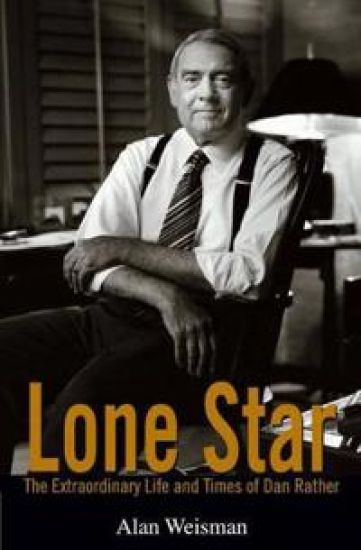
The first definitive biography of the iconic newscaster examines the sometimes controversial, four-decade career of television journalist Dan Rather, drawing on dozens of interviews with CBS and other news insiders to provide a close-up look at his early years as a Texas radio reporter, through his tenure as an anchorman, and beyond.