Kirjojen hintavertailu – 12 859 819 kirjaa ja 27 kauppaa

Kirjailija

Alasdair Whittle

Kirjat ja teokset yhdessä paikassa: 6 kirjaa, julkaisuja vuosilta 2008–2026, suosituimpiin kuuluu The Whittle Collection. Vertaile teosten hintoja ja tarkista saatavuus suomalaisista kirjakaupoista.

6 kirjaa

Kirjojen julkaisuvuodet: 2008–2026.

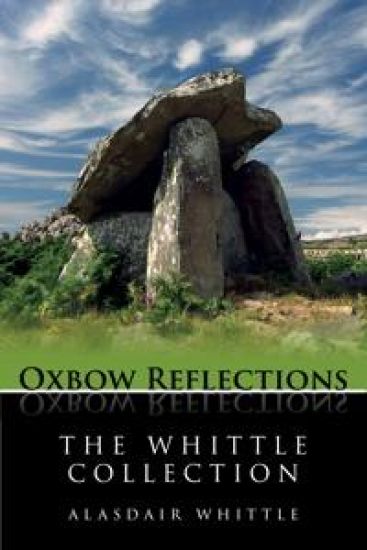
The Whittle Collection

The Whittle Collection

Alasdair Whittle

Casemate Publishers
2026
nidottu
Alasdair Whittle is one of the most influential British prehistorians of the late 20th to early 21st century. This volume in our new Reflections series re-presents some of his most important papers published in Oxbow titles and celebrates his contribution to our understanding of Neolithic lifeways and the development of Neolithic society in Britain and Europe. The collection illustrates his pioneering work in the interpretation of both monumental and settlement sites, and the spread and nature of early farming in central and western Europe, including investigation of LBK longhouse life. Alasdair has also been at the forefront of the application of Bayesian statistics in radiocarbon dating, helping to revolutionise chronologies at a variety of geographical and temporal scales. This volume seeks to reflect some of the best of his innovative thinking and influence as seen through his publications with Oxbow.
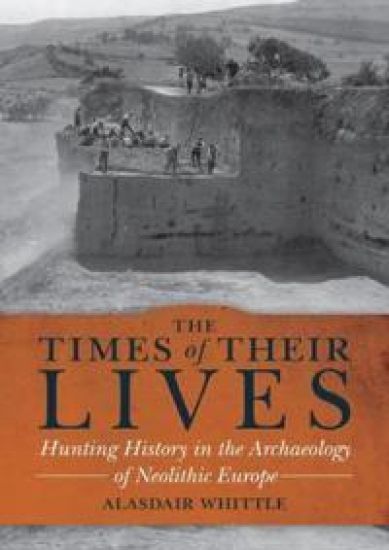
The Times of their Lives

The Times of their Lives

Alasdair Whittle

Oxbow Books
2018
sidottu
The hunt is on for the most detailed histories of people in the remote past that we can achieve. We can now routinely, through Bayesian modelling of radiocarbon dates, construct much more precise chronologies than previously, down to the scales of lifetimes and generations, and even on occasion of decades. Better timing opens estimates of duration and the evaluation of the tempo of change. Rather than the conventional default perspective of generally slow change and much continuity, in blocks of time a couple of centuries long or more, we can now examine sequences that are often much more dynamic, quicker-changing, and from time to time more interrupted and punctuated than we had previously imagined. We can now write much more precise and ambitious narratives about the actions, decisions and choices of past people; the pre- can and should come out of prehistory. Despite the absence of written records, such narratives can be aligned much more closely with those of history and its concerns with the specific and the particular, and can serve to rid archaeology of its addictions to generalisation and fuzzy chronology. Coming out of a recent major project funded by the European Research Council, and with the experience of Gathering Time (Oxbow Books 2011) also behind it, The Times of their Lives sets out this case. It considers the varying timescales of archaeology, history and anthropology, and the construction of precise chronologies. It examines the reach of precision in a series of case studies across Neolithic Europe to do with big themes of settlement, monumentality and materiality through the sixth to third millennia cal BC. It goes on to consider the implications of much more precise chronologies for narratives of social differentiation and change through the Neolithic sequence, and reflects on how to combine the varying timescales presented by turning points in the long term, by the slow time of daily life, subsistence practices and population growth, and by lifetime and generational developments. It ends by looking ahead to a future archaeology, exploiting the best of archaeological science, which can write precise and detailed narratives for the people of early history. Though focused on the European Neolithic, The Times of their Lives sets a challenge for archaeology as a whole.

Prehistoric Europe

Prehistoric Europe

Timothy Champion; Clive Gamble; Stephen Shennan; Alasdair Whittle

Routledge
2017
sidottu
The study of European prehistory has been revolutionized in recent years by the rapid growth rate of archeological discovery, advances in dating methods and the application of scientific techniques to archaeological material and new archaeological aims and frameworks of interpretation. Whereas previous work concentrated on the recovery and description of material remains, the main focus is now on the reconstruction of prehistoric societies and the explanation of their development. This volume provides that elementary and comprehensive synthesis of the new discoveries and the new interpretations of European prehistory. After and introductory chapter on the geographical setting and the development of prehistoric studies in Europe, the text is divided chronologically into nine chapters. Each one describes, with numerous maps, plans and drawings, the relevant archaeological data, and proceeds to a discussion of the societies they represent. Particular attention is paid to the major themes of recent prehistoric research, especially subsistence economy, trade, settlement, technology and social organization.
Prehistoric Europe

Prehistoric Europe

Timothy Champion; Clive Gamble; Stephen Shennan; Alasdair Whittle

Left Coast Press Inc
2009
nidottu
The study of European prehistory has been revolutionized in recent years by the rapid growth rate of archeological discovery, advances in dating methods and the application of scientific techniques to archaeological material and new archaeological aims and frameworks of interpretation. Whereas previous work concentrated on the recovery and description of material remains, the main focus is now on the reconstruction of prehistoric societies and the explanation of their development. This volume provides that elementary and comprehensive synthesis of the new discoveries and the new interpretations of European prehistory. After and introductory chapter on the geographical setting and the development of prehistoric studies in Europe, the text is divided chronologically into nine chapters. Each one describes, with numerous maps, plans and drawings, the relevant archaeological data, and proceeds to a discussion of the societies they represent. Particular attention is paid to the major themes of recent prehistoric research, especially subsistence economy, trade, settlement, technology and social organization.
Problems in Neolithic Archaeology

Problems in Neolithic Archaeology

Alasdair Whittle

Cambridge University Press
2008
pokkari
Problems in Neolithic Archaeology is a notable contribution to the debate about how we can write prehistory. Drawing on both processual and post-processual approaches, it reaffirms the central role of theory and interpretation while accepting as permanent the uncertainty which makes the testing of archaeological hypotheses difficult or even impossible. Dr Whittle asserts in particular the need for greater self-confidence and for the formulation of new theory and questions more appropriate to the archaeological record. The book's specific strength lies, however, in a close contextual study of the Neolithic period in western and central Europe. In this respect it provides an admirable complement to his textbook Neolithic Europe.
Living Well Together?

Living Well Together?

Alasdair Whittle

Oxbow Books
2008
nidottu
Living Well Together investigates the development of the Neolithic in southeast and central Europe from 6500-3500 cal BC with special reference to the manifestations of settling down. A collection of reports and comments on recent fieldwork in the region, Living Well Together? provides 14 tightly written and targeted papers presenting interpretive discussions from important excavations and reassessments of our understanding of the Neolithic. Each paper makes a significant contribution to existing knowledge about the period, and the book, like its companion (Un)settling the Neolithic (Oxbow 2005) will be a benchmark text for work in this region. The reports in Living Well Together? play out the critical questions posed in the earlier volume: how should one interpret settlement; what of the difference between tells and flat sites; what do we mean by permanent occupation; can we avoid the assumptions that underlie claims for year-round residence or seasonal occupation; why, in some regions and at some times, did people maintain residence for so many generations that monumental tell settlements grew to dominate the visual and social landscape; what would a viewshed analysis of tells reveal; what are the dynamics of households in Neolithic Greece; how should we see the emergence of pottery in terms of material culture; and what were the origins of the LBK, and how can we understand its development? The volume's authors have succeeded in attacking existing thought, in provoking new discussion and in creating new paths to understanding the nature of human existence in the Neolithic. Together they set a new agenda for studying the Neolithic across and beyond southeastern and central Europe.