Kirjojen hintavertailu – 12 903 735 kirjaa ja 27 kauppaa

Kirjailija

Alastair Greig

Kirjat ja teokset yhdessä paikassa: 5 kirjaa, julkaisuja vuosilta 2003–2023, suosituimpiin kuuluu Challenging Global Inequality. Vertaile teosten hintoja ja tarkista saatavuus suomalaisista kirjakaupoista.

5 kirjaa

Kirjojen julkaisuvuodet: 2003–2023.

The Road to Batemans Bay

The Road to Batemans Bay

Alastair Greig

ANU Press
2023
nidottu
The Road to Batemans Bay is the story of competing ventures to create 'the Great Southern Township' on the South Coast of New South Wales in the early 1840s. The idea of developing the furthest reaches of settlement was linked to the hopes of southern woolgrowers for a road from their properties to the coast, over the Great Dividing Range. The township proponents dreamed that having a quicker and cheaper connection to Sydney would allow them to open a port second only to Port Jackson. The scene begins with the proposed coastal township of St Vincent, in an age of optimism: settlement is expanding, exports are growing and land prices are soaring, generating Australia's first land boom. Before long, however, the colony experiences a catastrophic economic depression whose 'pestilential breath' infects those with a stake in the coastal townships. Alastair Greig follows the fate of these individuals, while also speculating on the broader fate of South Coast development during the mid-nineteenth century. Greig gives a unique insight into many aspects of colonial life-including the worlds of Sydney's merchants, auctioneers, land speculators, surveyors, map-makers and lawyers-as well as its maritime challenges. The Road to Batemans Bay is a chronicle of how Australia first developed its land-gambling habit and how land speculation led to the road to ruin.
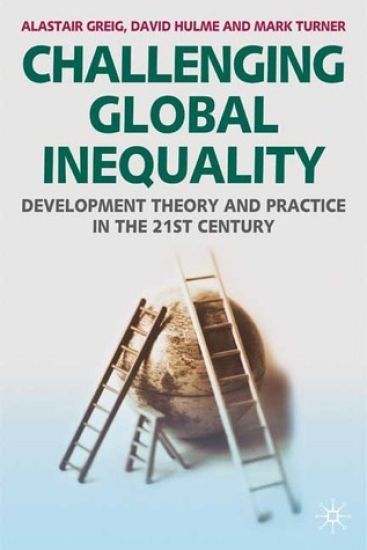
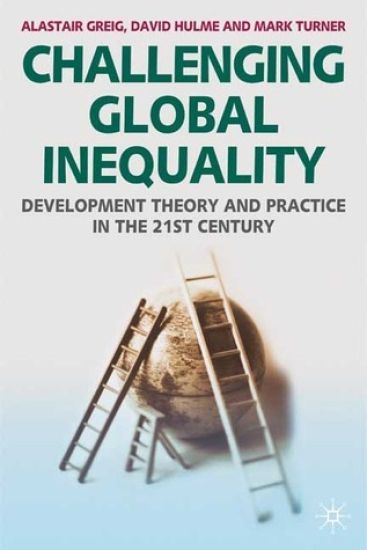
Challenging Global Inequality

Challenging Global Inequality

Alastair Greig; David Hulme; Mark Turner

Red Globe Press
2007
nidottu
This major introductory text written by 3 leading names in the field provides an accessible overview of the challenges faced in overcoming global poverty and inequality in the 21st century. Through an in-depth assessment of development theory and practice, the authors set out to advance two key arguments: the first being the importance of historically contextualizing contemporary developmental problems in order to assess policy proposals; and the second that inequality matters, and how this notion has continually remained a central feature of development debates from colonial times to present day. Ideal for undergraduate students taking development modules as part of political science and international relations degrees, this engaging text proves to be essential reading when exploring the impacts of development on today's international political economy. With each chapter covering inequalities from all different angles, the authors clearly outline the impact of models such as globalization and neoliberalism, as well as offering alternative views on the challenges posed by the UN's Millennium Development Goals. Also available is a companion website with extra features to accompany the text, please take a look by clicking below - https://he.palgrave.com/companion/Greig-Challenging-Global-Inequality/
Challenging Global Inequality

Challenging Global Inequality

Alastair Greig; David Hulme; Mark Turner

Red Globe Press
2007
sidottu
This major introductory text written by three leading names in the field provides an accessible overview of the challenges faced in overcoming global poverty and inequality in the twenty-first century. Through an in-depth assessment of development theory and practice, the authors set out to advance two key arguments: the first being the importance of historically contextualizing contemporary developmental problems in order to assess policy proposals; and the second that inequality matters, and how this notion has continually remained a central feature of development debates from colonial times to present day. Ideal for undergraduate students taking development modules as part of Political Science and International Relations degrees, this engaging text proves to be essential reading when exploring the impacts of development on today's international political economy. With each chapter covering inequalities from all different angles, the authors clearly outline the impact of models such as globalization and neoliberalism, as well as offering alternative views on the challenges posed by the UN's Millennium Development Goals. Also available is a companion website with extra features to accompany the text, please take a look by clicking below - https://he.palgrave.com/companion/Greig-Challenging-Global-Inequality/
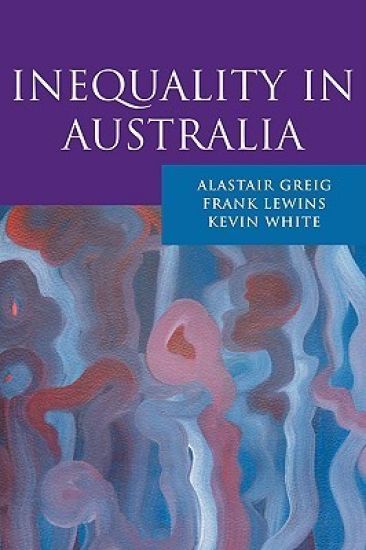
Inequality in Australia

Inequality in Australia

Alastair Greig; Frank Lewins; Kevin White

Cambridge University Press
2003
sidottu
This text seeks to analyse and explain inequality, challenging traditional conceptions and providing a new critical perspective. The authors provide a comprehensive historical account of inequality, and show how that account no longer adequately explains the new and different forms experienced in recent decades. They argue that transformations in industrial, familial and political relations since the 1970s must be taken into account when trying to come to grips with the 'new' inequalities. As society has changed, new forms of inequality have emerged, conditioning the subject's very experience of identity, embodiment and politics. Inequality is understood, then, not as something that can be determined only with reference to traditional categories such as class but as that which works more insidiously. The authors demonstrate, for example, how bio and medical technologies produce inequalities. The book is at once a critical overview of contemporary inequality and a thorough-going textbook suitable for undergraduates.
Inequality in Australia

Inequality in Australia

Alastair Greig; Frank Lewins; Kevin White

Cambridge University Press
2003
pokkari
This text seeks to analyse and explain inequality, challenging traditional conceptions and providing a new critical perspective. The authors provide a comprehensive historical account of inequality, and show how that account no longer adequately explains the new and different forms experienced in recent decades. They argue that transformations in industrial, familial and political relations since the 1970s must be taken into account when trying to come to grips with the 'new' inequalities. As society has changed, new forms of inequality have emerged, conditioning the subject's very experience of identity, embodiment and politics. Inequality is understood, then, not as something that can be determined only with reference to traditional categories such as class but as that which works more insidiously. The authors demonstrate, for example, how bio and medical technologies produce inequalities. The book is at once a critical overview of contemporary inequality and a thorough-going textbook suitable for undergraduates.