Kirjojen hintavertailu – 12 903 725 kirjaa ja 27 kauppaa

Kirjailija

Alastair Morgan

Kirjat ja teokset yhdessä paikassa: 5 kirjaa, julkaisuja vuosilta 2007–2023, suosituimpiin kuuluu Who Killed Daniel Morgan?. Vertaile teosten hintoja ja tarkista saatavuus suomalaisista kirjakaupoista.

5 kirjaa

Kirjojen julkaisuvuodet: 2007–2023.

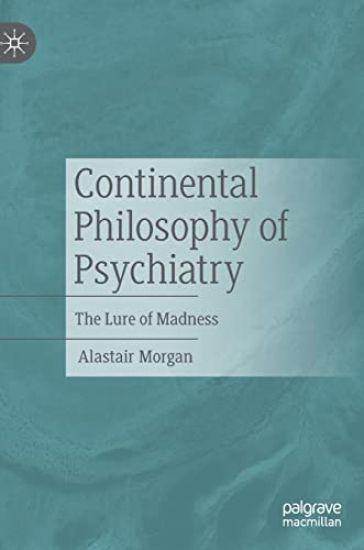
Continental Philosophy of Psychiatry

Continental Philosophy of Psychiatry

Alastair Morgan

Springer International Publishing AG
2023
nidottu
This book explores how the continental philosophical tradition in the 20th century attempted to understand madness as madness. It traces the paradoxical endeavour of reason attempting to understand madness without dissolving the inherent strangeness and otherness of madness. It provides a comprehensive overview of the contributions of phenomenology, critical theory, psychoanalysis, post-structuralism and anti-psychiatry to continental philosophy and psychiatry. The book outlines an intellectual tradition of psychiatry that is both fascinated by and withdraws from madness. Madness is a lure for philosophy in two senses; as both trap and provocation. It is a trap because this philosophical tradition constructs an otherness of madness so profound, that it condemns madness to silence. However, the idea of madness as another world is also a fertile provocation because it respects the non-identity of madness to reason. The book concludes with some critical reflections on the role of madness in contemporary philosophical thought.
Continental Philosophy of Psychiatry

Continental Philosophy of Psychiatry

Alastair Morgan

Springer International Publishing AG
2022
sidottu
This book explores how the continental philosophical tradition in the 20th century attempted to understand madness as madness. It traces the paradoxical endeavour of reason attempting to understand madness without dissolving the inherent strangeness and otherness of madness. It provides a comprehensive overview of the contributions of phenomenology, critical theory, psychoanalysis, post-structuralism and anti-psychiatry to continental philosophy and psychiatry. The book outlines an intellectual tradition of psychiatry that is both fascinated by and withdraws from madness. Madness is a lure for philosophy in two senses; as both trap and provocation. It is a trap because this philosophical tradition constructs an otherness of madness so profound, that it condemns madness to silence. However, the idea of madness as another world is also a fertile provocation because it respects the non-identity of madness to reason. The book concludes with some critical reflections on the role of madness in contemporary philosophical thought.

Who Killed Daniel Morgan?

Who Killed Daniel Morgan?

Peter Jukes; Alastair Morgan

BLINK Publishing
2018
nidottu
PRIVATE INVESTIGATOR DANIEL MORGAN WAS MURDERED WITH AN AXE TO THE HEAD IN A PUB CAR PARK ON 10TH MARCH 1987, AS HE WAS ON THE VERGE OF EXPOSING POLICE CORRUPTION. Daniel's killing is Britain's most-investigated murder case, yet his family still wait for answers over 30 years on from an 'institutionally corrupt' Met Police force acting only to 'protect itself'. After five failed police investigations and a damning independent inquiry into police corruption, Daniel's murder remains unsolved. Intrinsically connected to the murky relationship between press and police, Daniel's death can even be linked to the phone hacking scandal that closed the News of the World. A lawless and twisted timeline of bugging, bribing and bent cops leads you to the body of Daniel - but not the truth of how he died. Justice is hidden in a web of corruption and cover-ups not only in the press, but at the heart of the Met Police itself. Written by Daniel's brother Alastair with investigative journalist Peter Jukes, Who Killed Daniel Morgan? uncovers fresh revelations, new evidence and the latest findings of 'one of the most disgraceful episodes in the entire history of the Metropolitan Police Service' (an Assistant Commissioner of the Met).*Previously published as Untold: The Daniel Morgan Murder* and the full account of the story behind Channel 4's Murder in the Car Park.
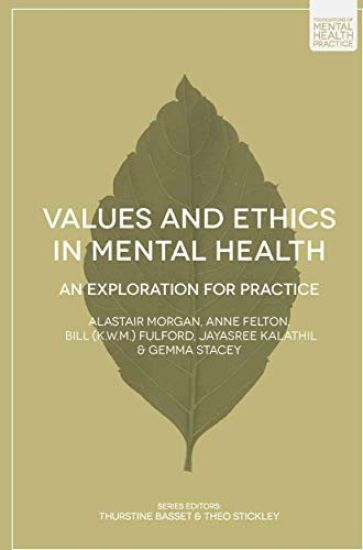
Values and Ethics in Mental Health

Values and Ethics in Mental Health

Alastair Morgan; Anne Felton; Bill Fulford

Red Globe Press
2015
nidottu
Mental health is the one area of health care where people are often treated against their will, with the justification that it is in their own interest. This raises significant ethical questions and value dilemmas; questions of autonomy, human rights, power and treatment. An understanding of how values matter is of vital importance across all disciplines working within the mental health field. This book provides a comprehensive and exploratory text for practitioners, students and all those interested in developing a knowledge of both ethics and the wider framework of values-based practice. It is unique in being fully co-written by authors representing both service user and service provider perspectives. This exciting new text will enable the mental health practitioner to work more co-productively with service users within a humane and just approach to care. With an emphasis on rights-based compassionate care throughout, this book: - Tackles the issues of how mental health is understood through key theoretical debates about mental distress, values and labelling;- Encourages readers to think critically about their understanding of key issues such as recovery, autonomy, power, knowledge, diagnoses and empathy;- Draws on a wide range of case examples and exercises to help readers deepen their knowledge of values-based practice and ethics in mental health.
Adorno's Concept of Life

Adorno's Concept of Life

Alastair Morgan

Continuum International Publishing Group Ltd.
2007
sidottu
In this important and engaging new book, Alastair Morgan offers a detailed examination of the concept of life in Adorno's philosophy. He relates Adorno's thought in this context to a number of key thinkers in the history of Continental philosophy, including Marx, Hegel, Heidegger and Agamben, and provides an argument for the relevance and importance of Adorno's critical philosophy of life at the beginning of the 21st century. Crucially, Morgan offers a new framework for understanding the relation between concepts of life and a critical philosophy. The concept of life has previously received little attention in Adorno scholarship. However, the concept of life is a constant theme and problem running throughout Adorno's work, from his early critiques of life-philosophies to his late philosophy of metaphysical experience as the possibility of life. The idea that Adorno's philosophy is in need of or lacking in a fundamental ontology has been the subject of a great deal of critical attention, but this has rarely been examined through an analysis of the concept of life. Furthermore, philosophies of life have seen a resurgence in recent years (particularly with a renewed interest in Bergson's philosophy via the critical reception of Deleuze's philosophy). "Adorno's Concept of Life" is therefore a necessary and timely study that offers a distinctive interpretation of Adorno's philosophy, and will be of central interest to everyone working on Adorno. Furthermore, it provides a powerful interpretation of the critical force of Adorno's philosophy, that will contribute to the renewed interest in the concept of life within contemporary philosophy.