
Kirjailija
Albert Bates
Kirjat ja teokset yhdessä paikassa: 8 kirjaa, julkaisuja vuosilta 2013–2021, suosituimpiin kuuluu Making Waves. Vertaile teosten hintoja ja tarkista saatavuus suomalaisista kirjakaupoista.
8 kirjaa
Kirjojen julkaisuvuodet: 2013–2021.

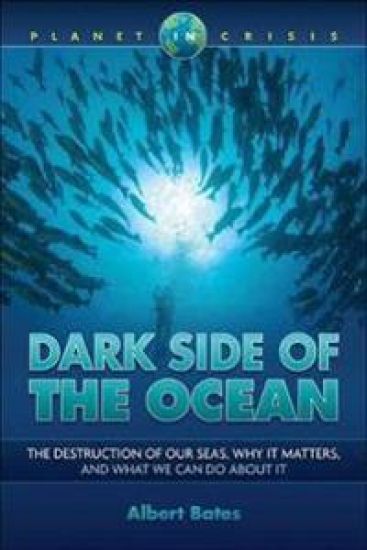
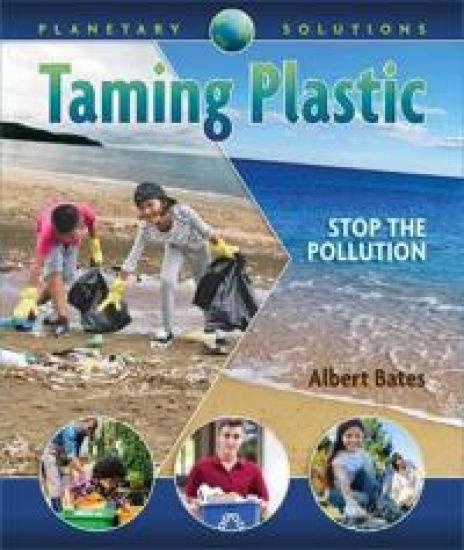
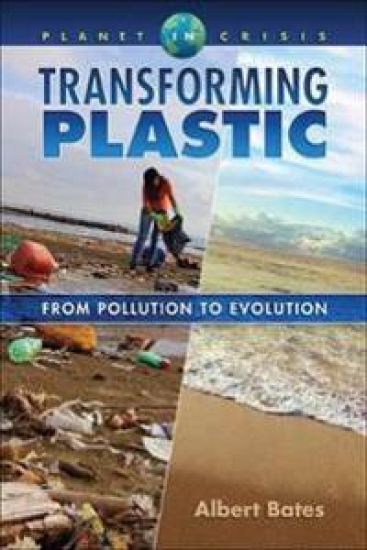
Plastic seems like a miraculous invention. You can make it into any shape, color or size, and it can be flexible or sturdy. Plastic also lasts forever--and that's a big problem. It's estimated that by 2050 there'll be more pounds of plastic in our oceans than pounds of fish. Recycling programs are growing faster than the collected plastic can be processed, and not all plastic can be recycled. Learn about the creative solutions that visionary people across the planet are using to curb plastic waste. Become an Emergency Planetary Technician and find out what you can do every day to tame plastic.
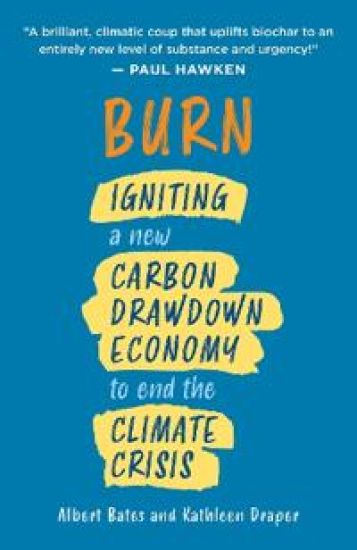
An 800-CEO-READ "Editor's Choice" March 2019 How We Can Harness Carbon to Help Solve the Climate Crisis In order to rescue ourselves from climate catastrophe, we need to radically alter how humans live on Earth. We have to go from spending carbon to banking it. We have to put back the trees, wetlands, and corals. We have to regrow the soil and turn back the desert. We have to save whales, wombats, and wolves. We have to reverse the flow of greenhouse gases and send them in exactly the opposite direction: down, not up. We have to flip the carbon cycle and run it backwards. For such a revolutionary transformation we’ll need civilization 2.0. A secret unlocked by the ancients of the Amazon for its ability to transform impoverished tropical soils into terra preta—fertile black earths—points the way. The indigenous custom of converting organic materials into long lasting carbon has enjoyed a reawakening in recent decades as the quest for more sustainable farming methods has grown. Yet the benefits of this carbonized material, now called biochar, extend far beyond the soil. Pyrolyzing carbon has the power to restore a natural balance by unmining the coal and undrilling the oil and gas. Employed to its full potential, it can run the carbon cycle in reverse and remake Earth as a garden planet. Burn looks beyond renewable biomass or carbon capture energy systems to offer a bigger and bolder vision for the next phase of human progress, moving carbon from wasted sources: into soils and agricultural systems to rebalance the carbon, nitrogen, and related cycles; enhance nutrient density in food; rebuild topsoil; and condition urban and agricultural lands to withstand flooding and droughtto cleanse water by carbon filtration and trophic cascades within the world’s rivers, oceans, and wetlandsto shift urban infrastructures such as buildings, roads, bridges, and ports, incorporating drawdown materials and components, replacing steel, concrete, polymers, and composites with biological carbonto drive economic reorganization by incentivizing carbon drawdown Fully developed, this approach costs nothing—to the contrary, it can save companies money or provide new revenue streams. It contains the seeds of a new, circular economy in which energy, natural resources, and human ingenuity enter a virtuous cycle of improvement. Burn offers bold new solutions to climate change that can begin right now.
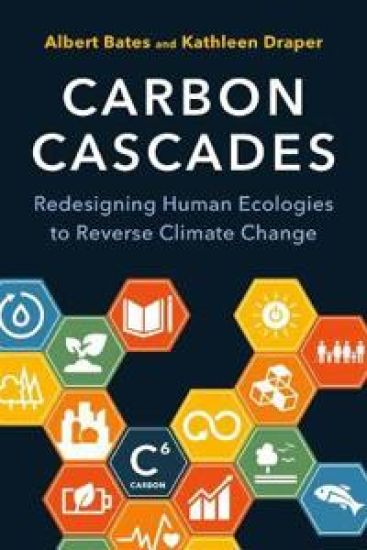
An 800-CEO-READ "Editor's Choice" March 2019 How We Can Harness Carbon to Help Solve the Climate Crisis In order to rescue ourselves from climate catastrophe, we need to radically alter how humans live on Earth. We have to go from spending carbon to banking it. We have to put back the trees, wetlands, and corals. We have to regrow the soil and turn back the desert. We have to save whales, wombats, and wolves. We have to reverse the flow of greenhouse gases and send them in exactly the opposite direction: down, not up. We have to flip the carbon cycle and run it backwards. For such a revolutionary transformation we’ll need civilization 2.0. A secret unlocked by the ancients of the Amazon for its ability to transform impoverished tropical soils into terra preta—fertile black earths—points the way. The indigenous custom of converting organic materials into long lasting carbon has enjoyed a reawakening in recent decades as the quest for more sustainable farming methods has grown. Yet the benefits of this carbonized material, now called biochar, extend far beyond the soil. Pyrolyzing carbon has the power to restore a natural balance by unmining the coal and undrilling the oil and gas. Employed to its full potential, it can run the carbon cycle in reverse and remake Earth as a garden planet. Burn looks beyond renewable biomass or carbon capture energy systems to offer a bigger and bolder vision for the next phase of human progress, moving carbon from wasted sources: into soils and agricultural systems to rebalance the carbon, nitrogen, and related cycles; enhance nutrient density in food; rebuild topsoil; and condition urban and agricultural lands to withstand flooding and drought to cleanse water by carbon filtration and trophic cascades within the world’s rivers, oceans, and wetlands to shift urban infrastructures such as buildings, roads, bridges, and ports, incorporating drawdown materials and components, replacing steel, concrete, polymers, and composites with biological carbon to drive economic reorganization by incentivizing carbon drawdown Fully developed, this approach costs nothing—to the contrary, it can save companies money or provide new revenue streams. It contains the seeds of a new, circular economy in which energy, natural resources, and human ingenuity enter a virtuous cycle of improvement. Burn offers bold new solutions to climate change that can begin right now.
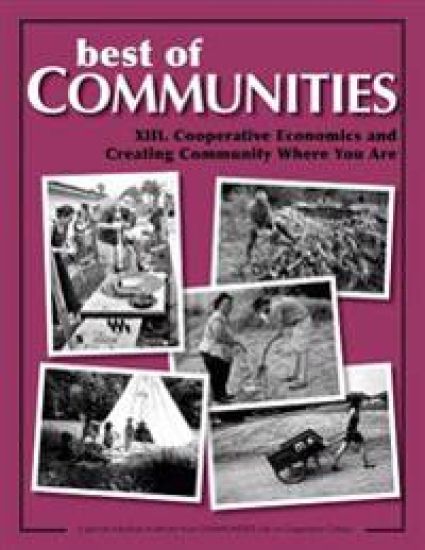
Best of Communities: XIII. Cooperative Economics and Creating Community Where Yo
Helena Norberg-Hodge; Albert Bates; Gwynelle Dismukes
Createspace Independent Publishing Platform
2013
nidottu
XIII. Cooperative Economics and Creating Community Where You Are On the three-legged stool of sustainability, less attention has been given to economics than to the more robust ecological and social dimensions. But that doesn't mean it's less important. (It's hard to keep a stool upright with only two legs.) Half the articles in this bundle are focused on what we're learning about values-based ways to make a living (which is a quality of life issue if there ever was one). The other stories are devoted to taking the inspiration of community beyond the boundary of shared property. If you figure that there are only 100,000 people in the US living in some form of self-identified intentional community, yet 100 million wanting a greater sense of community in their life, it's obvious that we should be exporting what we're learning to neighborhoods, churches, schools, and workplaces almost everywhere. Half of the 20 articles in this bundle focus on that expansive task. This Digital Issue of Cooperative Economics and Creating Community Where You Are includes: 1. Recipe for a Thriving Community by Jonathan Dawson, #119 2. Regaining Our Sense of Oneness through Localization by Helena Norberg-Hodge, #154, 15-16 . 3. Our Own Money: A Recipe for Local Economic Revival (including Local Currencies, Stephen Burke) by by Albert Bates, #133 4. When a Dollar Is Worth More than 100 Cents by Gwynelle Dismukes, #136 5. Social Class & Money in Community by Allen Hancock, #98 6. Our Community Revolving Loan Fund: How Walnut Street Co-op Financed Its Property by Tree Bressen, #128 7. Inventing a Rural Economy, Business by Business: How The Farm Lost its Community Subsidy and Formed a Stable Economy in Its Place by Douglas Stephenson, #116 8. Self-Reliance, Right Livelihood, and Economic "Realities": Finding Peace in Compromise by Abeja Hummel, #158 9. Communities That Serve Others...and Love Doing It by Darin Fenger, #131 10. Free to Serve: Notes from a Needs-Based Economy by Chris Foraker, #141 11. Householding: Communal Living on a Small Scale by Elizabeth Barrette, #144 12. Balancing Act: How Much Are You Willing to Share? by Janel Healy, #152 13. The Values of Shared Ownership by Tim Miller, #159 14. The Quest for Community: A Personal Journey into the Grey Zone by Tree Bressen, #139 15. Gardens of Gratitude: ATwo-Day Garden Party Blitz in L. A. by Ginny LeRossignol Blades, #144 16. Chicken a la West Birch Avenue by Hilary Giovale, #142 17. Lighten Up: A Community Energy-Reduction Experiment by Kelly Barth, #143 18. What Are the Boundaries of an Intentional Community? An Experiment in Geographically-Dispersed Community-Building by Don Schneider and Elin England, #143 19. Greening Your H'Hood David Leach, #157 20. Let's Do Greywater First by Laura Dvorak and J. Brush, #137