Kirjojen hintavertailu – 12 859 826 kirjaa ja 27 kauppaa

Kirjailija

Albert Einstein

Kirjat ja teokset yhdessä paikassa: 251 kirjaa, julkaisuja vuosilta 1916–2026, suosituimpiin kuuluu New Evidence of the Militarization of America. Vertaile teosten hintoja ja tarkista saatavuus suomalaisista kirjakaupoista.

251 kirjaa

Kirjojen julkaisuvuodet: 1916–2026.

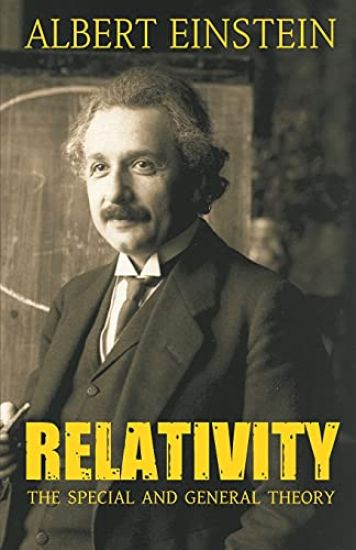
Relativity

Relativity

Albert Einstein

Pharos Books Private Limited
2022
nidottu
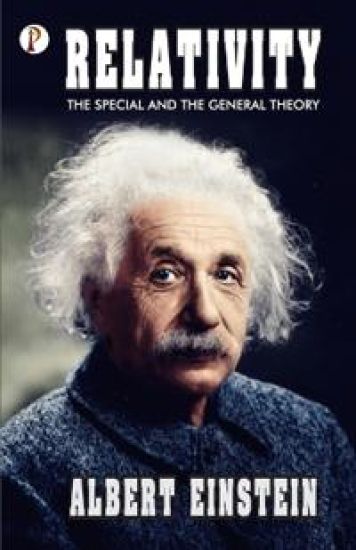
RELATIVITY: THE SPECIAL AND THE GENERAL THEORY aims to give, as Einstein himself says, an exact understanding of the concept of Relativity to the readers who are interested in the theory but are not conversant with the mathematical equipment of theoretical physics. When he wrote the book in 1916, Einstein was not as well-known as he is now. This principal work not only made him famous but made him the greatest physicist of all time. The new theory of gravity and different perspective on the cosmos establish this work as a pioneer in the world of physics.
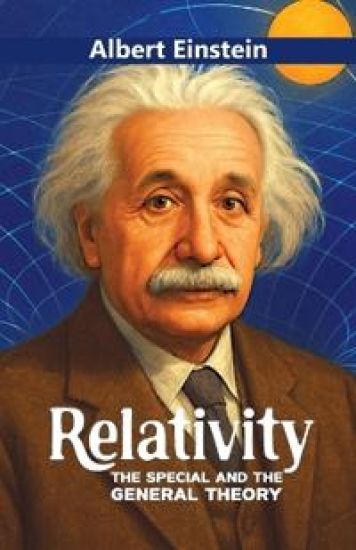
Relativity

Relativity

Albert Einstein

General Press India
2022
nidottu
First published in German in 1916, and later translated into English in 1920, 'Relativity: The Special and the General Theory' is a short paper and was eventually published as a book by Albert Einstein, German-born, best known for his work on the theory of Relativity, gaining him the title of 'Father of Modern Physics'. He received the 1921 Nobel Prize in Physics, and his work is attributed as an inspiration for the quantum theory within the field of physics. His hundreds of papers and books are highly original and intelligent, making him one of the most famous and respected intellectual minds of the twentieth century. Einstein's 'Theory of Relativity' is the most significant scientific idea of the modern era. In this book Einstein explains, using the minimum of mathematical terms, the basic ideas, and principles of the theory which has shaped the world we live in today. Unequaled by any subsequent books on relativity, this remains the most popular and beneficial exposition of Einstein's immense contribution to human knowledge. It is divided into 3 parts, the first dealing with special relativity, the second dealing with general relativity, and the third dealing with considerations on the universe as a whole. In this work Einstein intended, as far as possible, to give an accurate insight into the theory of relativity to those readers who, from a general and scientific-philosophical point of view, are curious in the theory, but who are not conversant with the mathematical apparatus of theoretical physics. The theory of relativity enriched physics and astronomy during the 20th century.

Mis ideas y opiniones

Mis ideas y opiniones

Albert Einstein

Antoni Bosch Editor, S.A.
2022
nidottu
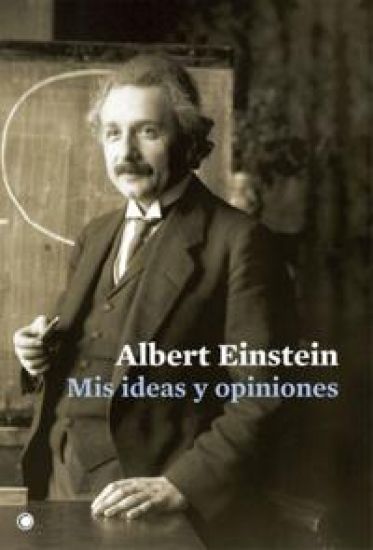
Preparada por el propio Einstein poco antes de morir, Mis ideas y opiniones es la antología definitiva de sus escritos menos técnicos. En esta excepcional selección de fragmentos, el lector descubrirá la opinión de Einstein en materia de moral y ética, de religión, sobre el arte de gobernar, la literatura, las artes, la universidad, la economía o la filosofía. Su correspondencia íntima con otros personajes fundamentales de su época y sus observaciones sobre algunos de ellos, como Shaw, Freud, Gandhi y Lorenz, son la prueba palpable de la universalidad de sus intereses intelectuales
Relativity: The Special and General Theory
Following the validation of Einstein's general and special theories on relativity during the solar eclipse of May 29, 1919, this edition, a translation of an earlier work published in Germany, was published by Methuen in the UK and Henry Holt in the US. Both it and the award of the 1921 Nobel Prize in Physics brought Einstein's theories into more general public awareness.
World as I See It

World as I See It

Albert Einstein

Hassell Street Press
2021
nidottu
This work has been selected by scholars as being culturally important and is part of the knowledge base of civilization as we know it. This work is in the public domain in the United States of America, and possibly other nations. Within the United States, you may freely copy and distribute this work, as no entity (individual or corporate) has a copyright on the body of the work. Scholars believe, and we concur, that this work is important enough to be preserved, reproduced, and made generally available to the public. To ensure a quality reading experience, this work has been proofread and republished using a format that seamlessly blends the original graphical elements with text in an easy-to-read typeface. We appreciate your support of the preservation process, and thank you for being an important part of keeping this knowledge alive and relevant.
World as I See It

World as I See It

Albert Einstein

Hassell Street Press
2021
sidottu
This work has been selected by scholars as being culturally important and is part of the knowledge base of civilization as we know it. This work is in the public domain in the United States of America, and possibly other nations. Within the United States, you may freely copy and distribute this work, as no entity (individual or corporate) has a copyright on the body of the work. Scholars believe, and we concur, that this work is important enough to be preserved, reproduced, and made generally available to the public. To ensure a quality reading experience, this work has been proofread and republished using a format that seamlessly blends the original graphical elements with text in an easy-to-read typeface. We appreciate your support of the preservation process, and thank you for being an important part of keeping this knowledge alive and relevant.
The Collected Papers of Albert Einstein, Volume 16 (Translation Supplement)
A translation of selected non-English texts included in Volume 16 is available in paperback. Since this supplementary paperback includes only select portions of Volume 16, it is not recommended for purchase without the main volume. Every document in The Collected Papers of Albert Einstein appears in the language in which it was written, and this supplementary paperback volume presents the English translations of select portions of non-English materials in Volume 16. This translation does not include notes or annotations of the documentary volume and is not intended for use without the original language documentary edition, which provides the extensive editorial commentary necessary for a full historical and scientific understanding of the documents.
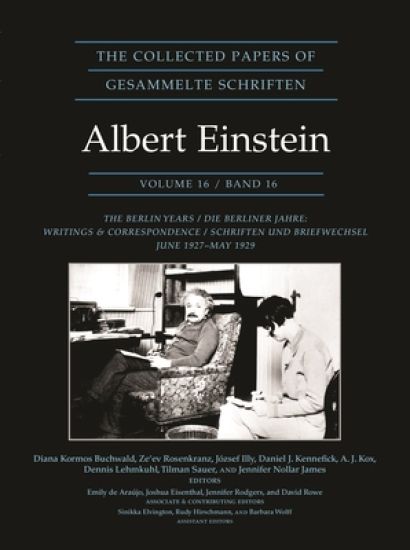
The Collected Papers of Albert Einstein, Volume 16 (Documentary Edition)
A definitive scholarly edition of the correspondence and papers of Albert EinsteinDuring the period covered by this volume, Einstein aims to discover whether one can derive the electron’s equations of motion directly from the field equations of general relativity, and he embarks on a new approach to unified field theory founded on teleparallel geometry. On these topics, he engages in exchanges with J. Grommer, C. Lanczos, and particularly with C. H. Müntz, and corresponds with mathematicians like R. Weitzenböck and É. Cartan. Einstein attends what will be considered a historic 1927 Solvay Conference where the new quantum mechanics is discussed, but in fact he makes very few remarks. In an important prelude to his eventual emigration to the United States, he is invited in September 1927 to accept a research professorship at Princeton University. Despite the sudden onset of a severe heart ailment in 1928, followed by an almost year-long period of convalescence, Einstein maintains a sustained engagement with scientific work, correspondence, and social and political issues. He publishes many articles and interviews designed for a popular audience and continues various technical preoccupations, including publishing a patent for a novel “people’s” refrigerator and being intimately involved in the design of his famous sailboat. Einstein advocates for domestic legislative reform, gay and minority rights, European rapprochement, and conscientious objection to military service. He resigns from his positions at the Hebrew University. He also tries to avoid the fanfare marking his fiftieth birthday in March 1929 yet is “buried under a paper avalanche” from the tributes. His hiring of Helen Dukas as his assistant, who accompanies Einstein to the end of his life, is of great significance for the ultimate preservation of his written legacy.