Kirjojen hintavertailu – 12 903 725 kirjaa ja 27 kauppaa

Kirjailija

Albert G. Miller

Kirjat ja teokset yhdessä paikassa: 6 kirjaa, julkaisuja vuosilta 2008–2025, suosituimpiin kuuluu Awakening to Justice. Vertaile teosten hintoja ja tarkista saatavuus suomalaisista kirjakaupoista.

Nimi esiintyy myös muodoissa: Albert G Miller

6 kirjaa

Kirjojen julkaisuvuodet: 2008–2025.

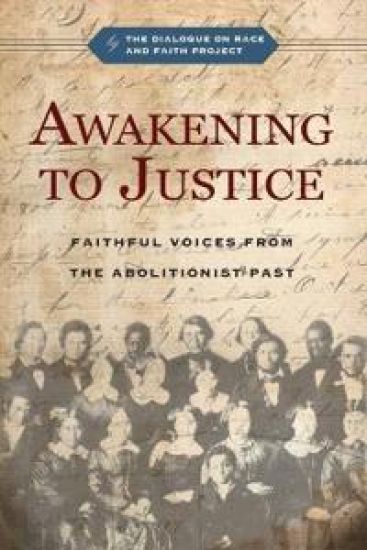
Awakening to Justice

Awakening to Justice

Jemar Tisby; Christopher P. Momany; Sègbégnon Mathieu Gnonhossou; David D. Daniels; R. Matthew Sigler; Douglas M. Strong; Diane Leclerc; Esther Chung-Kim; Albert G. Miller; Estrelda Y. Alexander

IVP Academic
2024
nidottu
"O where are the sympathies of Christians for the slave and where are their exertions for their liberation? . . . It seems as if the church were asleep." David Ingraham, 1839In 2015, the historian Chris Momany helped discover a manuscript that had been forgotten in a storage closet at Adrian College in Michigan. He identified it as the journal of a nineteenth-century Christian abolitionist and missionary, David Ingraham. As Momany and a fellow historian Doug Strong pored over the diary, they realized that studying this document could open new conversations for twenty-first-century Christians to address the reality of racism today. They invited a multiracial team of fourteen scholars to join in, thus launching the Dialogue on Race and Faith Project. Awakening to Justice presents the groundbreaking work of these scholars. In addition to reflecting on Ingraham's journal, chapters also explore the life and writings of two of Ingraham's Black colleagues, James Bradley and Nancy Prince. Appendixes feature writings by all three abolitionists so readers can engage the primary sources directly. Through considering connections between the revivalist, holiness, and abolitionist movements; the experiences of enslaved and freed people; abolitionists' spiritual practices; various tactics used by abolitionists; and other themes, the authors offer insight and hope for Christians concerned about racial justice. They highlight how Christians associated with Charles Finney's style of revivalism formed intentional, countercultural communities such as Oberlin College to be exemplars of interracial cooperation and equality. Christians have all too often compromised with racism throughout history, but that's not the whole story. Hearing the prophetic witness of revivalist social justice efforts in the nineteenth century can provide a fresh approach to today's conversations about race and faith in the church.

Shearcliff and Family

Shearcliff and Family

Albert G Miller

Authorhouse
2018
pokkari
Dragon fire and a mysterious blessing lead Christian Shearcliff and his companions on their most perilous adventure yet. Just when Chris is getting used to life as an adventurer, the young girl Eve is thrust into his life. Although she seems normal enough at first, they rapidly discover the dangers associated with the deranged child. Will Christian and his family be able to raise the strange girl, or will she spell doom for them all as together they unravel her mysteries?
Fury and the White Mare

Fury and the White Mare

Albert G. Miller

Literary Licensing, LLC
2011
sidottu
""Fury and the White Mare"" is a novel written by Albert G. Miller. The book follows the story of a young boy named Joe, who is determined to capture a wild white mare that has been causing havoc in his town. Joe's father had tried to capture the mare before but had failed, and now it is up to Joe to prove that he is a skilled horseman and can capture the mare. Along the way, Joe meets a mysterious man named Fury, who becomes his mentor and helps him train for the dangerous task of capturing the wild mare. As Joe and Fury work together, they form a strong bond, and Joe learns valuable lessons about bravery, perseverance, and the importance of never giving up on one's dreams. The novel is a thrilling adventure story that will captivate readers of all ages, especially those who love horses and tales of courage and determination. This scarce antiquarian book is a facsimile reprint of the old original and may contain some imperfections such as library marks and notations. Because we believe this work is culturally important, we have made it available as part of our commitment for protecting, preserving, and promoting the world's literature in affordable, high quality, modern editions, that are true to their original work.
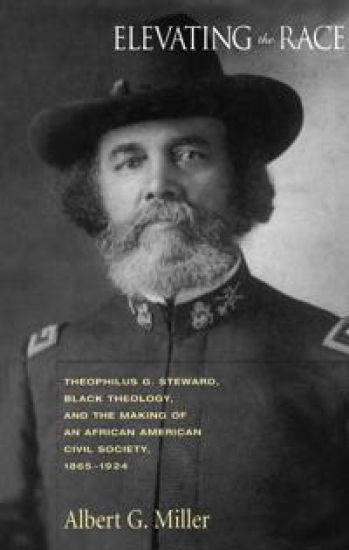
Elevating The Race

Elevating The Race

Albert G. Miller

University of Tennessee Press
2008
nidottu
As a minister in the African Methodist Episcopal Church, an army chaplain, a college professor, and a prolific writer, Theophilus Gould Steward was one of America’s leading black intellectuals during the half-century following Emancipation. He was not only a theologian deeply committed to challenging his church’s outlook, he also epitomized postbellum efforts to create an African American civil society through religious, educational, and social institutions integral to citizenship. Steward actively constructed a theological discourse that challenged both black and white religious and secular institutions, yet his tenacious pursuit of high standards often led him into conflict with the very community he served. A. G. Miller takes a new look at this key figure in African American history to establish Steward’s place among the most influential thinkers and activists of the late nineteenth century. Augmenting what is already known about Steward’s life with a thoughtful combination of intellectual and social history, Miller presents Steward’s ideas within the context of the social, political, economic, and religious trends of his day. Miller examines Steward’s accomplishments and writings—including his unpublished manuscripts and his overlooked Victorian novel—to assess the ideas that he left to posterity and to consider how they shaped his times. The book devotes individual chapters to the key themes that dominated Steward’s life: African American education, reconciling theology with modern science, the intersection of rational theology and moral virtues, the contradictions of race, the role of women in African American civil society, and Steward’s views on the military and imperialism. With great insight and clarity, Miller discloses in a new and original way the rich life and thought of this extraordinary man. His study is both a groundbreaking analysis of Steward’s legacy and an important contribution to the history of American religious thought.