Kirjojen hintavertailu – 12 903 725 kirjaa ja 27 kauppaa

Kirjailija

Albert Kirk Grayson

Kirjat ja teokset yhdessä paikassa: 5 kirjaa, julkaisuja vuosilta 1975–1996, suosituimpiin kuuluu Babylonian Historical-Literary Texts. Vertaile teosten hintoja ja tarkista saatavuus suomalaisista kirjakaupoista.

5 kirjaa

Kirjojen julkaisuvuodet: 1975–1996.

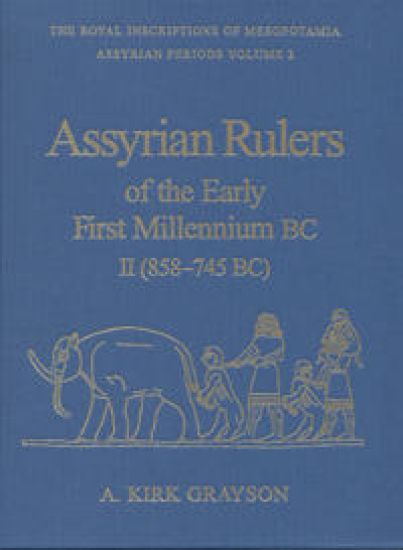
Assyrian Rulers of the Early First Millennium BC II (858-745 BC)

Assyrian Rulers of the Early First Millennium BC II (858-745 BC)

Albert Kirk Grayson

University of Toronto Press
1996
sidottu
In this, the seventh volume to be published by the Royal Inscriptions of Mesopotamia Project, A. Kirk Grayson presents the texts of the royal inscriptions from the earlier phase of the Neo-Assyrian period, a time in which the Assyrian kings campaigned as far as the Mediterranean and came into direct contact with biblical lands. In this period the Assyrian empire embraced most of the civilized parts of western Asia including western Iran, Mesopotamia, southern Turkey, and the shores of the Levant. It was an exciting and tumultous period involving palace revolutions and harem intrigues, and it was a time in which the legendary Semiramis played a prominent role. The inscriptions speak of the kings' building of palaces and temples in various parts of Assyria, of the gods who were invoked to bless their enterprises, of revolutions and a multitude of military conquests. Each text is accompanied by a brief introduction, a catalogue of exemplars, commentary, bibliography, transliteration, translation, and notes. The book contains an introduction to the volume as a whole and indexes. 'Scores,' published on microfiche, are located in a pocket at the back of the book.
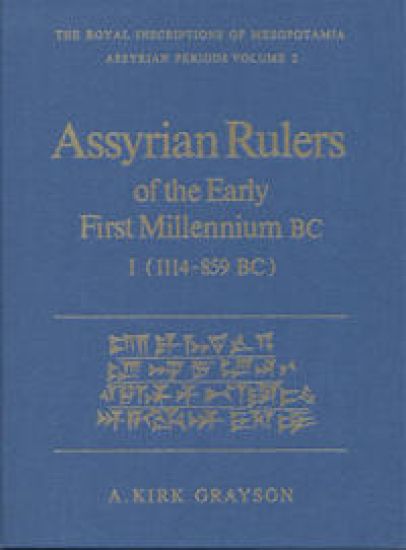
Assyrian Rulers of the Early First Millennium BC I (1114-859 BC)

Assyrian Rulers of the Early First Millennium BC I (1114-859 BC)

Albert Kirk Grayson

University of Toronto Press
1991
sidottu
In this, the seventh volume to be published by the Royal Inscriptions of Mesopotamia Project, A. Kirk Grayson presents the texts of the royal inscriptions from the earlier phase of the Neo-Assyrian period, a time in which the Assyrian kings campaigned as far as the Mediterranean and came into direct contact with biblical lands. In this period the Assyrian empire embraced most of the civilized parts of western Asia including western Iran, Mesopotamia, southern Turkey, and the shores of the Levant. It was an exciting and tumultous period involving palace revolutions and harem intrigues, and it was a time in which the legendary Semiramis played a prominent role. The inscriptions speak of the kings' building of palaces and temples in various parts of Assyria, of the gods who were invoked to bless their enterprises, of revolutions and a multitude of military conquests. Each text is accompanied by a brief introduction, a catalogue of exemplars, commentary, bibliography, transliteration, translation, and notes. The book contains an introduction to the volume as a whole and indexes. 'Scores,' published on microfiche, are located in a pocket at the back of the book.
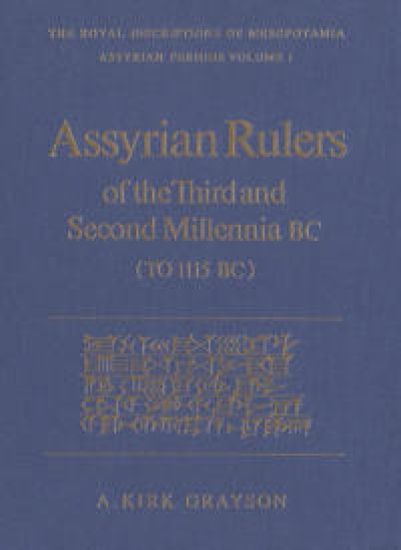
Assyrian Rulers of the Third and Second Millenia BC (to 1115 BC)

Assyrian Rulers of the Third and Second Millenia BC (to 1115 BC)

Albert Kirk Grayson

University of Toronto Press
1987
sidottu
A collection of the texts of inscriptions the originals of which are now scattered in museums throughout the world. Provides commentary, bibliography, transliteration from the cuneiform, and English translation from the Sumerian or Abkadian. Each text is complete, and is collated against the original whenever possible. Where a text has been conflated from several inscriptions, a full transliteration is included among the four microfiche cards in a pocket inside the back cover. The first of a projected series covering Mesopotamia. For dedicated students, of the early Middle East.
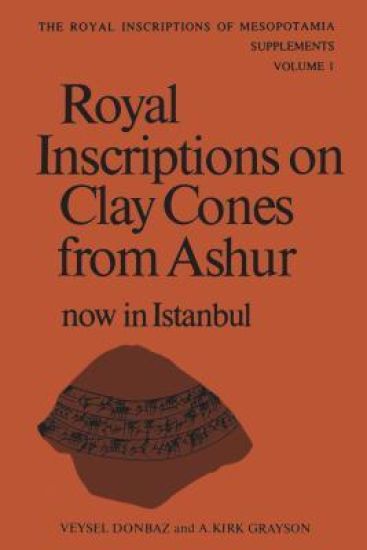
Royal Inscriptions on Clay Cones from Ashur Now in Istanbul

Royal Inscriptions on Clay Cones from Ashur Now in Istanbul

Veysel Donbaz; Albert Kirk Grayson

University of Toronto Press
1984
pokkari
The texts presented here were discovered by a German expedition to Ashur, capital of the Assyrians, more than half a century ago. They have remained in Istanbul, largely uncatalogued and unedited, until this publication, the first in a series to be prepared under the auspices of the Royal Inscriptions of Mesopotamia Project. The inscriptions speak of the building by the kings of palaces and temples in various parts of Assyria, of the god who were invoked to bless the enterprises, and at times of military campaigns and victories. Transliterations, commentaries, notes, and hand-copies for the indiviaul texts are provided along with the requisite indexes to make the volume a basic research tool for assyriologists.
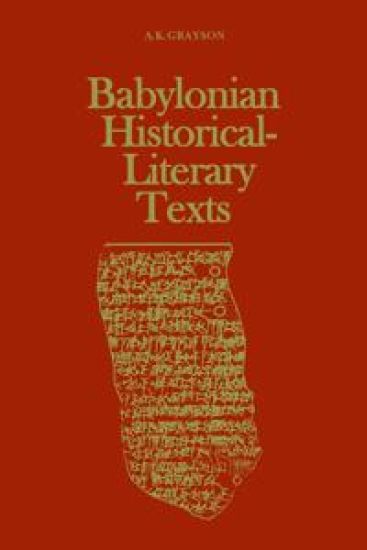
Babylonian Historical-Literary Texts

Babylonian Historical-Literary Texts

Albert Kirk Grayson

University of Toronto Press
1975
pokkari
Early Assyriologists were lured to Babylonian studies by the light which cuneiform text shed on ancient history and the Bible, and for later scholars this is still the attraction. The Age of Discovery is not past, and one can still read literature that has been unseen by the eyes of man for millennia. There are myriads of tablets lying in the ancient ruins of Iraq, Iran, Syria, and Turkey, waiting for the excavator's spade; in museums there are quantities of inscriptions that have not yet been made public.