Kirjojen hintavertailu – 12 903 725 kirjaa ja 27 kauppaa

Kirjailija

Albert R. Roberts

Kirjat ja teokset yhdessä paikassa: 12 kirjaa, julkaisuja vuosilta 1990–2015, suosituimpiin kuuluu Crime Policy in America. Vertaile teosten hintoja ja tarkista saatavuus suomalaisista kirjakaupoista.

Nimi esiintyy myös muodoissa: Albert R Roberts

12 kirjaa

Kirjojen julkaisuvuodet: 1990–2015.

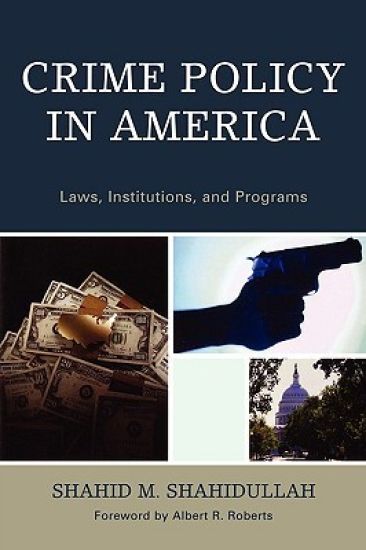
Crime Policy in America

Crime Policy in America

Shahid M. Shahidullah; Albert R. Roberts

University Press of America
2015
sidottu
The second edition of Crime Policy in America describes the process of policy-making and the substantive nature of policy directions in crime and justice in America, particularly from the beginning of the 1970s. This book examines the nature of presidential policy-making in crime and justice from Nixon to Obama, congressional policy-making since the birth of the Bill of Rights, and judicial policy-making since the promulgation of the Judicial Act of 1789. The perspective of this book is deeply historical, sociological, and legalistic. Historically, the book has explored the evolution of different policy strategies at different periods of American history; sociologically, it scrutinized the impact of the get-tough policy paradigm on crime and justice, and from a legal perspective it has examined the conflict and the consensus of Congress and the federal judiciary on different issues of crime and justice from drug crimes to sex crimes to counterterrorism. The second edition of the book has particularly illuminated the changing directions of US crime policy from the dominance of the “get tough” approach in the 1980s and 1990s to a more balanced approach to crime control and prevention in the beginning of the 21sr century.
Crime Policy in America

Crime Policy in America

Shahid M. Shahidullah; Albert R. Roberts

University Press of America
2008
sidottu
This book is a systematic examination of the nature of America's crime and criminal justice system as defined by its policy-makers at different times and in disparate contexts of social and political realities. By examining legislative documents and court cases and analyzing federal and state policy developments in such areas as drug crimes, juvenile crimes, sex crimes, and cyber crimes, this book provides a historically embedded and policy relevant understanding of how America's system of criminal justice was born, how it has grown, and where it is going.
Crime Policy in America

Crime Policy in America

Shahid M. Shahidullah; Albert R. Roberts

University Press of America
2015
nidottu
The second edition of Crime Policy in America describes the process of policy-making and the substantive nature of policy directions in crime and justice in America, particularly from the beginning of the 1970s. This book examines the nature of presidential policy-making in crime and justice from Nixon to Obama, congressional policy-making since the birth of the Bill of Rights, and judicial policy-making since the promulgation of the Judicial Act of 1789. The perspective of this book is deeply historical, sociological, and legalistic. Historically, the book has explored the evolution of different policy strategies at different periods of American history; sociologically, it scrutinized the impact of the get-tough policy paradigm on crime and justice, and from a legal perspective it has examined the conflict and the consensus of Congress and the federal judiciary on different issues of crime and justice from drug crimes to sex crimes to counterterrorism. The second edition of the book has particularly illuminated the changing directions of US crime policy from the dominance of the “get tough” approach in the 1980s and 1990s to a more balanced approach to crime control and prevention in the beginning of the 21sr century.
Juvenile Justice And Delinquency

Juvenile Justice And Delinquency

David W. Springer; Albert R. Roberts

Jones and Bartlett Publishers, Inc
2010
nidottu
"Juvenile Justice and Delinquency" is the first text to comprehensively trace the progress toward resolving critical juvenile justice and delinquency issues, and to provide cutting-edge intervention strategies to effectively rehabilitate juvenile offenders and prevent delinquency. Historical, political, and legal trends are examined and critiqued, as well as the range of developmental, familial, and sociological theoretical explanations of juvenile delinquency. Current evidence-based practice, prevention strategies and programs, and juvenile justice treatment and policy alternatives are thoroughly explored.
Pocket Guide to Crisis Intervention

Pocket Guide to Crisis Intervention

Albert R Roberts; Kenneth R Yeager

Oxford University Press Inc
2009
nidottu
Crisis workers make split-second decisions every day that affect the mental health and well-being of individuals, families, and entire communities. They support and guide people through health diagnoses, bankruptcies, sexual assaults, deaths of loved ones, suicide attempts, and natural or man-made disasters from the front lines. While professions vary from mental health professionals, emergency responders, educators, business managers or volunteers such as suicide hotline workers, all have a common and urgent need for a rapid reference that covers every type of traumatic event they may be asked to respond to in the course of an unpredictable and highly stressful day. The Pocket Guide to Crisis Intervention is a complete crisis toolkit, a trusted resource to consult on the fly, packed with easy-to-follow, step-by-step evidence-based protocols for responding effectively to a broad range of traumatic events. Checklists, bullets, and boxes highlight symptoms & warning signs and provide action plans, do's & don'ts, and screening & assessment questions. The open layout and two-color design make this pocket guide as visually appealing as it practical, ensuring at-a-glance lookup of the essentials of managing the most common types of crisis. More than just a collection of action lists, though, this pocket guide explains theories and models in clear, jargon-free language, offering tips for clinical practice, treatment planning, referrals, and coordinating services as needed. It can be used as a field manual for seasoned professionals or as a training tool for new recruits and practitioners seeking to sharpen their skills.
Death by Domestic Violence

Death by Domestic Violence

Katherine van Wormer; Albert R. Roberts

Praeger Publishers Inc
2008
sidottu
Each year, about 33 percent of all women and 3 percent of all men murdered in the United States, are killed by a so-called intimate, a spouse, partner, or lover. Nationwide, murder by an intimate is the number one cause of death for pregnant women. And murder by an intimate is not just an American problem. A European task force recently found domestic violence accounts for 25 percent of all homicides in London, and 35 percent across England and Wales. In this timely book, van Wormer and Roberts describe the problem, and what they have seen and heard on the front lines with both women and men who have escaped domestic violence that was escalating toward deadly levels. The text examines not only the psychology of the batterer but of domestic murder, and domestic murder-suicide. Drawn from the experience and insights of these two widely-known social workers, the text includes a safety plan for those at risk and a chapter providing narratives of women in prison for killing their abusive husband or partner. Drawing on the experience and insights of these two widely-known social workers, Death by Domestic Violence separates domestic violence myths and facts, explains the traumatic bonding that occurs between batterer and victim, and details how one facet of the solution could be school-based interventions and education. The book culminates with recommendations for further reduction of harm and a safety plan for those at risk.
Crime Policy in America

Crime Policy in America

Shahid M. Shahidullah; Albert R. Roberts

University Press of America
2008
nidottu
This book is a systematic examination of the nature of America's crime and criminal justice system as defined by its policy-makers at different times and in disparate contexts of social and political realities. By examining legislative documents and court cases and analyzing federal and state policy developments in such areas as drug crimes, juvenile crimes, sex crimes, and cyber crimes, this book provides a historically embedded and policy relevant understanding of how America's system of criminal justice was born, how it has grown, and where it is going.
Handbook of Domestic Violence Intervention Strategies

Handbook of Domestic Violence Intervention Strategies

Albert R. Roberts

Oxford University Press Inc
2002
sidottu
Public awareness regarding the life-threatening nature and intense traumatic impact of domestic violence has substantially increased in the past decade. At the same time, dramatic changes have taken place regarding criminal justice and social work policies and practices applied to domestic violence intervention. And while the prevalence of domestic violence has declined slightly, national estimates still indicate that every year, approximately eight million women are abused, battered, stalked, or killed by their husbands, boyfriends, and other intimate partners. Featuring cutting-edge research and expert intervention strategies, the Handbook of Intervention Strategies with Domestic Violence: Policies, Programs, and Legal Remedies is designed to prepare professionals to swiftly and compassionately meet the multiple needs of women and children who have suffered from domestic violence. This original and indispensable volume focues on the numerous advances in legal remedies, program developments, treatment protocols, and multidisciplinary perspectives. It is a comprehensive guide to the latest research, public policies, and legal and criminal justice responses, covering federal and state legislation as well as trends in police and court responses to domestic violence. This is the first book to include court-based technology developments and new research related to the duration and intensity of woman battering. Highlighting actual cases and promising programs, the handbook also addresses important social work issues, including risk assessment protocols, a new five level continuum of woman battering, intervention methods, and treatment models. This book also examines the myriad legal issues and health problems facing the most neglected and vulnerable battered women. Written by expert practitioners and leading scholars in the field, the book's 23 chapters provide rich insights into the complexities and challenges of addressing domestic violence.
Handbook of Violence

Handbook of Violence

Lisa A. Rapp-Paglicci; Albert R. Roberts; John S. Wodarski

John Wiley Sons Inc
2002
sidottu
A multidisciplinary team of experts examines violence from a resilience perspective Violence knows no boundaries. It attacks in schools, in families, and even in the workforce–places that should be regarded as safe havens. Encompassing the enormity of violence through a comprehensive, biopsychosocial perspective, Handbook of Violence examines community, school, family, and workplace violence, including identification, classification, prevention, and interview programs and case management. Written by the leading authorities in their fields, this groundbreaking compilation: *Reviews how children and adolescents from violent homes are detrimentally affected in multiple ways, including short- and long-term consequences that seriously impair their psychological, social, educational, and physical development *Explores issues related to the occurrence of domestic violence in African-American families, presenting an array of theoretical formulations that may prove useful to practitioners who must service both victims and perpetrators *Examines the prevalence of female juvenile delinquency and reviews the literature from a sociological and practice perspective *Focuses on the current trends and issues surrounding youth gang violence,discussing identification, classification, and prediction as they relate to gang violence as well as effective prevention and intervention *Addresses the identification, classification, and prediction of school violence among middle-school and high-school youth *Covers the broad range of cases that are classified as "workplace violence," examining the differences in definition and analyzing the bases for the growing prevalence of incidents Topics include: *Violence within families through the life span *Adolescent dating violence *Assessing violent behavior *Domestic violence in Latino cultures *Conduct disorder and substance abuse *Youth gang violence *School violence *Preventing workplace violence *Domestic violence in the workplace *And much more
Crisis Intervention and Time-Limited Cognitive Treatment

Crisis Intervention and Time-Limited Cognitive Treatment

Albert R. Roberts

SAGE Publications Inc
1995
nidottu
In these turbulent times, thorough grounding in crisis intervention and cognitive approaches are important components of every practitioner's repertoire. The chapters in this volume provide highly informative, up-to-date, and practical resources for the application of these interrelated approaches to many major crisis situations in which we must prepare ourselves and our students to intervene. This is an excellent resource for my graduate students and community training interns. --John Kalafat, Ph. D., Professor of Psychology, Spalding University and Co-Chair, School Committee, American Association of Suicidology "In a world of increasing global awareness of violence and disaster coupled with decreasing budgets and an emphasis on briefer interventions, practitioners need to expand and modify intervention strategies. The contributors to this volume present a wide range of techniques within Albert R. Roberts's crisis intervention model. For those in the trauma field, this book is a wealth of information and referral sources." --Mary Beth Williams, Ph. D., LCSW, Trauma Recover Education & Counseling Center, Warrenton, Virginia "Albert R. Roberts has provided a much-needed text that belongs on every criminal justice professional's bookshelf. Crisis Intervention and Time-Limited Cognitive Treatment covers the emerging trends within the field in an outstanding manner." --Harvey Wallace, J. D., Director, Victims Institute and Professor, Department of Criminal Justice, California State University, Fresno "Albert R. Roberts's edited book is the most comprehensive book I have seen on the application of cognitive therapy to the practice of crisis intervention and time-limited treatment. Crisis Intervention and Time-Limited Cognitive Treatment will be necessary reading by all mental health and social service administrators and practitioners who are often struggling to respond to the changing realities brought about by managed care. This is the first book to provide a national perspective on 24-hour crisis hotlines, cognitive therapy, and crisis intervention units of community mental health centers. it includes detailed information on crisis intervention and 24-hour crisis hotlines in every state in the nation. This exceptionally well-written book also includes valuable guidelines, practice wisdom, and cognitive therapy techniques for intervening with domestic stalking victims, battered women, rape victims, persons with sexual disorders, persons with AIDS, disaster victims, and families of homicide victims. This groundbreaking, provocative volume does an excellent job of integrating theory and foundation skills with the latest brief cognitive therapy technology in dealing with a wide range of client problems that practitioners deal with on a regular basis. I predict that this timely book will become a classic for all of us who strive to resolve acute psychological as well as situational crises." --Gilbert J. Greene, Associate Professor of Social Work, The Ohio State University "Albert R. Roberts's new volume significantly extends his earlier groundbreaking work in the field of crisis intervention by showing how cognitive approaches can help clients cope with a wide variety of crises. Using detailed case histories, Roberts and his contributors have shown how short-term treatment can play a major role in helping people regain their equilibrium when faced with high-risk situations." --Bernard Bloom, Professor Emeritus of Psychology, University of Colorado at Boulder "With the publication of this book, Dr. Roberts has met a critical need. At a time when a wide range of criminal justice and other professionals are called upon to respond to individuals and communities in crisis situations, Dr. Roberts has developed an outstanding resource and most inclusive book on crisis intervention. The thorough presentation of both established and cutting-edge strategies, crisis treatment, trauma therapy, and survivors' services will make this book the essential tool for criminologists, criminal justice professors, victimologists, forensic psychologists, as well as service providers. This volume is packed with vivid case examples and practical step-by-step applications, and up-to-date information about how to help persons in crisis, including suicide attempters, disaster victims, hostages, stalking victims, rape victims, and parents of murdered children. The book also includes a 90-page directory of suicide prevention agencies, rape crisis programs, battered women's shelters, addiction treatment programs, and victim assistance programs." --Jane Nady Burnley, Ph. D., Executive Director, VALOR: Victims' Assistance Legal Organization, Inc. and former Director,

Crisis Intervention and Time-Limited Cognitive Treatment

Crisis Intervention and Time-Limited Cognitive Treatment

Albert R. Roberts

SAGE Publications Inc
1995
sidottu
In these turbulent times, thorough grounding in crisis intervention and cognitive approaches are important components of every practitioner's repertoire. The chapters in this volume provide highly informative, up-to-date, and practical resources for the application of these interrelated approaches to many major crisis situations in which we must prepare ourselves and our students to intervene. This is an excellent resource for my graduate students and community training interns. --John Kalafat, Ph. D., Professor of Psychology, Spalding University and Co-Chair, School Committee, American Association of Suicidology "In a world of increasing global awareness of violence and disaster coupled with decreasing budgets and an emphasis on briefer interventions, practitioners need to expand and modify intervention strategies. The contributors to this volume present a wide range of techniques within Albert R. Roberts's crisis intervention model. For those in the trauma field, this book is a wealth of information and referral sources." --Mary Beth Williams, Ph. D., LCSW, Trauma Recover Education & Counseling Center, Warrenton, Virginia "Albert R. Roberts has provided a much-needed text that belongs on every criminal justice professional's bookshelf. Crisis Intervention and Time-Limited Cognitive Treatment covers the emerging trends within the field in an outstanding manner." --Harvey Wallace, J. D., Director, Victims Institute and Professor, Department of Criminal Justice, California State University, Fresno "Albert R. Roberts's edited book is the most comprehensive book I have seen on the application of cognitive therapy to the practice of crisis intervention and time-limited treatment. Crisis Intervention and Time-Limited Cognitive Treatment will be necessary reading by all mental health and social service administrators and practitioners who are often struggling to respond to the changing realities brought about by managed care. This is the first book to provide a national perspective on 24-hour crisis hotlines, cognitive therapy, and crisis intervention units of community mental health centers. it includes detailed information on crisis intervention and 24-hour crisis hotlines in every state in the nation. This exceptionally well-written book also includes valuable guidelines, practice wisdom, and cognitive therapy techniques for intervening with domestic stalking victims, battered women, rape victims, persons with sexual disorders, persons with AIDS, disaster victims, and families of homicide victims. This groundbreaking, provocative volume does an excellent job of integrating theory and foundation skills with the latest brief cognitive therapy technology in dealing with a wide range of client problems that practitioners deal with on a regular basis. I predict that this timely book will become a classic for all of us who strive to resolve acute psychological as well as situational crises." --Gilbert J. Greene, Associate Professor of Social Work, The Ohio State University "Albert R. Roberts's new volume significantly extends his earlier groundbreaking work in the field of crisis intervention by showing how cognitive approaches can help clients cope with a wide variety of crises. Using detailed case histories, Roberts and his contributors have shown how short-term treatment can play a major role in helping people regain their equilibrium when faced with high-risk situations." --Bernard Bloom, Professor Emeritus of Psychology, University of Colorado at Boulder "With the publication of this book, Dr. Roberts has met a critical need. At a time when a wide range of criminal justice and other professionals are called upon to respond to individuals and communities in crisis situations, Dr. Roberts has developed an outstanding resource and most inclusive book on crisis intervention. The thorough presentation of both established and cutting-edge strategies, crisis treatment, trauma therapy, and survivors' services will make this book the essential tool for criminologists, criminal justice professors, victimologists, forensic psychologists, as well as service providers. This volume is packed with vivid case examples and practical step-by-step applications, and up-to-date information about how to help persons in crisis, including suicide attempters, disaster victims, hostages, stalking victims, rape victims, and parents of murdered children. The book also includes a 90-page directory of suicide prevention agencies, rape crisis programs, battered women's shelters, addiction treatment programs, and victim assistance programs." --Jane Nady Burnley, Ph. D., Executive Director, VALOR: Victims' Assistance Legal Organization, Inc. and former Director,
Helping Crime Victims

Helping Crime Victims

Albert R. Roberts

SAGE Publications Inc
1990
nidottu
Nominated for the 1992 Academy of Criminal Justice Sciences Outstanding Book Award Where can victims of violent crime turn for assistance? What legislation exists to protect victims' rights? Are effective treatment programs available to help victims of violent crime? These are but a few of the fundamental questions professionals--as well as victims themselves--are asking in light of the rapid escalation of violent crime. Helping Crime Victims offers the first up-to-date, authoritative overview of victim/witness assistance and survivor services. It thoroughly discusses the development of victims' compensation, family violence intervention programs, and victim/witness assistance programs. Also examined are programs designed to improve service delivery and lessen the traumatic experiences to victims of violent crimes, such as rape, domestic violence, murder, robbery, and assault. An appendix offers a directory of 184 existing programs, including the staffing pattern and specialized types of victim services. Helping Crime Victims truly is a sourcebook geared to providing program directors, victim advocates, criminal justice professionals, clinicians, family therapists, criminologists, and researchers with a far better understanding of the policies, programs, and treatment alternatives developed to help victims cope and recover. Students in the field of victimology will also find this volume invaluable for their studies. "This is one of the most comprehensive and informative books published in the field. . . . Roberts provides the first national survey of the organizational structure and functions of 184 victim assistance programs. He offers insights into the strengths and shortcomings of existing programs, most of which were developed by responsive prosecutors and police chiefs. Roberts was able to summarize masses of data into concise and readable conclusions. . . . He also provides detailed descriptions of four model victim assistance programs. . . . All law enforcement administrators, grant writers, and program development specialists will find this book to be extremely valuable. . . . This volume makes an outstanding and practical addition to the field of criminal justice. The book's strengths lie in the excellence of writing, the geographic representation of the survey (respondents from all 12 regions of the United States), its careful attention to detail, illuminating program descriptions, and the thorough bibliography at the end of each chapter. . . . Robert's book is highly recommended for all police administrators, prosecutors, acquisition librarians, criminal justice editors, and legislators." --Law Enforcement News "The book . . . provides a comprehensive overview of current approaches and assistance strategies. . . . highlight[s] the most effective policies and procedures currently in use. . . . Helping Crime Victims is a well-organized, well-written exploration of victim/witness assistance programs. Readers--ranging from those with no prior knowledge of the subject to practitioners in the field--will find this book most informative and useful." --FBI Law Enforcement Bulletin "This stimulating, thought-provoking, practical, and valuable volume provides an in-depth examination of the latest issues, legislation, policies, treatment programs, and services to aid victims of violent crimes. *This incisive new book is the first to specifically address the strengths and weaknesses of victim/witness assistance programs, violent crime compensation, family violence intervention and restitution programs nationwide. . . . I have been searching for a book like this for years. It fills a major gap in the professional literature available for victim advocates. Helping Crime Victims is an indispensable reference that should be read by all professionals. . . . *Every criminal justice, mental health, family violence, and victim assistance professional should order a copy immediately." --Judith Moore, Indianapolis Police Department "[Roberts] is clearly one of the new victimologists who rejects the focus on victim facilitation of the crime and shared responsibility, and instead focuses on how to ease the pain of victims through effective assistance programs. . . . This book fills a significant gap in the field, by systematically reviewing the principle methods and approaches employed in victim and witness assistance. I am confident that victim advocates, service providers and researchers, regardless of their discipline perspective, will be better prepared after reading this book to critically assess and further enhance victim and witness assistance services in the decade of the nineties." --from the foreword by Dr. Jane Nady Burnley, Office for Victims of Crime, U. S. Department of Justice "As the NOVA Information Specialist for the past six years I have read a great deal of material in the field of victim issues. . . . Dr. Al Robert's new book Helping Crime Victims is of value because it consolidates a variety of these issues in the pages of one text . . . . Dr. Roberts has provided legislative, historical and program information while also addressing the topic of victim needs emphasizing specialized services for the elderly and children. I applaud Dr. Roberts research efforts and his skill in presenting this important topic to the public." --Michaela M. Cohen,