Kirjojen hintavertailu – 12 903 725 kirjaa ja 27 kauppaa
Kirjailija
Albert Schweitzer
Kirjat ja teokset yhdessä paikassa: 93 kirjaa, julkaisuja vuosilta 1966–2026, suosituimpiin kuuluu The Animal World of Albert Schweitzer: Jungle Insights Into Reverence for Life. Vertaile teosten hintoja ja tarkista saatavuus suomalaisista kirjakaupoista.
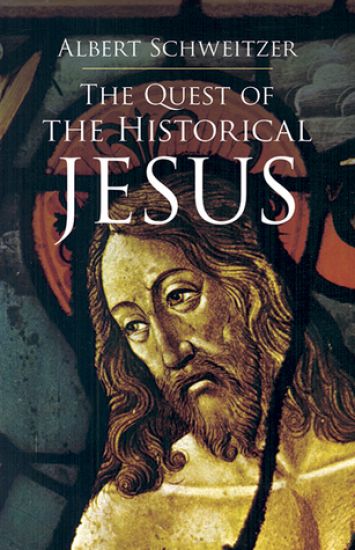
In this groundbreaking work that made his reputation as a theologian, Albert Schweitzer traces the search for the historical person of Jesus (apart from the Christ of faith) and puts forward his own view of Jesus as an apocalyptic figure who preached a radical message of the coming of the Kingdom of God. Though Schweitzer's own proposals about Jesus no longer command assent, his lasting contribution, comprising the bulk of the book, is the critique of his predecessors. Through examining the works of more than 50 18th- and 19th-century authors and scholars, he shows conclusively that each historical reconstruction of Jesus was largely a fantasy made in their own self-image. Schweitzer's work has proved the touchstone for all subsequent quests for the "Jesus of history." It also contributed in no small measure to the remarkable resurgence in Jesus studies in the latter part of the 20th century, which culminated in the much publicized and highly controversial findings of the Jesus Seminar.
Every Sunday in Lambarene, Gabon, Albert Schweitzer delivered an outdoor sermon in French. Although never intended for publication, the sermons were transcribed by some of Schweitzer's listeners. This text includes works that characterize Schweitzer's simplicity of language.
Albert Schweitzer's The Quest of the Historical Jesus will always be the most important book about the study of Jesus written in modern times. Remarkable enough, however, the full text has never been available in English. A second German edition came out in 1913 with such extensive modifications and additions as to make it a new book, but it was never translated. Now, at last, after the overcoming of many difficulties, the first complete text is available in English. The book is around 300 pages longer than the earlier one. It contains three additional chapters, those on comparative studies of Jesus and on the situation at the end of the nineteenth century, have been substantially enlarged and revised. Schweitzer also made many changes elsewhere, and cut out a number of passages. On close inspection the original translation has proved quite unsatisfactory, and this has been revised throughout and the text has, of course, been reset. Instead of reading and looking like a museum piece, Schweitzer's classic comes up as fresh as it had been written yesterday.
Immediately after the Gospels, the New Testament takes up the history of the early Christian Church, describing the works of the twelve disciples, and introducing Paul, the man whose influence on the history of Christianity is beyond calculation. Teacher, preacher, conciliator, diplomat, theologian, rule giver, consoler, and martyr, his life and writings became foundations for Christianity. Paul inspired a vast, serious, and intelligent literature that seeks to recapture his meaning, his thinking, and his purpose. In his letters to early Christian communities, Paul gave much practical advice about organization and orthodoxy. These treated the early Christian communities as something more than a group of people who believed in the same faith: they were people bound together by a common spirit unknown before. The significance of that common spirit occupied the greatest of Christian theologians from Athanasius and Augustine through Luther and Calvin. In The Mysticism of Paul the Apostle Albert Schweitzer goes against Luther and the Protestant tradition to look at what Paul actually writes in the Epistles to the Romans and Galatians: an emphasis upon the personal experience of the believer with the divine. Paul's mysticism was not like the mysticism elsewhere described as a soul being at one with God. In the mysticism he felt and encouraged, there is no loss of self but an enriching of it; no erasure of time or place but a comprehension of how time and place fit within the eternal. Schweitzer writes that Paul's mysticism is especially profound, liberating, and precise. Typical of Schweitzer, he introduces readers to his point of view at once, then describes in detail how he came to it, its scholarly antecedents, what its implications are, what objections have been raised, and why all of this matters. To students of the New Testament, this book opens up Paul by presenting him as offering an entirely new kind of mysticism, necessarily and exclusively Christian. "There is at least one other point that Albert Schweitzer scores here... The hard-won recognition that divine authority and human freedom ultimately cannot be in conflict must never be taken for granted, and the irony that the thought of Paul has repeatedly been invoked to undo that recognition truly does make this insight one of 'the permanent elements. '"-from the Introduction
"There, in this sorry world of ours, goes a great man."-Albert Einstein, on Albert Schweitzer In July of 1913, thirty-eight-year-old medical doctor Albert Schweitzer gave up his position as a respected professor at the University of Strasbourg and celebrated authority on music and philosophy in order to go as a physician to French Equatorial Africa (present-day Gabon). The Primeval Forest is Schweitzer's own fascinating story of these eventful years--a thrilling tale of his amazingly successful attempt to practice modern medicine and surgery in the face of wild elephant raids, marauding leopards, famine, an flood-a story rich in human interest and high drama. Schweitzer describes how he and his wife, a qualified nurse, worked to establish a hospital in the steaming jungle at Lambarene. At first they treated patients in the open air, amid unbelievably primitive conditions-with few drugs, medicines, or adequate instruments. But they worked tirelessly, caring for as many as forty cases a day, battling the misery caused by sleeping sickness, leprosy, pestilence, and plague. And, as the years went on, they gradually built a more permanent hospital to alleviate the terrible suffering of the Congo people. "Here, in Dr. Schweitzer's own words, is the inspiring and unforgettable account of his years in Africa; his thrilling jungle adventures, and his amazing experiences in bringing modern medicine and surgery to the French Congo. The record of Schweitzer's day-by-day experience is told so vividly that a responsive reader cannot fail to relive these stirring events."-Richmond Times-Dispatch
In the last decades of the eighteenth century, old arguments about what constituted true Christianity resumed with the newly refined tools and methods of linguistics, history, and comparative literature. The most sensitive questions sought to probe through the centuries and discover the original Jesus. Why, scholars asked, is the New Testament silent about most of Jesus's life? Why didn't Paul say more about the life of Jesus? To what extent was Jesus Jewish? How significant were the differences among the Gospels? What evidence could be trusted and what views justified? As scholars sought to discover and describe what they thought the "true"Jesus might be, they proved that Jesus could be many things. In this broad survey of the efforts to establish, amend, or deny the historical Jesus, Albert Schweitzer presents the history of a debate about what mattered most to millions of people: If God had entered human history, what could history tell about it? Throughout the course of this heated and prolonged dispute, one retelling of the life of Jesus followed another, enjoying -- in Schweitzer's phrase -- "the immortality of revised editions". Lesser writers might consider differences of opinion as signs of a hopeless enterprise, but Schweitzer instead finds immense value in the differences. Approaches and conclusions may differ, he concludes, but the quest for the historical Jesus has provided ample testimony to the importance of the effort and the rewards of the experience.
In this charming autobiographical essay, Albert Schwenzer tells of his first nineteen years in Upper Alsace and his youthful discoveries of religion, music, and the inspiration of friendship. Even in his boyhood there were traces of what was to become his "reverence for life": as a boy, he writes, he managed to dissuade several companions from going fishing because of the pain he felt the deed gave to both the worm and the fish. In poignant vignettes, Schweitzer also describes his unhappiness at discovering that he had better food or better clothing than chose around him. Memoirs of Childhood and Youth offers wonderful insights on Dr. Schweitzer's childhood journey thateventually led him to dedicate himself to medical service in African colonies. This new translation also has rarely seen photographs of Schweitzer, both as a youth and as an adult.
Albert Schweitzer gibt in einfacher und klarer Sprache Auskunft über sein Leben und Denken. Aufgewachsen im Elsaß, studiert er zunächst Theologie und Philosophie in Straßburg und belegt Vorlesungen in Musiktheorie, um seine musikalische Ausbildung zu vervollständigen. 1904 faßt er den Entschluß, nach Afrika zu gehen, jedoch nicht als Missionar, sondern als Arzt, um ?niht nur der Wissenschaft und der Kunst zu leben, sondern sich einem unmittelbaren menschlichen Dienen zu weihen?. Neben seiner Tätigkeit als Arzt in Lambarene beschäftigt sich Schweitzer weiterhin mit der Musik und der Philosophie; er gibt die Bachschen Orgelwerke heraus, geht auf Konzertreisen und veröffentlicht seine kulturphilosophischen Schriften.
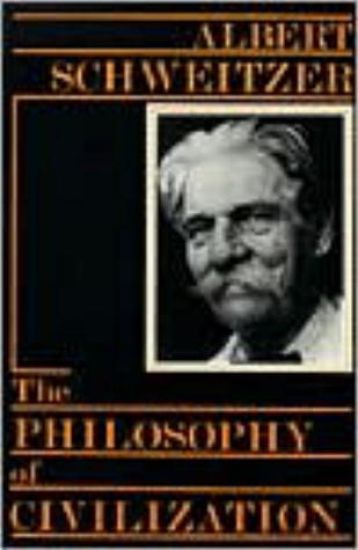
Albert Schweitzer's social and ethical philosophy is best expressed in The Philosophy of Civilization. Not widely available in recent years, this edition will give contemporary readers the opportunity to discover his prophetic thought. In Book I, The Decay and Restoration of Civilization, Schweitzer argues that the essential feature of every culture is its world view, and that a culture can be healthy and stable only as its world view is optimistic and ethical. Without this outlook, it is impossible to avoid the world's destruction. In Book II, Civilization and Ethics, he reviews the world's major ethical systems in search of the essential principle of "the moral," after which the world and life-affirming ethic of "reverence for life" is set forth. Through Schweitzer's guidance, man will strive for spiritual and ethical self-fulfillment which in turn may be actualized in all the processes of the world, making us a truly civilized people. Schweitzer's ultimate goal is to help us recognize that the source of universal misery and catastrophe is the absence of a theory of the universe.
The selections contained in this volume were made by Richard Kik. The original edition Vom Licht in uns was published by Verlag J. F. Steinkopf, Stuhgart. It contains sayings of things highly spiritual nature as well as a description of the life of Richard Kik. One such selection is "The beginning of all spiritual life is fearless belief in truth and its open confession." Albert Schweitzer (14 January 1875 - 4 September 1965) was a German-French theologian, musician, philosopher, and physician. He was born in Kaysersberg in the province of Elsass-Lothringen (Alsace-Lorraine), at the time in the German Empire. Schweitzer challenged both the secular view of Jesus as depicted by historical-critical methodology current at his time in certain academic circles, as well the traditional Christian view, depicting a Jesus Christ who expected and predicted the imminent end of the world. He received the 1952 Nobel Peace Prize in 1953 for his philosophy of "Reverence for Life" expressed in many ways, but most famously in founding and sustaining the Albert Schweitzer Hospital in Lambar n , now in Gabon, west central Africa (then French Equatorial Africa). As a music scholar and organist, he studied the music of German composer Johann Sebastian Bach and influenced the Organ reform movement (Orgelbewegung). Schweitzer's passionate quest was to discover a universal ethical philosophy, anchored in a universal reality, and make it directly available to all of humanity. This is reflected in some of his sayings, such as: "Until he extends his circle of compassion to include all living things, man will not himself find peace." "I don't know what your destiny will be, but one thing I do know: the only ones among you who will be really happy are those who have sought and found how to serve."
Am Anfang des 20. Jahrhunderts erschienen, ist dieses Werk des jungen Albert Schweitzer inzwischen zu einem theologischen Klassiker geworden. Es zog den Schlußstrich unter 150 Jahre historisch-kritischer Forschung und setzte einen neuen Anfang. Es macht die Geschichte der Leben-Jesu- Forschung, dieser epochalen "Wahrhaftigkeitstat des protestantischen Christentums", so durchsichtig, daß die persönliche Eigenart der Mitwirkenden ebenso zur Geltung kommt wie ihre sachliche Bedeutung in diesem Gespräch.