
Kirjailija
Albert Taylor Bledsoe
Kirjat ja teokset yhdessä paikassa: 48 kirjaa, julkaisuja vuosilta 1866–2026, suosituimpiin kuuluu An Essay On Liberty and Slavery. by Albert Taylor Bledsoe, Ll. D., Professor of Mathematics in the University of Virginia.. Vertaile teosten hintoja ja tarkista saatavuus suomalaisista kirjakaupoista.
48 kirjaa
Kirjojen julkaisuvuodet: 1866–2026.
Cotton Is King and Pro-slavery Arguments
David Christy; Albert Taylor Bledsoe; E. N. (EDT) Elliott
Kessinger Pub
2006
pokkari
War Between the States or Was Secession a Constitutional Right Previous to the War of 1861
Albert Taylor Bledsoe
KESSINGER PUBLISHING CO
2004
pokkari
A Theodicy or Vindication of the Divine Glory, 1854
Albert Taylor Bledsoe
Kessinger Pub
2003
pokkari

Is Davis a Traitor; Or, Was Secession a Constitutional Right Previous to the War of 1861?
Albert Taylor Bledsoe
University of Michigan Library
1899
sidottu
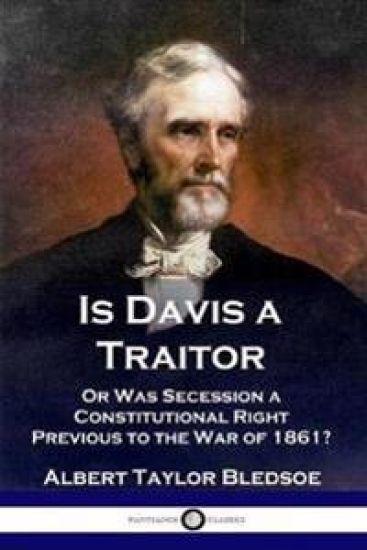
Historian and constitutional scholar Albert Taylor Bledsoe considers whether the secession of the Confederate states was legal under constitutional law. The author poses the question: did Jefferson Davis, the President of the Confederate States of America, commit treason by initiating the secession and thereby igniting the nation on a path to Civil War? Over the course of a lengthy analysis, Bledsoe justifies the actions of Jefferson Davis as lawful. Considering arguments both for and against Davis as a traitor, we are taken through a series of proposals that quote the U. S. Constitution, Declaration of Independence and Federalist papers. Upon reading and explaining a multitude of passages, the author arrives at the conclusion that states can lawfully leave the Union if they so choose. Bledsoe goes further in his arguments, saying that the Founding Fathers may have envisaged the prospect for conflict and schism between the north and south. The notion that the Constitution is a 'northern' document inclined to favor the north and undermine the south, even as the south grew in population, is floated. A notable defender of the southern states, Albert Taylor Bledsoe strongly supported slavery and would defend it as a necessary institution for an orderly society. After the South lost the Civil War, Bledsoe continued to espouse his ideas in a periodical known as the Southern Review, which would gain some popularity among those still supportive of the Confederate cause.
Historian and constitutional scholar Albert Taylor Bledsoe considers whether the secession of the Confederate states was legal under constitutional law. The author poses the question: did Jefferson Davis, the President of the Confederate States of America, commit treason by initiating the secession and thereby igniting the nation on a path to Civil War? Over the course of a lengthy analysis, Bledsoe justifies the actions of Jefferson Davis as lawful. Considering arguments both for and against Davis as a traitor, we are taken through a series of proposals that quote the U. S. Constitution, Declaration of Independence and Federalist papers. Upon reading and explaining a multitude of passages, the author arrives at the conclusion that states can lawfully leave the Union if they so choose. Bledsoe goes further in his arguments, saying that the Founding Fathers may have envisaged the prospect for conflict and schism between the north and south. The notion that the Constitution is a 'northern' document inclined to favor the north and undermine the south, even as the south grew in population, is floated. A notable defender of the southern states, Albert Taylor Bledsoe strongly supported slavery and would defend it as a necessary institution for an orderly society. After the South lost the Civil War, Bledsoe continued to espouse his ideas in a periodical known as the Southern Review, which would gain some popularity among those still supportive of the Confederate cause.