Kirjojen hintavertailu – 12 859 829 kirjaa ja 27 kauppaa

Kirjailija

Alberto Giubilini

Kirjat ja teokset yhdessä paikassa: 4 kirjaa, julkaisuja vuosilta 2019–2025, suosituimpiin kuuluu The Ethics of Vaccination. Vertaile teosten hintoja ja tarkista saatavuus suomalaisista kirjakaupoista.

4 kirjaa

Kirjojen julkaisuvuodet: 2019–2025.

Rethinking Conscientious Objection in Health Care

Rethinking Conscientious Objection in Health Care

Alberto Giubilini; Udo Schuklenk; Francesca Minerva; Julian Savulescu

OXFORD UNIVERSITY PRESS INC
2025
sidottu
Societies around the world are becoming increasingly multicultural, while the range of new or controversial medical procedures that are available to patients also grows. This has led to an increase in claims from healthcare professionals regarding their right to abide by their own moral or religious views and refuse a long list medical interventions or drugs. This list includes abortions, euthanasia, access to contraceptives, sterilizations, cosmetic surgery, and many others. Depending on circumstances, these interventions might or might not be consistent with professional standards; however, when deciding whether to provide them, many doctors would rely on their own conscientious views about the morality of each case instead of professional standards. As societies become more pluralistic and the range of medical options continues to grow, it is inevitable that the problem of conscientious objection in healthcare will as well. Rethinking Conscientious Objection in Health Care presents the case against the right of healthcare professionals to refuse delivery of certain healthcare services based on their moral views. It provides philosophical analyses of conscience and freedom of conscience, as well as the arguments and principles typically utilized when arguing in favor of allowing healthcare professionals conscientious objection. The authors criticize those arguments and offer a philosophical and historical analysis of the concept of professionalism, as well as an appeal to the nature of professional obligations, to build their case against the right to conscientious objection in healthcare. They explain why arguments for pluralism, tolerance, and diversity which support a right to freedom of conscience in society at large do not necessarily support the same right within the healthcare profession, or indeed any profession that is governed by internal norms of professionalism which an individual freely decides to enter.

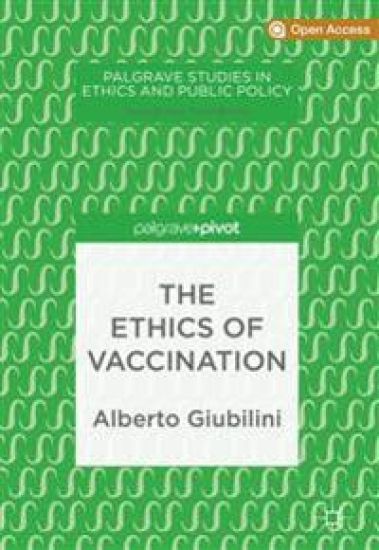
The Ethics of Vaccination

The Ethics of Vaccination

Alberto Giubilini

Saint Philip Street Press
2020
pokkari
This open access book discusses individual, collective, and institutional responsibilities with regard to vaccination from the perspective of philosophy and public health ethics. It addresses the issue of what it means for a collective to be morally responsible for the realisation of herd immunity and what the implications of collective responsibility are for individual and institutional responsibilities. The first chapter introduces some key concepts in the vaccination debate, such as 'herd immunity', 'public goods', and 'vaccine refusal'; and explains why failure to vaccinate raises certain ethical issues. The second chapter analyses, from a philosophical perspective, the relationship between individual, collective, and institutional responsibilities with regard to the realisation of herd immunity. The third chapter is about the principle of least restrictive alternative in public health ethics and its implications for vaccination policies. Finally, the fourth chapter presents an ethical argument for unqualified compulsory vaccination, i.e. for compulsory vaccination that does not allow for any conscientious objection. The book would appeal both philosophers interested in public health ethics and the general public interested in the philosophical underpinning of different arguments about our moral obligations with regard to vaccination. This work was published by Saint Philip Street Press pursuant to a Creative Commons license permitting commercial use. All rights not granted by the work's license are retained by the author or authors.
The Ethics of Vaccination

The Ethics of Vaccination

Alberto Giubilini

Saint Philip Street Press
2020
sidottu
This open access book discusses individual, collective, and institutional responsibilities with regard to vaccination from the perspective of philosophy and public health ethics. It addresses the issue of what it means for a collective to be morally responsible for the realisation of herd immunity and what the implications of collective responsibility are for individual and institutional responsibilities. The first chapter introduces some key concepts in the vaccination debate, such as 'herd immunity', 'public goods', and 'vaccine refusal'; and explains why failure to vaccinate raises certain ethical issues. The second chapter analyses, from a philosophical perspective, the relationship between individual, collective, and institutional responsibilities with regard to the realisation of herd immunity. The third chapter is about the principle of least restrictive alternative in public health ethics and its implications for vaccination policies. Finally, the fourth chapter presents an ethical argument for unqualified compulsory vaccination, i.e. for compulsory vaccination that does not allow for any conscientious objection. The book would appeal both philosophers interested in public health ethics and the general public interested in the philosophical underpinning of different arguments about our moral obligations with regard to vaccination. This work was published by Saint Philip Street Press pursuant to a Creative Commons license permitting commercial use. All rights not granted by the work's license are retained by the author or authors.
The Ethics of Vaccination

The Ethics of Vaccination

Alberto Giubilini

Springer Nature Switzerland AG
2019
sidottu
This open access book discusses individual, collective, and institutional responsibilities with regard to vaccination from the perspective of philosophy and public health ethics. It addresses the issue of what it means for a collective to be morally responsible for the realisation of herd immunity and what the implications of collective responsibility are for individual and institutional responsibilities. The first chapter introduces some key concepts in the vaccination debate, such as ‘herd immunity’, ‘public goods’, and ‘vaccine refusal’; and explains why failure to vaccinate raises certain ethical issues. The second chapter analyses, from a philosophical perspective, the relationship between individual, collective, and institutional responsibilities with regard to the realisation of herd immunity. The third chapter is about the principle of least restrictive alternative in public health ethics and its implications for vaccination policies. Finally, the fourth chapter presentsan ethical argument for unqualified compulsory vaccination, i.e. for compulsory vaccination that does not allow for any conscientious objection. The book will appeal to philosophers interested in public health ethics and the general public interested in the philosophical underpinning of different arguments about our moral obligations with regard to vaccination.