Kirjojen hintavertailu – 12 859 819 kirjaa ja 27 kauppaa

Kirjailija

Alberto Manguel

Kirjat ja teokset yhdessä paikassa: 29 kirjaa, julkaisuja vuosilta 1997–2026, suosituimpiin kuuluu Raymond Klibansky. Vertaile teosten hintoja ja tarkista saatavuus suomalaisista kirjakaupoista.

29 kirjaa

Kirjojen julkaisuvuodet: 1997–2026.

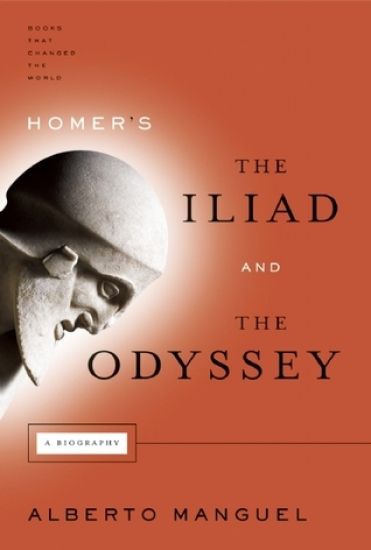
Homer's the Iliad and the Odyssey

Homer's the Iliad and the Odyssey

Alberto Manguel

Grove Press / Atlantic Monthly Press
2009
nidottu
While it is unknown if there ever was a man named Homer, there is no doubt that the epic poems assembled under his name form the cornerstone of Western literature, feeding our imagination for over two and a half millennia. The Iliad and The Odyssey, with their tales of the Trojan War, Achilles, Ulysses and Penelope, the Sirens, the Cyclops, Helen of Troy, and the petulant gods, are familiar to most readers because they are so pervasive. From Plato to Virgil, Pope to Joyce, the poems have been told and retold, interpreted and embellished. In this graceful and sweeping book, Alberto Manguel traces the lineage of the poems from their inception and first recording. He considers the original purpose of the poems--either as allegory of philosophical truth or as a record of historical truth--surveys the challenges the pagan Homer presented to the early Christian world, and maps the spread of the works around the world and through the centuries. Manguel follows Homer through the greatest literature ever created and, above all, delights in the poems themselves.
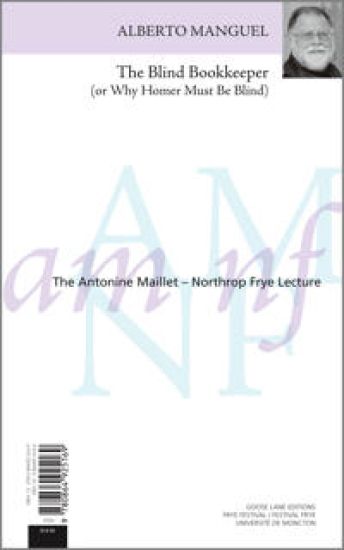
The Blind Bookkeeper (or Why Homer Must Be Blind) / Le comptable aveugle (l'Incontournable cécité d'Homère)
Rich with literary awards and honours, Alberto Manguel extends his literary genius to address and complete a thoughtfully crafted extrapolation on a paper left unfinished by Northrop Frye in 1943. The result is a succinct yet densely multilayered examination of how various readings of Homer throughout the annals of history cast light upon the human tendency towards war rather than peace and asks what roles writing and reading play to bring the world into better equilibrium. Central to this lecture is the concept of re-binding, a word drawn from the Latin roots for the word religion, which Manguel posits is the essential definition of poetry. Homer's writings, the point of origin of all written verse, are also the first written instance of the binding of imagined, written, and read realities. The semantics of Homer's name and the literal and figurative ramifications of his blindness are investigated as Manguel builds the scaffold for unveiling our own blindness through our desire to read Homer in our own image. We are left to examine our own assumptions. Comblé de prix littéraires et d'honneurs, Alberto Manguel prête son génie littéraire á l'étude et au parachèvement d'une extrapolation songée que Northrop Frye avait laissée en plan en 1943. Il en résulte une analyse succincte mais en replis serrés des multiples lectures d'Homère léguées par les siècles, qui révèle comment ces interprétations éclairent la propension humaine á la guerre plutôt qu'á la paix, ce qui le mène á s'interroger sur le rôle que jouent l'écriture et la lecture quand il s'agit de créer un monde plus équilibré. La notion de re-lier, un mot dont les racines latines sont les mêmes que le mot religion, est au coeur de cette conférence, et Manguel en fait la définition essentielle de la poésie. Les écrits d'Homère, point d'origine de toute la poésie écrite, fournissent aussi la première occurrence d'un lien entre les réalités imaginées, écrites et lues. La valeur sémantique du nom d'Homère et les répercussions concrètes et figurées de sa cécité font partie des éléments que Manguel scrute pour fonder son évocation de notre aveuglement á nous quand nous insistons pour lire Homère á notre propre image. Nous n'avons plus qu'á remettre nos hypothèses.
With Borges

With Borges

Alberto Manguel

Telegram Books
2006
nidottu
In Buenos Aires, 1964, a blind writer in his sixties approaches a sixteen-year-old bookstore clerk and asking if he would be interested in a part-time job reading aloud. The writer was Jorge Luis Borges, one of the world's finest literary minds; the boy was Alberto Manguel, who was later to become an internationally acclaimed author and editor and bibliophile. The young Manguel spent several years reading aloud and transcribing for the enigmatic Borges. Here he recalls this time with integrity and warmth, offering us an intimate and moving portrait of one of the great literary luminaries.
En historia om läsning

En historia om läsning

Alberto Manguel

Ordfront Förlag
2005
pokkari
Från lertavla till hypertext Alberto Manguel tar oss med på en resa genom läsandets märkliga och lidelsefyllda historia. En historia som sträcker sig över 6000 år. Det blir en färd med många stopp, omvägar och avstickare. En historia om läsning är en lärd och lysten bok som man läser som en äventyrsroman. Det handlar om bibliotek och bokskatter, om tillåten och förbjuden läsning, om boktjuvar och bokbrännare och om egendomliga läsmaskiner. Vårt sätt att läsa är nyckeln till hur vi uppfattar världen omkring oss. På ett mer privat plan ser vi hur de böcker som blivit verkligt betydelsefulla för oss speglar vår egen livshistoria. Alberto Manguel, bosatt utanför Paris, föddes i Buenos Aires där han i ungdomen läste högt för den blinde Jorge Luis Borges. På svenska har han också givit ut Läsa bilder. »Den är en av dessa vidunderliga böcker, svävande och vackra, och fyllda med en sådan fantasi och lärdom att man blir alldeles mjuk i hela kroppen. Tänk om man hade haft en sån svensklärare när man gick i skolan.« Anders Paulrud, Aftonbladet FÖRFATTAREN: Alberto Manguel är kanadensisk författare, översättare och redaktör med argentinskt ursprung, bosatt i Frankrike. 2002 utkom hans Läsa bilder. En historia om kärlek och hat.
Reading Pictures

Reading Pictures

Alberto Manguel

Random House USA Inc
2002
nidottu
We say that every picture tells a story -- but does it really? Can we read a painting the way we read a book? Is there a vocabulary we can learn that will help us tease out its meaning? In Reading Pictures, Alberto Manguel, the best-selling author of A History of Reading, offers a spirited, endlessly entertaining meditation on the questions we ask ourselves when we stand in front of a work of art. "Much as I love reading words," Manguel writes, "I love reading pictures, and I enjoy finding the stories explicitly or secretly woven into all kinds of works of art -- without, however, having to resort to arcane or esoteric vocabularies. This book grew out of the need to reclaim, for common viewers such as myself, the responsibility and the right to read these images and their stories." Manguel coaxes the reader to look at art not from the perspective of a critic but as a curious student of life. Taking a handful of great works of art -- photographs, paintings, buildings, sculptures -- he explores, with delight and erudition, how each one attempts to tell a story that we, the viewer, must either decipher or invent. Whether delving into Picasso's treatment of his mistresses and its impact on his painting, revisiting the riddles of the past in the paintings of Caravaggio and Robert Campin, or decrypting the fearful dreamscapes of Marianna Gartner and the ghoulish portraits of Lavinia Fontana, he invites us to explore, interrogate, and revel in what we see. Not since John Berger's Ways of Seeing has a writer so eloquently examined what happens when we are moved by a work of art. Richly illustrated with 33 color and 150 black-and-white images, Reading Pictures shows that there is no limit to the stories we can find if we know how -- and where -- to look for them.
Into the Looking Glass Wood

Into the Looking Glass Wood

Alberto Manguel

Bloomsbury Publishing PLC
2000
pokkari
In these essays, Alberto Manguel discusses the nature of books and literature as a moral imperative and explores the consequences of society's betrayal of its readers and writers. He covers writers such as Jorge Luis Borges, Julio Cortazar and G. K. Chesterton, as well as Che Guevara and Goethe.
By The Light Of The Glow-worm Lamp

By The Light Of The Glow-worm Lamp

Alberto Manguel

Perseus Books
1998
pokkari
From ancient Greece to the close of the second millennium, the keen scientific eye has been translated over and over into graceful and meaningful texts in which not only the world observed but the act of observation itself is set down for the common reader. By the Light of the Glow-Worm Lamp represents the best of the nature-writing genre in over three dozen works from the past three centuries.
Bulfinch's Mythology

Bulfinch's Mythology

Thomas Bulfinch; Alberto Manguel

Modern Library Inc
1998
pokkari

Halvin toimitettuna 22,10 €

For almost a century and a half, Bulfinch's Mythology has been the text by which the great tales of the gods and goddesses, Greek and Roman antiquity; Scandinavian, Celtic, and Oriental fables and myths; and the age of chivalry have been known. The stories are divided into three sections: The Age of Fable or Stories of Gods and Heroes (first published in 1855); The Age of Chivalry (1858), which contains King Arthur and His Knights, The Mabinogeon, and The Knights of English History; and Legends of Charlemagne or Romance of the Middle Ages (1863). For the Greek myths, Bulfinch drew on Ovid and Virgil, and for the sagas of the north, from Mallet's Northern Antiquities. He provides lively versions of the myths of Zeus and Hera, Venus and Adonis, Daphne and Apollo, and their cohorts on Mount Olympus; the love story of Pygmalion and Galatea; the legends of the Trojan War and the epic wanderings of Ulysses and Aeneas; the joys of Valhalla and the furies of Thor; and the tales of Beowulf and Robin Hood. The tales are eminently readable. As Bulfinch wrote, "Without a knowledge of mythology much of the elegant literature of our own language cannot be understood and appreciated. . . . Our book is an attempt to solve this problem, by telling the stories of mythology in such a manner as to make them a source of amusement." Thomas Bulfinch, in his day job, was a clerk in the Merchant's Bank of Boston, an undemanding position that afforded him ample leisure time in which to pursue his other interests. In addition to serving as secretary of the Boston Society of Natural History, he thoroughly researched the myths and legends and copiously cross-referenced them with literature and art. As such, the myths are an indispensable guide to the cultural values of the nineteenth century; however, it is the vigor of the stories themselves that returns generation after generation to Bulfinch.
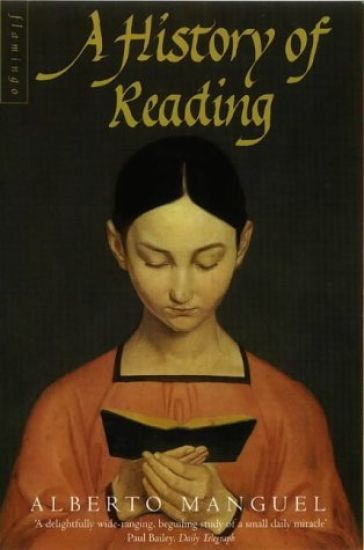
History of Reading

History of Reading

Alberto Manguel

Harpercollins Publishers
1997
pokkari

Halvin toimitettuna 25,60 €

This history of reading goes from the earliest examples of the clay tablets and cuneiform of ancient Mesopotamia and Egypt to today's digital revolution. It argues that it is the demands of the reader, acting alongside the will of the writer, that is the evolutionary motor of literary genres.