Kirjojen hintavertailu – 12 903 725 kirjaa ja 27 kauppaa

Kirjailija

Aldona Jonaitis

Kirjat ja teokset yhdessä paikassa: 7 kirjaa, julkaisuja vuosilta 1998–2021, suosituimpiin kuuluu Baleen Basketry of the North Alaskan Eskimo. Vertaile teosten hintoja ja tarkista saatavuus suomalaisista kirjakaupoista.

7 kirjaa

Kirjojen julkaisuvuodet: 1998–2021.

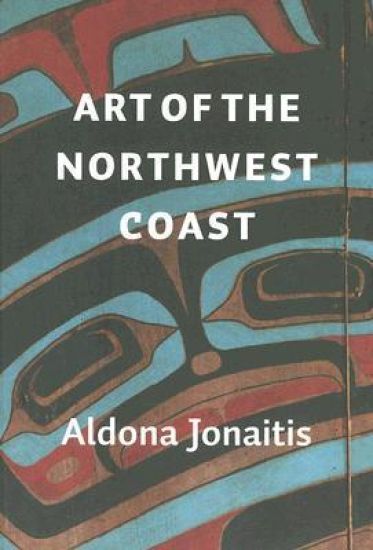
Art of the Northwest Coast

Art of the Northwest Coast

Aldona Jonaitis

UNIVERSITY OF WASHINGTON PRESS
2021
pokkari
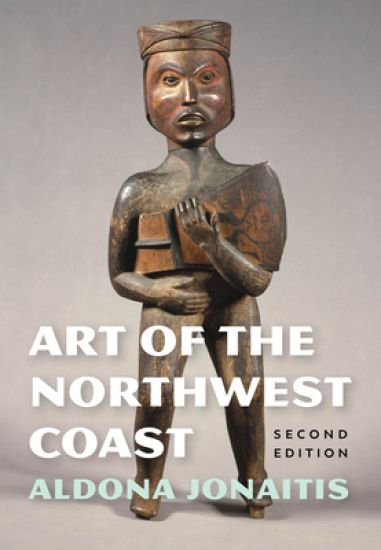
Essential reading for anyone interested in the art of Native culturesOriginally published in 2006, Art of the Northwest Coast offers an expansive history of this great tradition, from the earliest known works to those made at the beginning of the twenty-first century. Although non-Natives often claimed that First Nations cultures were disappearing, Northwest Coast Native people continued to make art during the painful era of colonization, often subtly expressing resistance to their oppressors and demonstrating the resilience of their heritage. Integrating the art's development with historical events following contact with Euro-Americans sheds light on the creativity of artists as they appropriated and transformed foreign elements into uniquely Indigenous statements. A new chapter discusses contemporary artists, including Marianne Nicholson, Nicholas Galanin, Lawrence Paul Yuxweluptun, and Sonny Assu, who address pressing issues ranging from Indigenous sovereignty and destruction of the environment to the power of Native women and efforts to work with non-Natives to heal the wounds of racism and discrimination.
Baleen Basketry of the North Alaskan Eskimo

Baleen Basketry of the North Alaskan Eskimo

Molly Lee; Aldona Jonaitis

University of Washington Press
2015
sidottu
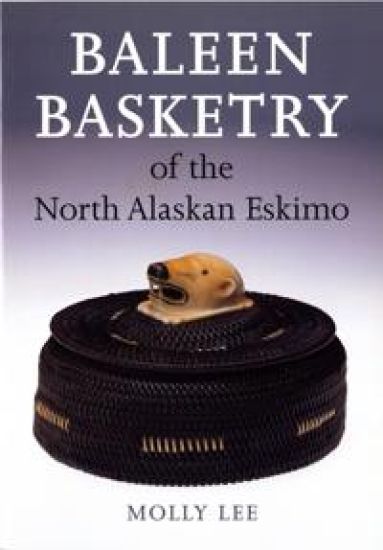
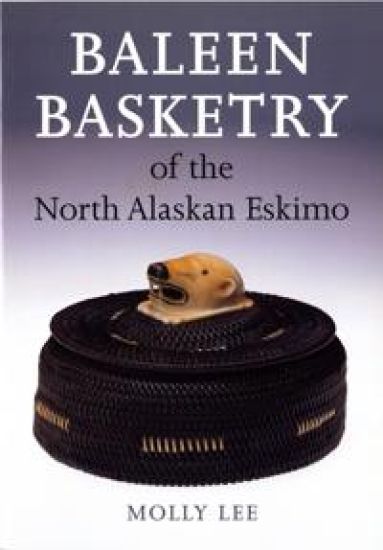
Baskets made of baleen, the fibrous substance found in the mouths of plankton-eating whales—a malleable and durable material that once had commercial uses equivalent to those of plastics today—were first created by Alaska Natives in the early years of the twentieth century. Because they were made for the tourist trade, they were initially disdained by scholars and collectors, but today they have joined other art forms as a highly prized symbol of native identity. Baskets of exquisite workmanship, often topped with fanciful ivory carvings, have been created for almost a century, contributing significantly to the livelihood of their makers in the Arctic villages of Barrow, Point Hope, Wainwright, and Point Lay, Alaska. Baleen Basketry of the North Alaskan Eskimo, originally published in 1983, was the first book on this unusual basket form. In this completely redesigned edition, it remains the most informative work on baleen baskets, covering their history, characteristics, and construction, as well as profiling their makers. Illustrations of the basketmakers at work and line drawings showing the methods of construction are a charming addition to this book, which belongs in the library of all those with an interest in the art of basketry and in Alaskan Native arts in general.
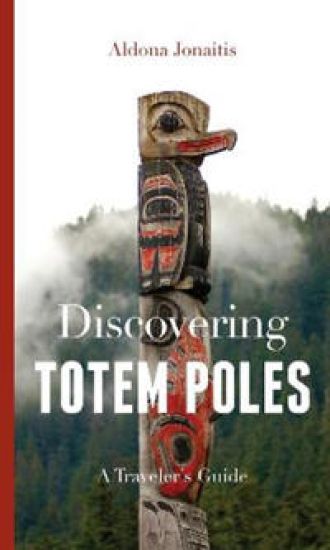
Discovering Totem Poles

Discovering Totem Poles

Aldona Jonaitis

University of Washington Press
2012
pokkari
Rising from a forest mist or soaring overhead in parks and museums, magnificent cedar totem poles have captured the attention and imagination of visitors to Washington State, British Columbia, and Alaska. Discovering Totem Poles is the first guidebook to focus on the complex and fascinating histories of the specific poles visitors encounter in Seattle, Victoria, Vancouver, Alert Bay, Prince Rupert, Haida Gwaii (Queen Charlotte Islands), Ketchikan, Sitka, and Juneau. It debunks common misconceptions about totem poles and explores the stories behind the making and displaying of 90 different poles. Travelers with this guide in their pockets will return home with a deeper knowledge of the monumental carvings, their place in history, and the people who made them. Watch the book trailer: https://www.youtube.com/watch?v=iAaAnYctJcg
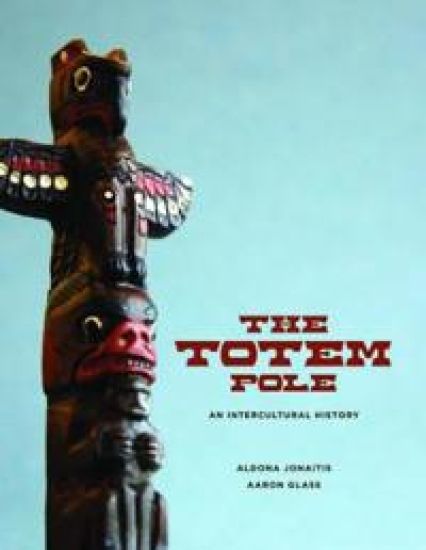
The Totem Pole

The Totem Pole

Aldona Jonaitis; Aaron Glass

University of Washington Press
2010
sidottu
The Northwest Coast totem pole captivates the imagination. From the first descriptions of these tall carved monuments, totem poles have become central icons of the Northwest Coast region and symbols of its Native inhabitants. Although many of those who gaze at these carvings assume that they are ancient artifacts, the so-called totem pole is a relatively recent artistic development, one that has become immensely important to Northwest Coast people and has simultaneously gained a common place in popular culture from fashion to the funny pages. The Totem Pole reconstructs the intercultural history of the art form in its myriad manifestations from the eighteenth century to the present. Aldona Jonaitis and Aaron Glass analyze the totem pole’s continual transformation since Europeans first arrived on the scene, investigate its various functions in different contexts, and address the significant influence of colonialism on the proliferation and distribution of carved poles. The authors also describe their theories on the development of the art form: its spread from the Northwest Coast to world’s fairs and global theme parks; its integration with the history of tourism and its transformation into a signifier of place; the role of governments, museums, and anthropologists in collecting and restoring poles; and the part that these carvings have continuously played in Native struggles for control of their cultures and their lands. Short essays by scholars and artists, including Robert Davidson, Bill Holm, Richard Hunt, Nathan Jackson, Vickie Jensen, Andrea Laforet, Susan Point, Charlotte Townsend-Gault, Lyle Wilson, and Robin Wright, provide specific case studies of many of the topics discussed, directly illustrating the various relationships that people have with the totem pole. Errata: http://www.washington.edu/uwpress/books/Jonaitis_errata_24.pdf
Art of the Northwest Coast

Art of the Northwest Coast

Aldona Jonaitis

University of Washington Press
2006
pokkari
Art of the Northwest Coast is a comprehensive survey of the Native arts of the Pacific Northwest Coast, from Puget Sound to Alaska and from prehistoric times to the present. Incorporating the region's social history with the observations of anthropologists, historians of art, and Native peoples, this groundbreaking volume examines how the upheavals of European contact affected the development of a powerful traditional art. By exploring the distinct origins of each of the area's linguistic groups and their histories, mythologies, and art forms, art historian Aldona Jonaitis reveals how a complex web of factors informed these groups' varied responses to the changes and challenges brought about by contact with Europeans. The post-contact period has often been considered a time of decline for Native artistic traditions and techniques, but Jonaitis convincingly argues against this assumption. The traditions were not lost, she asserts, but rather were expressed in different ways. Forms such as tourist art - made expressly for sale rather than for community use - were for some the only outlets available in the trying, repressive years when Natives were deprived of their land, rights, and essential cultural expressions. While art made for community use was often judged "inferior" in quality to nineteenth-century creations, it still expressed the strong aesthetics of a surviving Native culture. Since the 1960s, Native artistic activity has flourished and is increasingly recognized as fine art rather than anthropological artifact. Repatriation of Native works of art from museums, a strong market for collectors and dealers, and a reaffirmation of traditional culture and heritage among Native communities all contribute to a vibrant field in which Native artists reflect their enduring cultures in works that explore many contemporary directions. Compellingly written and beautifully illustrated, Art of the Northwest Coast is a cornerstone addition to any library and essential reading for anyone interested in the art of Native cultures.
The Yuquot Whalers' Shrine

The Yuquot Whalers' Shrine

Aldona Jonaitis

University of Washington Press
1999
sidottu
In 1905 George Hunt, at the insistence of anthropologist Franz Boas, acquired a remarkable collection of materials from the Mowachaht band of the Nuu-chah-nulth (Nootka) for the American Museum of Natural History. An assemblage of 92 carved wooden figures and whales, 16 human skulls, and the small building that sheltered them, the shrine had for centuries stood in Yuquot, or Friendly Cove, on the remote west coast of Vancouver Island, visited only by chiefs and their wives. Since its removal to New York, it has been represented in anthropological and historical writings, film, television, and newspapers. In this fascinating study, Aldona Jonaitis investigates and reconstructs the history of the shrine both before and after it was acquired for the museum. Clues to the shrine's complex history—traced to the mid-17th century—and meaning are provided by historical and anthropological writings, photographs, stories, the Hunt-Boas correspondence, and the artifacts themselves. Jonaitis addresses important contemporary issues, including the Mowachaht band's desire to have the shrine repatriated for display in Yuquot.
Baleen Basketry of the North Alaskan Eskimo

Baleen Basketry of the North Alaskan Eskimo

Molly Lee; Aldona Jonaitis

University of Washington Press
1998
pokkari
Baskets made of baleen, the fibrous substance found in the mouths of plankton-eating whales—a malleable and durable material that once had commercial uses equivalent to those of plastics today—were first created by Alaska Natives in the early years of the twentieth century. Because they were made for the tourist trade, they were initially disdained by scholars and collectors, but today they have joined other art forms as a highly prized symbol of native identity. Baskets of exquisite workmanship, often topped with fanciful ivory carvings, have been created for almost a century, contributing significantly to the livelihood of their makers in the Arctic villages of Barrow, Point Hope, Wainwright, and Point Lay, Alaska. Baleen Basketry of the North Alaskan Eskimo, originally published in 1983, was the first book on this unusual basket form. In this completely redesigned edition, it remains the most informative work on baleen baskets, covering their history, characteristics, and construction, as well as profiling their makers. Illustrations of the basketmakers at work and line drawings showing the methods of construction are a charming addition to this book, which belongs in the library of all those with an interest in the art of basketry and in Alaskan Native arts in general.