Kirjailija
Aldous Huxley
Kirjat ja teokset yhdessä paikassa: 335 kirjaa, julkaisuja vuosilta 1920–2026, suosituimpiin kuuluu Uljas uusi maailma. Vertaile teosten hintoja ja tarkista saatavuus suomalaisista kirjakaupoista.
335 kirjaa
Kirjojen julkaisuvuodet: 1920–2026.
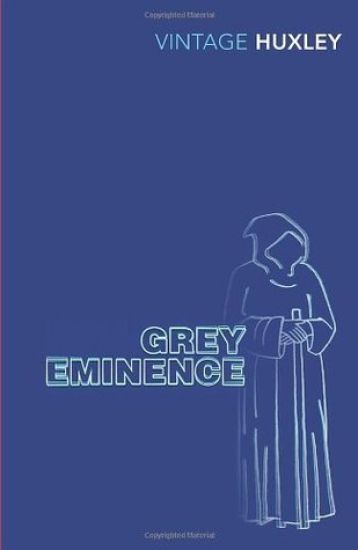
A gripping biography by the author of Brave New WorldThe life of Father Joseph, Cardinal Richelieu's aide, was a shocking paradox. After spending his days directing operations on the battlefield, Father Joseph would pass the night in prayer, or in composing spiritual guidance for the nuns in his care.
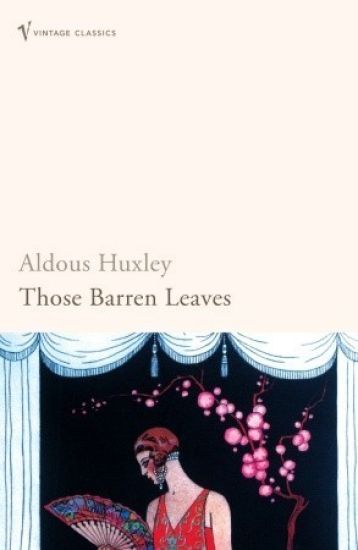
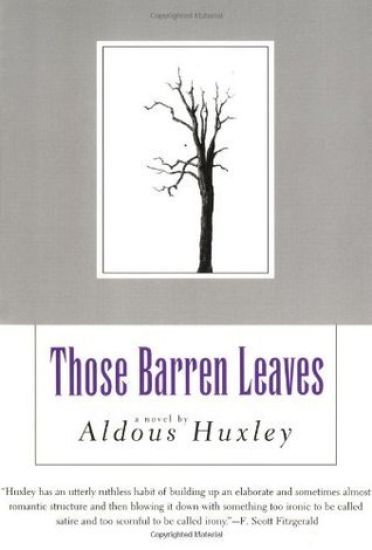
In a renovated Italian palace set above the blue of the sea, the Junoesque figure of Mrs Aldwinkle moves among her guests. Deliciously satirical, Those Barren Leaves bites the hands of those who dare to posture or feign sophistication and is as comically fresh today as when it was first published.
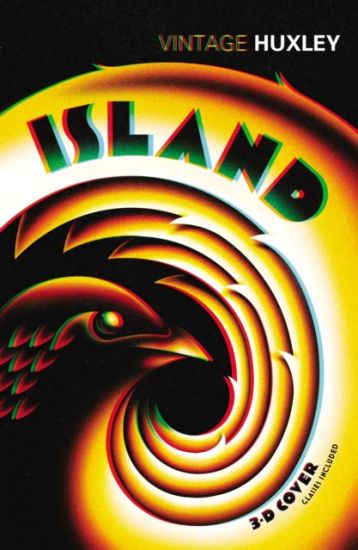
For over a hundred years the Pacific island of Pala has been the scene of a unique experiment in civilisation.
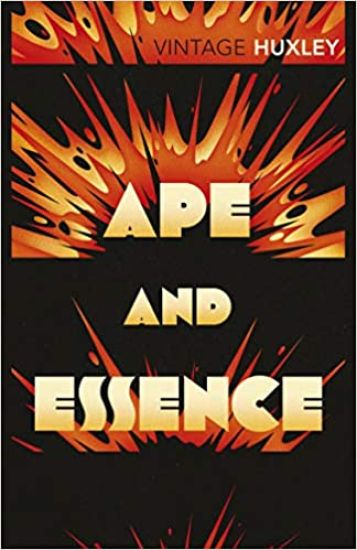
A dystopian classicIn February 2108, the New Zealand Rediscovery Expedition reaches California at last. The expedition expects to find physical destruction but they are quite unprepared for the moral degradation they meet.
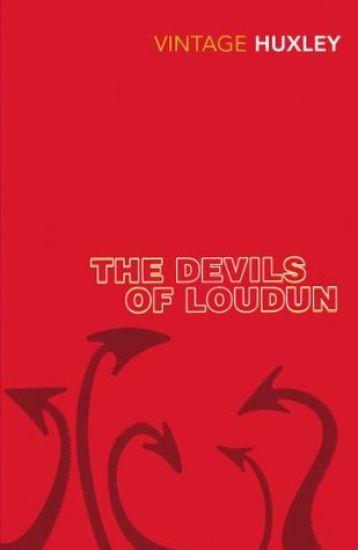
A gripping biography by the author of Brave New WorldIn 1634 Urbain Grandier, a handsome and dissolute priest of the parish of Loudun was tried, tortured and burnt at the stake.
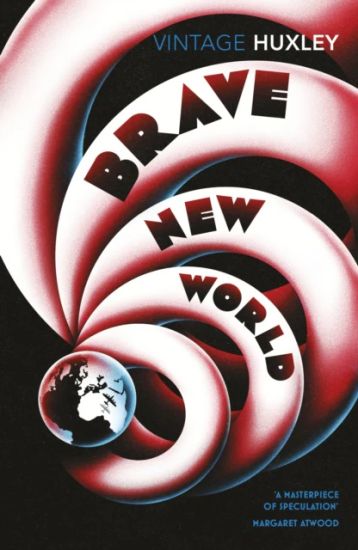
WITH INTRODUCTIONS BY MARGARET ATWOOD AND DAVID BRADSHAWFar in the future, the World Controllers have created the ideal society. Huxley's ingenious fantasy of the future sheds a blazing light on the present and is considered to be his most enduring masterpiece.
Denis Stone, a naive young poet, is invited to stay at Crome, a country house renowned for its gatherings of bright young things. Crome's hosts, Henry Wimbush and his exotic wife Priscilla are joined by a party of colourful guests whose intrigues and opinions make Denis's stay is a memorable one.
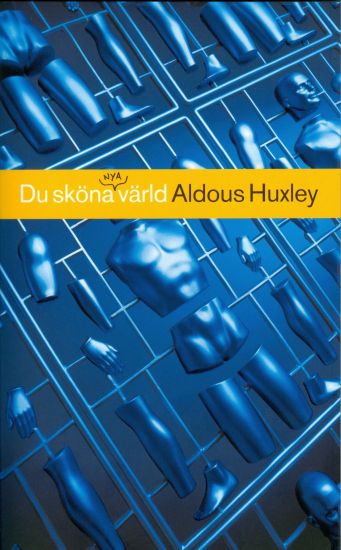
Du sköna nya värld, den kanske mest berömda av alla framtidsskildringar, skrevs redan 1932. I dag har flera av bokens mardrömsscenarier blivit verklighet. Det förefaller som om vi befinner oss närmare romanens dystopi än någonsin. I framtiden har gentekniken utvecklat människan intill perfektion. I den nya världen finns inga gamla, sjuka eller olyckliga människor. Livet är sorglöst och okomplicerat. Människan har befriats från alla känslomässiga bindningar och kan ohämmat ägna sig åt konsumtion och tillfälliga sexuella kontakter. Tillvaron är inriktad på omedelbar lyckomaximering. Den nya världen är ett sinnenas paradis och skulle något gå fel finns alltid lyckodrogen soma. "Provocerande, stimulerande, chockerande och bländande"/The Observer"Skarpsinnig, logisk, kvicktänkt och elegant. Huxleys ironi och bitska samhällskritik har aldrig formulerats briljantare än här"/The Times
In this fifth of six volumes in a major publishing enterprise, Huxley continues to explore the role of science and technology in modern culture, and seeks a final level of foundational Truth that might provide the basis for his growing interest in religious mysticism. His philosophy of history took its final form in this period. At their best, Huxley's essays stand among the finest examples of the genre in modern literature. "A remarkable publishing event...beautifully produced and authoritatively edited."—Jeffrey Hart. "He writes with an easy assurance and a command of classical and modern cross-references,"—Christopher Hitchens, Los Angeles Times. "There is much to enjoy in these volumes...they are important as a document of his times, and of a window on to a stage in the evolution of his mind."—Economist. "You have to marvel at the range of [Huxley’s] interests and the intelligence with which he explores them.... What we experience in this high journalism is a man of intelligence, sensibility, and formidable erudition engaging his era and struggling for equilibrium while sharing the widespread perception that something ghastly has happened to European civilization...."—Washington Times
In this fourth volume of a projected six, Huxley registers his deep misgivings about the course of history in the late 1930s as the world moved toward a second global war. Many of his essays reflect his continuing interest in the conventions of popular culture as well as the philosophy of science and history, particularly as they inform developments in art and politics. But his larger concerns oscillate between empirical science and the particulars of social history, on the one hand, and his need for a grounding of absolute truth that would transcend both. His critique of politics and the prevailing ideologies of fascism and capitalism overlaps with his attempt to locate a foundational truth in a world of change and diversity. He embraced a form of political pacifism that intersected with an increasing attraction to religious quietism and mysticism. And he made a sustained effort to reconcile mystical experience with contemporary theories of physics and the philosophy of science. At their best, Huxley's essays stand among the finest examples of the genre in modern literature. "A remarkable publishing event...beautifully produced and authoritatively edited."—Jeffrey Hart.
On vacation from school, Denis goes to stay at Crome, an English country house inhabitated by several of Huxley's most outlandish characters--from Mr. Barbecue-Smith, who writes 1,500 publishable words an hour by "getting in touch" with his "subconscious," to Henry Wimbush, who is obsessed with writing the definitive HISTORY OF CROME. Denis's stay proves to be a disaster amid his weak attempts to attract the girl of his dreams and the ridicule he endures regarding his plan to write a novel about love and art. Lambasting the post-Victorian standards of morality, CROME YELLOW is a witty masterpiece that, in F. Scott Fitzgerald's words, "is too irnonic to be called satire and too scornful to be called irony."
This third volume of a projected six reinforces Huxley’s stature as one of the most acute and informed observers of the social and ideological trends of the years between the world wars. It contains the important collection of essays "Music at Night" as well as the majority of Huxley’s journalistic writing for the Hearst newspapers in the United States and for a variety of British periodicals such as Nash’s Pall Mall Magazine, the Evening Standard, and Time and Tide. Much of the attraction of the Hearst essays lies in their vivid period detail: references to the raucous voices of Nazi broadcasters, speeches by Roosevelt and Stalin, Soviet five-year plans, and the effects of the Great Depression combine to provide a rich context for Huxley’s increasingly active role in organized pacifism and his sense of standing on the threshold of a new era. The essays of "Music at Night" define this trend as “the New Romanticism,” a celebration of Enlightenment modernity and an excessive faith in instrumental reason and applied science. Huxley was both intrigued by and suspicious of state planning and centralized bureaucratic authority. The essays in Volume III (and the volume to follow) register his growing ambivalence about the role of technocracy and science in an era of experimentation in the concentration of executive and legislative power. At their best, Huxley’s essays stand among the finest examples of the genre in modern literature. "He was among the few writers who...played with ideas so freely, so gaily, with such virtuosity, that the responsive reader...was dazzled and excited."—Isaiah Berlin.
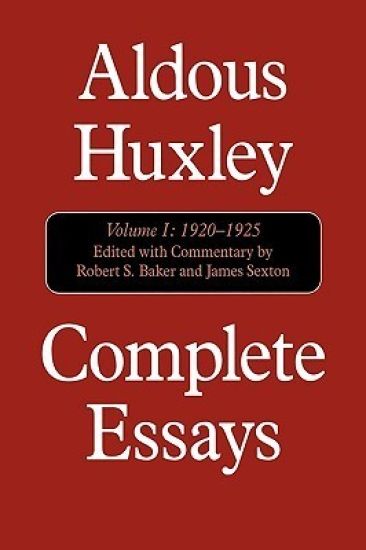
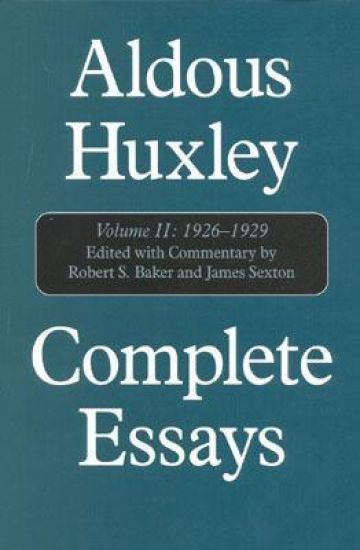
These first two volumes of a projected five, in preparation for several years, begin a major publishing venture, collecting the complete essays of one of the giants of modern English prose and of social commentary in our time. The first two volumes span the most productive period of Huxley's career. Volume I begins with his essays for Gilbert Murray's Athenaeum and his music essays for the New Westminster Gazette. Volume II continues through the 1920s and includes his controversial essays on India and the empire in "Jesting Pilate." The essays of both volumes range from nuanced assessments of art and architecture to political analyses, history, science, religion, and art, and a newly discovered series on music. Wide-ranging, allusive, and witty, they are informed by the probing skepticism of a highly educated and ironically incisive member of the English upper middle class. Huxley's fascination with the codes and conventions of European culture, his growing apprehensions about the menacing collapse of the European political order, and his awareness of the impact of science and technology on the post-Versailles world of England, France, Germany, and the United States form the basis for his critique. His subjects overlap with the satirical novels he wrote during the period between the wars, culminating in Point Counter Point and Brave New World. At their best, these essays stand among the finest examples of the genre in modern literature.

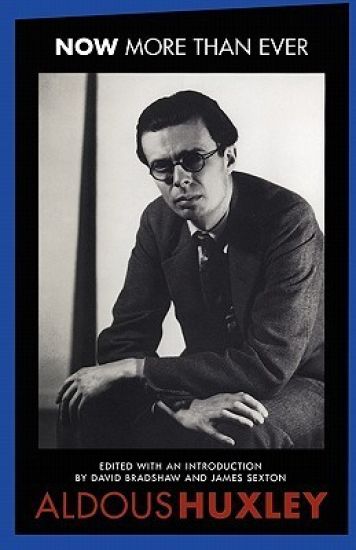
Over the course of his career, British writer Aldous Huxley (1894-1963) shifted away from elitist social satires and an atheistic outlook toward greater concern for the masses and the use of religious terms and imagery. This change in Huxley's thinking underlies the previously unpublished play Now More Than Ever. Written in 1932-1933 just after Brave New World, Now More Than Ever is a response to the social, economic, and political upheavals of its time. Huxley's protagonist is an idealistic financier whose grandiose schemes for controlling the means of production drive him to swindling and finally to suicide. His fate allows Huxley to expose the evils he perceives in free-market capitalism while pleading the case for national economic planning and the rationalization of Britain's industrial base. This volume contains the full text of Now More Than Ever, which was believed to be lost until 1976, when a copy was found at the Harry Ransom Humanities Research Center of the University of Texas at Austin. A "thinker's play" that has never been produced on stage, it is the last previously unpublished piece of Huxley's major writings and immensely important to understanding his development as a writer. The editors of this volume have annotated the play for contemporary readers. Their introduction sets the play in the context of Huxley's intellectual life.
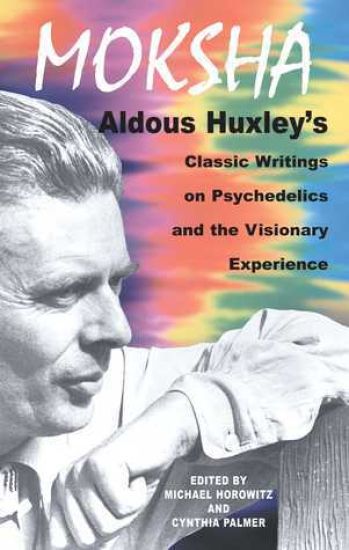
In May 1953 Aldous Huxley took four-tenths of a gram of mescaline. The mystical and transcendent experience that followed set him off on an exploration that was to produce a revolutionary body of work about the inner reaches of the human mind. Huxley was decades ahead of his time in his anticipation of the dangers modern culture was creating through explosive population increase, headlong technological advance, and militant nationalism, and he saw psychedelics as the greatest means at our disposal to ""remind adults that the real world is very different from the misshapen universe they have created for themselves by means of their culture-conditioned prejudices."" Much of Huxley's writings following his 1953 mescaline experiment can be seen as his attempt to reveal the power of these substances to awaken a sense of the sacred in people living in a technological society hostile to mystical revelations. Moksha, a Sanskrit word meaning ""liberation,"" is a collection of the prophetic and visionary writings of Aldous Huxley. It includes selections from his acclaimed novels Brave New Worldand Island, both of which envision societies centered around the use of psychedelics as stabilizing forces, as well as pieces from The Doors of Perceptionand Heaven and Hell, his famous works on consciousness expansion.
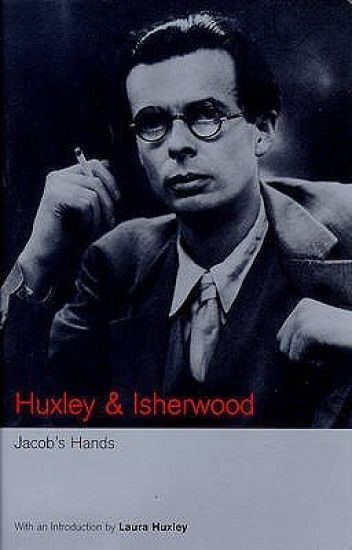
This is a jointly-authored film treatment, found in one of Huxley's old trunks. The story is set in the 1920s and involves a ranch worker who has the power to heal with his hands.
"Huxley has never written a richer book." The Nation
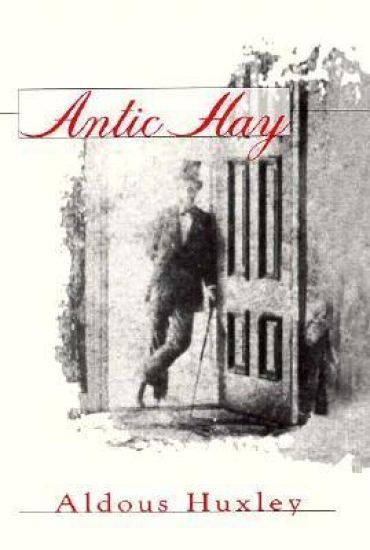
London life just after World War I, devoid of values and moving headlong into chaos at breakneck speed - Aldous Huxley's Antic Hay, like Hemingway's The Sun Also Rises, portrays a world of lost souls madly pursuing both pleasure and meaning. Fake artists, third-rate poets, pompous critics, pseudo-scientists, con-men, bewildered romantics, cock-eyed futurists - all inhabit this world spinning out of control, as wildly comic as it is disturbingly accurate. In a style that ranges from the lyrical to the absurd, and with characters whose identities shift and change as often as their names and appearances, Huxley has here invented a novel that bristles with life and energy, what the New York Times called "a delirium of sense enjoyment!"