Kirjojen hintavertailu – 12 903 725 kirjaa ja 27 kauppaa

Kirjailija

Alec Cairncross

Kirjat ja teokset yhdessä paikassa: 13 kirjaa, julkaisuja vuosilta 1988–2024, suosituimpiin kuuluu Central banks' independence in historical perspective. Vertaile teosten hintoja ja tarkista saatavuus suomalaisista kirjakaupoista.

13 kirjaa

Kirjojen julkaisuvuodet: 1988–2024.

The Economic Section 1939-1961

The Economic Section 1939-1961

Alec Cairncross; Nita Watts

TAYLOR FRANCIS LTD
2024
nidottu
First published in 1989, The Economic Section 1939-1961 is a rare study of economic policymaking as seen from the inside. The Economic Section, formed in 1939-1940, was the first group of professional economists to operate full-time at the centre of government in the United Kingdom and its views on many issues of economic policy were frequently decisive. In this volume, two former members of the Section draw on their memories and on the public records to trace the history of the Section from the early days of the war to the end of the 1950s. Alec Cairncross and Nita Watts discuss the advice offered by the Section, the controversies that followed advisers, and how Ministers responded. They present a picture of the day-to-day working of the Section, but inevitably focus on the more dramatic episodes, when major issues of policy were in dispute or important new issues were posed. Separate chapters are devoted to the Section’s role in four main areas: fiscal, monetary, incomes and external economic policy. In illuminating influence on policy exercised by officials and the place of expert advice in economic management, this work will appeal to a wide range of readers. It offers the student of economics or politics a picture of what, in practice, goes to the making of economic policy.
The Economic Section 1939-1961

The Economic Section 1939-1961

Alec Cairncross; Nita Watts

TAYLOR FRANCIS LTD
2021
sidottu
First published in 1989, The Economic Section 1939-1961 is a rare study of economic policymaking as seen from the inside. The Economic Section, formed in 1939-1940, was the first group of professional economists to operate full-time at the centre of government in the United Kingdom and its views on many issues of economic policy were frequently decisive. In this volume, two former members of the Section draw on their memories and on the public records to trace the history of the Section from the early days of the war to the end of the 1950s. Alec Cairncross and Nita Watts discuss the advice offered by the Section, the controversies that followed advisers, and how Ministers responded. They present a picture of the day-to-day working of the Section, but inevitably focus on the more dramatic episodes, when major issues of policy were in dispute or important new issues were posed. Separate chapters are devoted to the Section’s role in four main areas: fiscal, monetary, incomes and external economic policy. In illuminating influence on policy exercised by officials and the place of expert advice in economic management, this work will appeal to a wide range of readers. It offers the student of economics or politics a picture of what, in practice, goes to the making of economic policy.
Inflation, Growth and International Finance
This book, originally published in 1975, deals with the sources of economic growth, inflation and the prospects of bringing it under control, floating exchange rates and restrictions on international capital movements. Although aimed at the non-specialist, professional economists willa slo find the book stimulating.
Inflation, Growth and International Finance
This book, originally published in 1975, deals with the sources of economic growth, inflation and the prospects of bringing it under control, floating exchange rates and restrictions on international capital movements. Although aimed at the non-specialist, professional economists willa slo find the book stimulating.
Years of Recovery

Years of Recovery

Alec Cairncross

Routledge
2013
nidottu
Years of Recovery was the first comprehensive study of the transition from war to peace in the British economy under the Labour government of 1945–51. It includes a full account of the successive crises and turning-points in those hectic years – the coal and convertibility crises of 1947, devaluation in 1949 and rearmament in 1951. These episodes, apart from their dramatic interest, light up the dilemmas of policy and the underlying economic trends and pressures in a country delicately poised between economic disaster and full recovery. Many of the debates on economic policy that are still in progress – on incomes policy, demand management, the welfare state and relations with Europe, for example – have their roots in those years. Many of the trends originating then persisted long afterwards. The book also examines the interaction between events and policy and the role in a managed economy of the policy-making machine. Now that the public records are open to 1954, it has been possible to make use of official documents to review the possibilities of action that were canvassed and the thinking and differences of opinion that underlay ministerial decisions. Combining personal involvement with thorough research, this fascinating study will be a major contribution to our understanding of post-war economic policy. Alec Cairncross was Chancellor of the University of Glasgow and a former Master of St Peter’s College, Oxford. He spent the years covered by this volume as a civil servant in London, Berlin and Paris before moving to Glasgow as Professor of Applied Economics. This classic book of some of his most brilliant research was first published in 1985.
Years of Recovery

Years of Recovery

Alec Cairncross

Routledge
2005
sidottu
Years of Recovery was the first comprehensive study of the transition from war to peace in the British economy under the Labour government of 1945–51. It includes a full account of the successive crises and turning-points in those hectic years – the coal and convertibility crises of 1947, devaluation in 1949 and rearmament in 1951. These episodes, apart from their dramatic interest, light up the dilemmas of policy and the underlying economic trends and pressures in a country delicately poised between economic disaster and full recovery. Many of the debates on economic policy that are still in progress – on incomes policy, demand management, the welfare state and relations with Europe, for example – have their roots in those years. Many of the trends originating then persisted long afterwards. The book also examines the interaction between events and policy and the role in a managed economy of the policy-making machine. Now that the public records are open to 1954, it has been possible to make use of official documents to review the possibilities of action that were canvassed and the thinking and differences of opinion that underlay ministerial decisions. Combining personal involvement with thorough research, this fascinating study will be a major contribution to our understanding of post-war economic policy. Alec Cairncross was Chancellor of the University of Glasgow and a former Master of St Peter’s College, Oxford. He spent the years covered by this volume as a civil servant in London, Berlin and Paris before moving to Glasgow as Professor of Applied Economics. This classic book of some of his most brilliant research was first published in 1985.
The British Economy Since 1945

The British Economy Since 1945

Alec Cairncross

Blackwell Publishers
1995
nidottu
In this fully revised and updated second edition, Sir Alec Cairncross provides a lucid overview and analysis of British economic policy and performance from 1945 to the present. The author takes a chronological approach, introducing the events of the period with an account of changing ideas on economic policy and performance. He concludes with a survey of major developments over the period.
Goodbye, Great Britain

Goodbye, Great Britain

Kathleen Burk; Alec Cairncross

Yale University Press
1992
sidottu
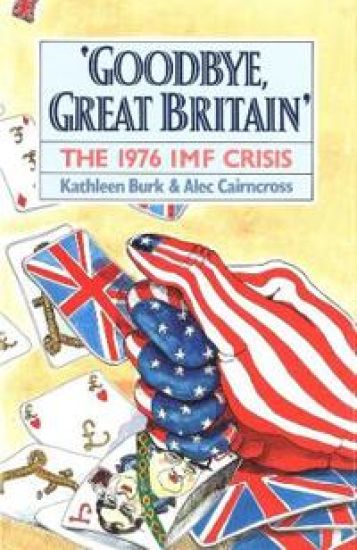
In this authoritative and gripping book—the first full account of the 1976 International Monetary Fund crisis—Kathleen Burk and Alec Cairncross peel back the surface of the most searing economic crisis of postwar Britain to reveal its historical roots and contemporary context. During the spring of 1976, the plummeting value of the British pound against the U. S. dollar triggered a traumatic economic and political crisis. International confidence in the pound collapsed; an article in the Wall Street Journal, headlined "Good-bye, Great Britain," urged investors to get out of sterling. Refused aid by the London and New York markets, the Labour Government under Prime Minister James Callaghan was forced to turn for help to the IMF—a highly unusual move for a developed Western economy. Fearing that the economic crisis would drive Britain into a left-wing siege economy which would endanger NATO and the EEC, the United States and Germany used the IMF loan as a means to force Britain to make major domestic policy changes; when the IMF mission arrived in London in November 1976, it was announced that the price for the loan included deep cuts in domestic spending. Burk and Cairncross uncover the maneuvers of the Labour Government to evade IMF conditions. They also examine underlying economic factors, the political agenda, the rise of monetarist ideas, and the Keynesian response. Juxtaposing narrative with analysis, they provide surprising answers to critical questions and reveal how the breakdown of the post-war consensus on the macroeconomic management paved the way for the triumph of Thatcherism.