Kirjojen hintavertailu – 12 859 829 kirjaa ja 27 kauppaa

Kirjailija

Alec Fisher

Kirjat ja teokset yhdessä paikassa: 10 kirjaa, julkaisuja vuosilta 2004–2020, suosituimpiin kuuluu Hodder GCSE History for Edexcel: Crime and punishment through time, c1000-present. Vertaile teosten hintoja ja tarkista saatavuus suomalaisista kirjakaupoista.

10 kirjaa

Kirjojen julkaisuvuodet: 2004–2020.

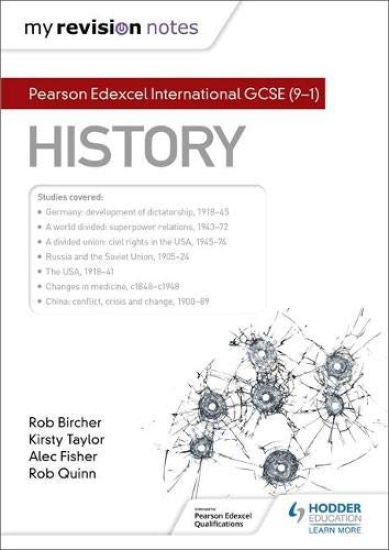
My Revision Notes: Pearson Edexcel International GCSE (9–1) History

My Revision Notes: Pearson Edexcel International GCSE (9–1) History

Alec Fisher; Rob Quinn; Rob Bircher; Kirsty Taylor

Hodder Education
2020
nidottu
Endorsed for Pearson Edexcel QualificationsExam board: Pearson EdexcelLevel: International GCSESubject: HistoryFirst teaching: September 2017First exams: Summer 2019Target success in Pearson Edexcel International GCSE (9-1) History with this proven formula for effective, structured revision. Key content coverage is combined with exam practice questions and practical tips to create a revision guide that students can rely on to review, strengthen and test their knowledge. With My Revision Notes every student can:- Plan and manage a successful revision programme using the topic-by-topic planner- Consolidate subject knowledge by working through clear and focused content coverage- Test understanding and identify areas for improvement with regular revision tasks- Improve exam technique through practice questions and tips- Learn and use key terms for each topicThis revision guide covers the following studies:- Germany: development of dictatorship, 1918-45- A world divided: superpower relations, 1943-72- A divided union: civil rights in the USA, 1945-74- Russia and the Soviet Union, 1905-24- The USA, 1918-41- Changes in medicine, c1848-c1948- China: conflict, crisis and change, 1900-89
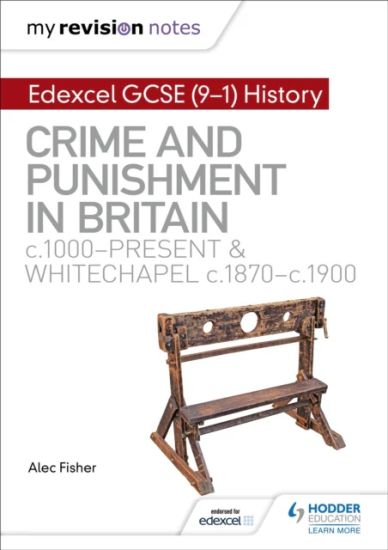
My Revision Notes: Edexcel GCSE (9-1) History: Crime and punishment in Britain, c1000-present and Whitechapel, c1870-c1900
Exam board: Pearson EdexcelLevel: GCSESubject: HistoryFirst teaching: September 2016First exams: Summer 2018Endorsed for EdexcelTarget success in Edexcel GCSE (9-1) History with this proven formula for effective, structured revision. Key content coverage is combined with exam-style questions, revision tasks and practical tips to create a revision guide that students can rely on to review, strengthen and test their knowledge. With My Revision Notes every student can:> Plan and manage a successful revision programme using the topic-by-topic planner> Enjoy an interactive approach to revision, with clear topic summaries that consolidate knowledge and related activities that put the content into context> Build, practise and enhance exam skills by progressing through activities set at different levels> Improve exam technique through exam-style questions and model answers with commentary from expert authors and teachers> Get exam ready with extra quick quizzes and answers to the activities available online
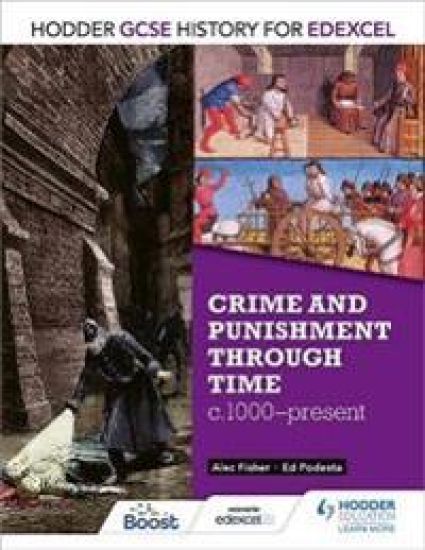
Hodder GCSE History for Edexcel: Crime and punishment through time, c1000-present
Endorsed for EdexcelExam board: Pearson EdexcelLevel: GCSESubject: HistoryFirst teaching: September 2016First exams: Summer 2018Enable students to achieve their full potential while ensuring pace, enjoyment and motivation with this popular series from the leading History publisher for secondary schools.> Blends in-depth coverage of topics with activities and strategies to help students to acquire, retain and revise core subject knowledge > Uses an exciting mix of clear narrative, visual stimulus materials and a rich collection of contemporary sources to capture students' interest> Helps students to maximise their grade potential and develop their exam skills through structured guidance on answering every question type successfully> Builds on our experience publishing popular GCSE History resources, providing you with accurate, authoritative content written by experienced teachers who understand the content and assessment requirementsCrime and punishment through time, c.1000-present covers both the thematic study 'Crime and punishment in Britain, c.1000-present' and the study of the historic environment 'Whitechapel, c.1870-c.1900: crime, policing and the inner city.'
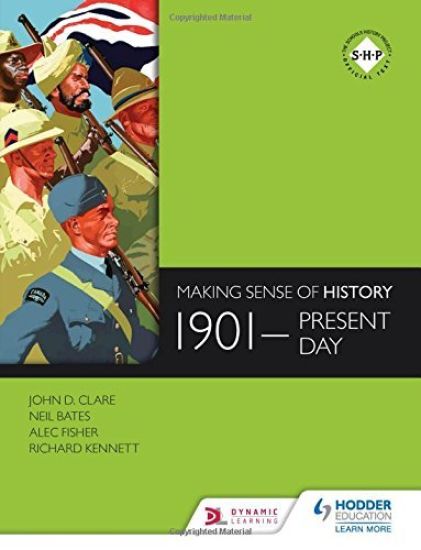
Making Sense of History: 1901-present day

Making Sense of History: 1901-present day

Neil Bates; Alec Fisher; John Clare; Richard Kennett

Hodder Education
2015
nidottu
Deliver engaging, enquiry-driven lessons and help pupils gain a coherent chronological understanding of and across periods studied with this complete offering for Key Stage 3 History. Designed for the 2014 National Curriculum this supportive learning package makes history fun and inspiring to learn. Making Sense of History consists of four Pupil's Books with accompanying Dynamic Learning Teaching and Learning resources. Structured around big picture overviews and in-depth enquiries on different topics, the course develops pupils understanding of history and their ability to ask and explore valid historical questions about the past.- Help pupils come to a sound chronological understanding of the past and identify the most significant events, connections and patterns of change and continuity with specifically tailored big pictures of the period and of the topics within it.- Develop pupils' enquiry skills and help them become motivated and curious to learn about the past with purposeful and engaging enquiries and a focus on individuals' lives.- Ensure pupils' progress in their historical thinking through clear and balanced targeted coverage of the main second order concepts in history.- Support and stretch your pupils with differentiated material, including writing frames to support literacy and ideas for more challenge provided in the Dynamic Learning Teaching and Learning Resources.- Make assessment become a meaningful and manageable process through bespoke mark schemes for individual pieces of work.
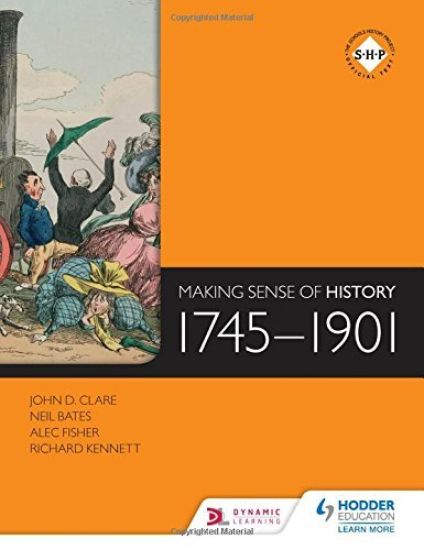
Making Sense of History: 1745-1901

Making Sense of History: 1745-1901

Neil Bates; Alec Fisher; John Clare; Richard Kennett

Hodder Education
2015
nidottu
Deliver engaging, enquiry-driven lessons and help pupils gain a coherent chronological understanding of and across periods studied with this complete offering for Key Stage 3 History. Designed for the 2014 National Curriculum this supportive learning package makes history fun and inspiring to learn. Making Sense of History consists of four Pupil's Books with accompanying Dynamic Learning Teaching and Learning resources. Structured around big picture overviews and in-depth enquiries on different topics, the course develops pupils understanding of history and their ability to ask and explore valid historical questions about the past.- Help pupils come to a sound chronological understanding of the past and identify the most significant events, connections and patterns of change and continuity with specifically tailored big pictures of the period and of the topics within it.- Develop pupils' enquiry skills and help them become motivated and curious to learn about the past with purposeful and engaging enquiries and a focus on individuals' lives.- Ensure pupils' progress in their historical thinking through clear and balanced targeted coverage of the main second order concepts in history.- Support and stretch your pupils with differentiated material, including writing frames to support literacy and ideas for more challenge provided in the Dynamic Learning Teaching and Learning Resources.- Make assessment become a meaningful and manageable process through bespoke mark schemes for individual pieces of work.
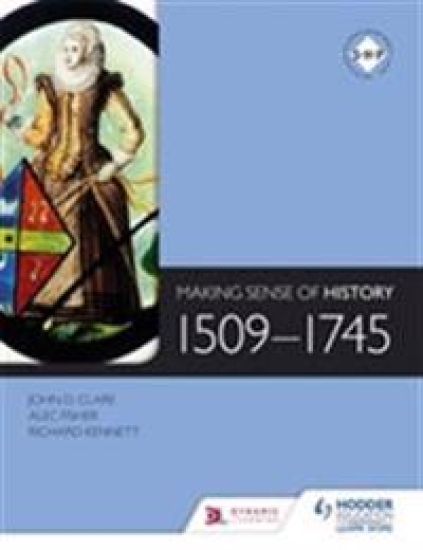
Making Sense of History: 1509-1745

Making Sense of History: 1509-1745

Alec Fisher; John Clare; Richard Kennett

Hodder Education
2014
nidottu
Deliver engaging, enquiry-driven lessons and help pupils gain a coherent chronological understanding of and across periods studied with this complete offering for Key Stage 3 History. Designed for the 2014 National Curriculum this supportive learning package makes history fun and inspiring to learn. Making Sense of History consists of four Pupil's Books with accompanying Dynamic Learning Teaching and Learning resources. Structured around big picture overviews and in-depth enquiries on different topics, the course develops pupils understanding of history and their ability to ask and explore valid historical questions about the past.- Help pupils come to a sound chronological understanding of the past and identify the most significant events, connections and patterns of change and continuity with specifically tailored big pictures of the period and of the topics within it.- Develop pupils' enquiry skills and help them become motivated and curious to learn about the past with purposeful and engaging enquiries and a focus on individuals' lives.- Ensure pupils' progress in their historical thinking through clear and balanced targeted coverage of the main second order concepts in history.- Support and stretch your pupils with differentiated material, including writing frames to support literacy and ideas for more challenge provided in the Dynamic Learning Teaching and Learning Resources.- Make assessment become a meaningful and manageable process through bespoke mark schemes for individual pieces of work.
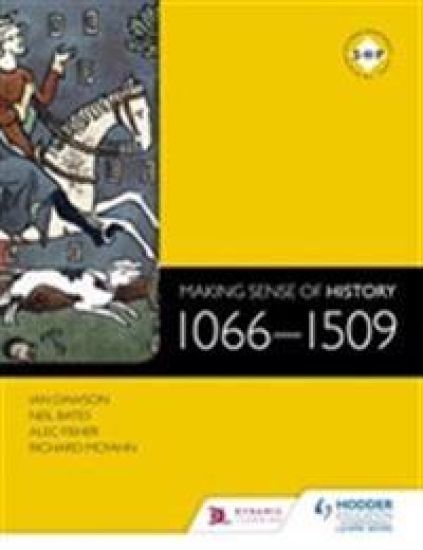
Making Sense of History: 1066-1509

Making Sense of History: 1066-1509

Ian Dawson; Richard McFahn; Neil Bates; Alec Fisher

Hodder Education
2014
nidottu
Deliver engaging, enquiry-driven lessons and help pupils gain a coherent chronological understanding of and across periods studied with this complete offering for Key Stage 3 History. Designed for the 2014 National Curriculum this supportive learning package makes history fun and inspiring to learn. Making Sense of History consists of four Pupil's Books with accompanying Dynamic Learning Teaching and Learning resources. Structured around big picture overviews and in-depth enquiries on different topics, the course develops pupils understanding of history and their ability to ask and explore valid historical questions about the past.- Help pupils come to a sound chronological understanding of the past and identify the most significant events, connections and patterns of change and continuity with specifically tailored big pictures of the period and of the topics within it.- Develop pupils' enquiry skills and help them become motivated and curious to learn about the past with purposeful and engaging enquiries and a focus on individuals' lives.- Ensure pupils' progress in their historical thinking through clear and balanced targeted coverage of the main second order concepts in history.- Support and stretch your pupils with differentiated material, including writing frames to support literacy and ideas for more challenge provided in the Dynamic Learning Teaching and Learning Resources.- Make assessment become a meaningful and manageable process through bespoke mark schemes for individual pieces of work.
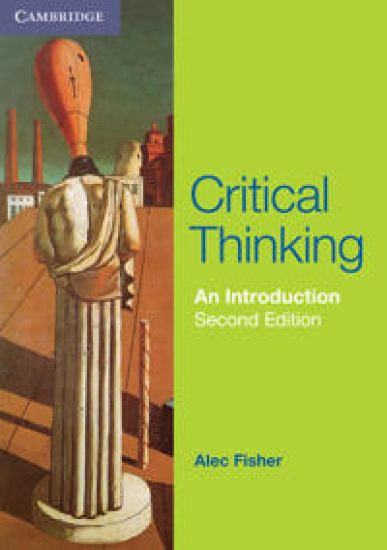
Critical Thinking

Critical Thinking

Alec Fisher

Cambridge University Press
2011
pokkari

Halvin toimitettuna 36,90 €

This second edition has been extensively revised with updated examples and a brand new chapter on how to obtain reliable information from the internet. Studying critical thinking involves trying to change the ways in which most of us think. In this second edition of the popular 'Critical Thinking: An Introduction', Alec Fisher concentrates on developing critical thinking skills explicitly and directly. His aim is to teach the ability to interpret, analyse and evaluate ideas and arguments and to show how these skills can be transferred to other studies and everyday life. A new chapter covers getting reliable information from the internet and examples and passages have been replaced by completely new material. The book is also suitable for the independent learner.
The Logic of Real Arguments

The Logic of Real Arguments

Alec Fisher

Cambridge University Press
2004
pokkari
This new and expanded edition of The Logic of Real Arguments explains a distinctive method for analysing and evaluating arguments. It discusses many examples, ranging from newspaper articles to extracts from classic texts, and from easy passages to much more difficult ones. It shows students how to use the question ‘What argument or evidence would justify me in believing P?’, and also how to deal with suppositional arguments beginning with the phrase ‘Suppose that X were the case.’ It aims to help students to think critically about the kind of sustained, theoretical arguments which they commonly encounter in the course of their studies, including arguments about the natural world, about society, about policy, and about philosophy. It will be valuable for students and their teachers in a wide range of disciplines including philosophy, law and the social sciences.
The Logic of Real Arguments

The Logic of Real Arguments

Alec Fisher

Cambridge University Press
2004
sidottu
This new and expanded edition of The Logic of Real Arguments explains a distinctive method for analysing and evaluating arguments. It discusses many examples, ranging from newspaper articles to extracts from classic texts, and from easy passages to much more difficult ones. It shows students how to use the question 'What argument or evidence would justify me in believing P?', and also how to deal with suppositional arguments beginning with the phrase 'Suppose that X were the case.' It aims to help students to think critically about the kind of sustained, theoretical arguments which they commonly encounter in the course of their studies, including arguments about the natural world, about society, about policy, and about philosophy. It will be valuable for students and their teachers in a wide range of disciplines including philosophy, law and the social sciences.