
Kirjojen hintavertailu – 12 859 824 kirjaa ja 27 kauppaa

Kirjailija

Alejandro Baer

Kirjat ja teokset yhdessä paikassa: 2 kirjaa, julkaisuja vuosilta 2016–2019, suosituimpiin kuuluu Memory and Forgetting in the Post-Holocaust Era. Vertaile teosten hintoja ja tarkista saatavuus suomalaisista kirjakaupoista.

2 kirjaa

Kirjojen julkaisuvuodet: 2016–2019.

Memory and Forgetting in the Post-Holocaust Era

Memory and Forgetting in the Post-Holocaust Era

Alejandro Baer; Natan Sznaider

Routledge
2019
nidottu
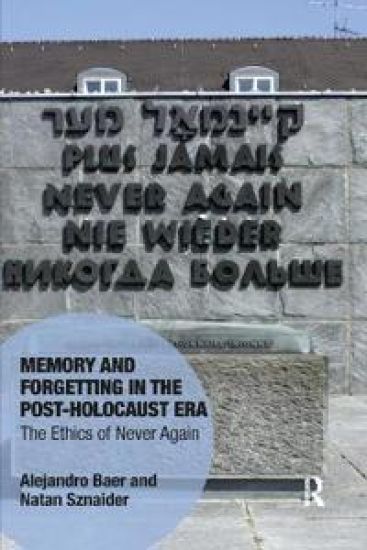
To forget after Auschwitz is considered barbaric. Baer and Sznaider question this assumption not only in regard to the Holocaust but to other political crimes as well. The duties of memory surrounding the Holocaust have spread around the globe and interacted with other narratives of victimization that demand equal treatment. Are there crimes that must be forgotten and others that should be remembered? In this book the authors examine the effects of a globalized Holocaust culture on the ways in which individuals and groups understand the moral and political significance of their respective histories of extreme political violence. Do such transnational memories facilitate or hamper the task of coming to terms with and overcoming divisive pasts? Taking Argentina, Spain and a number of sites in post-communist Europe as test cases, this book illustrates the transformation from a nationally oriented ethics to a trans-national one. The authors look at media, scholarly discourse, NGOs dealing with human rights and memory, museums and memorial sites, and examine how a new generation of memory activists revisits the past to construct a new future. Baer and Sznaider follow these attempts to manoeuvre between the duties of remembrance and the benefits of forgetting. This, the authors argue, is the "ethics of Never Again."

Memory and Forgetting in the Post-Holocaust Era

Memory and Forgetting in the Post-Holocaust Era

Alejandro Baer; Natan Sznaider

Routledge
2016
sidottu
To forget after Auschwitz is considered barbaric. Baer and Sznaider question this assumption not only in regard to the Holocaust but to other political crimes as well. The duties of memory surrounding the Holocaust have spread around the globe and interacted with other narratives of victimization that demand equal treatment. Are there crimes that must be forgotten and others that should be remembered? In this book the authors examine the effects of a globalized Holocaust culture on the ways in which individuals and groups understand the moral and political significance of their respective histories of extreme political violence. Do such transnational memories facilitate or hamper the task of coming to terms with and overcoming divisive pasts? Taking Argentina, Spain and a number of sites in post-communist Europe as test cases, this book illustrates the transformation from a nationally oriented ethics to a trans-national one. The authors look at media, scholarly discourse, NGOs dealing with human rights and memory, museums and memorial sites, and examine how a new generation of memory activists revisits the past to construct a new future. Baer and Sznaider follow these attempts to manoeuvre between the duties of remembrance and the benefits of forgetting. This, the authors argue, is the "ethics of Never Again."