Kirjailija
Alessandra Comini
Kirjat ja teokset yhdessä paikassa: 40 kirjaa, julkaisuja vuosilta 1980–2025, suosituimpiin kuuluu The Letters and Journals of Paula Modersohn-Becker. Vertaile teosten hintoja ja tarkista saatavuus suomalaisista kirjakaupoista.
40 kirjaa
Kirjojen julkaisuvuodet: 1980–2025.
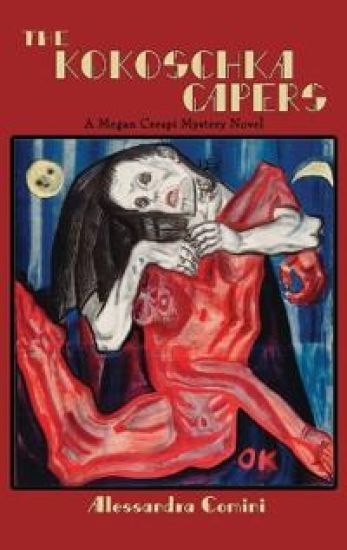
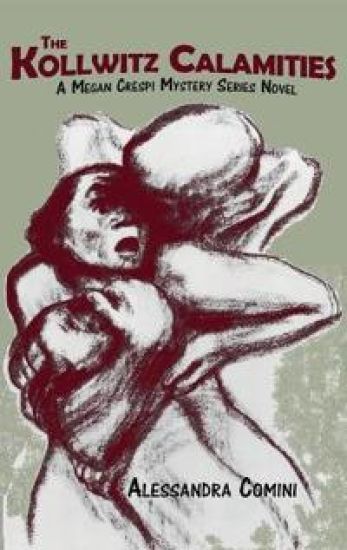
Two monumental granite statues by famed German artist K the Kollwitz--the Grieving Parents--have been stolen from a World War I soldiers' cemetery in Belgium. What could the motive have been for such an unlikely theft? On a visit to the director of the Kollwitz Museum in Cologne, retired art history professor and Kollwitz scholar Megan Crespi is asked to aid in tracking down the robber or robbers. As she pursues clues and visits possible suspects more Kollwitz statues are stolen in Cologne and Berlin. Crespi's itinerary takes her to the Berlin Kollwitz Museum, Weimar, the Baltic Sea island of R gen, Greifswald, and finally to the Kollwitz House in Moritzburg. On the way she interacts with physicians Abraham R ckgabe and Iliana Frankel, the just-married couple Monika von Putbus and Akram al-Aljamie, and unscrupulous CEO of R gen's asbestos-contaminated Dorotek factory, Reinhold Fromm, collector of dominatrix drawings. We meet possible suspects, Iranian prince Yusri Pahlavi, greedy Lukas Zamann of the Galerie Zamann, and the mysterious "Marie Schmidt," of Moritzburg, Kollwitz's final home. All seem to be connected to the spate of Kollwitz thefts. Can Crespi solve these thefts and will the precious artworks be found? An unexpected denouement involving seven persons and two cats gives us the answer.
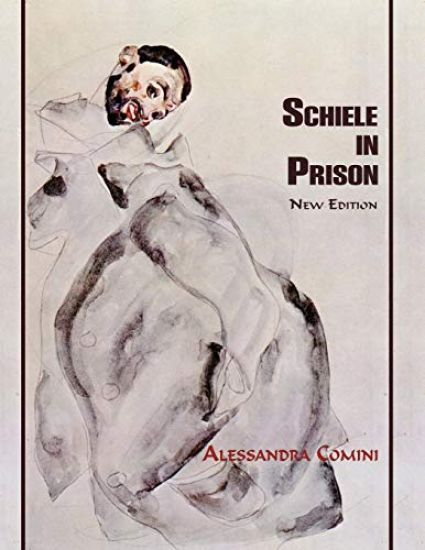
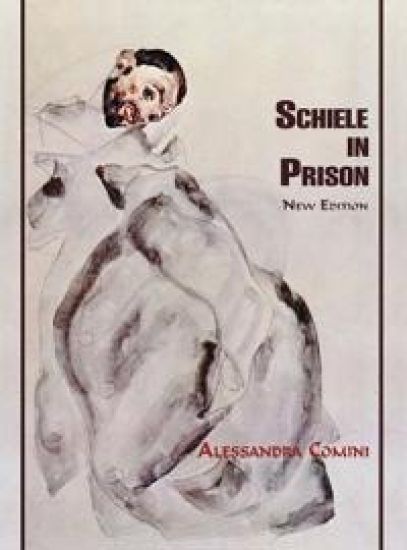
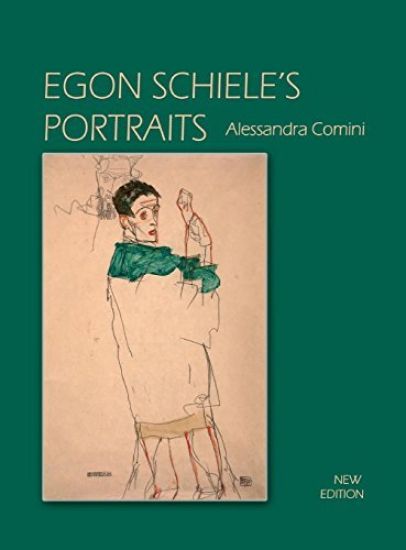
In April of 1912, twenty-one-year old Austrian artist Egon Schiele (1890-1918), known for his frank depictions of erotica as well as his Expressionist portraits, was arrested and imprisoned in a basement cell in the rural town of Neulengbach, some twenty miles from Vienna. There he made agonized diary entries and created twelve drawings of his dank surroundings. Half a century later, in August of 1963, as an enterprising PhD student from Texas in search of all sites and persons having to do with Schiele, the author of this book did what no previous scholar had yet done. She located and photographed the forgotten cellar and cell in which Schiele had been unjustly incarcerated. This book presents an English translation of the artist's extraordinary prison diary, a biographical chronology, and two essays, one concerning Schiele's cultural context, and the other, an enlightening analysis of the pungent artworks created in prison.
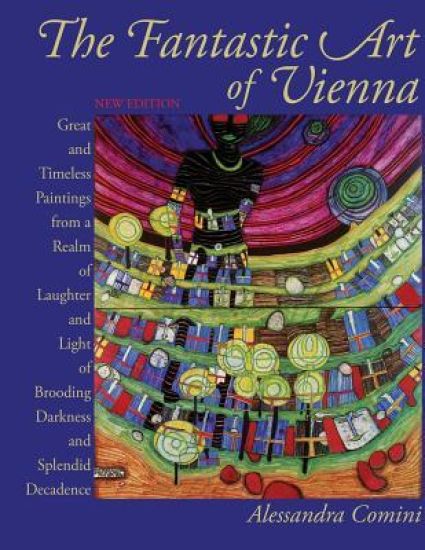
Art, music, literature, and science in Vienna at the turn of the last century presented a series of wrenching dualities: reality and illusion, sexuality and death, the external world and the internal self. Celebrated art historian Alessandra Comini explores in a lively, authoritative text the demonic origins of the 1000-year-old Habsburg Empire, easternmost outpost of Christendom against the dreaded Ottoman Turks. Escape from death encouraged a flight from reality and a predilection for the fantastic. Strauss waltzes inspired a collective escapism while a conquering Napoleon entered the city--twice. Vienna's fantastic heritage inspired composer Arnold Sch nberg, author Hugo von Hofmannsthal, physician Sigmund Freud and invigorated the work of Franz Xaver Messerschmidt, Anton Romako, Gustav Klimt, Alfred Kubin, Egon Schiele, Oskar Kokoschka, and the Fantastic Realism of Arnulf Rainer and Friedrich Hundertwasser.
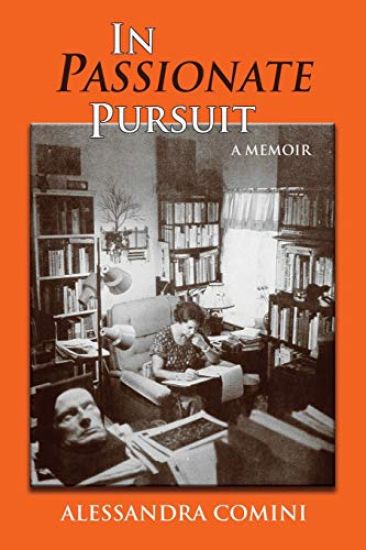
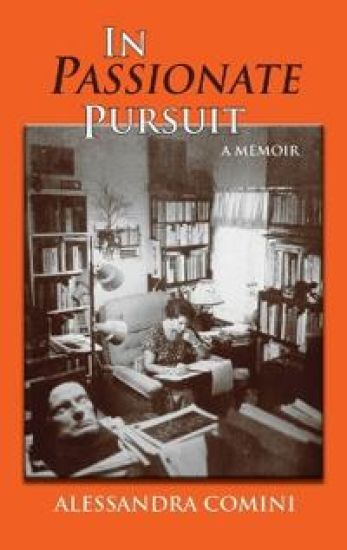
Overflowing with passion for her work as a scholar and teacher, Alessandra Comini reminisces and romps through six decades as an unconventional art historian in this illustrated memoir. The author of award-winning books on Egon Schiele, Gustav Klimt, and Ludwig van Beethoven, Comini draws on her lifelong daily journals and shares uniquely personal research-related anecdotes as she reflects on the formation and flowering of her distinguished career. Beginning with her own colorful background as a refugee from Franco's Spain, then Mussolini's Italy, she describes her music-loving family's sometimes humorous, sometimes painful, adjustment to World War II Texas. Her fortuitous experiences at Interlochen's National Music camp, Barnard College, Berkeley, and Columbia University led to what would ultimately be a turning point in both her life as well as in Schiele scholarship: the discovery, half a century after Schiele's incarceration in a provincial Austrian jail, of the actual cell in which he had been imprisoned. Throughout this book, Comini invites readers to join her in the same zestful pursuit of cultural history that has repeatedly earned her the honor of being voted "outstanding professor, " first by her students at Columbia University in the 1960s and 1970s, then later at Southern Methodist University in Dallas. Focusing on three major areas--nineteenth-and twentieth-century art ranging from Spain to Finland, revisionist work in the history of women artists past and present, and musical iconography--Comini's research and quests take the reader around the world and back. From the islands of Corfu, Corsica, and Madeira to Martinique, Rugen, and Tahiti, and from the cities of Lisbon,Istanbul, Barcelona, Rome, and Athens to Paris, Copenhagen, Oslo, Helsinki, and St. Petersburg, Comini pursues such diverse and distinctive personalities as Rosa Bonheur, Edvard Munch, Gustav Klimt, Vaslav Nijinsky, Egon Schiele, Isadora Duncan, Schopenhauer, and Kathe Kollwitz. For those who wonder what academics do besides teach and publish, Alessandra Comini's joyous, and occasionally heart-wrenching, memoir will inspire readers with its sincere and compelling account of an extraordinary life and career still passionately in progress.
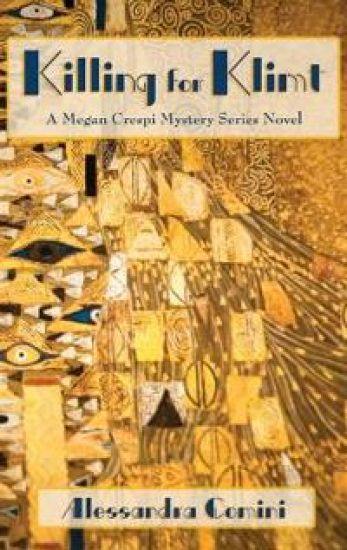
Overflowing with passion for her work as a scholar and teacher, Distinguished Professor of Art History Emerita at Southern Methodist University in Dallas, Texas, Alessandra Comini reminisces through six decades as an unconventional art historian in this illustrated memoir. The author of award-winning books on Egon Schiele, Gustav Klimt, and Ludwig van Beethoven, Comini draws on her sixty years of daily journals, sharing research-related anecdotes as she reflects on the formation and flowering of her distinguished career. Beginning with her colorful background as a refugee from Franco's Spain, then Mussolini's Italy, she describes her music-loving family's sometimes humorous, sometimes painful adjustment to a World War II Texas. A series of fortuitous experiences at Interlochen's National Music Camp, Barnard College, the University of California at Berkeley, and Columbia University later leads to what would ultimately be a turning point in her life as well as in Schiele scholarship. She discovered the actual cell in which Schiele had been imprisoned in a provincial Austrian jail half a century earlier. Comini invites readers to join her in the same zestful and persistent pursuit of cultural history that has repeatedly earned her the honor of being voted "outstanding" professor, by her students at Columbia University and later at Southern Methodist University in Dallas. Her research and quests take the reader around the world and back. From the islands of Corfu, Madeira, R gen, and Tahiti to the cities of Lisbon, Rome, Oslo, and St. Petersburg, Comini pursues such diverse and distinctive personalities as Rosa Bonheur, Gustav and Alma Mahler, Pablo Picasso, Eleonora Duse, Edvard Munch, K the Kollwitz, Vaslav Nijinski, and Egon Schiele. Alessandra Comini's memoir will inspire readers with its sincere and compelling account of an extraordinary life and career still passionately in progress. Retirement for her has meant discovering a joyful new profession: writing art history murder mystery novels that take her eighty-year-old pseudonymous heroine Megan Crespi from the top of Europe down to Antarctica in pursuit of murderous purloiners of artworks by Klimt, Schiele, Kokoschka, Munch, and Kollwitz.
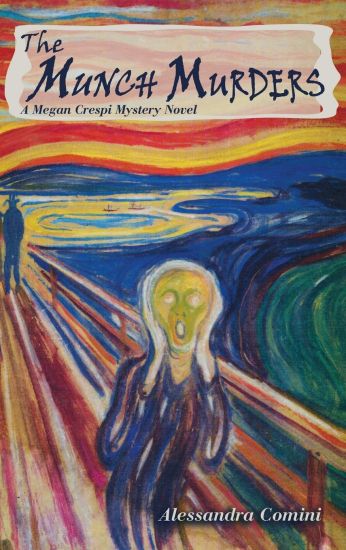
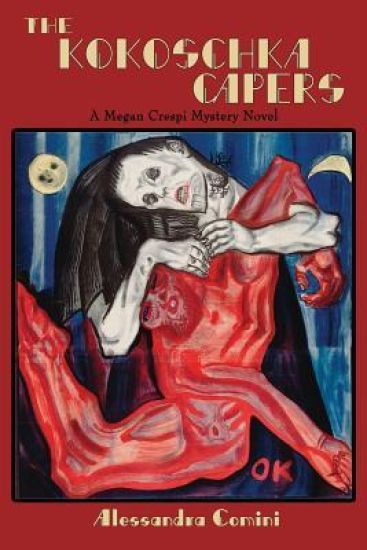
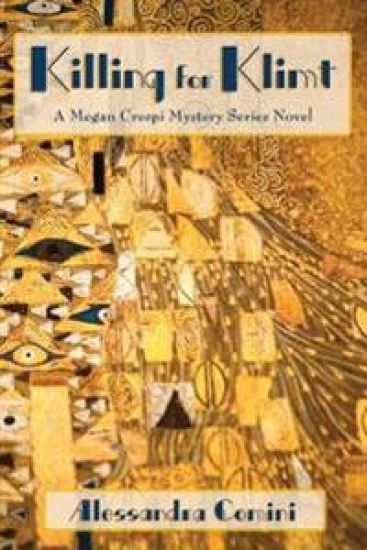
In this third book in the Megan Crespi Mystery Series, a major double portrait by the Viennese Expressionist artist Oskar Kokoschka showing himself with his lover Alma Mahler has been stolen from the Basel Museum in Switzerland. Left in its place is an exact duplicate, except that Alma has been replaced by an unknown woman. Retired professor of art history Megan Crespi, an expert on Viennese art, is called in to help with the investigation. Then, a second theft of fourteen crates of unknown Kokoschka artworks from a Viennese storage vault takes Megan to Vienna. There she meets by accident the mysterious multimillionaire Desdemona Dumba. A stunning anorexic, Desdemona feels it is her role in life to bring Kokoschka's lost works together and away from public scrutiny. Meanwhile, two individuals, Leo Lang and Bruno Fichte-Mahler, harbor fanatical interest in Kokoschka and go to extreme measures either to desecrate or to protect the artist's images of Alma. An endangered Megan pursues leads that take her from Basel and Vienna to Berlin and finally to Xenia, Desdemona's remote islet off the Greek island of Corfu. Includes Readers Guide. Distinguished Professor of Art History Emerita at Southern Methodist University in Dallas, Texas, ALESSANDRA COMINI was awarded Austria's Grand Medal of Honor for her books on Viennese artists Egon Schiele and Gustav Klimt. Her "Egon Schiele's Portraits" was nominated for the National Book Award and her "The Changing Image of Beethoven" is used in classrooms around the country. Both in new editions are now available from Sunstone Press. Comini's travels, recorded in her memoir, "In Passionate Pursuit," extend from Europe to Antarctica and are reflected in her second mystery novel in the Megan Crespi Mystery Series, "The Schiele Slaughters." It, and the first in the series, "Killing for Klimt," were also published by Sunstone Press.
Retired art history professor Megan Crespi, an expert on the Expressionist artist Egon Schiele, is called to Vienna to help solve the brutal murder of a museum night watchman whose naked cadaver was propped up in the same pose as the nude self-portrait by Schiele above him. A series of attacks relating to Schiele occur, ranging from "censoring" of his nude figures' private parts with spray paint to desecration of his burial site. Amid restitution lawsuits and murderous competing gallery owners, Megan's investigations are endangered by the fanatical Grand Master of a secret sect dedicated to the obliteration of obscenity. Her own life in danger, the twisting Schiele trail leaves multiple corpses in its wake and leads Megan from conniving Vienna to remote Kaliningrad in Russia, to ancient Krumau in Bohemia, and bustling Milan in Italy as she hunts for a possible hidden trove of major Schiele paintings. What she discovers is undreamt of and leaves the Schiele world stunned and covetous. Includes Readers Guide.
The Letters and Journals of Paula Modersohn-Becker
Diane J. Radycki; Alessandra Comini; Adrienne Rich; Lilly Engler
Scarecrow Press
1980
sidottu
These rare documents chronicle the developing persona of the young woman Expressionist painter at the turn of the century, struggling to resolve the conflict between what she demanded of herself as an artist and what society expected of her as a married woman. Radycki provides an intriguing guide to the art capitals of Berlin, London, and Paris through the eyes of a woman studying art there and through contemporary sources that describe the artistic milieu and the status of women in 1900. We view the changing relationships between Becker and her friends, the poet Rainer Maria Rilke, Clara Westhoff (the sculptor who married Rilke), and her husband, the painter Otto Modersohn. The letters begin when Becker is in art school and end within a month of her tragic death in 1907 at age thirty-one. The epilogue includes Rilke's intense "Requiem" of 1908, translated by Lilly Engler and Adrienne Rich and never before published and Rich's own moving "Paula Becker to Clara Westhoff."