

Kirjailija
Alessandro Rizzo
Kirjat ja teokset yhdessä paikassa: 4 kirjaa, julkaisuja vuosilta 2006–2025, suosituimpiin kuuluu HolographiX. Vertaile teosten hintoja ja tarkista saatavuus suomalaisista kirjakaupoista.
4 kirjaa
Kirjojen julkaisuvuodet: 2006–2025.
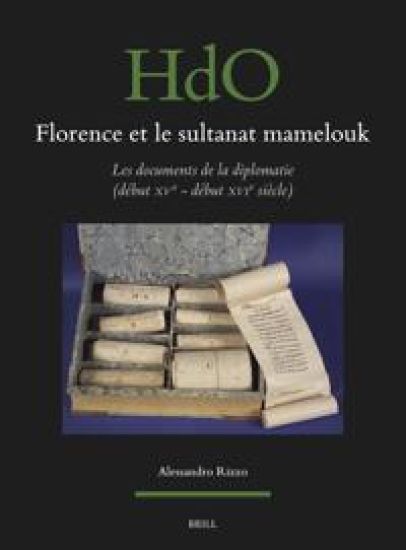
Florence et le sultanat mamelouk: les documents de la diplomatie (début XVe - début XVIe siècle)
Alessandro Rizzo
BRILL
2023
sidottu
Cet ouvrage présente l’édition, la traduction en français et l’analyse de tous les documents de chancellerie (en arabe, latin et italien) concernant les relations établies entre Florence et le sultanat mamelouk entre 1422 et 1510. Prenant en compte les recherches accomplies au cours des dernières décennies dans le domaine des études diplomatiques, ce travail corrige plusieurs erreurs et inexactitudes contenues dans les précédentes éditions de ces sources et contient quelques documents inédits. Une introduction aborde le cadre historique des relations diplomatiques et examine les caractéristiques des sources. Un riche ensemble de notes explicatives et un glossaire analysent leur contenu. Les sources publiées dans ce volume constituent le témoignage historique disponible pour tracer le cadre des échanges diplomatiques entretenus par la Ville du Lys et Le Caire mamelouk. This book offers the edition, translation into French and analysis of all the chancery documents (in Arabic, Latin and Italian) concerning the relations established between Florence and the Mamluk sultanate between 1422 and 1510. Taking into consideration the achievements made in recent decades in the field of Mamluk diplomatics, this work corrects several errors and inaccuracies contained in previous editions as well as presents some unpublished documents. An introduction addresses the historical framework of diplomatic relations and examines the characteristics of the sources. A rich body of explanatory notes and a glossary analyze their content. The sources published in this volume constitute the historical testimony available for outlining the framework of the diplomatic exchanges maintained by the City of the Lily and Mamluk Cairo.
Soft Sensors for Monitoring and Control of Industrial Processes
Luigi Fortuna; Salvatore Graziani; Alessandro Rizzo; Maria Gabriella Xibilia
Springer London Ltd
2010
nidottu
focussed on the key steps in soft sensor design: data selection; model structure selection and model validation, respectively. Extensions to the basic steps of soft sensor design, namely soft sensor performance enhancement and the modifications needed to facilitate different industrial process applications follow in Chapter 7 and 8, respectively. Widening the applications range and role of soft sensors to fault detection and sensor validation configurations is dealt with in Chapter 9. A great strength of Soft Sensors for Monitoring and Control of Industrial Processes is the use, throughout the text, of a set of industrial case studies to demonstrate the successes and drawbacks of the different methods used to create soft sensor models. A number of different methods may be used in each separate step of the soft sensor design process and the industrial case studies are often used to provide explicit comparisons of the performance of these methods. The industrial control and process engineer will find these comparison exercises invaluable illustrations of the sort of results that might be found in industrial applications. The monograph also highlights the importance of using knowledge from industrial experts and from the existing industrial process literature. This is an important aspect of industrial control that is not very widely acknowledged or taught in control courses. Most industrial processes have already generated a significant experimental knowledge base and the control engineer should develop ways of tapping into this valuable resource when designing industrial control schemes.
Soft Sensors for Monitoring and Control of Industrial Processes
Luigi Fortuna; Salvatore Graziani; Alessandro Rizzo; Maria Gabriella Xibilia
Springer London Ltd
2006
sidottu
focussed on the key steps in soft sensor design: data selection; model structure selection and model validation, respectively. Extensions to the basic steps of soft sensor design, namely soft sensor performance enhancement and the modifications needed to facilitate different industrial process applications follow in Chapter 7 and 8, respectively. Widening the applications range and role of soft sensors to fault detection and sensor validation configurations is dealt with in Chapter 9. A great strength of Soft Sensors for Monitoring and Control of Industrial Processes is the use, throughout the text, of a set of industrial case studies to demonstrate the successes and drawbacks of the different methods used to create soft sensor models. A number of different methods may be used in each separate step of the soft sensor design process and the industrial case studies are often used to provide explicit comparisons of the performance of these methods. The industrial control and process engineer will find these comparison exercises invaluable illustrations of the sort of results that might be found in industrial applications. The monograph also highlights the importance of using knowledge from industrial experts and from the existing industrial process literature. This is an important aspect of industrial control that is not very widely acknowledged or taught in control courses. Most industrial processes have already generated a significant experimental knowledge base and the control engineer should develop ways of tapping into this valuable resource when designing industrial control schemes.