Kirjojen hintavertailu – 12 859 818 kirjaa ja 27 kauppaa

Kirjailija

Alex Callinicos

Kirjat ja teokset yhdessä paikassa: 28 kirjaa, julkaisuja vuosilta 1989–2023, suosituimpiin kuuluu Making History: Agency, Structure, And Change In Social Theory. Vertaile teosten hintoja ja tarkista saatavuus suomalaisista kirjakaupoista.

28 kirjaa

Kirjojen julkaisuvuodet: 1989–2023.

The New Age of Catastrophe

The New Age of Catastrophe

Alex Callinicos

JOHN WILEY AND SONS LTD
2023
nidottu
The world is entering a new age of catastrophe. The exceptional is becoming normal. The last such crisis, between 1914 and 1945, witnessed two world wars, the Great Depression, and the Holocaust. Now humankind faces fresh existential threats – the COVID-19 pandemic, wildfires, floods and other extreme weather events caused by accelerating climate change, and the danger of nuclear war in the wake of Russia's invasion of Ukraine. These threats, argues Alex Callinicos, have their common source in a multidimensional crisis of the capitalist system, which is hitting the buffers, hurling us towards societal collapse. It embraces the increasing destruction of nature and the degradation of labour, a world economy stagnant since the global financial crisis, and escalating inter-imperialist conflicts between the United States, China, and Russia. So far, the main political beneficiary has been the far right, which may capture the White House again. But the new age of catastrophe is also an age of revolt. Following on from Black Lives Matter, the #MeToo protests, and the revolts in Sudan, Sri Lanka, and Iran, multiple faultlines in the system will provoke still more mass movements that can challenge myriad forms of oppression and open the way to a just and sustainable world.
The New Age of Catastrophe

The New Age of Catastrophe

Alex Callinicos

JOHN WILEY AND SONS LTD
2023
sidottu
The world is entering a new age of catastrophe. The exceptional is becoming normal. The last such crisis, between 1914 and 1945, witnessed two world wars, the Great Depression, and the Holocaust. Now humankind faces fresh existential threats – the COVID-19 pandemic, wildfires, floods and other extreme weather events caused by accelerating climate change, and the danger of nuclear war in the wake of Russia's invasion of Ukraine. These threats, argues Alex Callinicos, have their common source in a multidimensional crisis of the capitalist system, which is hitting the buffers, hurling us towards societal collapse. It embraces the increasing destruction of nature and the degradation of labour, a world economy stagnant since the global financial crisis, and escalating inter-imperialist conflicts between the United States, China, and Russia. So far, the main political beneficiary has been the far right, which may capture the White House again. But the new age of catastrophe is also an age of revolt. Following on from Black Lives Matter, the #MeToo protests, and the revolts in Sudan, Sri Lanka, and Iran, multiple faultlines in the system will provoke still more mass movements that can challenge myriad forms of oppression and open the way to a just and sustainable world.
The Revolutionary Ideas of Karl Marx

The Revolutionary Ideas of Karl Marx

Alex Callinicos

Haymarket Books
2012
pokkari
Few thinkers have been declared irrelevant and out of date with such frequency as Karl Marx. Hardly a decade since his death has gone by in which establishment critics have not announced the death of his theory. Whole forests have been felled to produce the paper necessary to fuel this effort to marginalize the coauthor of The Communist Manifesto. And yet, despite their best efforts to bury him again and again, Marx’s specter continues to haunt his detractors more than a century after his passing. As another international economic collapse pushes ever growing numbers out of work, and a renewed wave of popular revolt sweeps across the globe, a new generation is learning to ignore all the taboos and scorn piled upon Marx’s ideas and rediscovering that the problems he addressed in his time are remarkably similar to those of our own. In this engaging and accessible introduction, Alex Callinicos demonstrates that Marx’s ideas hold an enduring relevance for today’s activists fighting against poverty, inequality, oppression, environmental destruction, and the numerous other injustices of the capitalist system.
Bonfire of Illusions

Bonfire of Illusions

Alex Callinicos

Polity Press
2010
sidottu
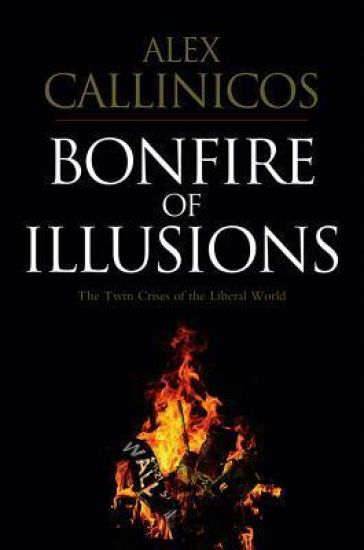
Something dramatic happened in the late summer and autumn of 2008. The post-Cold War world came to an abrupt end. This was the result of two conjoined crises. First, in its brief war with Georgia in August 2008, Russia asserted its military power to halt the expansion of NATO to its very borders. Secondly, on 15 September 2008 the Wall Street investment bank Lehman Brothers collapsed. This precipitated a severe financial crash and helped to push the world economy into the worst slump since the 1930s. Both crises marked a severe setback for the global power of the United States, which had driven NATO expansion and forced through the liberalization of financial markets. More broadly they challenged the consensus that had reigned since the collapse of the Soviet bloc in 1989 that a US-orchestrated liberal capitalist order could offer the world peace and prosperity. Already badly damaged by the Iraq debacle, this consensus has now suffered potentially fatal blows. In Bonfire of Illusions Alex Callinicos explores these twin crises. He traces the credit crunch that developed in 2007-8 to a much more protracted crisis of overaccumulation and profitability that has gripped global capitalism since the late 1960s. He also confronts the interaction between economic and geopolitical events, highlighting the new assertiveness of nation-states and analysing the tense, complex relationship of interdependence and conflict that binds together the US and China. Finally, in response to the revelation that the market is not the solution to the world's problems, Callinicos reviews the prospects for alternatives to capitalism.
Bonfire of Illusions

Bonfire of Illusions

Alex Callinicos

Polity Press
2010
nidottu
Something dramatic happened in the late summer and autumn of 2008. The post-Cold War world came to an abrupt end. This was the result of two conjoined crises. First, in its brief war with Georgia in August 2008, Russia asserted its military power to halt the expansion of NATO to its very borders. Secondly, on 15 September 2008 the Wall Street investment bank Lehman Brothers collapsed. This precipitated a severe financial crash and helped to push the world economy into the worst slump since the 1930s. Both crises marked a severe setback for the global power of the United States, which had driven NATO expansion and forced through the liberalization of financial markets. More broadly they challenged the consensus that had reigned since the collapse of the Soviet bloc in 1989 that a US-orchestrated liberal capitalist order could offer the world peace and prosperity. Already badly damaged by the Iraq debacle, this consensus has now suffered potentially fatal blows. In Bonfire of Illusions Alex Callinicos explores these twin crises. He traces the credit crunch that developed in 2007-8 to a much more protracted crisis of overaccumulation and profitability that has gripped global capitalism since the late 1960s. He also confronts the interaction between economic and geopolitical events, highlighting the new assertiveness of nation-states and analysing the tense, complex relationship of interdependence and conflict that binds together the US and China. Finally, in response to the revelation that the market is not the solution to the world's problems, Callinicos reviews the prospects for alternatives to capitalism.
Making History: Agency, Structure, And Change In Social Theory
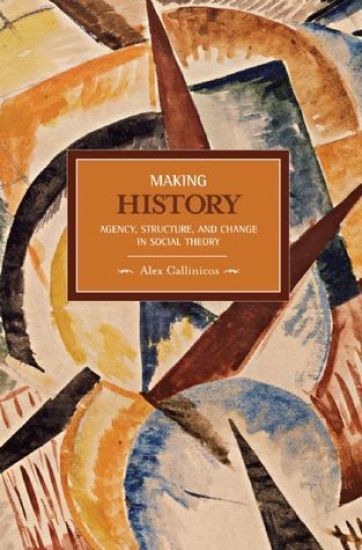
Making History is about the question - central to social theory - of how human agents draw their powers from the social structures they are involved in. Drawing on classical Marxism, analytical philosophy, and a wide range of historical writing, Alex Callinicos seeks to avoid two unacceptable extremes: dissolving the subject into an impersonal flux, as poststructuralists tend to; and treating social structures as the mere effects of individual action (for example, rational-choice theory). Among those discussed are Althusser, Anderson, Benjamin, Brenner, Cohen, Elster, Foucault, Giddens, Habermas, and Mann. Callinicos has written an extended introduction to this new edition that reviews developments since Making History was first published in 1987. This republication gives a new generation of readers access to an important intervention in Marxism and social theory. Alex Callinicos, D. Phil. (1979) in Philosophy, University of Oxford, is Professor of Politics at the University of York (UK). He has written widely about Marxism and social theory. His most recent books are Social Theory (1999), Equality (2000), Against the Third Way (2001) and An Anti-Capitalist Manifesto (2003), all published by Polity.
Imperialism and Global Political Economy

Imperialism and Global Political Economy

Alex Callinicos

Polity Press
2009
nidottu

Halvin toimitettuna 30,90 €

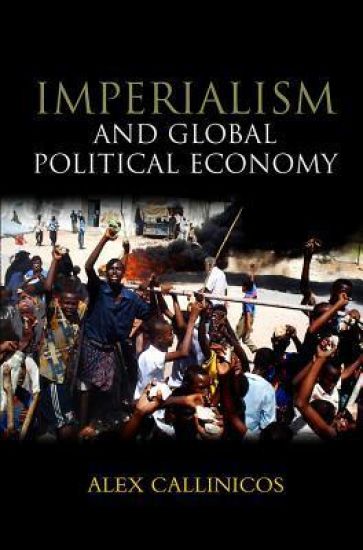
In Imperialism and Global Political Economy Alex Callinicos intervenes in one of the main political and intellectual debates of the day. The global policies of the United States in the past decade have encouraged the widespread belief that we live in a new era of imperialism. But is this belief true, and what does ‘imperialism’ mean? Callinicos explores these questions in this wide-ranging book. In the first part, he critically assesses the classical theories of imperialism developed in the era of the First World War by Marxists such as Lenin, Luxemburg, and Bukharin and by the Liberal economist J. A. Hobson. He then outlines a theory of the relationship between capitalism as an economic system and the international state system, carving out a distinctive position compared to other contemporary theorists of empire and imperialism such as Antonio Negri, David Harvey, Giovanni Arrighi, and Ellen Wood. In the second half of Imperialism and Global Political Economy Callinicos traces the history of capitalist imperialism from the Dutch East India Company to the specific patterns of economic and geopolitical competition in the contemporary era of American decline and Chinese expansion. Imperialism, he concludes, is far from dead.
Imperialism and Global Political Economy

Imperialism and Global Political Economy

Alex Callinicos

Polity Press
2009
sidottu
In Imperialism and Global Political Economy Alex Callinicos intervenes in one of the main political and intellectual debates of the day. The global policies of the United States in the past decade have encouraged the widespread belief that we live in a new era of imperialism. But is this belief true, and what does ‘imperialism’ mean? Callinicos explores these questions in this wide-ranging book. In the first part, he critically assesses the classical theories of imperialism developed in the era of the First World War by Marxists such as Lenin, Luxemburg, and Bukharin and by the Liberal economist J. A. Hobson. He then outlines a theory of the relationship between capitalism as an economic system and the international state system, carving out a distinctive position compared to other contemporary theorists of empire and imperialism such as Antonio Negri, David Harvey, Giovanni Arrighi, and Ellen Wood. In the second half of Imperialism and Global Political Economy Callinicos traces the history of capitalist imperialism from the Dutch East India Company to the specific patterns of economic and geopolitical competition in the contemporary era of American decline and Chinese expansion. Imperialism, he concludes, is far from dead.
Social Theory

Social Theory

Alex Callinicos

Polity Press
2007
nidottu
The second edition of this remarkably lucid text, provides a wide-ranging historical introduction to social theory. The new edition preserves, and further enhances, the book’s striking qualities – its clarity, reliability, comprehensiveness and scholarship. The theorists treated include Montesquieu, Adam Smith and the Scottish Enlightenment, Hegel, Marx, Tocqueville, Maistre, Gobineau, Darwin, Spencer, Kautsky, Nietzsche, Durkheim, Weber, Simmel, Freud, Lukács, Gramsci, Heidegger, Keynes, Hayek, Parsons, the Frankfurt School, Lévi-Strauss, Althusser, Foucault, Habermas, Bourdieu, Beck, and Giddens. Callinicos examines the ways in which social theory grew out of the eighteenth century Enlightenment, a time when societies emerging in the West ceased to invoke the authority of tradition to validate themselves, instead looking to scientific knowledge to justify their mastery of the world. He traces social theory’s connections with central themes in modern philosophy, with the development of political economy, and with the impact of evolutionary biology on social thought. The book has been carefully updated to ensure that it engages with the most up-to-date debates in social theory, and concludes with a substantial new chapter. Here Callinicos assesses the significance of contemporary debates about globalization, including the recent re-emergence of critiques of capitalism and imperialism in the work of Michael Hardt, Toni Negri, Luc Boltanski, Eve Chiapello, David Harvey, Robert Brenner, Giovanni Arrighi, and Slavoj Žižek. This updated version of a widely praised text will be essential reading for students of politics, sociology and social and political thought.

Social Theory

Social Theory

Alex Callinicos

Polity Press
2007
sidottu
The second edition of this remarkably lucid text, provides a wide-ranging historical introduction to social theory. The new edition preserves, and further enhances, the book’s striking qualities – its clarity, reliability, comprehensiveness and scholarship. The theorists treated include Montesquieu, Adam Smith and the Scottish Enlightenment, Hegel, Marx, Tocqueville, Maistre, Gobineau, Darwin, Spencer, Kautsky, Nietzsche, Durkheim, Weber, Simmel, Freud, Lukács, Gramsci, Heidegger, Keynes, Hayek, Parsons, the Frankfurt School, Lévi-Strauss, Althusser, Foucault, Habermas, Bourdieu, Beck, and Giddens. Callinicos examines the ways in which social theory grew out of the eighteenth century Enlightenment, a time when societies emerging in the West ceased to invoke the authority of tradition to validate themselves, instead looking to scientific knowledge to justify their mastery of the world. He traces social theory’s connections with central themes in modern philosophy, with the development of political economy, and with the impact of evolutionary biology on social thought. The book has been carefully updated to ensure that it engages with the most current debates in social theory, and concludes with a substantial new chapter. Here Callinicos assesses the significance of contemporary debates about globalization, including the recent re-emergence of critiques of capitalism and imperialism in the work of Michael Hardt, Toni Negri, Luc Boltanski, Eve Chiapello, David Harvey, Robert Brenner, Giovanni Arrighi, and Slavoj Žižek. This updated version of a widely praised text will be essential reading for students of politics, sociology and social and political thought.
The Resources of Critique

The Resources of Critique

Alex Callinicos

Polity Press
2006
sidottu
Social criticism has enjoyed a renaissance in the past few years. The anti-globalization protests at Seattle and Genoa and the great marches against the war in Iraq have put contestation of capitalism and imperialism back on the political and intellectual agenda. But how does social critique situate itself philosophically today, after the marginalization of Marxism and the impact of postmodernism? In The Resources of Critique, Alex Callinicos seeks to address this question systematically. He does so, in the first part, by surveying some of the most influential contemporary critical theorists Alain Badiou, Jacques Bidet, Luc Boltanski, Pierre Bourdieu, Eve Chiapello, Jürgen Habermas, Antonio Negri and Slavoj Žižek. The limitations of all these theorists perspectives prompts Callinicos in the second part of the book to outline an alternative approach whose main elements are a critical realist ontology, a Marxist theory of social contradiction, and an egalitarian conception of justice. The main thrust of his argument is to show that Marx's critique of political economy remains inescapable for anyone seeking to challenge the existing world order but only if it maintains an open but rigorous dialogue with other critical perspectives. The Resources of Critique is, above all, a contribution to this dialogue.
The Resources of Critique

The Resources of Critique

Alex Callinicos

Polity Press
2006
nidottu
Social criticism has enjoyed a renaissance in the past few years. The anti-globalization protests at Seattle and Genoa and the great marches against the war in Iraq have put contestation of capitalism and imperialism back on the political and intellectual agenda. But how does social critique situate itself philosophically today, after the marginalization of Marxism and the impact of postmodernism? In The Resources of Critique, Alex Callinicos seeks to address this question systematically. He does so, in the first part, by surveying some of the most influential contemporary critical theorists Alain Badiou, Jacques Bidet, Luc Boltanski, Pierre Bourdieu, Eve Chiapello, Jürgen Habermas, Antonio Negri and Slavoj Žižek. The limitations of all these theorists perspectives prompts Callinicos in the second part of the book to outline an alternative approach whose main elements are a critical realist ontology, a Marxist theory of social contradiction, and an egalitarian conception of justice. The main thrust of his argument is to show that Marx's critique of political economy remains inescapable for anyone seeking to challenge the existing world order but only if it maintains an open but rigorous dialogue with other critical perspectives. The Resources of Critique is, above all, a contribution to this dialogue.
The New Mandarins of American Power

The New Mandarins of American Power

Alex Callinicos

Polity Press
2003
nidottu
In this timely book, Alex Callinicos explores the real meaning of the Bush Doctrine. He deconstructs the rhetorical justifications of the ‘war on terrorism’ and analyses the strategy of the Republican neoconservatives who now dominate American foreign policy. A controversial and provocative view on an extremely timely and important topic. Examines the neo-conservative foreign policies of the Bush administration and the "Project for the New American Century". Highly topical Builds on the success of Callinicos’ previous book with us – An Anti-Capitalist Manifesto.
The New Mandarins of American Power

The New Mandarins of American Power

Alex Callinicos

Polity Press
2003
sidottu
In this timely book, Alex Callinicos explores the real meaning of the Bush Doctrine. He deconstructs the rhetorical justifications of the ‘war on terrorism’ and analyses the strategy of the Republican neoconservatives who now dominate American foreign policy. A controversial and provocative view on an extremely timely and important topic. Examines the neo-conservative foreign policies of the Bush administration and the "Project for the New American Century". Highly topical Builds on the success of Callinicos’ previous book with us – An Anti-Capitalist Manifesto.
An Anti-Capitalist Manifesto

An Anti-Capitalist Manifesto

Alex Callinicos

JOHN WILEY AND SONS LTD
2003
nidottu
The great demonstrations at Seattle and Genoa have shown that we are in a new era of protest. The neo-liberal economic policies pursued by the Group of Seven leading industrial countries and the international institutions they control are provoking widespread resistance. Growing numbers of people in all five continents are rejecting the values of the market and the vision of a world made safe for the multinational corporations. But what does the anti-globalization movement stand for? Is it, as its most common name suggests, against globalization itself? Is it opposed merely to the neo-liberal Washington Consensus that became dominant in the 1980s and 1990s, or is its real enemy the capitalist system itself? The World Social Forum at Porto Alegre has popularized the slogan ‘Another World is Possible’. But what is that world? Alex Callinicos seeks to answer these questions in An Anti-Capitalist Manifesto. He analyses the development of the movement, distinguishes between the different political forces within it, and explores the strategic dilemmas – notably over violence and the nation-state – that it increasingly confronts. He argues that the movement is directed against capitalism itself. The logic of competitive accumulation that drives this system is not only increasing global inequality and economic instability, but threatens ecological catastrophe and appalling conflict. To meet the challenge of global capitalism the new protest movement requires, according to Callinicos, a creative synthesis of its own inclusive and dynamic style and the best of the classical Marxist tradition.
An Anti-Capitalist Manifesto

An Anti-Capitalist Manifesto

Alex Callinicos

Polity Press
2003
sidottu
The great demonstrations at Seattle and Genoa have shown that we are in a new era of protest. The neo-liberal economic policies pursued by the Group of Seven leading industrial countries and the international institutions they control are provoking widespread resistance. Growing numbers of people in all five continents are rejecting the values of the market and the vision of a world made safe for the multinational corporations. But what does the anti-globalization movement stand for? Is it, as its most common name suggests, against globalization itself? Is it opposed merely to the neo-liberal Washington Consensus that became dominant in the 1980s and 1990s, or is its real enemy the capitalist system itself? The World Social Forum at Porto Alegre has popularized the slogan ‘Another World is Possible’. But what is that world? Alex Callinicos seeks to answer these questions in An Anti-Capitalist Manifesto. He analyses the development of the movement, distinguishes between the different political forces within it, and explores the strategic dilemmas – notably over violence and the nation-state – that it increasingly confronts. He argues that the movement is directed against capitalism itself. The logic of competitive accumulation that drives this system is not only increasing global inequality and economic instability, but threatens ecological catastrophe and appalling conflict. To meet the challenge of global capitalism the new protest movement requires, according to Callinicos, a creative synthesis of its own inclusive and dynamic style and the best of the classical Marxist tradition.
Jämlikhet

Jämlikhet

Alex Callinicos

Bokförlaget Daidalos
2002
nidottu
Vid sidan av frihet är jämlikhet en moralisk idé som ligger till grund för demokratiska samhällen. I likhet med frihet är jämlikhet ett komplext och omstritt begrepp. Jämlikhet kan ha olika betydelser, användas inom olika områden (rätt, politik, ekonomi) och inte minst är det omstritt hur jämlikhet förhåller sig till frihet, och omvänt. I sin lilla bok ger Alex Callinicos en tillbakablick på jämlikhetstankens historia: på dess rötter i 1700-talets revolutioner och vidare utveckling i den liberala och socialistiska traditionen. Han ger en klar och översiktlig presentation av den senare tidens omfattande filosofiska diskussion om »jämlikhet i vad?», om jämlikhetens värde, om förhållandet mellan fördelningsrättvisa och »erkännandets politik». Från filosofernas abstrakta utläggningar vänder han blicken mot dagens politiska diskussioner, och framför allt mot den tredje vägens företrädare och underkastar deras reformerade socialdemokrati en kritisk granskning. Alex Callinicos är professor i statsvetenskap vid universitet i York.
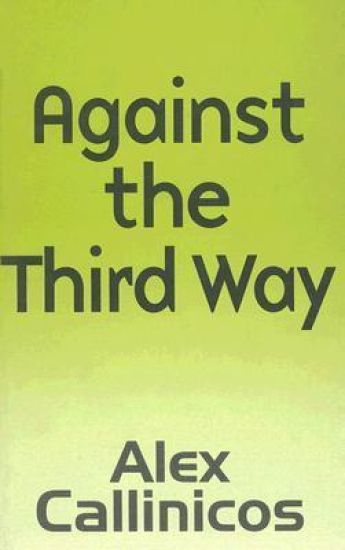
Against the Third Way

Against the Third Way

Alex Callinicos

Polity Press
2001
sidottu
The Third Way is the political philosophy of Tony Blair and New Labour in Britain, Bill Clinton in the United States, and Gerhard Schröder in Germany. Defended most forcefully by Anthony Giddens, it claims to offer a strategy for renewing the Centre Left that avoids the free-market liberalism of the New Right and the state socialism of the Old Left. In Against the Third Way Alex Callinicos develops a fundamental critique of this philosophy. He argues that Third Way governments have continued the neoliberal policies of their conservative predecessors. They have promoted the interests of the multinational corporations, privatized areas where Ronald Reagan or Margaret Thatcher dared not go, and allowed social and economic inequality to continue growing. Callinicos also attacks the theoretical underpinnings of the Third Way. He challenges the idea that the 'knowledge economy' is freeing us from the contradictions of capitalism, denies that New Labour has coherent strategies for achieving greater equality or reconciling the interests of individual and community, and argues that what is called 'political globalization' - the higher profile of international institutions such as NATO, the IMF, and the WTO - masks the assertion of American imperial power. The best hope for the Left, Callinicos contends, lies in the emergence of an international movement against global capitalism with the protests at Seattle, Prague, and elsewhere. Those who want to see real change should be challenging the logic of the market rather than, like Blair and Clinton, extending its dominion.
Against the Third Way

Against the Third Way

Alex Callinicos

JOHN WILEY AND SONS LTD
2001
nidottu
The Third Way is a political philosophy claiming to offer a strategy for renewing the Centre Left that avoids the free-market liberalism of the New Right and the state socialism of the Old Left. In this book, Alex Callinicos develops a fundamental critique of this philosophy.