
Kirjailija
Alex Potts
Kirjat ja teokset yhdessä paikassa: 4 kirjaa, julkaisuja vuosilta 2000–2026, suosituimpiin kuuluu Experiments in Modern Realism. Vertaile teosten hintoja ja tarkista saatavuus suomalaisista kirjakaupoista.
4 kirjaa
Kirjojen julkaisuvuodet: 2000–2026.
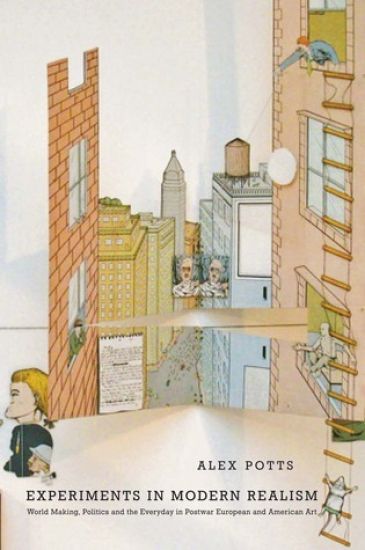
World Making, Politics and the Everyday in Postwar European and American Art
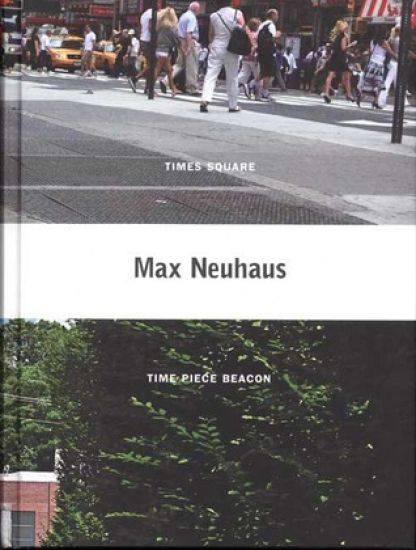
Max Neuhaus
Max Neuhaus; Christoph Cox; Branden W. Joseph; Liz Kotz; Ulrich Loock; Peter Pakesch; Alex Potts
Yale University Press
2010
sidottu
In 1977, Max Neuhaus turned a triangle of pedestrian space between 45th and 46th Streets in Times Square into an island of harmonic sound. The rich textures of that sound continue today, emanating from beneath the sidewalk grating, to anonymously reach an individual’s ears as if one has stumbled upon a secret. Known as Times Square, the celebrated installation was restored in 2002 with support from Dia Art Foundation, which further commissioned a site-specific piece, Time Piece Beacon, from Neuhaus in 2006 for its museum in Beacon, New York. This stunning book—the only volume in print dedicated solely to the work of Neuhaus—takes these two projects as a point of departure from which to consider the singular impact this artist has had in establishing sound as a medium in contemporary art. An interview with Neuhaus is complemented with essays by multidisciplinary scholars who investigate and situate his work within a historical context. Distributed for Dia Art Foundation
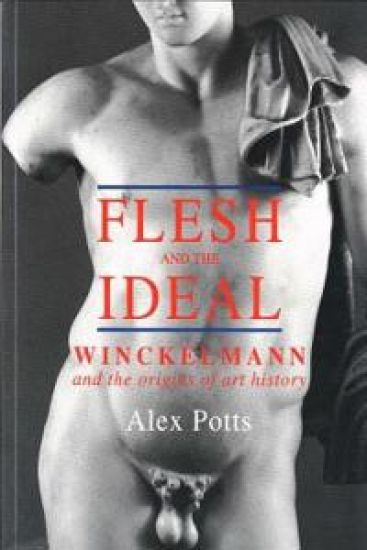
Johann Joachim Winckelmann (1717-1768), one of the most important figures ever to have written about art, is considered by many to be the father of modern art history. This book is an intellectual biography of Winckelmann that discusses his magnum opus, History of the Art of Antiquity, in the context of his life and work in Germany and in Rome in the eighteenth century. Alex Potts analyzes Winckelmann's eloquent account of the aesthetic and imaginative Greek ideal in art, an account that focuses on the political and homoerotic sexual content that gave the antique ideal male nude its larger resonance. He shows how Winckelmann's writing reflects the well-known preoccupations and values of Enlightenment culture as well as a darker aspect of Enlightenment ideals--such as the fantasy of a completely free sovereign subjectivity associated with Greek art. Potts explores how Winckelmann's historical perspective on the art of antiquity both prefigures and undermines the more strictly historicizing views put forward in the nineteenth century and how his systematic definition of style and historical development casts a new light on the present-day understanding of these notions. According to Potts, Winckelmann goes well beyond the simple rationalist art history and Neoclassical art theory with which he is usually associated. Rather, he often seems to speak directly to our present awareness of the discomforting ideological and psychic contradictions inherent in supposedly ideal symbolic forms.