Kirjojen hintavertailu – 12 859 828 kirjaa ja 27 kauppaa

Kirjailija

Alex Zamalin

Kirjat ja teokset yhdessä paikassa: 17 kirjaa, julkaisuja vuosilta 2015–2026, suosituimpiin kuuluu African American Political Thought. Vertaile teosten hintoja ja tarkista saatavuus suomalaisista kirjakaupoista.

17 kirjaa

Kirjojen julkaisuvuodet: 2015–2026.

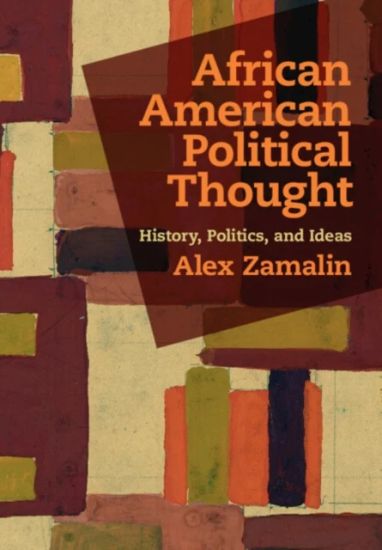
African American Political Thought

African American Political Thought

Alex Zamalin

Cambridge University Press
2026
pokkari
Discussions of racism and antiracism are a central part of today's national conversation. The political environment is filled with challenging questions around race and politics. This introductory textbook combines intellectual history, political biography, and philosophy in a manner that incorporates the contributions and ideas of African American political thinkers into a comprehensive, engaging narrative. Acting as a companion to primary source documents, the text frames these figures and their ideologies within their historical and political contexts. African American political thinkers throughout history have been at the forefront of considering how to counteract racism and achieve racial justice. By examining the evolution of the core figures, concepts, and movements of African American political thought over time, students will be able to apply theory to both historical and current contexts. This text provides a multicultural lens to challenge commonly held understandings of traditional western thought as future leaders tackle challenging questions.
African American Political Thought

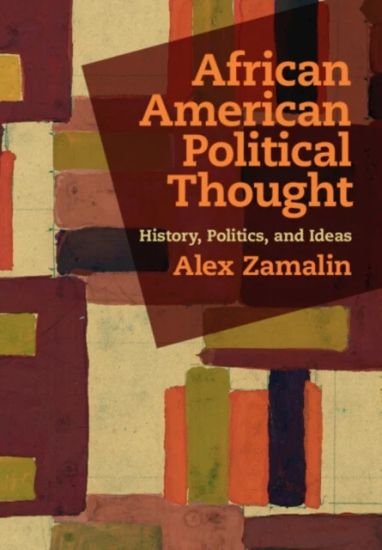
African American Political Thought

Alex Zamalin

Cambridge University Press
2026
sidottu
Discussions of racism and antiracism are a central part of today's national conversation. The political environment is filled with challenging questions around race and politics. This introductory textbook combines intellectual history, political biography, and philosophy in a manner that incorporates the contributions and ideas of African American political thinkers into a comprehensive, engaging narrative. Acting as a companion to primary source documents, the text frames these figures and their ideologies within their historical and political contexts. African American political thinkers throughout history have been at the forefront of considering how to counteract racism and achieve racial justice. By examining the evolution of the core figures, concepts, and movements of African American political thought over time, students will be able to apply theory to both historical and current contexts. This text provides a multicultural lens to challenge commonly held understandings of traditional western thought as future leaders tackle challenging questions.

Counterculture: The Story of America from Bohemia to Hip-Hop
A political and intellectual history of American counterculture and the historical figures who redefined mainstream understandings of freedom, culture, art, and politics--from The Beat Generation to Basquiat This entertaining, intellectual history fulfills the growing appetite for marginalized narratives. Counterculture brilliantly interrogates the diversity of counterculture and the interwoven relationship between each individual legacy. From Anarchism to the Harlem Renaissance, Alex Zamalin unveils the humanity behind these romanticized figures and popularized movements to capture revolutionary freedom in action. American counterculture, defined as a movement whose values are outside and oppositional to mainstream norms and whose practices fundamentally reject what is socially respectable, ultimately transformed the 20th century. With key players: Emma GoldmanBillie HolidayAllen GinsbergAmiri BarakaJean-Michel BasquiatAnd key movements: AnarchismBlack BohemiaThe Harlem RenaissanceThe Beat GenerationThe Black Arts MovementHip-HopCounterculture reaches new depths, tackling a wide range of historical, social, and political topics, and expanding contemporary understandings of American cultural tradition. At a time when counterculture was on the outskirts of American society, Alex Zamalin explores the reason why.
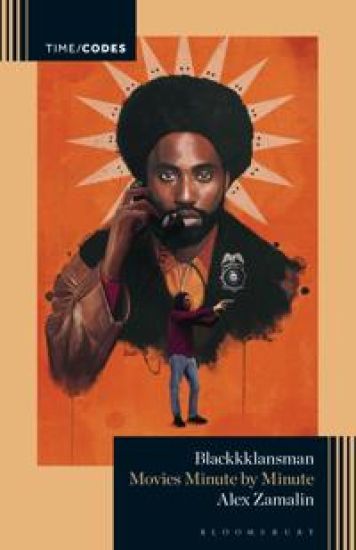
BlacKkKlansman

BlacKkKlansman

Alex Zamalin

BLOOMSBURY PUBLISHING PLC
2025
nidottu
A minute-by-minute analysis of Spike Lee's infamous film, BlacKkKlansman. Blending film criticism with creative nonfiction, each book in the Timecodes series focuses on one film, exploring it minute by minute beginning with minute one, and ending with the final minute before the closing credits. Film scholars have examined Spike Lee’s inventive visual style, didactic argumentative structure, use of music, and cinematic movement, but his film, BlacKkKlansman, is also a meditation on questions of perennial concern to political theorists: what is the meaning of freedom under social constraint? How does racism and anti-Blackness structure the parameters of conversation and belonging? Is redistribution or recognition crucial for justice? Alex Zamalin takes up these questions by examining the dynamics of race and politics as presented in the film. Through dissecting themes of law and order, white supremacy, police brutality, Black rebellion, and intersectionality, Zamalin invites readers to draw connections to the present political consciousness of the Black Lives Matter movement. The creative and thorough analysis presented in this book translates just how pressing social and cultural insights can be glimpsed through popular media.
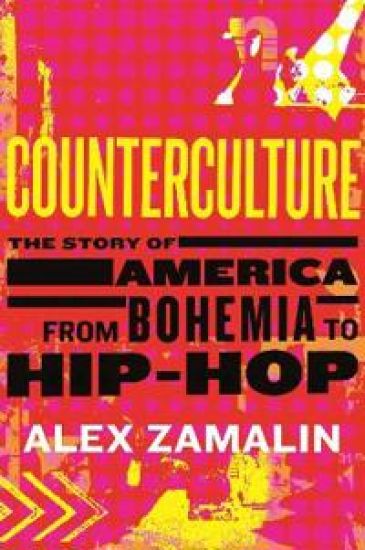
Counterculture

Counterculture

Alex Zamalin

BEACON PRESS
2025
sidottu
A political and intellectual history of American counterculture and the historical figures who redefined mainstream understandings of freedom, culture, art, and politics--from The Beat Generation to Basquiat This entertaining, intellectual history fulfills the growing appetite for marginalized narratives. Counterculture brilliantly interrogates the diversity of counterculture and the interwoven relationship between each individual legacy. From Anarchism to the Harlem Renaissance, Alex Zamalin unveils the humanity behind these romanticized figures and popularized movements to capture revolutionary freedom in action. American counterculture, defined as a movement whose values are outside and oppositional to mainstream norms and whose practices fundamentally reject what is socially respectable, ultimately transformed the 20th century. With key players: Emma GoldmanBillie HolidayAllen GinsbergAmiri BarakaJean-Michel BasquiatAnd key movements: AnarchismBlack BohemiaThe Harlem RenaissanceThe Beat GenerationThe Black Arts MovementHip-HopCounterculture reaches new depths, tackling a wide range of historical, social, and political topics, and expanding contemporary understandings of American cultural tradition. At a time when counterculture was on the outskirts of American society, Alex Zamalin explores the reason why.
The Ends of Resistance

The Ends of Resistance

Alix Olson; Alex Zamalin

Columbia University Press
2024
sidottu
Since the rise of Donald Trump and other right-wing authoritarians worldwide, we have been told to “resist.” But this kind of opposition looks surprisingly like restoring the status quo. Under the banner of resistance, liberals and progressives have encouraged voting for Democrats, reading the mainstream media, trusting the science, putting up yard signs, buying the right products, and celebrating a “return to normal.” How was “resistance” diluted, and where can we find alternative forms of resistance for present and future struggles? Alix Olson and Alex Zamalin offer a clear-eyed critical account of how neoliberalism has redefined resistance to thwart social movements and consolidate power. Elites have domesticated and coopted some once-radical concepts and practices into “restorative resistance” that bolsters support for an unjust social order while marginalizing, racializing, and criminalizing many others. Olson and Zamalin argue that true resistance to racial neoliberalism must instead be deeply antirestorative: collective, horizontal, counterhegemonic, radically democratic insurrectionary movements that cannot be redirected into shoring up the existing order. This “unruly world-building”—exemplified by Occupy Wall Street, the Movement for Black Lives, Indigenous activism at Standing Rock, and more—pushes us to live, think, and dream beyond profit maximization, democratic civility, and individual freedom. Powerfully and accessibly written with manifesto-like urgency, The Ends of Resistance shows how marginalized voices and social movements deepen our thinking for confronting power.
The Ends of Resistance

The Ends of Resistance

Alix Olson; Alex Zamalin

Columbia University Press
2024
pokkari
Since the rise of Donald Trump and other right-wing authoritarians worldwide, we have been told to “resist.” But this kind of opposition looks surprisingly like restoring the status quo. Under the banner of resistance, liberals and progressives have encouraged voting for Democrats, reading the mainstream media, trusting the science, putting up yard signs, buying the right products, and celebrating a “return to normal.” How was “resistance” diluted, and where can we find alternative forms of resistance for present and future struggles? Alix Olson and Alex Zamalin offer a clear-eyed critical account of how neoliberalism has redefined resistance to thwart social movements and consolidate power. Elites have domesticated and coopted some once-radical concepts and practices into “restorative resistance” that bolsters support for an unjust social order while marginalizing, racializing, and criminalizing many others. Olson and Zamalin argue that true resistance to racial neoliberalism must instead be deeply antirestorative: collective, horizontal, counterhegemonic, radically democratic insurrectionary movements that cannot be redirected into shoring up the existing order. This “unruly world-building”—exemplified by Occupy Wall Street, the Movement for Black Lives, Indigenous activism at Standing Rock, and more—pushes us to live, think, and dream beyond profit maximization, democratic civility, and individual freedom. Powerfully and accessibly written with manifesto-like urgency, The Ends of Resistance shows how marginalized voices and social movements deepen our thinking for confronting power.
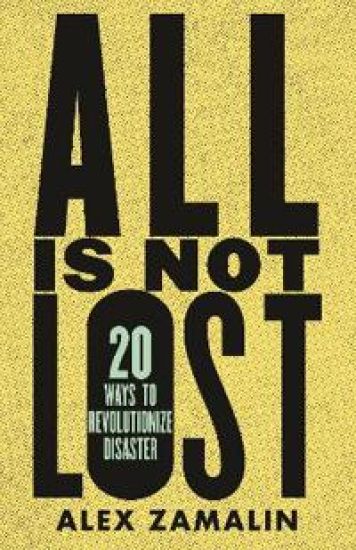
All Is Not Lost

All Is Not Lost

Alex Zamalin

BEACON PRESS
2022
nidottu
An uplifting look at how organizers in the past have successfully leveraged crises into emancipatory politics, and a plea for continued progressive movement building in our tumultuous social climate From the climate apocalypse and COVID-19 to double digit unemployment to Donald Trump and the rise of far-right white nationalists--disasters are everywhere we look. While these disasters often leave us feeling hopeless and withdrawn, scholar Alex Zamalin argues that pessimism cannot be the only response. Silence and inaction only perpetuate mass suffering and inequality. Instead, All Is Not Lost suggests that following every crisis emerges new political opportunity for changing our politics and everyday lives. Blending intellectual history, biography, and political critique, Zamalin offers 20 specific lessons for our present moment, turning to moments in history to demonstrate how various figures in the past have successfully leveraged struggles into sources of political action and freedom. The lessons--on how to resist, how to speak, organize, treat others, think politically, memorialize, dream, write, occupy, build, and act--all build toward one truth: though disaster is something we cannot control from arriving, we can control how we confront it and what we build in its place. Using examples from the seventeenth century to the present, All Is Not Lost reminds readers to not back down in the face of crisis and instead offers radical lessons of continued resistance and movement building to create a successful progressive coalition.
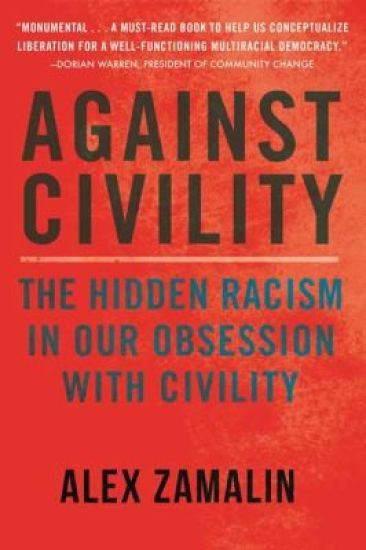
Against Civility

Against Civility

Alex Zamalin

Beacon Press
2021
sidottu
A call for citizens who care about social justice to abandon the concept of discreet politeness when it comes to racial justice, and support more disruptive actions and complete calls for liberation. The idea and practice of civility has always been wielded to silence dissent, repress political participation, and justify violence upon people of color. Although many progressives today are told that we need to be more polite and thoughtful, less rancorous and angry when we talk about race in America, civility maintains rather than disrupts racial injustice. Spanning two hundred years, Zamalin's accessible blend of intellectual history, political biography, and contemporary political criticism shows that civility has never been neutral in its political uses and impacts. The best way to tackle racial inequality is through "civic radicalism," an alternative to civility found in the actions of Black radical leaders including Frederick Douglass, Harriet Tubman, Ida B. Wells, Martin Luther King, Jr., James Baldwin, Malcolm X, and Audre Lorde. Civic radicals shock and provoke people. They name injustice and who is responsible for it. They protest, march, strike, boycott, and mobilize collectively rather than form alliances with those who fundamentally oppose them. In Against Civility, citizens who care deeply about racial and socioeconomic equality will see that they need to abandon this concept of discreet politeness when it comes to racial justice, and instead more fully support disruptive actions and calls for liberation, which have already begun with movements like #MeToo, the Dakota Access Pipeline Protests, and Black Lives Matter.
Black Utopia

Black Utopia

Alex Zamalin

Columbia University Press
2019
pokkari
Within the history of African American struggle against racist oppression that often verges on dystopia, a hidden tradition has depicted a transfigured world. Daring to speculate on a future beyond white supremacy, black utopian artists and thinkers offer powerful visions of ways of being that are built on radical concepts of justice and freedom. They imagine a new black citizen who would inhabit a world that soars above all existing notions of the possible. In Black Utopia, Alex Zamalin offers a groundbreaking examination of African American visions of social transformation and their counterutopian counterparts. Considering figures associated with racial separatism, postracialism, anticolonialism, Pan-Africanism, and Afrofuturism, he argues that the black utopian tradition continues to challenge American political thought and culture. Black Utopia spans black nationalist visions of an ideal Africa, the fiction of W. E. B. Du Bois, and Sun Ra’s cosmic mythology of alien abduction. Zamalin casts Samuel R. Delany and Octavia E. Butler as political theorists and reflects on the antiutopian challenges of George S. Schuyler and Richard Wright. Their thought proves that utopianism, rather than being politically immature or dangerous, can invigorate political imagination. Both an inspiring intellectual history and a critique of present power relations, this book suggests that, with democracy under siege across the globe, the black utopian tradition may be our best hope for combating injustice.
Black Utopia

Black Utopia

Alex Zamalin

Columbia University Press
2019
sidottu
Within the history of African American struggle against racist oppression that often verges on dystopia, a hidden tradition has depicted a transfigured world. Daring to speculate on a future beyond white supremacy, black utopian artists and thinkers offer powerful visions of ways of being that are built on radical concepts of justice and freedom. They imagine a new black citizen who would inhabit a world that soars above all existing notions of the possible. In Black Utopia, Alex Zamalin offers a groundbreaking examination of African American visions of social transformation and their counterutopian counterparts. Considering figures associated with racial separatism, postracialism, anticolonialism, Pan-Africanism, and Afrofuturism, he argues that the black utopian tradition continues to challenge American political thought and culture. Black Utopia spans black nationalist visions of an ideal Africa, the fiction of W. E. B. Du Bois, and Sun Ra’s cosmic mythology of alien abduction. Zamalin casts Samuel R. Delany and Octavia E. Butler as political theorists and reflects on the antiutopian challenges of George S. Schuyler and Richard Wright. Their thought proves that utopianism, rather than being politically immature or dangerous, can invigorate political imagination. Both an inspiring intellectual history and a critique of present power relations, this book suggests that, with democracy under siege across the globe, the black utopian tradition may be our best hope for combating injustice.
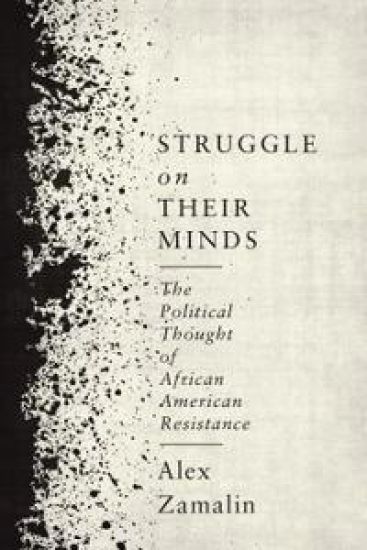
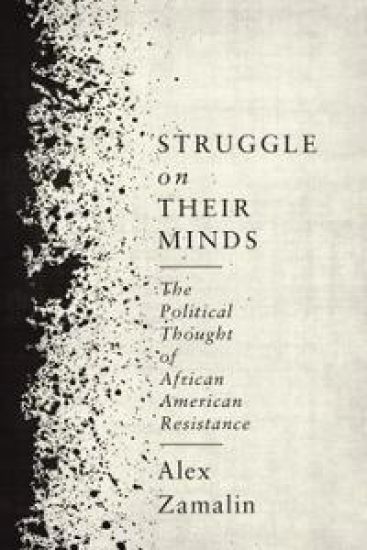
Struggle on Their Minds

Struggle on Their Minds

Alex Zamalin

Columbia University Press
2019
pokkari
American political thought has been shaped by those who fought back against social inequality, economic exclusion, the denial of political representation, and slavery, the country's original sin. Yet too often the voices of African American resistance have been neglected, silenced, or forgotten. In this timely book, Alex Zamalin considers key moments of resistance to demonstrate its current and future necessity, focusing on five activists across two centuries who fought to foreground slavery and racial injustice in American political discourse. Struggle on Their Minds shows how the core values of the American political tradition have been continually challenged—and strengthened—by antiracist resistance, creating a rich legacy of African American political thought that is an invaluable component of contemporary struggles for racial justice. Zamalin looks at the language and concepts put forward by the abolitionists David Walker and Frederick Douglass, the antilynching activist Ida B. Wells, the Black Panther Party organizer Huey Newton, and the prison abolitionist Angela Davis. Each helped revise and transform ideas about power, justice, community, action, and the role of emotion in political action. Their thought encouraged abolitionists to call for the eradication of slavery, black journalists to chastise American institutions for their indifference to lynching, and black radicals to police the police and to condemn racial injustice in the American prison system. Taken together, these movements pushed political theory forward, offering new language and concepts to sustain democracy in tense times. Struggle on Their Minds is a critical text for our contemporary moment, showing how the political thought that comes out of resistance can energize the practice of democratic citizenship and ultimately help address the prevailing problem of racial injustice.
Antiracism

Antiracism

Alex Zamalin

New York University Press
2019
sidottu
An introduction to antiracism, a powerful tradition crucial for energizing American democracy On August 12, 2017, in Charlottesville, Virginia, a rally of white nationalists and white supremacists culminated in the death of a woman murdered in the street. Those events made clear that racism is alive and well in the United States of America. However, they also brought into sharp relief another American tradition: antiracism. While racists marched and chanted in the streets, they were met and matched by even larger numbers of protesters calling for racism's end. Racism is America's original and most enduring sin, with well-known historic and contemporary markers: slavery, lynching, Jim Crow, redlining, mass incarceration, police brutality. But racism has always been challenged by an opposing political theory and practice. Alex Zamalin's Antiracism tells the story of that opposition. The most theoretically generative and politically valuable source of antiracist thought has been the black American intellectual tradition. While other forms of racial oppression—for example, anti-Semitism, Islamophobia, and anti-Latino racism—have been and continue to be present in American life, antiblack racism has always been the primary focus of American antiracist movements. From antislavery abolition to the antilynching movement, black socialism to feminism, the long Civil Rights movement to the contemporary Movement for Black Lives, Antiracism examines the way the black antiracist tradition has thought about domination, exclusion, and power, as well as freedom, equality, justice, struggle, and political hope in dark times. Antiracism is an accessible introduction to the political theory of black American antiracism, through a study of the major figures, texts, and political movements across US history. Zamalin argues that antiracism is a powerful tradition that is crucial for energizing American democracy.
Antiracism

Antiracism

Alex Zamalin

New York University Press
2019
pokkari
An introduction to antiracism, a powerful tradition crucial for energizing American democracy On August 12, 2017, in Charlottesville, Virginia, a rally of white nationalists and white supremacists culminated in the death of a woman murdered in the street. Those events made clear that racism is alive and well in the United States of America. However, they also brought into sharp relief another American tradition: antiracism. While racists marched and chanted in the streets, they were met and matched by even larger numbers of protesters calling for racism's end. Racism is America's original and most enduring sin, with well-known historic and contemporary markers: slavery, lynching, Jim Crow, redlining, mass incarceration, police brutality. But racism has always been challenged by an opposing political theory and practice. Alex Zamalin's Antiracism tells the story of that opposition. The most theoretically generative and politically valuable source of antiracist thought has been the black American intellectual tradition. While other forms of racial oppression—for example, anti-Semitism, Islamophobia, and anti-Latino racism—have been and continue to be present in American life, antiblack racism has always been the primary focus of American antiracist movements. From antislavery abolition to the antilynching movement, black socialism to feminism, the long Civil Rights movement to the contemporary Movement for Black Lives, Antiracism examines the way the black antiracist tradition has thought about domination, exclusion, and power, as well as freedom, equality, justice, struggle, and political hope in dark times. Antiracism is an accessible introduction to the political theory of black American antiracism, through a study of the major figures, texts, and political movements across US history. Zamalin argues that antiracism is a powerful tradition that is crucial for energizing American democracy.
Struggle on Their Minds

Struggle on Their Minds

Alex Zamalin

Columbia University Press
2017
sidottu
American political thought has been shaped by those who fought back against social inequality, economic exclusion, the denial of political representation, and slavery, the country's original sin. Yet too often the voices of African American resistance have been neglected, silenced, or forgotten. In this timely book, Alex Zamalin considers key moments of resistance to demonstrate its current and future necessity, focusing on five activists across two centuries who fought to foreground slavery and racial injustice in American political discourse. Struggle on Their Minds shows how the core values of the American political tradition have been continually challenged-and strengthened-by antiracist resistance, creating a rich legacy of African American political thought that is an invaluable component of contemporary struggles for racial justice. Zamalin looks at the language and concepts put forward by the abolitionists David Walker and Frederick Douglass, the antilynching activist Ida B. Wells, the Black Panther Party organizer Huey Newton, and the prison abolitionist Angela Davis. Each helped revise and transform ideas about power, justice, community, action, and the role of emotion in political action. Their thought encouraged abolitionists to call for the eradication of slavery, black journalists to chastise American institutions for their indifference to lynching, and black radicals to police the police and to condemn racial injustice in the American prison system. Taken together, these movements pushed political theory forward, offering new language and concepts to sustain democracy in tense times. Struggle on Their Minds is a critical text for our contemporary moment, showing how the political thought that comes out of resistance can energize the practice of democratic citizenship and ultimately help address the prevailing problem of racial injustice.