Kirjojen hintavertailu – 12 903 725 kirjaa ja 27 kauppaa

Kirjailija

Alexander Anievas

Kirjat ja teokset yhdessä paikassa: 4 kirjaa, julkaisuja vuosilta 2014–2015, suosituimpiin kuuluu Capital, the State, and War. Vertaile teosten hintoja ja tarkista saatavuus suomalaisista kirjakaupoista.

4 kirjaa

Kirjojen julkaisuvuodet: 2014–2015.

How the West Came to Rule

How the West Came to Rule

Alexander Anievas; Kerem Nisancioglu

Pluto Press
2015
pokkari

Halvin toimitettuna 37,70 €

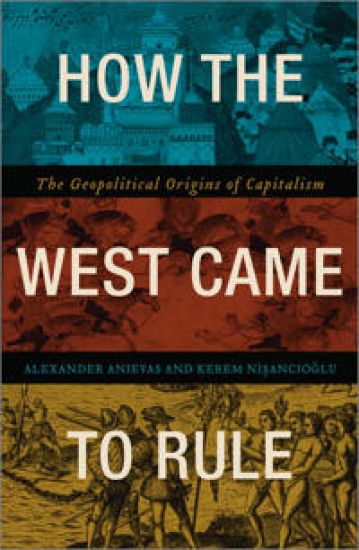
*Winner of International Studies Association (ISA)'s International Political Sociology Best Book Prize for 2017* *Winner of British International Studies Association (BISA)'s International Political Economy Working Group Book Prize of 2016* *Shortlisted for the ISA Book Prize* Mainstream historical accounts of the development of capitalism describe a process which is fundamentally European - a system that was born in the mills and factories of England or under the guillotines of the French Revolution. In this groundbreaking book, a very different story is told. How the West Came to Rule offers a interdisciplinary and international historical account of the origins of capitalism. It argues that contrary to the dominant wisdom, capitalism's origins should not be understood as a development confined to the geographically and culturally sealed borders of Europe, but the outcome of a wider array of global processes in which non-European societies played a decisive role. Through an outline of the uneven histories of Mongolian expansion, New World discoveries, Ottoman-Habsburg rivalry, the development of the Asian colonies and bourgeois revolutions, Alexander Anievas and Kerem Nisancioglu provide an account of how these diverse events and processes came together to produce capitalism.
How the West Came to Rule

How the West Came to Rule

Alexander Anievas; Kerem Nisancioglu

Pluto Press
2015
sidottu
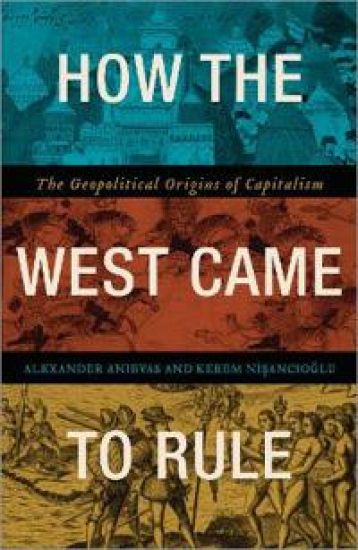
*Winner of International Studies Association (ISA)'s International Political Sociology Best Book Prize for 2017* *Winner of British International Studies Association (BISA)'s International Political Economy Working Group Book Prize of 2016* *Shortlisted for the ISA Book Prize* Mainstream historical accounts of the development of capitalism describe a process which is fundamentally European - a system that was born in the mills and factories of England or under the guillotines of the French Revolution. In this groundbreaking book, a very different story is told. How the West Came to Rule offers a interdisciplinary and international historical account of the origins of capitalism. It argues that contrary to the dominant wisdom, capitalism's origins should not be understood as a development confined to the geographically and culturally sealed borders of Europe, but the outcome of a wider array of global processes in which non-European societies played a decisive role. Through an outline of the uneven histories of Mongolian expansion, New World discoveries, Ottoman-Habsburg rivalry, the development of the Asian colonies and bourgeois revolutions, Alexander Anievas and Kerem Nisancioglu provide an account of how these diverse events and processes came together to produce capitalism.
Capital, the State, and War

Capital, the State, and War

Alexander Anievas

The University of Michigan Press
2014
sidottu
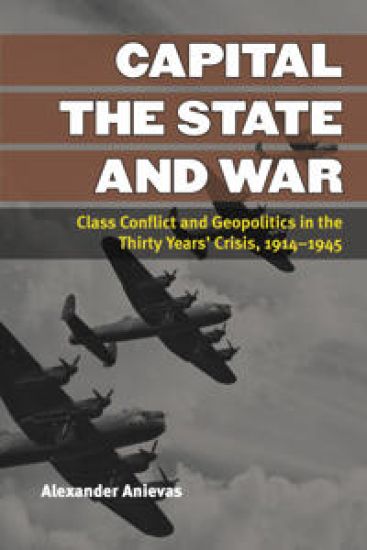
The history of the modern social sciences can be seen as a series of attempts to confront the challenges of social disorder and revolution wrought by the international expansion of capitalist social relations. In Capital, the State, and War, Alexander Anievas focuses on one particularly significant aspect of this story: the inter-societal or geo-social origins of the two world wars, and, more broadly, the confluence of factors behind the Thirty Years’ Crisis between 1914 and 1945. Anievas presents the Thirty Years’ Crisis as a result of the development of global capitalism with all its destabilizing social and geopolitical consequences, particularly the intertwined and co-constitutive nature of imperial rivalries, social revolutions, and anti-colonial struggles. Building on the theory of “uneven and combined development,” he unites geopolitical and sociological explanations into a single framework, thereby circumventing the analytical stalemate between “primacy of domestic politics” and “primacy of foreign policy” approaches. Anievas opens new avenues for thinking about the relations among security-military interests, the making of foreign policy, political economy and, more generally, the origins of war and the nature of modern international order.
Capital, the State, and War

Capital, the State, and War

Alexander Anievas

The University of Michigan Press
2014
nidottu
The history of the modern social sciences can be seen as a series of attempts to confront the challenges of social disorder and revolution wrought by the international expansion of capitalist social relations. In Capital, the State, and War, Alexander Anievas focuses on one particularly significant aspect of this story: the inter-societal or geo-social origins of the two world wars, and, more broadly, the confluence of factors behind the Thirty Years’ Crisis between 1914 and 1945. Anievas presents the Thirty Years’ Crisis as a result of the development of global capitalism with all its destabilizing social and geopolitical consequences, particularly the intertwined and co-constitutive nature of imperial rivalries, social revolutions, and anti-colonial struggles. Building on the theory of “uneven and combined development,” he unites geopolitical and sociological explanations into a single framework, thereby circumventing the analytical stalemate between “primacy of domestic politics” and “primacy of foreign policy” approaches. Anievas opens new avenues for thinking about the relations among security-military interests, the making of foreign policy, political economy and, more generally, the origins of war and the nature of modern international order.